

Orders
.png&w=48&q=75 "login")
Profile


Wallet

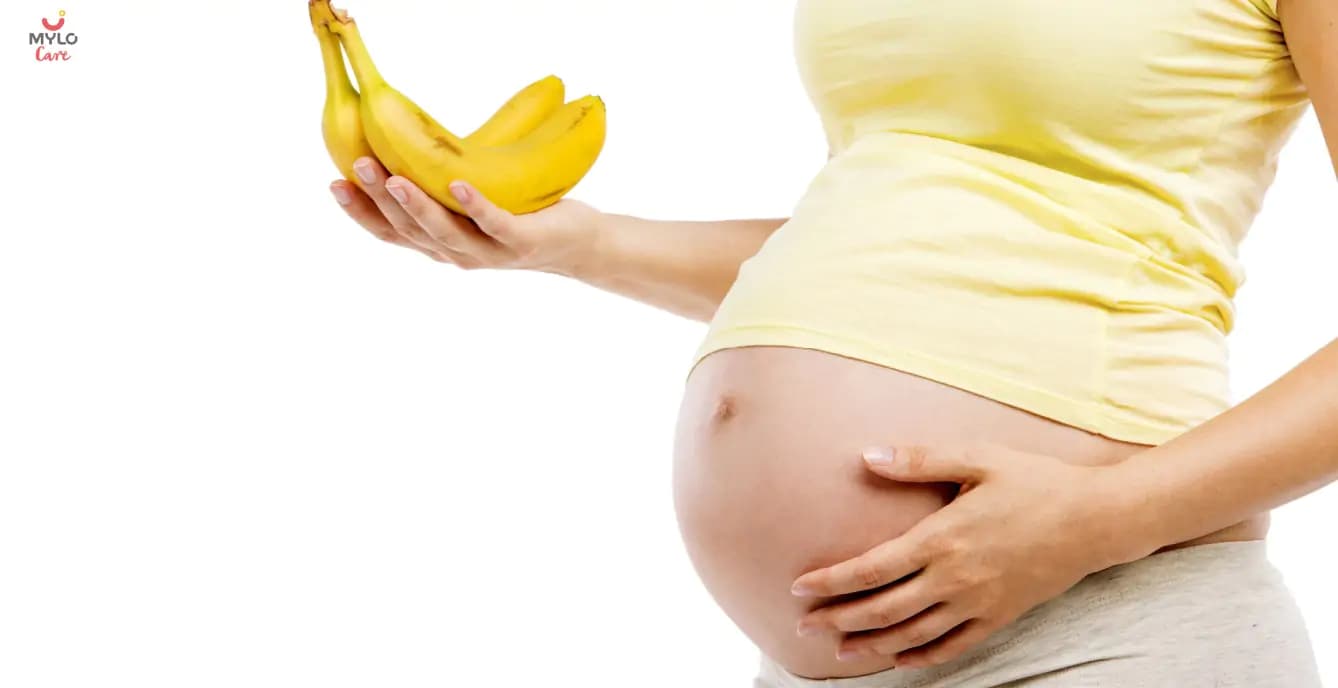
Banana During Pregnancy: Is It Safe? How Many Per Day, Benefits and Side Effects (2026 Guide)


BSC, MSC (Home Science, Food & Nutrition) · 5 years experience
 102 Likes|
 10 min
AI-Generated Summary
Quick overview in 30 seconds.webp&w=32&q=75)
Summary
- Bananas are safe and highly recommended during pregnancy, providing 105 calories, 422mg potassium, vitamin B6, and folate that support foetal development and ease morning sickness naturally.
- Eating 1-2 bananas daily helps reduce nausea, prevent constipation with 3g fibre, manage blood pressure, improve hemoglobin levels, ease heartburn, and lower the risk of edema.
- Pregnant women with gestational diabetes, latex allergies, or digestive sensitivities should limit bananas, avoid overripe ones, and pair them with protein to prevent blood sugar spikes.
- What else supports a healthy pregnancy diet? Explore our MamaGro™ Protein Diskettes - High Protein & No Added Sugar - 250gm (50 Diskettes).
TL;DR
Yes, bananas are safe and healthy during pregnancy for most women. They are rich in potassium, vitamin B6, fibre and folate, which help with morning sickness, constipation, leg cramps, blood pressure and energy (USDA) (Harvard Nutrition Source)。 A healthy amount is about 1 to 2 medium bananas a day. Vitamin B6 in bananas can genuinely ease nausea in early pregnancy, and the fibre helps with constipation. The main caution is for gestational diabetes, bananas are naturally sweet, so keep portions moderate (a small or half banana) and pair with protein. People with a latex-fruit allergy should be careful. Overall, bananas are one of the safest, most convenient pregnancy snacks.
Quick Answer
Yes, bananas are safe and healthy in pregnancy for most women. They provide potassium, vitamin B6, fibre and folate, which help with morning sickness, constipation, leg cramps and blood pressure. A healthy amount is about 1 to 2 medium bananas a day. The main caution is gestational diabetes, keep portions moderate and pair with protein, since bananas are naturally sweet. People with a latex-fruit allergy should be careful.
Author: Anupama Chadha, Senior Nutrition Content Editor, Mylo Parenting Desk Medically reviewed by: Dt. Mansi Goyal, BSc, MSc (Food and Nutrition), aligned with ICMR Dietary Guidelines and Harvard Nutrition Source Last updated: 29 June 2026
Medical Disclaimer: This article is for informational purposes only and is not a substitute for professional medical or dietary advice. If you have gestational diabetes, a latex-fruit allergy, or any dietary condition, ask your doctor or dietitian how many bananas are right for you.
Key Takeaways
- Bananas are safe and healthy in pregnancy for most women (Harvard Nutrition Source)
- Rich in potassium, vitamin B6, fibre and folate
- Help with morning sickness, constipation, leg cramps and blood pressure
- A healthy amount is about 1 to 2 medium bananas a day
- Vitamin B6 can genuinely ease early-pregnancy nausea
- Watch portions if you have gestational diabetes (naturally sweet)
- Be cautious with a latex-fruit allergy
- A convenient, hygienic snack (peel and eat)
Is It Safe to Eat Bananas During Pregnancy?
Yes. Bananas are one of the safest and most nutritious fruits in pregnancy for most women (Harvard Nutrition Source)。 They are easy to digest, convenient, and naturally hygienic (you peel them, so there is little contamination risk).
A few situations need moderation:
- Gestational diabetes (keep portions small and pair with protein)
- Latex-fruit allergy (bananas can cross-react)
- Very overripe bananas (higher sugar)
What Is the Nutritional Value of a Banana?
Approximate nutrition per one medium banana (about 120 g) (USDA FoodData Central):
| Nutrient | Approx. Amount | Benefit in Pregnancy |
|---|---|---|
| Calories | About 105 kcal | Quick energy |
| Carbohydrates | About 27 g | Energy |
| Fibre | About 3 g | Helps constipation |
| Potassium | About 420 mg | Blood pressure, leg cramps |
| Vitamin B6 | Good source | Eases nausea |
| Vitamin C | Present | Immunity, iron absorption |
| Folate | Present | Supports early development |
Bananas are low in fat and sodium and provide steady energy, making them a great pregnancy snack.
What Are the Benefits of Bananas in Pregnancy?
In normal amounts, bananas offer real benefits (Harvard Nutrition Source) (NHS):
1. Eases Morning Sickness
Vitamin B6 in bananas is well known to help reduce nausea in early pregnancy (NHS Morning Sickness)。
2. Helps With Constipation
The fibre adds bulk and eases bowel movements, helping the common problem of pregnancy constipation.
3. Supports Blood Pressure
Potassium helps balance sodium and supports healthy blood pressure.
4. Reduces Leg Cramps
Potassium also helps with muscle function, which may ease pregnancy leg cramps.
5. Provides Quick Energy
Natural sugars and carbs give a fast, healthy energy boost, useful when tired.
6. Helps With Heartburn (Mild)
Bananas are gentle and can have a soothing effect for mild heartburn in some women.
How Many Bananas Can You Eat Per Day in Pregnancy?
| Aspect | Guidance |
|---|---|
| Daily amount | About 1 to 2 medium bananas |
| For GDM | A small or half banana, paired with protein |
| Best time | As a snack, or in the morning for nausea |
| Form | Fresh, in curd, in a smoothie (low added sugar) |
Bananas are healthy but also have natural sugar and calories, so 1 to 2 a day is a sensible amount for most pregnant women (Harvard Nutrition Source)。
Can You Eat Bananas With Gestational Diabetes?
Yes, in controlled portions. Bananas contain natural sugar, so for gestational diabetes (Harvard Nutrition Source):
- Choose a small or half banana rather than a large one
- Prefer a slightly less ripe banana (lower sugar than overripe)
- Pair it with protein (nuts, curd) to slow sugar absorption
- Avoid banana shakes with added sugar
- Follow your doctor or dietitian's plan
How Can You Eat Bananas in Pregnancy?
Easy, safe ways to enjoy them:
- Fresh as a quick snack (great for nausea)
- Sliced into curd (dahi) or oats
- In a smoothie (with milk or curd, light on sugar)
- Mashed on toast with nuts
- Raw/green banana (kaccha kela) cooked as a sabzi, common in South Indian and Bengali cooking
Tip: Use pasteurised milk for banana shakes, and ripe (not overripe) bananas for the best balance of nutrition and sugar.
What Are the Side Effects and Precautions?
Bananas are safe for most, but keep these in mind (USDA):
- Too much sugar/calories: Eating many bananas daily adds extra sugar and calories
- Gestational diabetes: Keep portions moderate and pair with protein
- Latex-fruit allergy: Bananas can cross-react; be cautious if you are allergic to latex
- Overripe bananas: Higher in sugar; choose ripe but not overripe
- Constipation (rare): Very unripe (green) bananas can be binding for some people
Indian Context: What Indian Mothers Should Know
- Widely available and affordable: Bananas are one of the most accessible, hygienic fruits in India (ICMR)
- "Hot/cold food" belief: Some avoid bananas as "cold," this garam/thanda idea is cultural, not medical, bananas are safe and nutritious
- Great for nausea: A banana in the morning can genuinely help with morning sickness (vitamin B6)
- Raw banana dishes: Kaccha kela sabzi and steamed raw banana are nutritious and common, safe in pregnancy
- GDM is common: Gestational diabetes is common in Indian women, keep portions moderate (FOGSI)
- Anaemia support: Pair bananas with iron-rich foods; their vitamin C and folate help
Myths vs Facts About Bananas in Pregnancy
| Myth | Fact | Source |
|---|---|---|
| "Bananas are unsafe in pregnancy" | False. They are safe and nutritious for most | Harvard Nutrition Source |
| "Bananas cause cold or cough in the baby" | False. No scientific basis | ICMR |
| "Bananas must be avoided as a cold food" | False. The garam/thanda idea is not medical | ICMR |
| "Bananas are completely off-limits with GDM" | False. Small portions with protein are fine | Harvard Nutrition Source |
| "Eating bananas guarantees a particular gender" | False. Food cannot determine gender | Cleveland Clinic |
| "More bananas means a healthier baby" | False. 1 to 2 a day is enough; balance matters | ICMR |
FAQs: Bananas in Pregnancy
Is it safe to eat bananas during pregnancy?
Yes. Bananas are safe and healthy for most pregnant women (Harvard Nutrition Source)。 They provide potassium, vitamin B6, fibre and folate, helping with nausea, constipation, leg cramps and blood pressure. Keep portions moderate if you have gestational diabetes.
Pregnancy mein kela kha sakte hain? (Hinglish)
Haan, pregnancy mein kela khana safe aur faydemand hai. Ismein potassium, vitamin B6, fibre aur folate hota hai, jo morning sickness, constipation, leg cramps aur blood pressure mein madad karta hai. Din mein 1 se 2 medium kele theek hain. GDM ho toh chhota ya aadha kela protein ke saath khayein.
How many bananas can I eat per day in pregnancy?
About 1 to 2 medium bananas per day is a healthy amount for most women (USDA)。 They have natural sugar and calories, so keep to this amount, and with gestational diabetes, choose a small or half banana paired with protein.
Are bananas good for morning sickness?
Yes. Bananas are rich in vitamin B6, which is known to help reduce nausea in early pregnancy (NHS)。 A banana in the morning is also gentle on the stomach and gives quick energy.
Kya GDM mein kela kha sakte hain? (Hinglish)
Haan, lekin portion control ke saath. Kela naturally meetha hota hai, isliye chhota ya aadha kela lein, thoda kam paka hua chunein, aur ise protein (nuts, dahi) ke saath khayein taaki blood sugar control mein rahe. Banana shake mein extra sugar na milayein. Apne doctor ya dietitian ki salah maanein.
Can I drink banana shake during pregnancy?
Yes, in moderation. A banana shake is safe when made with pasteurised milk, ripe bananas and minimal added sugar (NHS)。 If you have gestational diabetes, skip the added sugar and keep the portion small.
Is raw (green) banana safe in pregnancy?
Yes. Raw or green banana (kaccha kela), cooked as a sabzi or steamed, is safe and nutritious (ICMR)。 It is common in South Indian and Bengali cooking and provides fibre and resistant starch.
Do bananas cause cold or cough in pregnancy?
No. There is no scientific evidence that bananas cause cold or cough (ICMR)。 This is a cultural belief. Bananas are safe and nutritious. If you find very cold bananas uncomfortable, simply eat them at room temperature.
References
- USDA FoodData Central. "Bananas, Raw." https://fdc.nal.usda.gov/
- Harvard T.H. Chan School of Public Health. "Bananas." https://www.hsph.harvard.edu/nutritionsource/food-features/bananas/
- Harvard T.H. Chan School of Public Health. "Carbohydrates and Blood Sugar." https://www.hsph.harvard.edu/nutritionsource/carbohydrates/carbohydrates-and-blood-sugar/
- NHS UK. "Severe Vomiting in Pregnancy." https://www.nhs.uk/pregnancy/related-conditions/common-symptoms/severe-vomiting/
- ICMR / NIN. "Dietary Guidelines for Indians." https://www.nin.res.in/dietaryguidelines/pdfjs/locale/DGI07052024P.pdf
- FOGSI (Federation of Obstetric and Gynaecological Societies of India). https://www.fogsi.org/
Article Posted Under
Related Articles
Watermelon in Pregnancy: Benefits, Risks & Nutrients
 116·5 min
 Apricot (Jardalu) in Pregnancy: Benefits, Fresh vs Dried, and Safety
 20·14 min
 Mango in Pregnancy: The Ultimate Guide for Expecting Mothers
 5·9 min
 Papaya (Papita) In Pregnancy: Ripe Vs Unripe, Daily Limit, Trimester Guide, And The Truth About Miscarriage Risk For 2026
 1·19 min
Related Topics
.webp&w=32&q=75)
Medical Disclaimer
This content is for informational purposes only and should not replace professional medical advice. Consult with a physician or other health care professional if you have any concerns or questions about your health. If you rely on the information provided here, you do so solely at your own risk.


AWARDS AND RECOGNITION

Mylo wins Forbes D2C Disruptor award

Mylo wins The Economic Times Promising Brands 2022
AS SEEN IN












- Mylo Care: Effective and science-backed personal care and wellness solutions for a joyful you.
- Mylo Baby: Science-backed, gentle and effective personal care & hygiene range for your little one.
- Mylo Community: Trusted and empathetic community of 10mn+ parents and experts.


Product Categories
Baby Carrier | Baby Soap | Baby Wipes | Stretch Marks Cream | Baby Cream | Baby Shampoo | Baby Massage Oil | Baby Hair Oil | Stretch Marks Oil | Baby Body Wash | Baby Powder | Baby Lotion | Diaper Rash Cream | Newborn Diapers | Teether | Baby Kajal | Baby Diapers Pants | Cloth Diapers | Laundry Detergent | Lactation Granules |