


Orders

Profile


Wallet

Protein Powder in Pregnancy: Is It Safe, Benefits and When to Take It
 172 Likes|
 14 min


M.Sc. (Food & Nutrition) · 3 years experience
Key Takeaways
Quick overview in 30 seconds
- Protein needs rise in pregnancy, with ICMR-NIN advising about 8 g extra daily in the second trimester and 18 g extra in the third trimester to support your baby's growth.
- A pregnancy-specific protein powder is safe when taken as directed, but avoid gym or weight-loss powders that may contain caffeine, herbal extras or hidden sugars not meant for pregnancy.
- Choose a powder made for pregnancy with complete protein, no caffeine, no added sugar, key nutrients like DHA, iron, folic acid and calcium, and a clear FSSAI-licensed label.
- Looking for a safe pregnancy protein powder? Explore our MamaGro™ Protein Diskettes - High Protein & No Added Sugar - 250gm (50 Vanilla Diskettes).
 4.6
 4.4
 4.7
Quick Answer
A protein powder made for pregnancy is generally considered safe when you take it as directed, alongside balanced meals. Your protein needs rise most from the second trimester: India's National Institute of Nutrition advises about 8 g extra a day in the second trimester and 18 g in the third. Choose a powder with no caffeine, a clear label and pregnancy nutrients, and check with your doctor first.
If dal and paneer feel impossible on some days, or you are simply not hungry enough to eat the extra your body needs, you are not alone. Protein needs climb in the second half of pregnancy, and a protein powder can help fill the gap. This guide explains how much protein you need, how to choose a safe powder, when to take it, and when to check with your doctor.
Why Do You Need More Protein in Pregnancy?
Your body uses protein to build your baby's tissues and organs, and to support the changes in your own body, such as the growing uterus and placenta and a larger blood volume. That is why your protein needs rise as your pregnancy moves on, and stay higher while you breastfeed (ICMR-NIN, 2024).
The National Institute of Nutrition (ICMR-NIN) gives these extra amounts, on top of what you needed before pregnancy:
Stage | Extra protein a day |
First trimester | No extra needed for most women |
Second trimester | About 8 g |
Third trimester | About 18 g |
Breastfeeding, 0 to 6 months | About 13.6 g |
Breastfeeding, 6 to 12 months | About 10.6 g |
To see how this adds up for your weight and your meals, read Mylo's guide to how much protein you need in pregnancy.
Do You Need Protein Powder in Pregnancy?
Not always. If you eat protein at most meals, such as dal, curd, paneer, milk, eggs or fish, you may already be meeting your needs, and a powder is not necessary.
A protein powder is more useful when:
• nausea, vomiting or a poor appetite means you are eating much less than usual
• you follow a vegetarian or vegan diet and find it hard to eat enough protein
• you are expecting twins or more, as your needs are higher
• your doctor says your weight gain is lower than expected
Your doctor or a dietitian can look at what you eat in a day and tell you whether you need one.
Is Protein Powder Safe During Pregnancy?
For most women, a protein powder made for pregnancy is safe when taken as directed on the pack and alongside a balanced diet. The safety depends on what else is in the powder, not on the protein itself.
The powders to be careful with are the ones not made for pregnancy. Gym and weight-loss powders can contain caffeine, green tea extract, herbal extras or high doses of some vitamins that are not meant for pregnant women. The NHS advises keeping caffeine below 200 mg a day in pregnancy (NHS), and some powders contain caffeine without making it obvious.
Check with your doctor before you start any protein powder if you:
• have kidney disease or have been told to limit protein
• have gestational diabetes, as some powders contain sugar
• have a milk or soy allergy
• already take prescribed iron, folic acid, calcium or other supplements, so your doctor can check the total
Protein Powder or Protein From Food: Which Is Better?
Food comes first. ICMR-NIN advises that a balanced diet with a variety of foods is the best way to meet your needs (ICMR-NIN, 2024). A protein powder is useful when food alone does not get you there, for example on days with nausea, a poor appetite, a busy schedule, or a vegetarian diet that is low in protein.
Good Indian sources of protein include:
• dal, rajma, chana and other pulses
• milk, curd, paneer and buttermilk
• eggs, fish and chicken, if you eat them
• soya chunks and tofu
• peanuts, almonds and seeds
For a full meal plan by trimester, try Mylo's pregnancy diet chart.
When Should You Start Taking Protein Powder in Pregnancy?
Most women find it most useful from the second trimester, when protein needs start to rise, and through the third trimester and breastfeeding. In the first trimester most women do not need extra protein, but a powder can still help if nausea is stopping you from eating enough. Ask your doctor what suits your stage.
What is the best time of day to take it?
There is no single best time. Take it when it fits your day and helps you eat well, such as with breakfast or as a mid-morning or evening snack between meals. Taking it at the same time each day makes it easier to remember.
Which Type of Protein Powder Is Best in Pregnancy?
Protein powders are made from different protein sources. Pick one that suits your diet and any allergies:
Type | Made from | Good to know |
Whey | Milk | A complete protein that is easy to digest; not suitable with a milk allergy, and may upset some women with lactose intolerance |
Casein | Milk | A complete, slow-digesting milk protein; same milk caution as whey |
Soy | Soybeans | A complete plant protein; avoid with a soy allergy |
Pea, rice and other plant blends | Plants | Good for vegan diets; blends combine proteins to make them more complete |
Collagen | Animal connective tissue | Not a complete protein, so it is not a good main protein source |
Powders to avoid in pregnancy: weight-loss and "fat burner" blends, pre-workout or energy powders with caffeine, and powders with herbal extras or hormone boosters that are not meant for pregnancy.
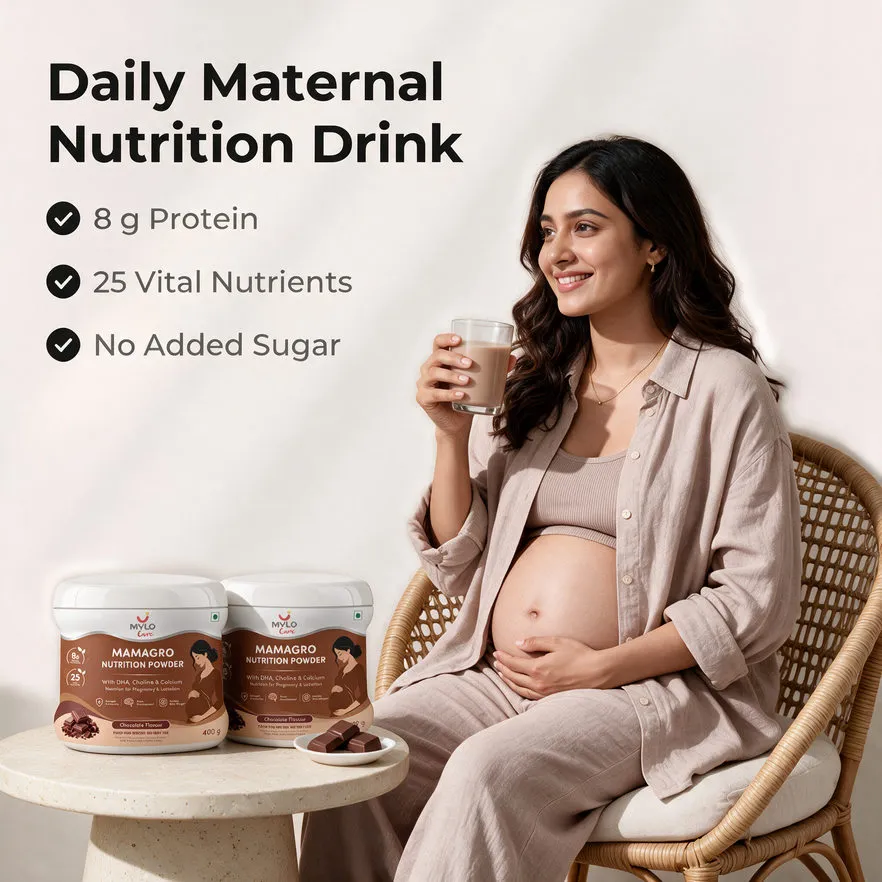
Where does Mylo MamaGro Nutrition Powder fit?
Mylo MamaGro Nutrition Powder is a milk protein powder made for pregnancy and breastfeeding, not a gym or weight-loss powder. Each serve gives 8 g of milk protein with a PDCAAS score of 1, the highest score for how well your body can digest and use a protein. Unlike a plain protein powder, it also adds 25 essential nutrients that matter in pregnancy, including DHA, choline, iodine, iron, folic acid, calcium and vitamin D3. It has no caffeine and no added sugar*, and it is gluten free. Because it is milk-based, it is not suitable if you have a milk allergy, and women with lactose intolerance should check with their doctor.

How to Choose a Protein Powder for Pregnancy
Read the label before you buy. A good pregnancy protein powder ticks most of these boxes:
Check | What to look for | Why it matters |
Made for pregnancy | Labelled for pregnant and breastfeeding women | Gym and weight-loss powders are not designed for pregnancy |
No caffeine or stimulants | No caffeine, green tea extract or "fat burner" herbs | Caffeine adds to your 200 mg daily limit |
Protein quality | A complete protein, such as milk protein | Your body can use it well |
Pregnancy nutrients | DHA, choline, iodine, iron, folic acid, calcium, vitamin D | Supports both you and your baby |
Sugar | "No added sugar", and check the total sugars on the label | Matters even more if you have gestational diabetes |
Allergens | Milk, soy, gluten clearly declared | Avoid what you are allergic to |
Licence | An FSSAI licence number on the pack | Shows it is licensed as a food product in India |
Trusted brand | A brand that shares its ingredient list and quality testing | Supplement quality varies from product to product |
Short ingredient list | Few ingredients you can recognise | Fewer unnecessary thickeners, colours and additives |
Is "sugar free" the same as "no added sugar"?
No. "No added sugar" means no sugar has been added during making, but the powder may still contain natural sugars, for example from milk. Check the total sugars on the nutrition label, and if you have gestational diabetes, ask your doctor or dietitian which powder suits you.
Mylo MamaGro Nutrition Powder
Mylo Care MAMAGRO Nutrition Powder is a maternal nutrition powder made for pregnancy and postpartum. Each serve gives 8 g of high-quality milk protein and 25 essential nutrients, including:
• DHA, choline and iodine to support your baby's brain and nervous system development
• Iron, folic acid and vitamin B12 to support blood health and energy
• Calcium, vitamin D3, vitamin K2-7, magnesium and phosphorus to support bone health
• Vitamin C, zinc, selenium and vitamin E to support immunity
• FOS, a prebiotic fibre that supports digestion
It has no added sugar and no added preservatives*, no artificial colours or flavours, and it is gluten free and GMO free. It contains milk, so it is not suitable if you have a milk allergy.
How to take it: mix 1 scoop (28 g) into a glass of milk once a day, or as advised by your doctor. It is chocolate flavoured, so there is no need to add sugar. Each 400 g pack gives about 14 servings.
Choose your pack:
• MamaGro Nutrition Powder, pack of 1 (14-day pack)
• MamaGro Nutrition Powder, pack of 2 (28-day pack)
• MamaGro Nutrition Powder, pack of 3 (42-day pack)
Prefer a snack to a drink? Compare the two formats in protein biscuits vs protein powder in pregnancy.
*Refer to the pack for full ingredient and nutrition information.
Are There Any Risks?
The main risks come from choosing the wrong powder or taking too much:
• Hidden caffeine or herbs in powders not made for pregnancy.
• More is not better: taking extra scoops does not give extra benefit. Stick to the serve on the pack, and get the rest of your protein from food.
• Quality varies: supplements are not all made to the same standard, so buy from a brand you trust that is clear about what is inside.
• Hidden sugar: some flavoured powders contain a lot of sugar, so check the nutrition label.
• Doubling up on nutrients: a pregnancy powder may already contain iron, folic acid, calcium or vitamin D. Show the label to your doctor if you also take prescribed tablets.
• Replacing meals: a powder supports your diet, it does not replace meals.
• Allergies: check for milk and soy if you are sensitive to them.
When to Talk to Your Doctor
Speak to your doctor before starting a protein powder if you have kidney disease, gestational diabetes, a thyroid problem or a food allergy, or take other supplements. Also check with them if you:
• feel unusually tired, weak or breathless, which can be a sign of anaemia
• are not gaining weight as expected, or are gaining much faster than expected
• have nausea or vomiting so severe that you cannot keep food or fluids down
Frequently Asked Questions
Can pregnant women drink protein shakes?
Yes, if the shake is made for pregnancy, has no caffeine, and is taken as directed alongside balanced meals. Avoid gym or weight-loss shakes unless your doctor approves them.
Is whey protein safe during pregnancy?
Whey is a milk protein, and plain whey is generally safe for women who are not allergic to milk. The concern is usually what is added to it, such as caffeine, sweeteners or herbs, so check the label and ask your doctor.
In which month of pregnancy should I start protein powder?
Most women benefit most from the second trimester (around the 4th month) onwards, when protein needs rise. Ask your doctor what suits you.
Can I take protein powder in the first trimester?
Most women do not need extra protein in the first trimester, but a pregnancy protein powder can help if nausea or a poor appetite means you are eating too little. Talk to your doctor first.
Can I take protein powder with my iron and folic acid tablets?
Many pregnancy powders already contain iron and folic acid, so show the label to your doctor. They can check your total intake and tell you how to combine them.
Will protein powder make me gain too much weight?
A protein powder taken as directed adds nutrition, not a large number of extra calories. Weight gain in pregnancy depends on your whole diet and activity. Your doctor will tell you what range is healthy for you.
Can I take protein powder while breastfeeding?
Yes. Your protein needs stay higher while you breastfeed: about 13.6 g extra a day in the first six months, according to ICMR-NIN. For more on eating after delivery, see the postpartum diet plan.
Do I need protein powder if I eat a healthy diet?
Often not. If you eat protein-rich foods at most meals, you may already meet your needs. A powder helps when nausea, a poor appetite or your diet makes that hard. Your doctor can tell you if you need one.
How long does one pack of MamaGro Nutrition Powder last?
At 1 scoop a day, a 400 g pack lasts about 14 days. The pack of 2 lasts about 28 days and the pack of 3 about 42 days.
Can I make protein powder at home?
You can make a homemade mix with roasted chana, peanuts, almonds and seeds. It adds protein and other nutrients, but it will not contain DHA, iodine or the measured vitamins of a pregnancy powder.
References
• National Institute of Nutrition (ICMR-NIN). Dietary Guidelines for Indians, 2024
Trusted by Mamas Nourishing Two
A pregnancy-safe protein powder with essential nutrients can help you meet rising protein needs on tough appetite days.
MamaGro™ Protein Diskettes - 250gm - Vanilla
Supports Healthy Placenta | Supports Fetal Development



Organic Aloe Vera (300 ml)
Nurtures Skin & Hair | Reduces Suntan | Soothes Burns | Enhances Hair Resilience

Pregnancy Massage Oil + Coconut Oil - 200 ml each


Article Posted Under
Related Articles

Related Topics

Medical Disclaimer
This content is for informational purposes only and should not replace professional medical advice. Consult with a physician or other health care professional if you have any concerns or questions about your health. If you rely on the information provided here, you do so solely at your own risk.


AWARDS AND RECOGNITION

Mylo wins Forbes D2C Disruptor award

Mylo wins The Economic Times Promising Brands 2022
AS SEEN IN













- Mylo Care: Effective and science-backed personal care and wellness solutions for a joyful you.
- Mylo Baby: Science-backed, gentle and effective personal care & hygiene range for your little one.
- Mylo Community: Trusted and empathetic community of 10mn+ parents and experts.


Product Categories
Baby Carrier | Baby Soap | Stretch Marks Cream | Baby Cream | Baby Shampoo | Baby Massage Oil | Baby Hair Oil | Stretch Marks Oil | Baby Body Wash | Baby Powder | Baby Lotion | Diaper Rash Cream | Teether | Baby Kajal |