


Orders
.png&w=48&q=75 "login")
Profile


Wallet

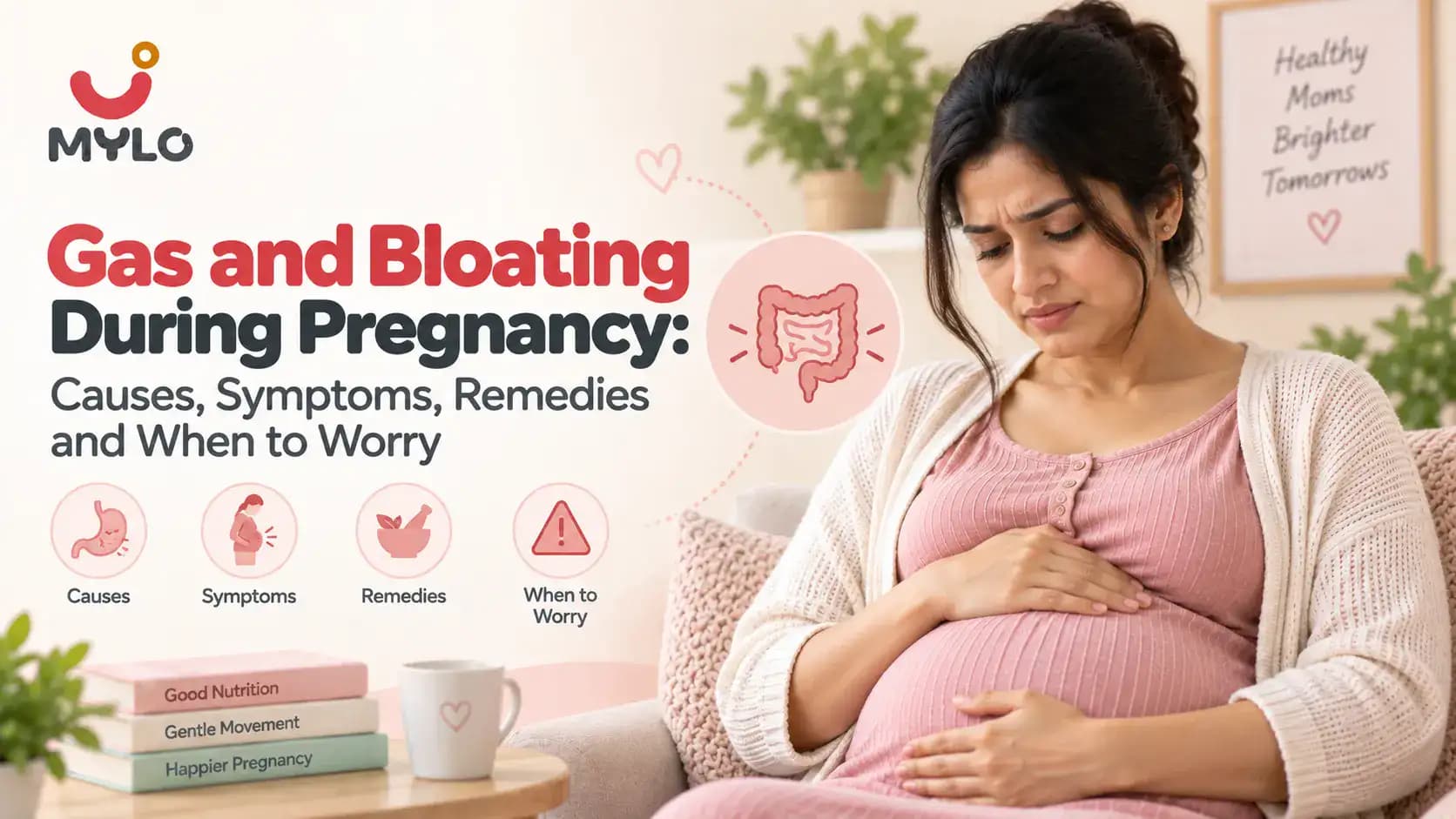
Gas and Bloating During Pregnancy: Causes, Symptoms, Remedies and When to Worry


BDS (Gold Medalist), Certified Lactation Consultant – BPNI Delhi, Maternal & Infant Nutrition Expert · 15 years experience
 400 Likes|
 12 min
AI-Generated Summary
Quick overview in 30 seconds.webp&w=32&q=75)
- During pregnancy, rising progesterone and estrogen relax digestive muscles, slowing digestion and causing uncomfortable gas, bloating, belching, and a swollen, tight tummy feeling.
- Common triggers include beans, cabbage, broccoli, lentils, dairy (if lactose intolerant), fried and processed foods, carbonated drinks, and sugary items that worsen bloating.
- Relief comes from drinking 8-10 glasses of water, eating smaller fibrous meals, walking daily, avoiding tight clothes, trying fenugreek water, probiotics, and ginger.
- Looking for gentle relief from pregnancy gas and bloating? Explore our Pregnancy Massage Oil + Coconut Oil - 200 ml each.

 4.9
4.9Quick Answer
Gas and bloating are very common and completely normal in pregnancy. They happen mainly because rising progesterone relaxes your digestive muscles and slows digestion, so gas builds up more easily, and later the growing uterus presses on your gut. It can even be one of the earliest pregnancy symptoms. Simple steps help a lot: eat smaller meals slowly, drink plenty of water, stay active, and limit gas-causing foods. Most gas pain is harmless, but severe or persistent tummy pain should always be checked.
Key Takeaways
Gas and bloating are a normal part of pregnancy, driven mainly by the hormone progesterone slowing your digestion.
It can start early, which is why some women notice bloating as an early sign of pregnancy.
It often gets worse later in pregnancy, as the growing uterus presses on your intestines, and constipation makes it worse.
Simple changes give real relief: smaller frequent meals, eating slowly, staying hydrated, light activity, and avoiding trigger foods and fizzy drinks.
Most gas pain is harmless, but severe, sharp or persistent abdominal pain, especially with bleeding, fever or vomiting, needs a doctor, because it may not be just gas.
Is Gas and Bloating Normal During Pregnancy?
Yes, completely. Feeling gassy, bloated and windy is one of the most common discomforts of pregnancy, and it is nothing to be embarrassed about. Nearly all pregnant women experience it at some point. While it is uncomfortable, it is usually harmless and very manageable with a few simple changes.
Bloating can also be one of the earliest signs of pregnancy, appearing before or around the time of a missed period, because the hormone changes that cause it begin very early.
What Causes Gas and Bloating During Pregnancy?
There are a few reasons, and they build on each other as pregnancy progresses.
1. Progesterone slows your digestion. In pregnancy, levels of the hormone progesterone rise, and progesterone relaxes the smooth muscles throughout your body, including those of your digestive tract (American Pregnancy Association). This slows down how quickly food moves through your gut, giving it more time to ferment and produce gas. Slower digestion actually helps your body absorb more nutrients for your baby, so it serves a purpose, but the side effect is more gas and bloating.
2. Your growing uterus presses on your gut. As pregnancy advances, the enlarging uterus takes up more space and presses on your stomach and intestines, which slows digestion further and traps gas. This is why bloating often feels worse in the second and third trimesters.
3. Constipation makes it worse. Slower digestion and iron supplements commonly cause constipation in pregnancy, and a backed-up gut produces and holds more gas. Managing constipation usually eases the gas too. See Mylo's guide to constipation in early pregnancy.
4. Swallowing air. Eating quickly, talking while eating, chewing gum or drinking fizzy drinks makes you swallow air, which adds to the gas.
What Are the Symptoms of Gas in Pregnancy?
Gas and bloating can show up as:
A full, tight or swollen feeling in the tummy
Burping (belching)
Passing wind more than usual
Cramping or sharp, jabbing pains in the abdomen that come and go
A rumbling or gurgling stomach
Discomfort that eases after you pass wind or stool or change position
The key feature of harmless gas pain is that it usually comes and goes and eases when you move, rest, pass wind or have a bowel movement. Pain that does the opposite, staying severe and constant, is the kind to get checked.
Which Foods Cause Gas and Bloating in Pregnancy?
Trigger foods vary from person to person, so it helps to notice which ones affect you. Common culprits include:
Food group | Examples |
|---|---|
Beans, peas and lentils | Rajma, chana, dals in large amounts |
Cruciferous vegetables | Cabbage, cauliflower (gobi), broccoli, Brussels sprouts |
Certain other vegetables | Onions, asparagus |
Fried and fatty foods | Deep-fried snacks, very oily curries |
Fizzy and carbonated drinks | Sodas, sparkling drinks |
Whole grains in large amounts | Adding a lot of fibre suddenly |
Dairy | If you are lactose intolerant |
You do not need to cut these out entirely, as many are nutritious. Instead, notice which ones bother you most, and eat those in smaller amounts. Keeping a simple food-and-symptom note for a few days can reveal your personal triggers.
Remedies: How to Relieve and Prevent Gas and Bloating
The good news is that a few easy, safe changes make a real difference (NHS; American Pregnancy Association).
Eating habits:
Eat smaller meals more often, rather than a few large heavy ones, so your slower digestion is not overloaded.
Eat slowly and chew well, with your mouth closed, to avoid swallowing air.
Do not lie down straight after eating; stay upright for a while.
Limit your personal trigger foods and fried, oily food.
Avoid fizzy drinks and chewing gum, which add swallowed air.
Drinks and fibre:
Drink plenty of water through the day, which helps digestion and eases constipation.
Get enough fibre from fruits, vegetables and whole grains to prevent constipation, but increase it gradually so it does not add to the gas.
Activity:
Stay gently active. A short walk after meals and light prenatal exercise or yoga help move gas along.
Traditional Indian remedies that are generally safe in moderation:
Ajwain (carom seeds), jeera (cumin) or saunf (fennel) water or seeds are traditionally used after meals to ease gas and are commonly used in Indian households. Use in normal culinary amounts.
Hing (asafoetida) added while cooking dals and gas-forming vegetables is a traditional way to make them easier to digest.
If gas is very troublesome, ask your doctor before taking any anti-gas medication, as some are fine in pregnancy but should be doctor-approved. See Mylo's home remedies for gas in pregnancy.
When Is Gas and Bloating Worse in Pregnancy?
Trimester | What to expect |
|---|---|
First (weeks 1 to 13) | Bloating can appear early as progesterone rises, sometimes before you even know you are pregnant |
Second (weeks 14 to 27) | Often continues, and constipation can add to it. Good eating habits help |
Third (weeks 28 to 40) | Frequently at its most noticeable, as the growing uterus presses on your gut. Small, frequent meals help most |
It usually settles after your baby is born, though some women get postpartum gas for a while too.
When Is Tummy Pain NOT Just Gas? Warning Signs to Watch
This is important, because gas pain can sometimes be confused with something more serious. Harmless gas pain is usually mild and eases when you change position, rest, or pass wind or stool (Tommy's; NHS, stomach pain in pregnancy).
Contact your doctor or maternity unit promptly if your tummy pain is:
Severe, sharp or constant, and does not ease with rest or passing wind
Accompanied by vaginal bleeding
With a fever, feeling hot or shivery
With persistent vomiting or inability to keep fluids down
With regular tightenings or contractions, especially before 37 weeks, which could be preterm labour
On one side and severe, or in the upper-right abdomen, which needs checking
With reduced baby movements
These can be signs of conditions that need medical attention, such as an infection, preterm labour, appendicitis or, later in pregnancy, pre-eclampsia. When in doubt, it is always better to be checked and reassured than to assume it is only gas.
Gas and Bloating in Pregnancy: Frequently Asked Questions
"Is gas and bloating an early sign of pregnancy?"
It can be. Rising progesterone slows digestion very early, so some women feel bloated and gassy around the time of a missed period. On its own, though, bloating is not proof of pregnancy, since it has many causes. A pregnancy test is what confirms it.
"Why do I get so much gas during pregnancy?"
Mainly because the hormone progesterone relaxes your digestive muscles and slows digestion, so gas builds up. Later, your growing uterus presses on your gut, and constipation adds to it. It is a normal part of pregnancy.
"How can I relieve gas pain during pregnancy quickly?"
Try gentle movement like a short walk, change position, and let yourself pass wind rather than holding it in. Sipping warm water, or ajwain or fennel water, can help. For prevention, eat smaller meals slowly, stay hydrated and avoid trigger foods and fizzy drinks.
"Which foods should I avoid to reduce gas in pregnancy?"
Common triggers include beans and lentils in large amounts, cabbage, cauliflower, broccoli, onions, fried and oily foods, and fizzy drinks. Notice which ones affect you most, and eat those in smaller portions rather than cutting nutritious foods out entirely.
"Is severe gas pain during pregnancy normal?"
Mild to moderate gas pain that comes and goes and eases with movement or passing wind is normal. But severe, sharp or constant abdominal pain, or pain with bleeding, fever, vomiting or contractions, is not just gas and needs a doctor.
"Can I take medicine for gas during pregnancy?"
Some anti-gas remedies are considered safe in pregnancy, but always check with your doctor before taking any medication. Simple dietary and lifestyle measures, and traditional aids like ajwain and jeera in normal amounts, are usually enough.
"Does gas cause back pain in pregnancy?"
Trapped wind can sometimes cause referred discomfort, including in the back. However, persistent or severe back pain, or back pain with tightenings before 37 weeks, should be checked, as it can be a sign of other issues including preterm labour.
When To See a Doctor
Contact your doctor or maternity unit if you have:
Severe, sharp or constant abdominal pain that does not ease
Tummy pain with vaginal bleeding, fever or persistent vomiting
Regular tightenings or contractions, especially before 37 weeks
Reduced baby movements
Pain that is one-sided and severe, or high on the right side
This article is for information only and does not replace medical advice. If you are worried about tummy pain in pregnancy, contact your maternity unit, which is always the right thing to do.
Bottom Line
Gas and bloating are a normal, if uncomfortable, part of pregnancy, caused mainly by progesterone slowing your digestion and, later, by your growing uterus pressing on your gut. It can start early and often peaks in the last trimester. The relief is simple and safe: eat smaller meals slowly, drink plenty of water, keep gently active, manage constipation, and cut back on your personal trigger foods and fizzy drinks, with traditional aids like ajwain, jeera and hing helping many Indian mothers. Most gas pain is harmless and eases when you move or pass wind. The one thing to remember is that severe, constant or unusual tummy pain, especially with bleeding, fever or contractions, is not just gas and should always be checked.
References
All links verified live on 17 September 2026.
Gas during pregnancy: causes, relief and diet — American Pregnancy Association. Source for progesterone slowing digestion, the effect of the growing uterus, trigger foods, and dietary remedies.
Indigestion and heartburn in pregnancy — NHS, UK. Source for dietary and lifestyle relief measures (smaller meals, avoiding trigger foods, staying upright).
Stomach pain in pregnancy — NHS, UK. Source for distinguishing harmless gas pain from pain that needs medical attention.
Stomach (abdominal) pain or cramps in pregnancy — Tommy's. Source for when abdominal pain should be checked.
Mylo internal guides: constipation in early pregnancy, home remedies for gas in pregnancy, and preterm labour.

Trusted by Mamas Navigating Pregnancy Tummy Troubles
Gentle, pregnancy-safe essentials to ease bloating, support digestion and help you feel comfortable through every trimester.



Article Posted Under
Related Articles


Related Topics
.webp&w=32&q=75)
Medical Disclaimer
This content is for informational purposes only and should not replace professional medical advice. Consult with a physician or other health care professional if you have any concerns or questions about your health. If you rely on the information provided here, you do so solely at your own risk.


AWARDS AND RECOGNITION

Mylo wins Forbes D2C Disruptor award

Mylo wins The Economic Times Promising Brands 2022
AS SEEN IN













- Mylo Care: Effective and science-backed personal care and wellness solutions for a joyful you.
- Mylo Baby: Science-backed, gentle and effective personal care & hygiene range for your little one.
- Mylo Community: Trusted and empathetic community of 10mn+ parents and experts.


Product Categories
Baby Carrier | Baby Soap | Baby Wipes | Stretch Marks Cream | Baby Cream | Baby Shampoo | Baby Massage Oil | Baby Hair Oil | Stretch Marks Oil | Baby Body Wash | Baby Powder | Baby Lotion | Diaper Rash Cream | Newborn Diapers | Teether | Baby Kajal | Baby Diapers Pants | Cloth Diapers | Laundry Detergent | Lactation Granules |