


Orders
.png&w=48&q=75 "login")
Profile


Wallet

Apricot (Jardalu) in Pregnancy: Benefits, Fresh vs Dried, and Safety
 20 Likes|
 14 min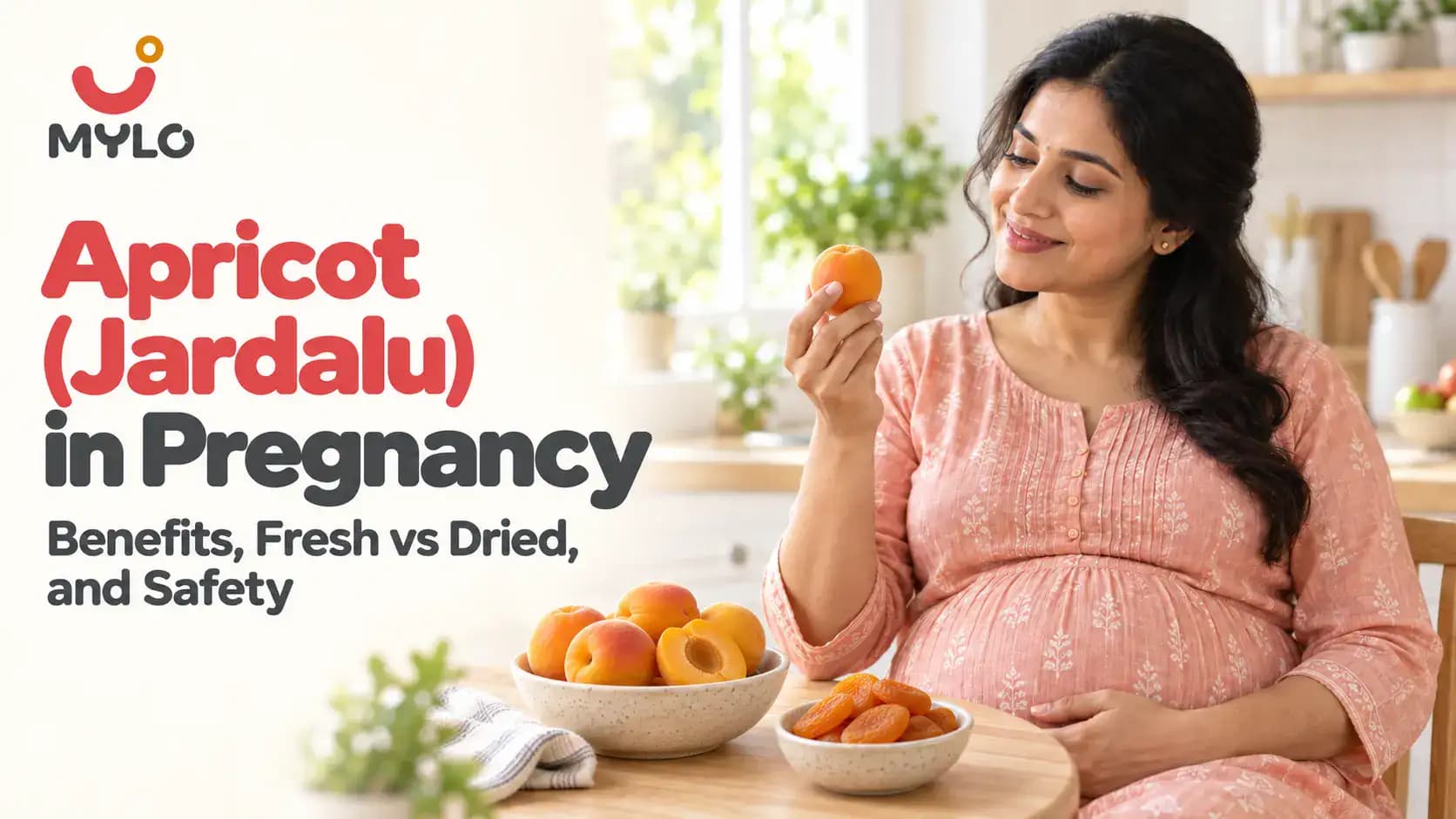
Quick Answer
Yes, apricots (jardalu) are safe and nutritious to eat during pregnancy, in moderation. The fruit is a good source of fibre, beta-carotene, potassium and, especially in dried form, iron. Fresh apricots are lower in sugar; dried apricots are more concentrated in nutrients but also in sugar. Two things to remember: never eat the kernel (the seed inside the stone), which contains a cyanide-forming compound, and if you have asthma, be aware that dried apricots often contain sulphite preservatives.
Key Takeaways
Apricot fruit is safe and healthy in pregnancy. A few fresh or a small handful of dried apricots a day is a good amount.
Never eat apricot kernels (the seed inside the pit). They contain amygdalin, which the body converts to cyanide, and food safety authorities warn that even a few can exceed safe limits (EFSA). The fruit flesh is completely safe.
Apricot's vitamin A is beta-carotene, which is safe in pregnancy. This is different from the retinol form of vitamin A (in supplements and liver), which should be avoided in excess.
Dried apricots are a useful plant source of iron and fibre, helpful in a pregnancy diet, but higher in sugar, so eat them in moderation.
If you have asthma, choose unsulphured dried apricots, as the sulphite preservatives in most dried apricots can trigger reactions in sensitive people.
Is It Safe to Eat Apricots During Pregnancy?
Yes. Apricot fruit, whether fresh or dried, is safe and genuinely nutritious in pregnancy when eaten in normal amounts. Known as jardalu or khubani in India, it is a well-tolerated fruit that adds useful nutrients to a pregnancy diet.
There is one firm exception, which most articles miss: the kernel inside the apricot stone should never be eaten. We explain why in the safety section below. The soft fruit around the stone is what you eat, and that is completely safe.
What Is the Nutritional Value of Apricots?
Apricots are more nutrient-dense than many everyday fruits. The values below are approximate, and differ between fresh and dried, so use them as a guide.
Nutrient (per 100 g, approx) | Fresh apricot | Dried apricot |
|---|---|---|
Energy | ~48 to 50 kcal | ~240 kcal |
Water | ~86 g | ~30 g |
Fibre | ~2 g | ~7 g |
Sugar/carbohydrate | Moderate | High (concentrated) |
Beta-carotene (provitamin A) | High | High |
Potassium | Good | Very good (concentrated) |
Iron | Low | Moderate (a useful plant source) |
Vitamin C | Modest | Lower (reduced by drying) |
(Approximate values, which vary by variety and processing. Editorial note: confirm exact figures against IFCT 2017 or USDA before publishing; the IFCT apricot entry appears to need cross-checking.)
The honest summary: apricot's real strengths are beta-carotene, fibre and potassium, and in the dried form, iron. Drying concentrates the nutrients but also the sugar, and reduces the vitamin C.
Is the Vitamin A in Apricots Safe in Pregnancy?
Yes, and this is worth clarifying because "vitamin A in pregnancy" worries many women. There are two forms:
Beta-carotene (provitamin A), found in plant foods like apricots, carrots and mangoes. Your body converts only what it needs, so it does not build up to harmful levels. This form is safe in pregnancy.
Preformed vitamin A (retinol), found in supplements, cod liver oil and liver. Too much of this can harm the baby, which is why the NHS advises avoiding retinol supplements and liver in pregnancy (NHS, pregnancy vitamins).
So the vitamin A in apricots is the safe, plant kind. You can enjoy apricots for their beta-carotene without concern.
What Are the Benefits of Apricots in Pregnancy?
Here are the benefits that genuinely hold up.
1. Fibre helps with pregnancy constipation
Apricots, especially dried, are a good source of fibre, which helps relieve the constipation that is so common in pregnancy. Pair them with plenty of water. See Mylo's guide to constipation in early pregnancy.
2. Dried apricots contribute iron
Unlike many fruits, dried apricots provide a useful amount of iron, which supports the extra blood volume of pregnancy and helps guard against anaemia. Plant (non-heme) iron is absorbed better with vitamin C, so have your apricots with a citrus fruit or amla. Note that dried apricots support your iron intake as part of a diet; they do not replace prescribed iron-folic acid tablets.
3. Beta-carotene supports vision, immunity and development
The beta-carotene in apricots is used by the body to make vitamin A, which is needed for your baby's eyes, immune system and overall development, and for your own immune function. As above, this plant form is safe.
4. Potassium supports fluid balance and blood pressure
Apricots, particularly dried, are rich in potassium, which helps maintain normal fluid balance and supports healthy blood pressure. This is a general nutritional benefit, not a treatment for high blood pressure, which needs medical management.
5. A wholesome snack and natural energy
Fresh apricots are a low-calorie, hydrating snack, while dried apricots are a compact, portable energy source, useful when you need a quick, nutritious bite. Just mind the sugar with dried.
6. Antioxidants and modest vitamin C
Apricots provide antioxidants and some vitamin C, which supports immune function and iron absorption. The vitamin C amount is modest, so it is a bonus rather than a main source.
Fresh vs Dried Apricots in Pregnancy: Which Is Better?
Both are good; they simply suit different needs.
Fresh apricots | Dried apricots | |
|---|---|---|
Calories and sugar | Lower | Higher (concentrated) |
Fibre and iron | Moderate | More concentrated |
Water content | High (hydrating) | Low |
Vitamin C | More | Less (reduced by drying) |
Convenience | Seasonal, perishable | Portable, long shelf life |
Best for | A light, hydrating snack | A concentrated fibre and iron boost, in small amounts |
Watch out for | Wash well | Sugar content; sulphite preservatives (see below) |
If you are watching your blood sugar, favour fresh. If you want an iron and fibre boost, a small handful of dried works well, in moderation.
Important Safety: Never Eat Apricot Kernels (Seeds)
This is the single most important safety point, and the current version of this topic often leaves it out.
Do not eat the kernel, the seed found inside the hard apricot stone (pit). Apricot kernels contain a compound called amygdalin, which the body converts into cyanide. Food safety authorities, including the European Food Safety Authority, warn that eating apricot kernels risks cyanide poisoning, and that even a small number, around three small raw kernels for an adult, can exceed safe limits (EFSA; Health Canada). The risk is higher for children.
Important points:
The apricot fruit (flesh) is completely safe. The danger is only in the kernel inside the stone.
Ignore "apricot kernel" health and "natural cancer cure" claims. These are not proven and carry a real poisoning risk, which is especially not worth taking in pregnancy.
If you or a family member has been eating apricot kernels, stop, and seek medical advice if anyone feels unwell.
Simply put: eat the fruit, discard the stone, and never crack it open to eat the seed.
Important Safety: Sulphites in Dried Apricots (Especially If You Have Asthma)
Most bright-orange commercial dried apricots are treated with sulphur dioxide or sulphites (E220 and related) as a preservative, which keeps their colour and shelf life. For most people this is harmless, but if you have asthma or a sulphite sensitivity, sulphites can trigger a reaction (NHS guidance on sulphur dioxide).
Practical guidance:
Unsulphured dried apricots are brown or dark, not bright orange, because without the preservative the colour darkens naturally. These are a good choice if you are sensitive.
If you have asthma, choose unsulphured apricots, or stick to fresh.
Check the label for "sulphur dioxide" or "sulphites".
How Many Apricots Can I Eat Per Day in Pregnancy?
Fresh apricots: 2 to 3 a day is a reasonable amount for most pregnancies.
Dried apricots: a small handful (around 4 to 6 pieces) is plenty, because they are concentrated in sugar and calories.
As with any food, more is not better. Too many, especially dried, can add up in sugar and may cause loose stools due to the fibre.
Is Apricot Safe in the First, Second and Third Trimester?
Yes, in all three, in moderation.
Trimester | Is apricot safe? | What to know |
|---|---|---|
First (weeks 1 to 13) | Yes | Fresh apricots can be gentle if you have nausea. Small amounts of dried are fine |
Second (weeks 14 to 27) | Yes | A good time for the iron and fibre from dried apricots. Watch sugar. See the second trimester guide |
Third (weeks 28 to 40) | Yes | Helpful for constipation. If you have gestational diabetes, favour fresh over dried |
Apricots and Gestational Diabetes
Fresh apricots in a small portion are usually fine. Dried apricots are high in sugar, so limit them.
Fresh apricots have a modest effect on blood sugar and can fit a gestational diabetes plan in a sensible portion. Dried apricots, being concentrated, raise blood sugar more, so keep them small and counted, and pair them with a protein or fat like a few nuts. See Mylo's gestational diabetes guide, and always follow your dietitian's advice.
How Should I Eat Apricots in Pregnancy?
Fresh: wash well, then eat whole (discarding the stone), or slice into curd, oats or salads.
Dried: eat a small handful as a snack, chop into porridge or mix into a small portion of nuts and seeds.
Wash fresh apricots thoroughly under running water, as with all fruit in pregnancy (NHS).
Choose good-quality dried apricots, and unsulphured ones if you are sulphite-sensitive.
Never crack the stone to eat the kernel.
Mylo Parents Asked
"Is it safe to eat apricots during pregnancy?"
Yes, the apricot fruit is safe and nutritious in moderation, fresh or dried. The only thing to avoid completely is the kernel (the seed inside the stone), which contains a cyanide-forming compound. Enjoy the fruit, discard the stone.
"Are dried apricots good in pregnancy?"
Yes, in small amounts. Dried apricots are a good source of fibre, iron and potassium, which is useful in pregnancy. But they are concentrated in sugar, so keep to a small handful, and if you have asthma, choose unsulphured (brown) dried apricots.
"Can I eat apricots in the first trimester?"
Yes. Apricots are safe throughout pregnancy. Fresh apricots can be easy to tolerate during first-trimester nausea, and dried apricots in small amounts are fine too.
"Is the vitamin A in apricots dangerous for my baby?"
No. Apricots contain beta-carotene, the plant form of vitamin A, which is safe because your body only converts what it needs. The vitamin A to avoid in excess is the retinol form found in supplements and liver, not the kind in fruits and vegetables.
"How many dried apricots can I eat a day?"
A small handful, around 4 to 6 pieces, is plenty, because they are high in sugar and calories. Fresh apricots you can have a little more of, around 2 to 3.
"Do apricots help with anaemia in pregnancy?"
Dried apricots do contribute iron, unlike many fruits, so they can support your iron intake as part of a balanced diet. But they are not a treatment for anaemia and do not replace your prescribed iron-folic acid tablets. Have them with a vitamin C source to absorb the iron better.
"Why should I not eat apricot seeds?"
Because apricot kernels contain amygdalin, which turns into cyanide in the body, and even a small number can be dangerous. Food safety authorities warn against eating them. The fruit is safe; only the kernel inside the stone is the problem.
"Is jardalu the same as apricot?"
Yes. Jardalu (or khubani) is the Hindi and Urdu name for apricot. The guidance in this article applies to it.
When To Speak To Your Doctor
Check with your doctor or dietitian if you:
Have gestational diabetes and want to know how apricots fit your plan
Have asthma or a sulphite sensitivity and eat dried fruit
Are anaemic and want to build iron-rich foods into your diet
Get persistent loose stools after eating dried apricots
Seek medical advice promptly if anyone has eaten apricot kernels and feels unwell (symptoms of cyanide effects can include headache, nausea, dizziness and weakness), or if you get itching, swelling or breathing difficulty after eating apricots (possible allergy).
This article is for information only and does not replace advice from your doctor or a registered dietitian.
Bottom Line
Apricots are a genuinely nutritious addition to a pregnancy diet, offering fibre, beta-carotene, potassium and, in dried form, useful iron. Fresh apricots are the lighter, lower-sugar choice, while a small handful of dried apricots gives a concentrated fibre and iron boost. The beta-carotene form of vitamin A in apricots is safe, so there is no need to worry about that. Do keep two safety points firmly in mind: never eat the kernel inside the stone, because it can form cyanide, and if you have asthma, choose unsulphured dried apricots. Eat the fruit in moderation, and it earns its place in your pregnancy diet.
References
All links verified live on 17 September 2026.
Apricot kernels pose risk of cyanide poisoning — European Food Safety Authority (EFSA). Source for the amygdalin-to-cyanide risk and the very low number of kernels that can exceed safe limits.
Cyanide in bitter apricot kernels — Health Canada. Supporting source on apricot kernel toxicity and safe consumption of the fruit.
Pregnancy vitamins and supplements — NHS, UK. Source for the vitamin A (retinol vs beta-carotene) distinction.
Foods to avoid in pregnancy — NHS, UK. Source for washing produce and food-safety guidance.
Food allergy (including sulphur dioxide/sulphites) — NHS, UK. Source for sulphite sensitivity, relevant to dried apricots and asthma.
Anaemia in pregnancy and constipation in early pregnancy — Mylo internal guides.
Article Posted Under

.webp&w=32&q=75)
Medical Disclaimer
This content is for informational purposes only and should not replace professional medical advice. Consult with a physician or other health care professional if you have any concerns or questions about your health. If you rely on the information provided here, you do so solely at your own risk.


AWARDS AND RECOGNITION

Mylo wins Forbes D2C Disruptor award

Mylo wins The Economic Times Promising Brands 2022
AS SEEN IN













- Mylo Care: Effective and science-backed personal care and wellness solutions for a joyful you.
- Mylo Baby: Science-backed, gentle and effective personal care & hygiene range for your little one.
- Mylo Community: Trusted and empathetic community of 10mn+ parents and experts.


Product Categories
Baby Carrier | Baby Soap | Baby Wipes | Stretch Marks Cream | Baby Cream | Baby Shampoo | Baby Massage Oil | Baby Hair Oil | Stretch Marks Oil | Baby Body Wash | Baby Powder | Baby Lotion | Diaper Rash Cream | Newborn Diapers | Teether | Baby Kajal | Baby Diapers Pants | Cloth Diapers | Laundry Detergent | Lactation Granules |