


Orders
.png&w=48&q=75 "login")
Profile


Wallet

Triple Marker Test: Timing, Results and What They Mean

MBBS, DGO · 38 years experience

 378 Likes|
 13 min
Quick answer
The triple marker test is a blood test done between 15 and 20 weeks that estimates the chance of your baby having Down syndrome, Edwards syndrome or a neural tube defect. It is a screening test, not a diagnosis. A result reported as high risk does not mean your baby has a condition, and most women with a high risk result go on to have a healthy baby.
Key takeaways
Screening estimates chance. It does not diagnose. This single distinction causes more distress than anything else about these tests, and understanding it beforehand changes how you receive the result.
Your dates must be confirmed by scan first. Wrong dating is the most common reason for an abnormal triple marker result.
Triple marker is the weakest of the common screening options. Combined first trimester screening and NIPT detect considerably more, so ask what is available to you before choosing.
A high risk result means further testing is offered, usually a detailed ultrasound, NIPT, or a diagnostic test such as amniocentesis.
Screening is a choice. You can accept it, decline it, or choose a different test, and none of those is the wrong answer.
What is the triple marker test?
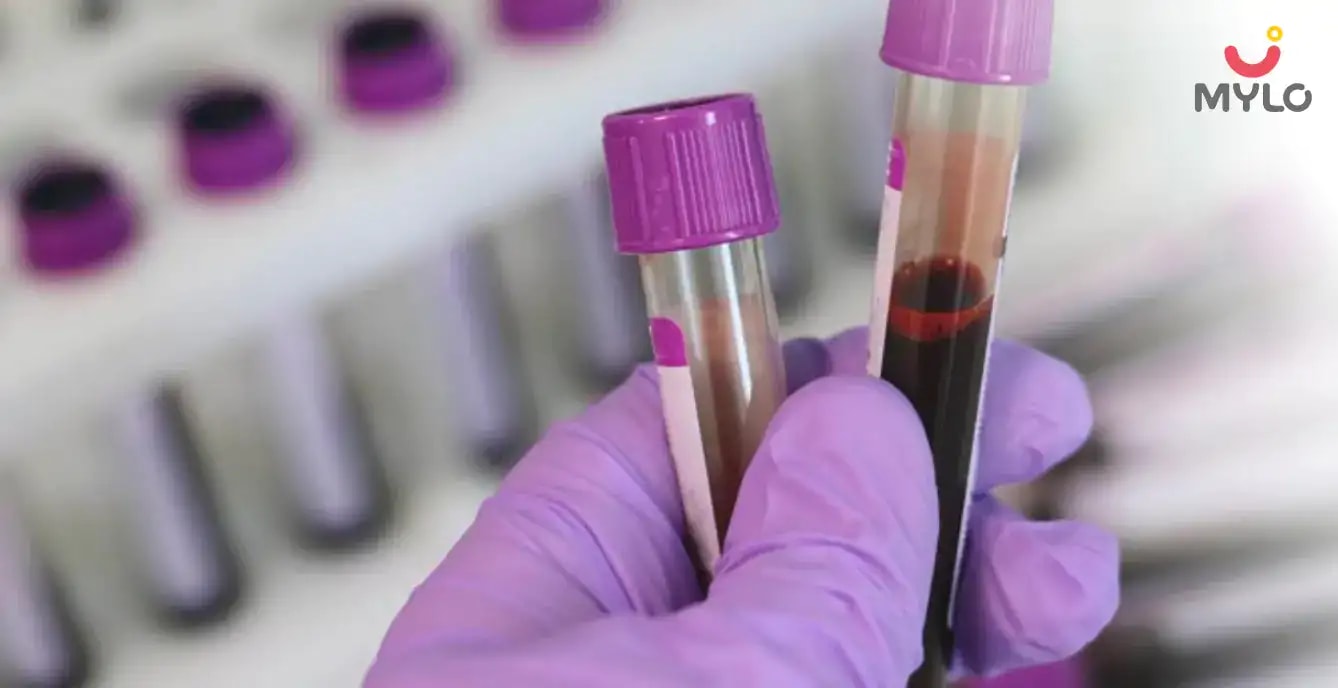
A blood test taken from your arm that measures three substances in your blood, which come from your baby and the placenta.
Marker | What it is |
|---|---|
AFP, alpha fetoprotein | A protein made by your baby's liver |
hCG, human chorionic gonadotropin | A hormone produced by the placenta |
uE3, unconjugated estriol | An oestrogen produced by the placenta and your baby |
These three levels are combined with your age, weight, the exact gestational age from your scan, whether you have diabetes, and whether you are carrying twins to calculate a risk estimate.
It does not look at your baby directly, and it cannot tell you whether your baby has a condition. It produces a number describing chance.
When is it done?
Between 15 and 20 weeks, and most accurately between 16 and 18 weeks.
Your dates must be confirmed by an ultrasound first. If the calculation uses the wrong gestational age, the result will be wrong, and incorrect dating is the single most common cause of an abnormal triple marker result.
Results usually take three to five days.
No fasting is needed, and no special preparation is required beyond telling the laboratory your exact weeks, your weight, and whether you have diabetes or are carrying more than one baby.
Where the triple marker sits among the options
This is the context most articles leave out, and it matters because you may have better options.
Test | When | What it is | Roughly how much it detects |
|---|---|---|---|
Combined first trimester screening, NT scan plus double marker | 11 weeks 0 days to 13 weeks 6 days | Ultrasound measurement plus two blood markers | The strongest of the conventional screening tests |
NIPT, non-invasive prenatal testing | From about 10 weeks | Analyses your baby's DNA fragments in your blood | The most sensitive screening test available. Still a screening test |
Triple marker | 15 to 20 weeks | Three blood markers | The weakest of the common options |
Quadruple marker | 15 to 22 weeks | Triple marker plus inhibin A | Better than triple marker |
CVS, chorionic villus sampling | 11 to 14 weeks | Sample of placental tissue | Diagnostic. Gives an answer, not a chance |
Amniocentesis | From 15 weeks | Sample of amniotic fluid | Diagnostic. Gives an answer, not a chance |
Why triple marker is still used in India: it is inexpensive, widely available, and useful for women who missed the first trimester window. If you are still within the first trimester window, ask whether combined screening or NIPT is available to you, because they detect more.
If you have already missed the first trimester window, the quadruple marker performs better than the triple marker where it is available. Ask.
What it screens for
Down syndrome, trisomy 21
Edwards syndrome, trisomy 18
Neural tube defects, including spina bifida and anencephaly, detected mainly through AFP
What it does not screen for: most other genetic conditions, structural heart defects, or any condition not listed above. The anomaly scan at 18 to 22 weeks is what examines your baby's structure in detail, and it is a separate and important test, covered in our second trimester guide.
One correction worth making: the triple marker test does not screen for urinary tract infections or any infection. If you have seen that stated anywhere, it is incorrect.
How results are reported
Not as positive or negative, but as a chance.
Your report will give a risk figure such as 1 in 900 or 1 in 120, for each condition screened.
How to read that: 1 in 900 means that out of 900 women with this exact result, one would be expected to have a baby with that condition and 899 would not.
Laboratories use a cut-off, commonly around 1 in 250, though it varies.
Result | What it means |
|---|---|
Risk lower than the cut-off, for example 1 in 900 | Reported as screen negative or low risk. Your chance is lower than the threshold. It does not mean zero |
Risk higher than the cut-off, for example 1 in 120 | Reported as screen positive or high risk. Further testing is offered. It does not mean your baby has the condition |
This is the part to hold on to. Even at a risk of 1 in 120, roughly 119 out of 120 babies do not have the condition. Most women with a screen positive result go on to have a healthy baby.
What each marker pattern can suggest
Pattern | May suggest | Also commonly caused by |
|---|---|---|
Low AFP, low uE3, high hCG | Increased chance of Down syndrome | Incorrect dating |
All three low | Increased chance of Edwards syndrome | Incorrect dating |
High AFP | Increased chance of a neural tube defect or abdominal wall defect | Incorrect dating, twins, or simply normal variation |
Other things that shift the result include your weight, diabetes, smoking, ethnicity and whether you conceived through fertility treatment. This is why the laboratory needs accurate information from you.
What happens if the result is high risk
First, nothing happens quickly, and you have time to think.
Your doctor will usually discuss the following.
1. Recheck the dates. If your gestational age was wrong, the calculation is rerun and the risk often changes substantially.
2. A detailed ultrasound. The anomaly scan at 18 to 22 weeks, or a targeted scan looking for specific markers.
3. NIPT. A blood test analysing your baby's DNA in your bloodstream. It is much more sensitive than the triple marker, but it is still a screening test, and a positive NIPT result is confirmed with a diagnostic test before any decision is made.
4. A diagnostic test. Amniocentesis from 15 weeks, or CVS if you are earlier. These sample your baby's cells and give a definite answer.
Amniocentesis carries a small risk of miscarriage. Modern estimates put it at a fraction of one percent, and your doctor will give you the figure for your centre. That risk is why it is offered rather than assumed, and the decision is yours.
5. Genetic counselling. Ask for this if it is not offered. A genetic counsellor explains what the numbers mean for you specifically, without pushing you toward any decision.
Decisions, and Indian law
If a diagnostic test confirms a significant condition, the decisions that follow are personal, and they are difficult. There is no correct answer, and different families make different choices for good reasons.
What is worth knowing factually:
Under India's Medical Termination of Pregnancy Act, as amended in 2021, termination is permitted up to 20 weeks on one registered medical practitioner's opinion, and between 20 and 24 weeks for specified categories of women with two practitioners' opinions. Beyond 24 weeks, a State Medical Board's approval is required in cases of substantial fetal abnormality
Ask your doctor to explain what applies in your situation, and confirm the current legal position, since this area has been amended and continues to be interpreted by courts
Determining or disclosing the sex of the baby is illegal under the PCPNDT Act, and this applies to every prenatal test and scan, including genetic testing. Laboratories are required not to disclose it
Many conditions detected are compatible with a full life, and support and information are available. Ask your doctor to connect you with a genetic counsellor and, where relevant, a parent support organisation, before making any decision.
You can decline screening
Screening is offered, not required. Some parents want the information, some do not, and both positions are reasonable.
Worth thinking about beforehand:
Would the result change anything for you?
Would you want a diagnostic test if screening came back high risk?
How would you feel waiting several days for a result?
Would you rather have the more accurate test earlier, if available?
Discuss it with your partner before the blood draw, not after the report arrives. The most difficult situations arise when parents have not talked about what they would do.
Practical points
Confirm your exact gestational age from your scan before the test
Tell the lab your weight, whether you have diabetes, whether you smoke, whether this is a twin pregnancy, and whether you conceived through fertility treatment
No fasting is required
Results take three to five days. Ask who will explain them to you and when
Take the report to your doctor. Do not interpret a risk ratio on your own
Costs vary widely between private laboratories, and screening is available at government facilities. Ask about the cost of NIPT too if you are considering it, since it is usually self-funded
Keep every report in one file with the dates written on them
Frequently asked questions
When is the triple marker test done?
Between 15 and 20 weeks, most accurately between 16 and 18 weeks, and after your dates have been confirmed by a scan.
Is the triple marker test compulsory?
No. It is offered, and you can accept or decline it.
Does a high risk result mean my baby has Down syndrome?
No. It means your chance is above the laboratory's cut-off. Most women with a high risk result have a healthy baby.
What does 1 in 250 mean?
Out of 250 women with that same result, one would be expected to have a baby with the condition and 249 would not.
Why did my result come back abnormal?
Incorrect dating is the most common reason. Twins, your weight, diabetes and normal variation also affect it. Your doctor will usually recheck the dates first.
Is the triple marker or the double marker better?
Combined first trimester screening, which pairs the double marker with the NT scan, detects more than the triple marker. If you are past that window, ask whether the quadruple marker is available.
What is the difference between screening and diagnostic tests?
Screening estimates a chance. Diagnostic tests such as amniocentesis and CVS give a definite answer, but carry a small procedural risk.
Is NIPT better than the triple marker?
It is far more sensitive, and it can be done from about 10 weeks. It is still a screening test, so a positive result is confirmed with a diagnostic test. It is usually self-funded in India.
Does the test hurt or harm the baby?
No. It is a simple blood sample from your arm and carries no risk to your baby.
Can the test tell the sex of my baby?
No, and disclosing the sex of the baby is illegal in India under the PCPNDT Act, for every prenatal test.
The bottom line
The triple marker test estimates the chance of three specific conditions from a blood sample taken between 15 and 20 weeks. It does not diagnose anything, and a high risk result is a reason for more information rather than a conclusion, because most women who receive one go on to have a healthy baby. Make sure your dates are confirmed by scan before the test, ask whether a first trimester combined test or NIPT is available to you instead, and take the report to your doctor rather than reading a risk ratio alone.
Sources
NHS, screening for Down's syndrome, Edwards' syndrome and Patau's syndrome
National Institute for Health and Care Excellence, antenatal care
American College of Obstetricians and Gynecologists, prenatal genetic screening tests
American College of Obstetricians and Gynecologists, prenatal genetic diagnostic tests
Federation of Obstetric and Gynaecological Societies of India, antenatal screening guidance
Ministry of Health and Family Welfare, Government of India, Pre-Conception and Pre-Natal Diagnostic Techniques (PCPNDT) Act and the Medical Termination of Pregnancy (Amendment) Act, 2021
This article is for general information and is not a substitute for professional medical advice. Take every report to your doctor for interpretation, and ask for genetic counselling before making any decision based on a screening result.
Article Posted Under
Related Articles



Related Topics
.webp&w=32&q=75)
Medical Disclaimer
This content is for informational purposes only and should not replace professional medical advice. Consult with a physician or other health care professional if you have any concerns or questions about your health. If you rely on the information provided here, you do so solely at your own risk.


AWARDS AND RECOGNITION

Mylo wins Forbes D2C Disruptor award

Mylo wins The Economic Times Promising Brands 2022
AS SEEN IN












- Mylo Care: Effective and science-backed personal care and wellness solutions for a joyful you.
- Mylo Baby: Science-backed, gentle and effective personal care & hygiene range for your little one.
- Mylo Community: Trusted and empathetic community of 10mn+ parents and experts.


Product Categories
Baby Carrier | Baby Soap | Baby Wipes | Stretch Marks Cream | Baby Cream | Baby Shampoo | Baby Massage Oil | Baby Hair Oil | Stretch Marks Oil | Baby Body Wash | Baby Powder | Baby Lotion | Diaper Rash Cream | Newborn Diapers | Teether | Baby Kajal | Baby Diapers Pants | Cloth Diapers | Laundry Detergent | Lactation Granules |