


Orders
.png&w=48&q=75 "login")
Profile


Wallet

7 Safe Home Remedies for Cold and Cough in Infants
 1.3K Likes|
 14 min

RMNCH+A, MCH & Midwifery, Program Management & National Trainer (ToT/ToN), WHO, MoHFW, ECHO Model · 11 years experience

Key Takeaways
Quick overview in 30 seconds.webp&w=32&q=75)
- Infants often catch colds and coughs multiple times before their first birthday, and OTC medicines can harm their tiny organs, making safe home remedies the better choice.
- Breastmilk boosts immunity, while garlic-carom seed pouches, mustard oil infusions, and coconut oil with tulsi help ease congestion through anti-viral and anti-bacterial properties.
- Turmeric paste on the chest and forehead, saline nasal drops with pediatrician approval, and a clean humidifier in the room help clear mucus and ease breathing.
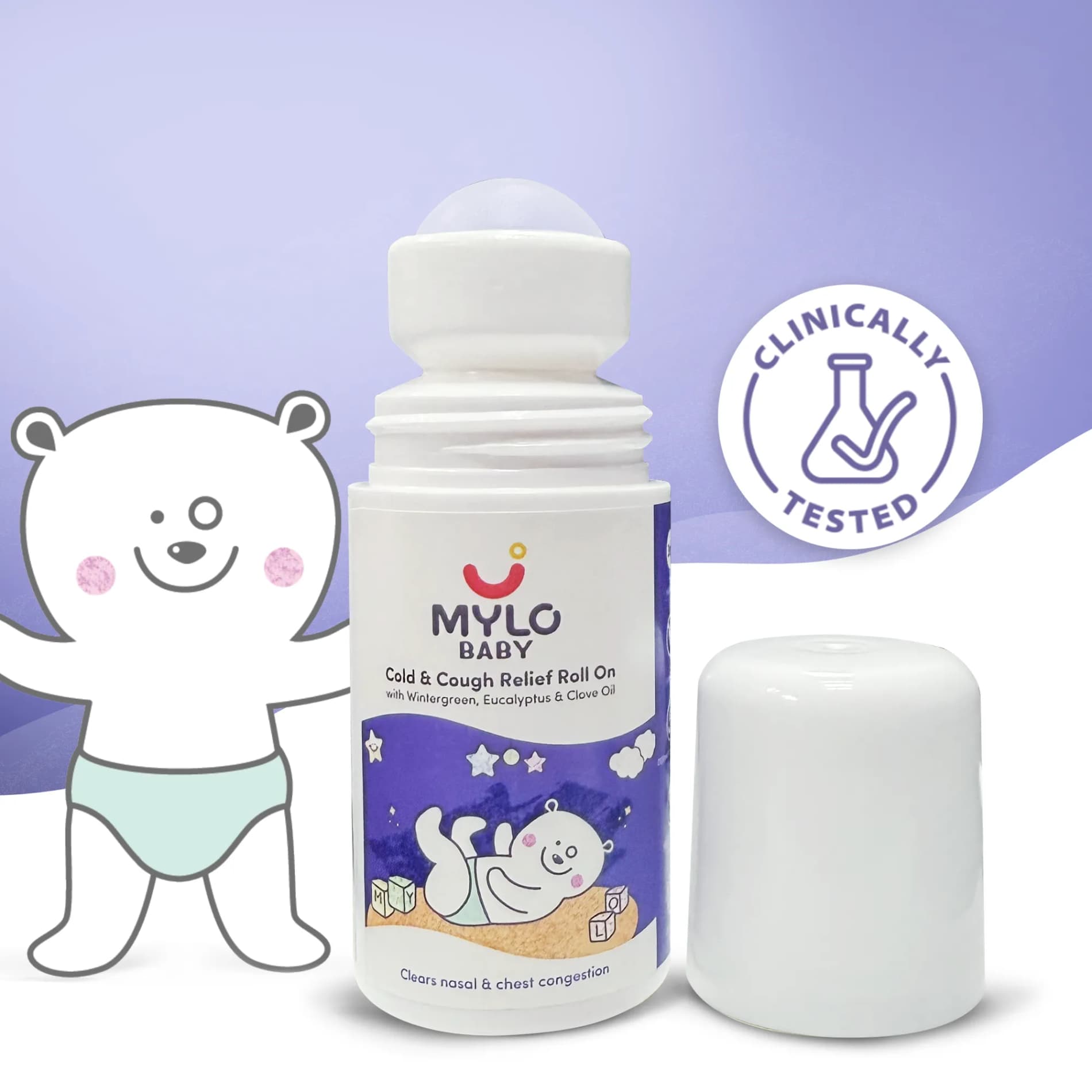
- Worried about your baby's blocked nose at night? Explore our Mylo Baby Cold & Cough Roll-On designed to gently relieve congestion and help babies breathe easier.
 4.5
4.5 4.8
4.8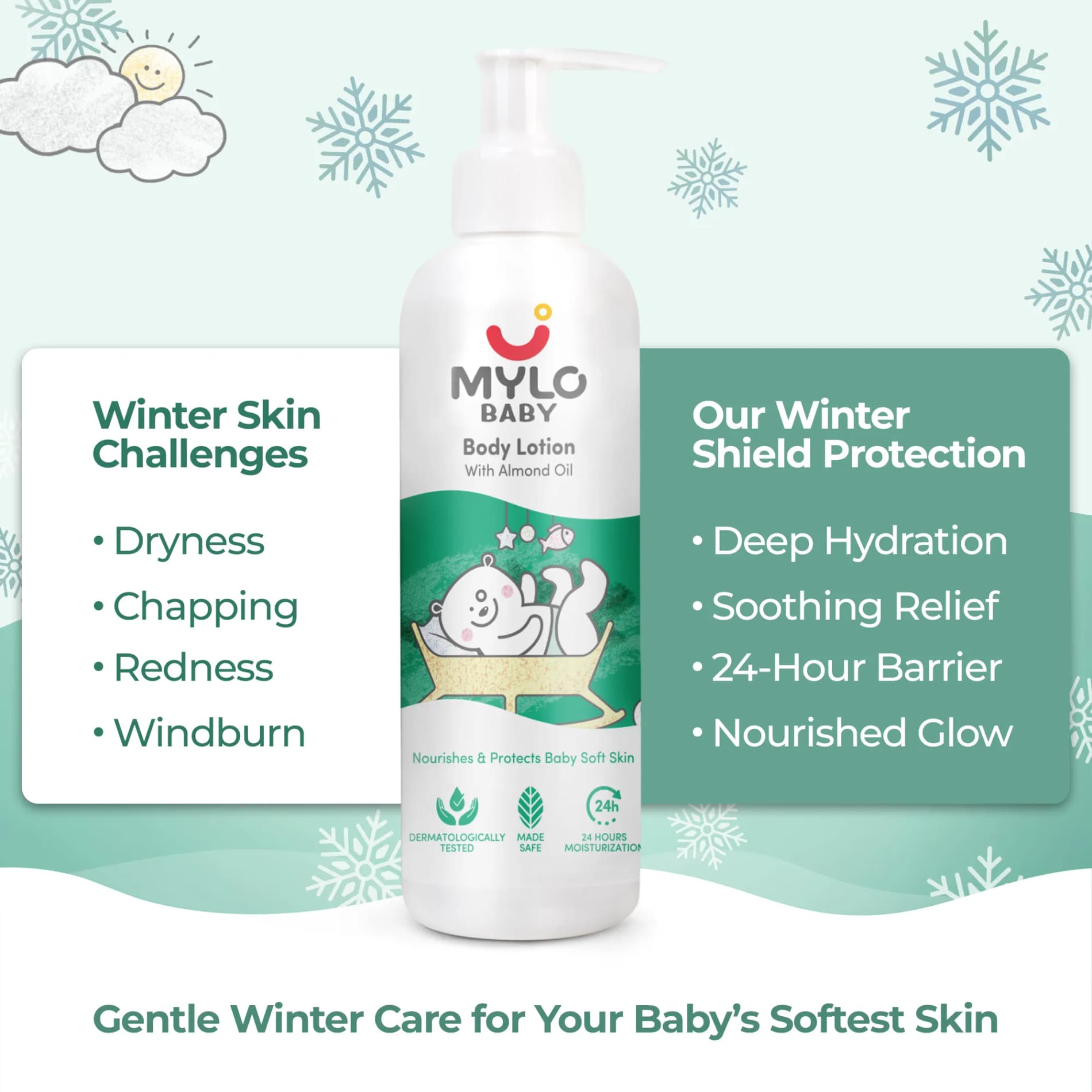 4.9
4.9Quick answer
A cold in a baby under one cannot be cured, only made more comfortable. It is viral and clears in one to two weeks. What helps is frequent breastfeeding, saline drops with gentle suction before feeds and sleep, humid air, holding upright, and rest. Never give honey, cough syrup or vapour rub to a baby under one, and watch their breathing closely.
Key takeaways
There is no cure for a cold, in a baby or anyone else. Home care is about comfort and about watching for the signs that matter.
Saline drops and gentle suction before feeds is the most useful thing you can do, because a blocked nose is what stops a baby feeding and sleeping.
Honey is unsafe under 12 months. So are cough and cold syrups, and vapour rubs are unsafe under 2 years.
Learn the breathing numbers. Faster than 60 breaths a minute under 2 months, or 50 from 2 to 11 months, needs immediate medical attention.
Any fever in a baby under 3 months is an emergency, however mild the rest of the illness looks.
Can a cold in an infant be cured?
No. Colds are caused by viruses, and no remedy, syrup or antibiotic shortens them. A baby's cold typically lasts seven to ten days, with the cough often lingering for two to three weeks afterwards.
That is not a failure of care. It is simply how viral illness works, and it is why the sections below are about comfort and about knowing when to stop treating at home.
Babies get a lot of colds, six to eight a year is common once they are around other children, and more in the first winter of creche. What matters is how your baby is in between: feeding well, alert when awake, and recovering fully before the next one.
Why colds are harder on babies
Babies breathe mainly through the nose, so a blocked nose interferes with feeding and sleeping far more than it would in an older child
Their airways are much smaller, so the same amount of mucus causes more obstruction
They cannot blow their nose or tell you what hurts
They dehydrate faster, because feeds are their only source of fluid
This is why the remedies below focus on clearing the nose and keeping feeds going.
The 7 safe home remedies
1. Keep breastfeeding, and feed more often
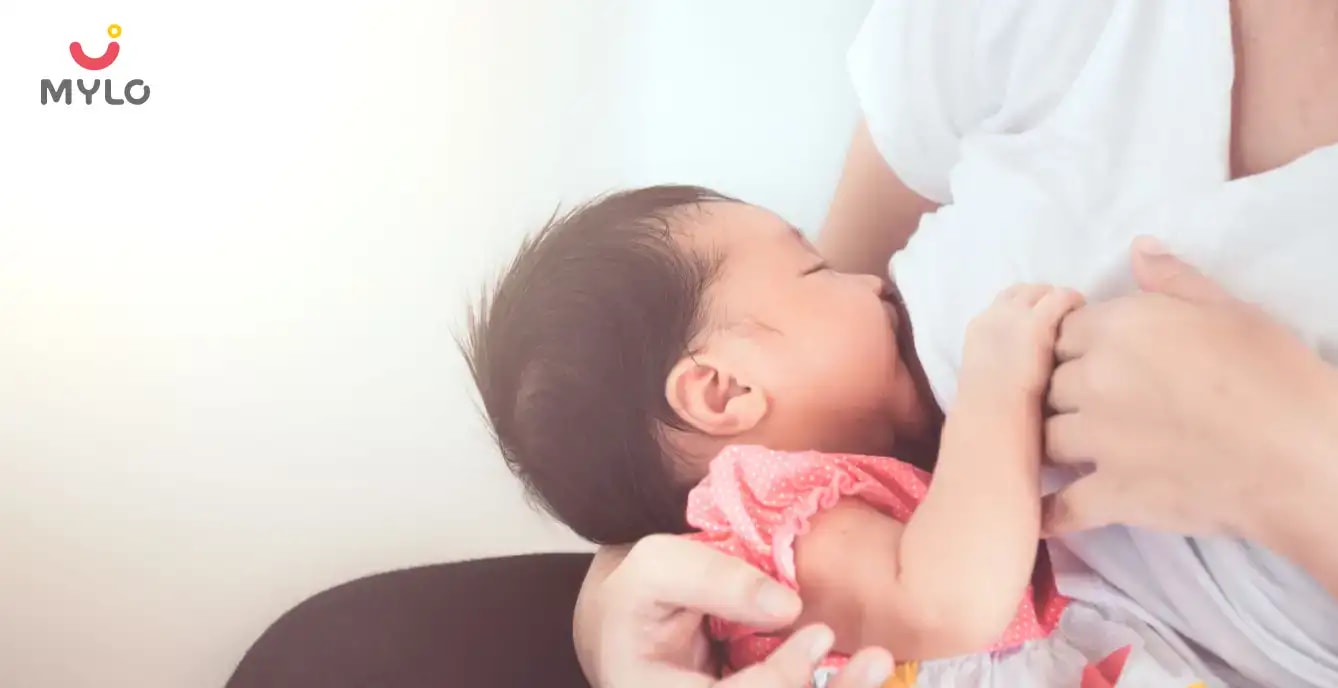
Breast milk provides hydration, antibodies, calories and comfort all at once, and it is the single best thing your baby can have while unwell.
Offer feeds more frequently and for shorter periods. A blocked baby tires quickly and cannot manage long feeds
Feed before suctioning is needed again, since a clear nose makes feeding far easier
If formula feeding, offer smaller amounts more often
Count wet nappies. Fewer than usual is the first sign of dehydration
One correction worth making: putting breast milk into a baby's nose is a common suggestion in India. There is no good evidence for it, and it introduces non-sterile fluid into an already irritated nose. Feed the milk, do not instil it. Use sterile paediatric saline drops for the nose.
2. Saline nasal drops and gentle suction
The most useful thing you can actually do, and the one most parents do not have the equipment for.
Lay your baby down with the head tilted slightly back
Put two to three drops of sterile paediatric saline into each nostril
Wait 30 to 60 seconds for the mucus to loosen
Suction gently with a bulb syringe or nasal aspirator, one nostril at a time
Do this before feeds and before sleep, not every hour
Use sterile paediatric saline, not salt water mixed at home, which can be the wrong concentration and is not sterile. Over-suctioning makes the nose sore and swollen, so keep it brief and gentle.
3. Keep the air humid, safely
Moist air eases a dry nose and an irritated airway.
A cool mist humidifier in the room, particularly in dry winter air. Clean and dry it every single day, since a damp unwashed humidifier spreads mould into the air you are trying to improve
Sitting with your baby in a bathroom with a hot shower running for a few minutes is a safe alternative
🚩 Do not use steam bowls, kettles or steamers near a baby. Scald burns from steam devices are a well-recognised and serious injury in small children. Nothing hot should be within reach, and your baby should never be left with it.
4. Hold your baby upright
Upright positions help a blocked nose drain and make breathing easier.
Hold your baby upright while awake, especially when they are struggling
Keep them upright for 15 to 20 minutes after feeds
Carry them in a sling or upright against your chest for naps you can supervise
🚩 Never prop, tilt or elevate an infant's cot, and never put pillows, wedges or rolled towels in it. Babies must sleep flat on their back on a firm, flat surface with nothing in the cot. This advice appears on many cold remedy pages and it is a suffocation risk.
5. Gentle warmth: ajwain potli and light massage
Traditional warmth measures are comforting and are fine when done carefully.
Ajwain potli: dry-roast carom seeds, tie them in a clean soft cloth, and let the pouch cool until it is comfortably warm on your own inner wrist. Hold it near, not pressed against, your baby's chest or back for a minute or two.
Warm, never hot. Test on yourself first
Never leave it against the skin, and never leave it in the cot
Never leave your baby unattended with it
Gentle massage: a light chest and back massage with coconut or sunflower oil, warmed to body temperature, is soothing.
🚩 Do not use mustard oil on an infant. It is the traditional choice across much of North India, but research has found it can irritate and weaken a baby's skin barrier. Coconut or sunflower oil is the better choice.
🚩 Never put oil, garlic paste, turmeric paste or anything else into your baby's nose, ears or mouth. Oil in the nose can be inhaled into the lungs. Garlic and turmeric applied to infant skin frequently cause irritation and burns.
6. Keep them comfortable and rested
Dress in loose, breathable cotton, in fewer layers than you think. Overdressing is very common and makes a feverish baby more uncomfortable
Keep the room at a comfortable temperature, with a fan or air conditioning not blowing directly on your baby
Expect extra clinginess and broken sleep, and plan around it rather than fighting it
Keep them away from smoke. Cigarette smoke, incense, mosquito coils and cooking smoke all worsen a cough and are best avoided entirely around an unwell baby
7. Watch the fluids and the nappies
This is less a remedy than the thing that tells you whether home care is still enough.
Count wet nappies. Fewer than usual, dark urine, a dry mouth or no tears when crying all mean your baby needs to be seen
Watch feeding. A baby who is feeding much less, or refusing feeds, needs medical attention
Weigh the pattern, not the moment. A baby who perks up between bouts is usually doing fine. A baby who is dull even when the fever comes down is not
What to avoid completely in a baby under one
Avoid | Why |
|---|---|
Honey, in any form | Infant botulism risk under 12 months. This includes honey mixed into anything, and traditional ghutti preparations |
Cough and cold syrups | Not recommended in this age group. Several combination formulations are restricted for young children in India, and there is real risk of side effects |
Vapour rubs and roll-ons containing camphor, menthol or eucalyptus | Not suitable under 2 years. Camphor and menthol can cause breathing problems in young children |
Camphor tablets, camphor pouches, or camphor burnt in the room | Camphor is toxic to children and is readily absorbed |
Anything in the nose, ears or mouth | Including oil, breast milk, garlic, turmeric and home preparations |
Mustard oil on the skin | Research suggests it impairs the infant skin barrier |
Turmeric or garlic paste on the skin | Frequently irritating on infant skin |
Antibiotics for a cold | Colds are viral. Antibiotics do not work and drive resistance |
Adult medicine in a smaller dose | Dosing must be by weight and by a paediatrician |
Pillows, wedges or propping in the cot | Suffocation risk |
Ghutti, janam ghutti or unlabelled traditional mixtures | Ingredients cannot be verified |
If your baby needs medication, it must come from a paediatrician who knows their age and weight. Do not buy a cough preparation over the counter for a baby.
When should you see a doctor?
🚩 Go to hospital or seek care immediately if your baby has:
Any fever in a baby under 3 months. This is an emergency regardless of how well they seem otherwise
Fast breathing. As a guide, more than 60 breaths a minute under 2 months, or more than 50 a minute from 2 to 11 months
Chest pulling in below or between the ribs with each breath, nostrils flaring, or grunting
Blue or grey lips, tongue or face
Pauses in breathing
Wheezing, or noisy breathing at rest
Refusing feeds, or far fewer wet nappies than usual
Unusual drowsiness or floppiness, or difficulty waking
A seizure
A rash that does not fade when pressed with a glass
A baby who looks unwell to you, even without any of the above
Book an appointment if:
Fever lasts more than two to three days, or goes away and comes back
The cough is worsening after day five, or still present after three weeks
Your baby is pulling at one ear, or has ear discharge
Your baby is not back to normal within about ten days
Feeding is disrupted every night
A note on bronchiolitis
In babies under one, especially in winter, a cold can progress to bronchiolitis, a chest infection usually caused by a virus called RSV.
The pattern to recognise: it starts as an ordinary cold, and then around day three to five the breathing becomes faster and more effortful, a wheeze appears, and feeding becomes difficult.
That combination needs medical assessment. Most cases are managed at home, but younger babies, premature babies and those with heart or lung conditions can become unwell quickly.
Frequently asked questions
Can I cure my baby's cold at home?
No. Colds are viral and cannot be cured, only made more comfortable. Most clear in seven to ten days, with the cough lasting longer.
Can I give honey to my 8-month-old for cough?
No. Honey is unsafe under 12 months because of infant botulism risk, including honey mixed into other things.
Can I use a vapour rub or cold roll-on on my baby?
Not under 2 years, unless a product is specifically labelled for a younger age and your paediatrician agrees. Camphor and menthol can cause breathing problems in young children.
Is steam inhalation safe for a baby?
Sitting with your baby in a bathroom with a hot shower running is the safe way to get humid air. Steam bowls and steamers cause serious scald burns and should never be near a baby.
Can I put breast milk in my baby's nose?
No good evidence supports it, and it introduces non-sterile fluid into an irritated nose. Feed the milk, and use sterile paediatric saline drops for the nose.
Which oil should I use for chest massage?
Coconut or sunflower oil, warmed to body temperature. Avoid mustard oil on infant skin, which research suggests weakens the skin barrier.
Should I raise the head of my baby's cot?
No. Babies must sleep flat on their back with nothing in the cot. Hold them upright while awake instead.
Does my baby need antibiotics?
Almost never for a cold, which is viral. Your doctor will prescribe them only if there is a bacterial infection.
My baby has a fever and is 2 months old. Can I wait until morning?
No. Any fever in a baby under 3 months needs medical assessment immediately.
How long will the cough last?
The cold settles in seven to ten days, but the cough often lingers for two to three weeks. A cough worsening after day five, or still present after three weeks, should be reviewed.
The bottom line
A baby's cold cannot be cured, so the aim is comfort and vigilance. Feed often, use saline drops and gentle suction before feeds and sleep, keep the air humid, hold your baby upright, and use only warm, gentle measures on the skin. Skip the honey, the syrups, the roll-ons and the mustard oil. And learn the two numbers that matter most: any fever in a baby under three months, and breathing faster than 60 a minute under two months or 50 from two to eleven months, both mean going in now rather than waiting.
Sources
World Health Organization, Integrated Management of Childhood Illness, including fast breathing thresholds and general danger signs
American Academy of Pediatrics, cough and cold medicines in young children, and safe sleep recommendations
National Institute for Health and Care Excellence, bronchiolitis in children, and fever in under 5s
NHS, coughs, colds, bronchiolitis and fever in babies and children
Centers for Disease Control and Prevention, common colds in children, RSV and antibiotic use
Central Drugs Standard Control Organisation, Government of India, restrictions on paediatric cough and cold formulations
Indian Academy of Pediatrics, guidance on acute respiratory infections in children
Peer-reviewed neonatal dermatology research on topical oils and infant skin barrier function
This article is for general information and is not a substitute for medical advice. Seek care immediately for any fever in a baby under three months, fast or laboured breathing, blue lips, refusal to feed, or a baby who is difficult to wake.


Loved By Moms Caring For Little Sniffles
When baby catches a cold, these gentle essentials help soothe congestion and comfort your little one naturally.
Mylo Baby Cold & Cough Roll-On - 40ml
Helps with breathing blockage | Dermatologist Approved | 100% Natural



Coconut Oil - 200 ml
Reduces Dandruff | Strengthens Hair | Soothes Baby's Rashes



100% Safe Baby Lotion for Kids - 200 ml
Made Safe Australia Certified | Dermatologically Tested | Long Lasting 24 Hours Moisturisation | Soothes Dryness

Article Posted Under
Related Articles


Related Topics
.webp&w=32&q=75)
Medical Disclaimer
This content is for informational purposes only and should not replace professional medical advice. Consult with a physician or other health care professional if you have any concerns or questions about your health. If you rely on the information provided here, you do so solely at your own risk.


AWARDS AND RECOGNITION

Mylo wins Forbes D2C Disruptor award

Mylo wins The Economic Times Promising Brands 2022
AS SEEN IN













- Mylo Care: Effective and science-backed personal care and wellness solutions for a joyful you.
- Mylo Baby: Science-backed, gentle and effective personal care & hygiene range for your little one.
- Mylo Community: Trusted and empathetic community of 10mn+ parents and experts.


Product Categories
Baby Carrier | Baby Soap | Baby Wipes | Stretch Marks Cream | Baby Cream | Baby Shampoo | Baby Massage Oil | Baby Hair Oil | Stretch Marks Oil | Baby Body Wash | Baby Powder | Baby Lotion | Diaper Rash Cream | Newborn Diapers | Teether | Baby Kajal | Baby Diapers Pants | Cloth Diapers | Laundry Detergent | Lactation Granules |