


Orders
.png&w=48&q=75 "login")
Profile


Wallet

Developmental Milestones by Age: A Parent's Guide
 1K Likes|
 18 min
MBBS, DGO · 38 years experience
Key Takeaways
Quick overview in 30 seconds.webp&w=32&q=75)
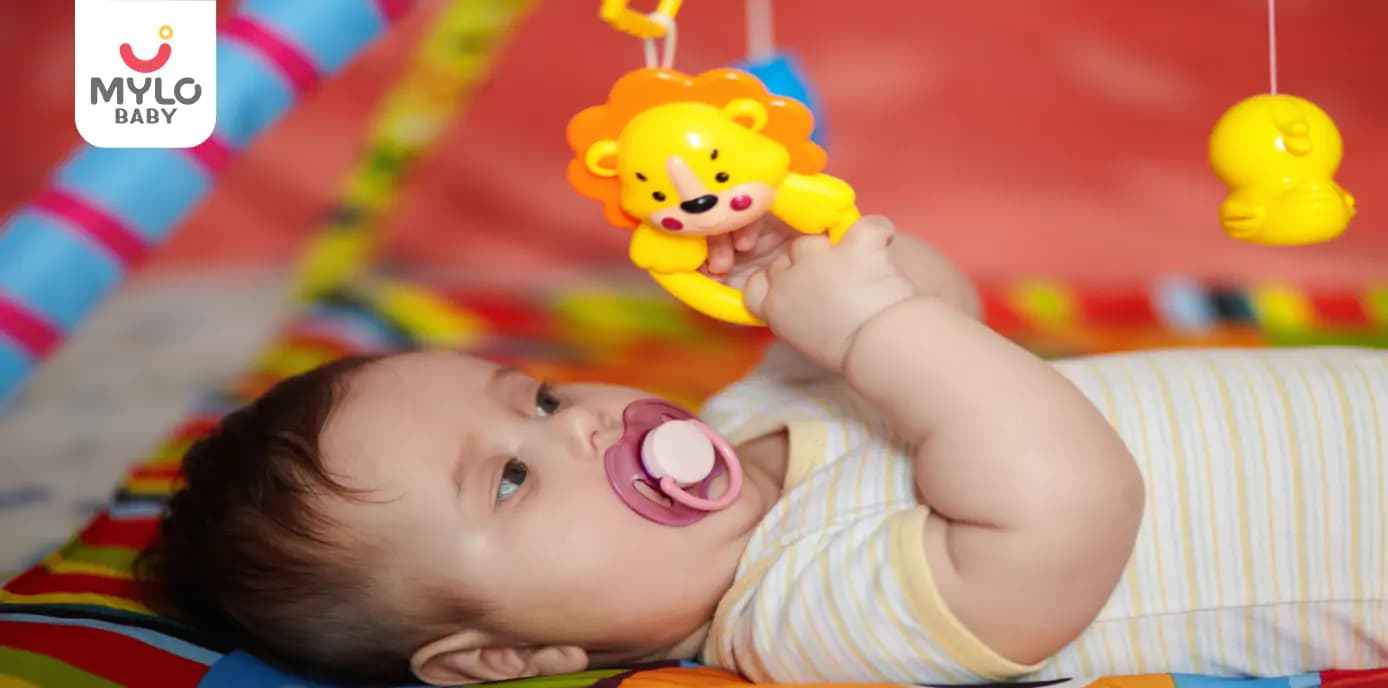
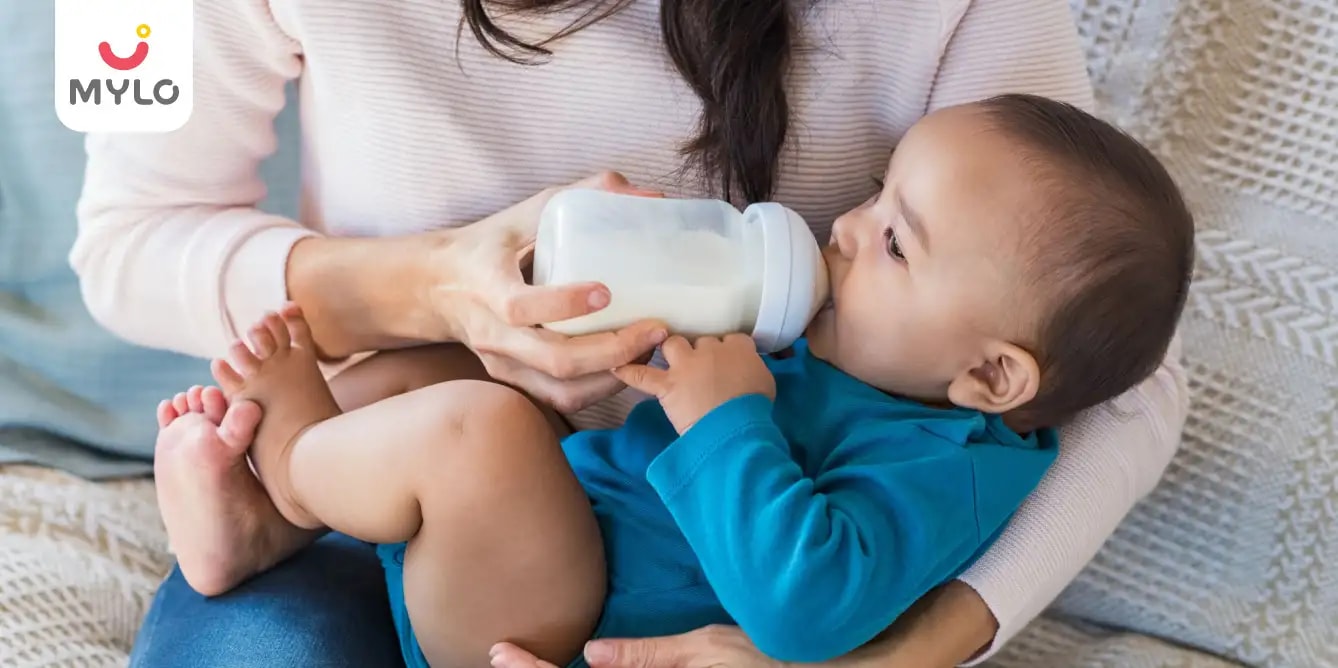
- At four months, breast milk or formula remains essential, with babies typically feeding five to six times daily, totaling 24-36 ounces of milk or formula.
- Doctors generally recommend starting solid foods between 4-6 months, but always consult your pediatrician first and watch carefully for any allergic reactions.
- Engage your baby's development through touch-and-feel books, daily singing or reading, and begin childproofing your home before crawling and rolling start.
- What can support your 4-month-old's growth and play? Explore our Adjustable & Reusable Cloth Diaper - Rainbow, Pet Love & Heart Doodles - Pack of 3.

 4.2
4.2Quick answer
Developmental milestones are the skills most children can do by a certain age, across four areas: social, language, thinking and movement. They are ranges, not deadlines, and healthy children vary. What matters is steady progress in all four areas. Losing a skill your child already had, at any age, needs a paediatrician the same week, not a wait-and-see approach.
Key takeaways
Milestones are ranges, not exam dates. Most children reach them within a window, and being at one end of that window is usually normal.
Never "wait and see" if you are worried. Early intervention works best when it starts early, and no paediatrician will mind checking.
Losing a skill is different from being late to gain one. A child who stops babbling, stops waving, or stops using words needs prompt assessment.
Use corrected age for premature babies until about two years. A baby born two months early is measured from their due date, not their birth date.
Growing up with two or three languages does not cause speech delay. Count words across all languages together. This is one of the most common false alarms in Indian families.
What are developmental milestones?
Milestones are grouped into four areas, and a good check looks at all four rather than focusing on walking and talking alone.
Area | What it covers |
|---|---|
Social and emotional | Smiling, eye contact, responding to people, playing with others |
Language and communication | Sounds, babbling, understanding, words, sentences |
Cognitive | Learning, problem solving, exploring, pretend play |
Movement and physical | Head control, rolling, sitting, crawling, walking, hand skills |
Social and language milestones matter as much as motor ones, and are often the ones families notice last. A baby who sits and walks on time but does not respond to their name or make eye contact needs the same attention as one who is late to walk.
How to use this guide
These are what most children can do by that age. Being a little early or late is common.
Look at the overall pattern. Steady progress across all four areas matters more than any single item.
Compare your child with themselves, not with a cousin or a neighbour's baby.
If your baby was premature, use corrected age. See the section below.
If something on the "act early" list applies, book an appointment. You do not need to be certain before asking.
Milestones from 2 months to 12 months
Age | Social and language | Thinking and movement |
|---|---|---|
2 months | Calms when spoken to or picked up. Looks at your face. Smiles when you talk. Makes sounds other than crying. Reacts to loud sounds | Watches you as you move. Holds head up briefly on tummy. Moves both arms and both legs |
4 months | Smiles on their own to get your attention. Chuckles. Coos and makes sounds back when you talk. Turns towards your voice | Holds head steady without support when held. Holds a toy placed in their hand. Brings hands to mouth. Pushes up on elbows on tummy |
6 months | Knows familiar people. Laughs. Takes turns making sounds. Squeals, blows raspberries | Reaches for and grabs toys. Puts things in mouth to explore. Rolls from tummy to back. Leans on hands when sitting |
9 months | Looks when you call their name. Shy or clingy with strangers. Makes sounds like "mamama" or "bababa". Smiles and laughs in peekaboo | Sits without support. Gets to sitting by themselves. Moves things from one hand to the other. Looks for a toy that has dropped |
12 months | Waves bye-bye. Calls a parent "mama" or "dada". Understands "no". Plays games like pat-a-cake | Pulls up to stand. Walks holding furniture. Picks up small things between thumb and finger. Puts something into a container |
Milestones from 15 months to 5 years
Age | Social and language | Thinking and movement |
|---|---|---|
15 months | Copies other children. Shows you things. Claps when excited. Tries one or two words besides "mama" and "dada". Points to ask for something | Takes a few steps alone. Stacks two small objects. Feeds themselves with fingers. Tries to use things correctly, like a cup or phone |
18 months | Points to show you something interesting. Tries three or more words besides "mama" and "dada". Follows a one-step instruction without a gesture | Walks without holding on. Scribbles. Drinks from an open cup. Tries to use a spoon. Climbs on and off a sofa |
2 years | Notices when others are hurt or upset. Points to things in a book. Says at least two words together, such as "more milk". Points to at least two body parts | Kicks a ball. Runs. Walks up a few stairs. Eats with a spoon. Uses switches and knobs |
2.5 years | Plays next to other children. Says about 50 words. Uses "I", "me", "we". Follows two-step instructions. Names things in a book | Uses hands to twist things open. Jumps with both feet off the ground. Takes some clothes off. Turns book pages one at a time |
3 years | Joins other children to play. Has a conversation with at least two back-and-forth turns. Asks "who", "what", "where", "why". Speech clear enough for others to understand most of the time | Draws a circle when shown. Strings items together. Puts on some clothes. Uses a fork |
4 years | Pretends to be something else in play. Comforts others. Says sentences of four or more words. Talks about something that happened during the day | Draws a person with three or more body parts. Catches a large ball most of the time. Serves themselves food. Unbuttons some buttons |
5 years | Takes turns in games. Tells a story with at least two events. Keeps a conversation going across more than three turns | Counts to 10. Writes some letters of their name. Hops on one foot. Buttons some buttons |
Red flags: when to see a paediatrician
At any age, regardless of milestones
🚩 Losing a skill your child already had. No longer babbling, waving, using words they used to say, or making eye contact they used to make. This is the single most important item on this page, and it needs assessment the same week rather than a wait-and-see approach.
🚩 You are worried. Parental concern is one of the strongest predictors of genuine developmental delay, and it is a valid reason to ask on its own.
By age
By this age, see a paediatrician if your child | Age |
|---|---|
Does not respond to loud sounds, or does not watch things as they move | 2 months |
Does not smile at people, or cannot hold their head steady | 4 months |
Does not try to get things within reach, shows no affection for caregivers, does not make vowel sounds, does not roll either way | 6 months |
Does not bear weight on legs with support, does not sit with help, does not babble, does not respond to their own name, does not look where you point | 9 months |
Does not crawl or move in any way, does not point to things, does not say single words, does not search for things you hide, does not use gestures such as waving | 12 months |
Is not walking, does not say at least three words, does not copy others, does not point to show you things | 18 months |
Does not put two words together, does not know what common things are for, does not copy actions and words, does not follow simple instructions, is unsteady walking | 2 years |
Speech is unclear to people outside the family, does not play pretend, does not make eye contact, falls often, cannot work simple toys | 3 years |
Cannot tell a simple story, ignores other children, resists dressing and toileting, speaks unclearly | 4 years |
Also see a paediatrician for: stiffness or floppiness in the limbs, strong preference for one hand before 18 months, persistent toe-walking, squint or not following objects with the eyes, repeated ear infections, or not responding to sound at any age.
About autism screening
Routine developmental and autism screening is recommended at 18 months and again at 24 months, usually using a short parent questionnaire such as the M-CHAT. Ask for it if it has not been offered, since it is often skipped in busy clinics.
Early signs worth mentioning to your paediatrician:
Not responding to their name by 12 months
Not pointing to show you things by 14 to 18 months
Not playing pretend games by 18 months to 2 years
Avoiding or inconsistent eye contact
Delayed speech, or losing words they previously used
Repeating words or phrases over and over
Getting upset by small changes in routine
Repetitive movements such as hand flapping, spinning or rocking
Unusual reactions to sounds, textures, tastes or lights
None of these alone means autism, and many typically developing children show some of them. The point is that they are worth raising rather than dismissing. Early support improves outcomes, and assessment does not commit you to anything.
Hearing and vision come first
Before assuming a speech delay is a speech problem, get hearing checked. Undetected hearing loss is one of the most common and most treatable causes of delayed speech, and repeated ear infections with fluid can cause a temporary hearing loss that affects language.
Newborn hearing screening is available in many Indian hospitals. Ask whether your baby had it, and what the result was
Ask for a hearing test for any child with delayed speech, regardless of how well they seem to hear
Ask for a vision check if your child does not follow objects, has a squint, holds things very close, or tilts their head to look
Premature babies: use corrected age
If your baby was born before 37 weeks, measure milestones from their due date, not their birth date.
How to calculate it: subtract the number of weeks early from your baby's actual age.
A baby born at 32 weeks was 8 weeks early
At 6 months of actual age, their corrected age is 4 months
Compare them with the 4-month milestones, not the 6-month ones
Use corrected age until about two years, by which point most preterm children have caught up. Your paediatrician will tell you when to stop.
Preterm babies are also followed more closely for development, which is a normal part of their care rather than a sign of a problem.
Growing up with more than one language
Children raised with two or three languages do not have delayed speech because of it. This is one of the most common false alarms in Indian households, and it leads both to unnecessary worry and, occasionally, to families being told to "stick to one language," which is not helpful advice.
What to know:
Count words across all languages together. A child who says 20 words in Hindi and 15 in English has a vocabulary of 35 words, not 20
Mixing languages in one sentence is normal and is a sign of skill, not confusion
Milestones apply to total communication, not to any single language
Keep speaking the languages you speak naturally at home. Rich, responsive conversation matters far more than which language it happens in
What is still a concern in a multilingual child: no babbling by 12 months, no words in any language by 18 months, no two-word combinations in any language by 2 years, or losing words they previously used. Bilingualism does not explain any of these.
What actually helps development
Talk, sing and read to your child every day, from birth. Responsive conversation is the single most powerful thing you can do for language
Tummy time from the newborn stage, in short frequent sessions while awake and supervised. It builds the neck, shoulder and trunk strength that motor milestones depend on
Floor time and free movement. Babies develop by moving
Respond to their sounds and gestures. Back-and-forth interaction is what builds communication
Play, including messy and unstructured play
Nutrition. Iron deficiency is very common in Indian children and affects development. Ask about testing if your child is pale, tired or a poor eater
Keep vaccinations up to date, and attend well-child visits, which are when development is checked
Two things to limit:
Screen time. Guidance advises avoiding screens other than video calling before about 18 to 24 months, and limiting them to short, supervised, high-quality content afterwards. Screens displace the back-and-forth conversation that language development depends on.
Baby walkers. These are widely used across India and are not recommended. They do not help babies learn to walk, they may delay motor development, and they are a well-documented cause of serious injuries, particularly falls down stairs. Floor time is better for development and safer.
Where to get help in India
Your paediatrician is the first stop, and developmental checks should happen at routine immunisation visits. Ask explicitly if they are not raised
Rashtriya Bal Swasthya Karyakram (RBSK), under the National Health Mission, provides screening for developmental delays and disabilities from birth to 18 years, free of cost
District Early Intervention Centres (DEICs) provide assessment and therapy services in many districts, including speech, occupational and physiotherapy
Anganwadi workers and ASHAs can help with referral
Government medical colleges usually have paediatric neurology and child development units
Do not let cost or distance delay the first conversation. Screening and early intervention services are available free through government programmes, and the earlier support begins, the more effective it is.
What not to worry about
Skipping crawling. Some babies bum-shuffle, roll or go straight to walking. What matters is that they move independently
Walking at the later end of the range. Many healthy children walk closer to 15 to 18 months
Being quieter than a sibling, as long as they are meeting the milestones for their age
Not knowing letters or numbers early. These are taught skills, not developmental milestones
A brief plateau during illness or a big change, such as a new sibling or starting creche. Skills usually resume
Frequently asked questions
At what age should my baby start talking?
Most babies say their first word around 12 months, use three or more words by 18 months, and put two words together by 2 years. No words at 18 months, or no two-word phrases at 2 years, should be assessed.
My child is not walking at 15 months. Should I worry?
Many children walk between 12 and 18 months. Mention it at your next visit, and see a paediatrician if there is no independent walking by 18 months, or if your child is not pulling to stand or cruising.
Does speaking two languages at home delay speech?
No. Count words across all languages together. Mixing languages is normal and is a sign of ability, not confusion.
My baby was born premature. Which milestones apply?
Use corrected age. Subtract the weeks your baby was early from their actual age, and use that figure until about two years.
When should I ask about autism?
Routine screening is recommended at 18 and 24 months. Ask sooner if your child does not respond to their name by 12 months, does not point to show you things by 18 months, or loses words or skills at any age.
What is the most important warning sign?
Losing a skill your child already had. That needs a paediatrician the same week, whatever your child's age.
Should I use a baby walker to help my baby walk?
No. Walkers do not help babies learn to walk, may delay motor development, and are a common cause of serious injury. Floor time and tummy time are better.
How much screen time is okay?
Guidance advises avoiding screens other than video calls before about 18 to 24 months, and keeping them short and supervised afterwards.
Everyone says he will talk when he is ready. Should I wait?
No. Waiting is the most common reason children reach therapy late. Assessment costs nothing but a visit, and early support works better than late support.
Mera bacha 2 saal ka hai aur bolta nahi hai. Kya karun?
Do saal tak bache aam taur par do shabd jod kar bolne lagte hain. Agar aapka bacha abhi tak aisa nahi kar raha, to intezaar na karein. Pehle kaan ki jaanch karayein aur bal rog visheshagya se milein. Jaldi shuru hui therapy zyada asardar hoti hai.
The bottom line
Milestones are ranges rather than deadlines, and most children who sit at one end of a range are perfectly fine. Two things override everything else on this page. First, if your child loses a skill they already had, see a paediatrician the same week, whatever their age. Second, if you are worried, ask, because parental concern is one of the strongest predictors of genuine delay and waiting is the most common reason children reach help late. Get hearing checked before assuming a speech delay is anything else, use corrected age for a premature baby, and do not let anyone tell you that growing up with three languages is the reason your two-year-old is not speaking.
Sources
Centers for Disease Control and Prevention, Learn the Signs. Act Early. developmental milestones
American Academy of Pediatrics, developmental surveillance and screening, autism screening recommendations, and guidance on media use and baby walkers
World Health Organization, early childhood development standards and guidelines on physical activity, sedentary behaviour and sleep for children under 5
Indian Academy of Pediatrics, developmental screening and early intervention guidance
Ministry of Health and Family Welfare, Government of India, Rashtriya Bal Swasthya Karyakram and District Early Intervention Centre guidelines
UNICEF, early childhood development resources
Peer-reviewed literature on bilingual language acquisition in children
This article is for general information and is not a substitute for medical advice. If your child loses a skill they previously had, or you are worried about their development, see a paediatrician rather than waiting.
Loved by Parents Nurturing Curious 4-Month-Olds
From feeding essentials to sensory play, find gentle products that support your little one's exciting fourth-month milestones.


Article Posted Under


.webp&w=32&q=75)
Medical Disclaimer
This content is for informational purposes only and should not replace professional medical advice. Consult with a physician or other health care professional if you have any concerns or questions about your health. If you rely on the information provided here, you do so solely at your own risk.


AWARDS AND RECOGNITION

Mylo wins Forbes D2C Disruptor award

Mylo wins The Economic Times Promising Brands 2022
AS SEEN IN













- Mylo Care: Effective and science-backed personal care and wellness solutions for a joyful you.
- Mylo Baby: Science-backed, gentle and effective personal care & hygiene range for your little one.
- Mylo Community: Trusted and empathetic community of 10mn+ parents and experts.


Product Categories
Baby Carrier | Baby Soap | Baby Wipes | Stretch Marks Cream | Baby Cream | Baby Shampoo | Baby Massage Oil | Baby Hair Oil | Stretch Marks Oil | Baby Body Wash | Baby Powder | Baby Lotion | Diaper Rash Cream | Newborn Diapers | Teether | Baby Kajal | Baby Diapers Pants | Cloth Diapers | Laundry Detergent | Lactation Granules |