


Orders
.png&w=48&q=75 "login")
Profile


Wallet

Newborn Diapers: Sizes, How Many You Need, and the First Six Weeks
 17 min
Key Takeaways
Quick overview in 30 seconds.webp&w=32&q=75)
- Choosing the right newborn diaper prevents skin irritation, ensures proper fit, provides absorbency, reduces infection risk and offers convenience for new parents.
- Common types include disposable diapers, taped diapers and cloth diapers, each offering unique benefits in comfort, fit, eco-friendliness and ease of use.
- Pick the right size by checking weight guidelines, waist and thigh measurements, considering growth spurts and seeking recommendations from other parents or pediatricians.
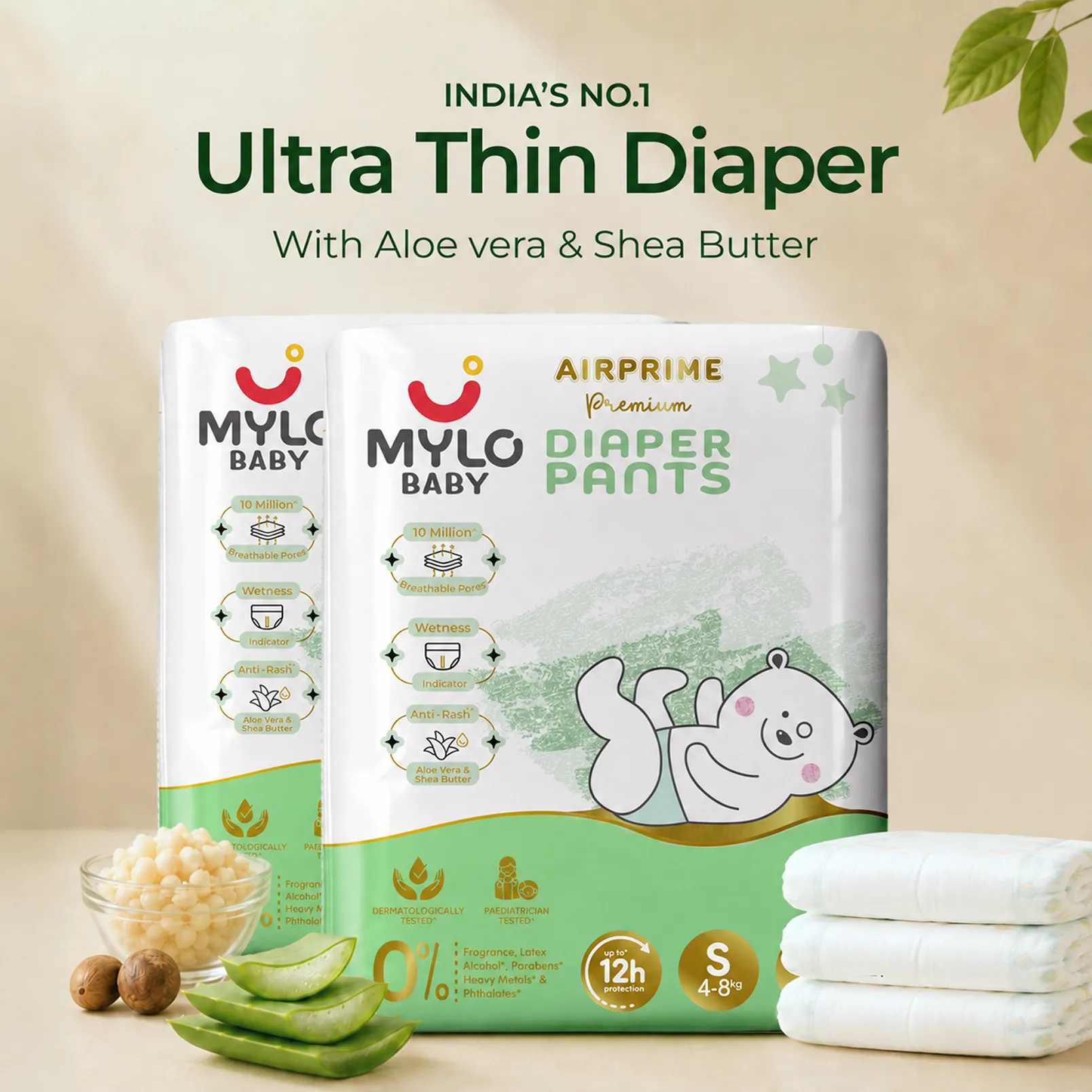
- Looking for the perfect diaper for your newborn? Explore our Airprime Premium Diaper Pants S (5–9 kg, 26 Count) + 100% Plant-Based Baby Wipes (Pack of 2).
Quick Answer
Most babies stay in New Born size, which covers up to about 5 kg, for roughly 4 to 6 weeks. Expect 10 to 12 changes a day, so around 300 to 360 diapers in the first month. Buy small packs, because babies outgrow this size fast. Tape style is easier than pull on pants while the umbilical stump is healing, because you can fold the front edge below the navel.
Key Takeaways
New Born size fits up to about 5 kg and most babies leave it within 4 to 6 weeks. Do not buy a jumbo pack.
Tape style suits the first weeks better than pants, because you can adjust the fit precisely and fold below the healing stump.
Wet and dirty diaper counts are one of the main ways to check your newborn is feeding enough. Around 6 or more heavy wet diapers a day once your milk is in.
The first stools are black, thick and sticky. That is meconium and it is normal.
Move up to S when your baby reaches about 5 kg, or sooner if you see red marks or leaks at the thighs.
Low birth weight and preterm babies may need a smaller size than New Born, and your hospital will usually advise.
How Long Do Babies Stay in Newborn Size Diapers?
About 4 to 6 weeks for most babies, though it is weight that decides rather than age. New Born size covers up to roughly 5 kg.
This is the single most useful number for a first time parent, because it is the reason the most common first month money mistake happens. A jumbo pack of New Born diapers looks like good value and then half of it becomes unusable within a month.
Your baby | Likely time in New Born size |
|---|---|
Born around 2.5 to 3 kg | Roughly 5 to 8 weeks |
Born around 3 to 3.5 kg | Roughly 4 to 6 weeks |
Born around 3.5 to 4 kg | Roughly 2 to 4 weeks |
Born over 4 kg | May go straight to S size, or use New Born for only a week or two |
Low birth weight or preterm | May need a size below New Born. Ask your hospital, which will usually provide these initially |
Signs it is time to move up to S: red marks at the waist or thighs after you take the diaper off, the tapes reaching the very edge of the landing zone, leaks at the legs, or your baby simply passing 5 kg. Waiting for leaks to tell you is the expensive way to find out.
How Many Newborn Diapers Should You Buy?
Plan around 10 to 12 changes a day, which works out to roughly 300 to 360 in the first month. But buy them in small packs rather than all at once.
What you are buying for | How many | Why |
|---|---|---|
Hospital bag | About 15 to 20 | Enough for 2 days. Many hospitals supply some, so check first |
First week at home | About 70 to 80 | 10 to 12 a day, plus a margin for a messy day |
Before the birth, total | One or two small packs only | You do not yet know your baby's birth weight, and a big baby may skip this size |
First month, total | About 300 to 360 | Buy in stages as you go, not upfront |
Once you know the size fits | Larger packs are fine | Price per diaper drops, but only if you finish the pack |
A practical way to handle it: buy two small packs before the birth, then judge from your baby's actual weight. If they are over 3.5 kg, do not stock up on New Born at all.
Tape Style or Pull On Pants for a Newborn?
Tape style, for the first weeks. This is one of the few places where the format genuinely matters rather than being a preference.
Tape style | Pull on pants | |
|---|---|---|
Umbilical stump | Better. You can fold the front edge below the navel so nothing rubs it | Harder to adjust that precisely |
Fit on a small body | Better. You set the tightness at every change | Fixed by the size and elastic |
A baby between sizes | Better. Tapes tolerate an in between weight | Leaks if the size is not right |
Frequent stools | Better. Unfasten rather than tearing seams several times a day | Workable but messier |
Checking without removing | Better. Open one tape and look | Rely on the indicator or feel |
Once your baby starts rolling | Becomes a wrestling match | Better. Usually from around 6 months |
Pull on pants come into their own later, when your baby is mobile. More on that in what diaper pants are and when to switch.
How Do You Diaper Around the Umbilical Stump?
Keep the stump dry and exposed to air, and keep the diaper off it entirely.
Fold the front edge of the diaper down so it sits below the navel. Some newborn diapers have a notch or a lower cut front for this. If not, fold it.
Do not cover the stump with the diaper, clothing pulled tight, or a belly band. It dries and separates faster in air.
Leave it alone otherwise. Current guidance is dry cord care: no oil, no powder, no antiseptic, no spirit unless your doctor has specifically advised it.
If it gets soiled with urine or stool, clean gently with plain water and let it air dry.
It usually falls off within 1 to 3 weeks. A small amount of dried blood at separation is normal.
See a doctor the same day if the skin around the stump is red or swollen, there is pus or a foul smell, it bleeds more than a spot or two, or your baby has a fever or seems unwell. Umbilical infection in a newborn is serious and needs prompt treatment.
What Should Newborn Poop and Pee Look Like?
This section matters more than any product choice, because diaper output is one of the main ways you and your doctor check that your newborn is feeding enough.
Day | Wet diapers | Stools | What the stool looks like |
|---|---|---|---|
Day 1 | At least 1 | At least 1 | Meconium. Black, thick, sticky, almost tar like |
Day 2 | At least 2 | At least 1 or 2 | Still mostly meconium |
Day 3 to 4 | 3 or more, becoming heavier | 2 or more | Changing colour, greenish brown and looser |
Day 5 onwards | 6 or more heavy wet diapers | 3 or more | Soft, yellow, often seedy or mustard like in breastfed babies |
After a few weeks | 6 or more | Can become less frequent | Still soft. Stool frequency dropping on its own is usually normal at this stage |
Two things to know about this. Meconium is normal and it does not mean anything is wrong. It is sticky and hard to clean, so use plain water and cotton and do not scrub. And 6 or more heavy wet diapers a day, with pale rather than dark urine, is the reassuring sign once your milk has come in. If you are counting fewer than that, or your baby is very sleepy and hard to wake, that needs a same day call to your doctor rather than watchful waiting.
Disposable diapers are absorbent enough that a wet one can be hard to judge. A wetness indicator helps, and so does comparing the weight of a used diaper against a dry one.
What Else Is Normal in the First Weeks?
Very frequent changes. 10 to 12 a day is normal and it is a good sign. Newborns pass small amounts of urine often and stool frequently.
Stools after almost every feed. Common in breastfed newborns, and a reassuring sign that feeding is going well.
A little pink or white discharge in baby girls, and occasionally a small amount of blood in the first weeks. This is caused by the mother's hormones and is usually normal, though it is worth mentioning to your doctor if you are unsure.
Swollen genitals in both boys and girls in the first days, also hormonal and settling on its own.
Brick dust or orange staining in the diaper in the first two or three days can happen and usually resolves once feeding is established. If it continues past day 3, mention it.
A urine stream that shoots upward on boys. Point downward when you put the diaper on, and keep a cloth over the area while cleaning.
Ten Practical Tips for the First Six Weeks
Set up two changing stations, one where you sleep and one where you spend the day. Walking to another room at 3 am is what makes night changes feel impossible.
Keep a hand on your baby at all times on any raised surface. Falls from changing surfaces are among the most common home injuries in infants.
Use plain water and cotton wool rather than wipes for the first few weeks. It is the gentlest option and costs almost nothing.
Dry the skin properly before the fresh diaper goes on. The step most often skipped, and the one most linked to rash.
Clean front to back, always, and into every skin fold at the thighs and groin.
Do not use talcum or baby powder. The American Academy of Pediatrics advises against it, because inhaled talc can cause serious lung problems in babies.
Barrier cream only when needed, not routinely. If the skin looks pink, or during any bout of diarrhoea, apply a thin layer at each change.
Two fingers at the waist, and leg elastic sitting flat in the thigh crease rather than folded inward. Folded cuffs cause most leg leaks.
Change before a feed rather than after where you can, since moving a full stomach around tends to bring milk back up.
Wash your hands with soap for at least 20 seconds, and before feeding as well as after changing.
Where Mylo's Newborn Options Fit
While the stump is healing, the New Born tape style diaper for up to 5 kg is the easier format, because you can fold the front below the navel and set the fit at each change.
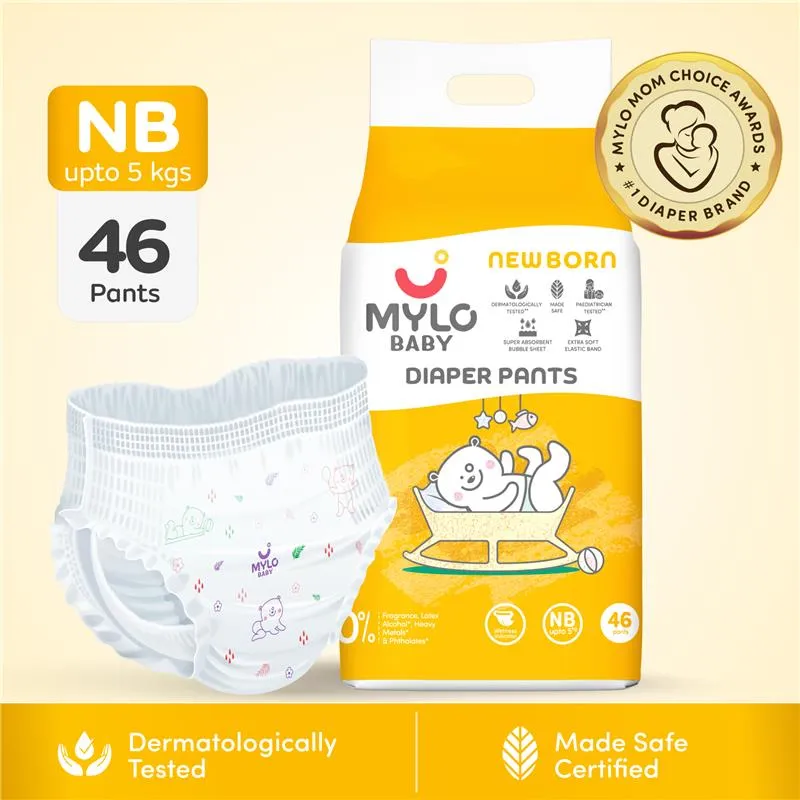
Once the stump has separated, New Born diaper pants for up to 5 kg come in 46 count and 92 count. Both carry a wetness indicator, which is genuinely useful when you are counting wet diapers to check feeding.
Start with the smaller pack. Given that most babies leave this size within 4 to 6 weeks, the 46 count is the sensible first purchase, and the 92 count makes sense only once you know your baby is comfortably inside the weight range.
When your baby passes 5 kg, move to S, which covers 4 to 8 kg, in the baby diaper range.
What no newborn diaper does: prevent diaper rash, or replace checking your baby. Absorbency figures describe capacity under test conditions, not how long a diaper should stay on.
Mylo Parents Asked
How long will my baby be in newborn size diapers?
Usually 4 to 6 weeks, but it depends on birth weight rather than age. New Born size covers up to about 5 kg, so a 2.5 kg baby may be in it for 6 to 8 weeks while a 4 kg baby may skip it almost entirely. This is why small packs are the safer buy.
How many newborn diapers should I buy before the birth?
One or two small packs, no more. You do not know your baby's birth weight yet, and a bigger baby may go straight to S. Buy 15 to 20 for the hospital bag, then restock once you see how the size fits.
Should I use tape diapers or pants for a newborn?
Tape style for the first weeks. You can fold the front below the healing umbilical stump and adjust the fit at every change, neither of which a pull on pant allows. Switch to pants later, usually once your baby starts rolling.
How do I put a diaper on without touching the umbilical stump?
Fold the front edge of the diaper down so it sits below the navel, and leave the stump uncovered and exposed to air. Do not apply oil, powder or antiseptic unless your doctor has advised it. It usually separates within 1 to 3 weeks.
My newborn's poop is black and sticky. Is that normal?
Yes. That is meconium, the first stool, and it is expected in the first two or three days. It changes to greenish brown and then to soft yellow as feeding establishes. Clean it with plain water and cotton rather than scrubbing.
How many wet diapers should a newborn have?
Around 6 or more heavy wet diapers a day from about day 5, once your milk is in, with pale rather than dark urine. Fewer than that, or a baby who is very sleepy and hard to rouse, needs a same day call to your doctor. Diaper counts are one of the main ways to check a newborn is feeding enough.
Why does my newborn need changing 10 to 12 times a day?
Because newborns pass small amounts of urine very often and stool frequently, sometimes after almost every feed. It is normal, and frequent stools in the early weeks are a good sign about feeding rather than a problem.
When should I move up from newborn to S size?
At about 5 kg, or sooner if you see red marks at the waist or thighs, the tapes reaching the edge of the landing zone, or leaks at the legs. Do not wait for repeated leaks to make the decision for you.
When Should You Call a Doctor?
In the newborn period the threshold for getting advice should be low. Contact your paediatrician the same day if you notice:
No urine passed in 24 hours, or fewer than 6 heavy wet diapers a day after the first week
No stool passed in the first 48 hours
Dark, strong smelling urine, or orange or brick coloured staining continuing past day 3
Redness, swelling, pus or a foul smell around the umbilical stump, or bleeding more than a spot or two
Yellow colour of the skin or eyes appearing, deepening, or appearing after the first week
A baby who is very sleepy, difficult to wake, floppy, or refusing feeds
Fever, or a temperature below normal. Any fever in a baby under 3 months needs same day assessment
Blood in the stool, or repeated forceful vomiting
A rash that has not improved in 2 to 3 days, or that blisters, weeps or comes with fever
Your baby not back to birth weight by about 2 weeks
This article is general information and does not replace an examination.
Bottom Line
Expect 4 to 6 weeks in New Born size and 10 to 12 changes a day, and buy in small packs because your baby will outgrow this size quickly. Use tape style while the umbilical stump heals so you can fold the diaper below the navel. Watch the diaper counts, because 6 or more heavy wet diapers a day is one of the clearest signs your newborn is feeding well, and fewer than that is worth a call to your doctor.
References
WHO. Newborn health, including dry umbilical cord care.
UNICEF. Baby care guidance for parents.
NHS, UK. Caring for a newborn.
AAP, HealthyChildren.org. Common Diaper Rashes and Treatments.
Indian Academy of Pediatrics. IAP Guidelines for Pediatric Skin Care. Indian Pediatrics. 2021.
Indian Academy of Pediatrics. Care of Newborn Skin.

Article Posted Under
Related Articles



Related Topics
.webp&w=32&q=75)
Medical Disclaimer
This content is for informational purposes only and should not replace professional medical advice. Consult with a physician or other health care professional if you have any concerns or questions about your health. If you rely on the information provided here, you do so solely at your own risk.


AWARDS AND RECOGNITION

Mylo wins Forbes D2C Disruptor award

Mylo wins The Economic Times Promising Brands 2022
AS SEEN IN













- Mylo Care: Effective and science-backed personal care and wellness solutions for a joyful you.
- Mylo Baby: Science-backed, gentle and effective personal care & hygiene range for your little one.
- Mylo Community: Trusted and empathetic community of 10mn+ parents and experts.


Product Categories
Baby Carrier | Baby Soap | Baby Wipes | Stretch Marks Cream | Baby Cream | Baby Shampoo | Baby Massage Oil | Baby Hair Oil | Stretch Marks Oil | Baby Body Wash | Baby Powder | Baby Lotion | Diaper Rash Cream | Newborn Diapers | Teether | Baby Kajal | Baby Diapers Pants | Cloth Diapers | Laundry Detergent | Lactation Granules |