


Orders
.png&w=48&q=75 "login")
Profile


Wallet

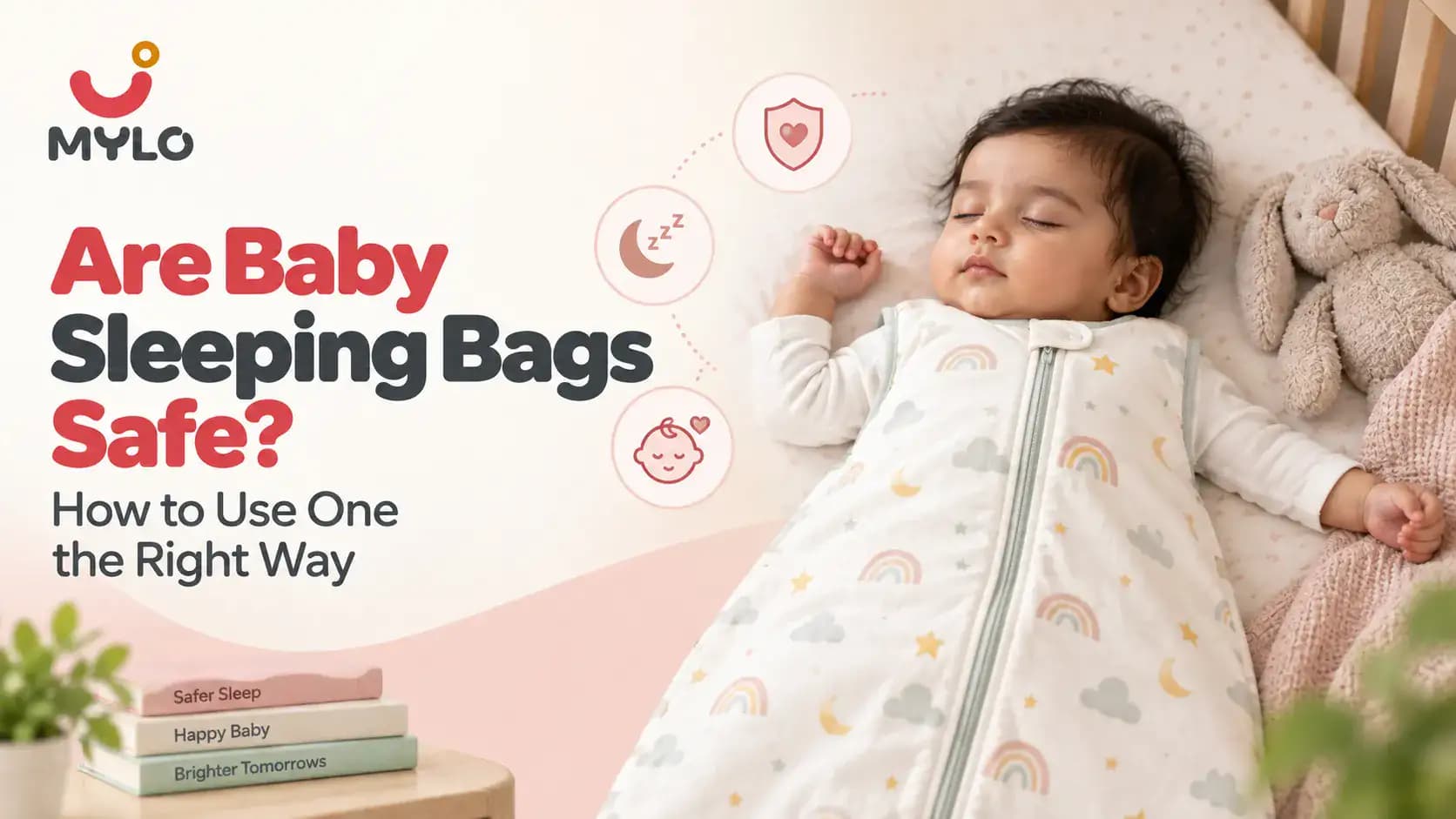
Are Baby Sleeping Bags Safe? How to Use One the Right Way


RMNCH+A, MCH & Midwifery, Program Management & National Trainer (ToT/ToN), WHO, MoHFW, ECHO Model · 11 years experience
 159 Likes|
 14 min
Key Takeaways
Quick overview in 30 seconds.webp&w=32&q=75)
- Baby sleeping bags keep your little one warm, cozy and safe through the night while reducing the risk of Sudden Infant Death Syndrome (SIDS) by keeping the head uncovered.
- Sleeping bags are safer than loose blankets, top sheets or duvets as babies cannot kick them off, preventing sudden exposure to cold or suffocation risks.
- With soft skin-friendly fabric, secure zippers, armholes and thick cushioning, sleeping bags protect baby's feet from cot bars and help set a consistent bedtime routine.
- Looking for a safe, cozy sleep solution for your newborn? Explore our 4-in-1 Soft & Snuggly Baby Sleeping Bag - Magical Rainbow designed for snug, worry-free nights.
 4.4
4.4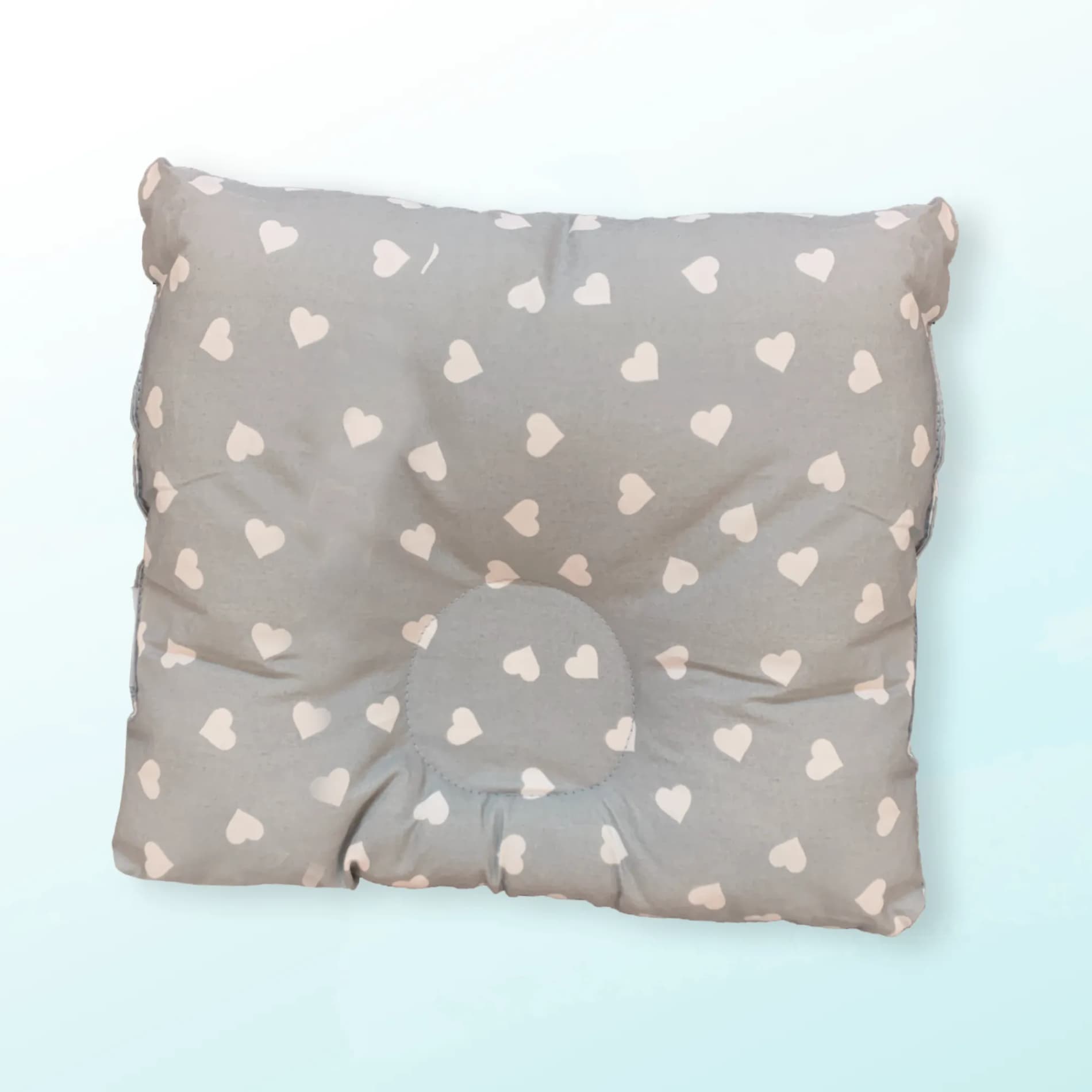 4.8
4.8 4.3
4.3Quick Answer
Yes, baby sleeping bags are safe, and in fact they are recommended as a safer alternative to loose blankets, because a well-fitting one stops your baby wriggling down under covers and getting their head covered. But safety depends on using it correctly: the right size (fitted at the neck and shoulders so your baby cannot slip inside), the right TOG rating for the room temperature, no extra blankets on top, and always placing your baby on their back to sleep in a clear, flat cot.
Key Takeaways
A well-fitting sleeping bag is a safer choice than loose blankets, because it cannot slip over your baby's face or be kicked off (The Lullaby Trust).
Correct fit is the most important safety point. It must be snug around the neck and shoulders so your baby cannot wriggle down inside it. Sleeping bags are sized by weight, not age.
Match the TOG rating to the room temperature. The recommended room temperature for a sleeping baby is 16 to 20°C, and overheating raises the risk of SIDS.
Never add blankets on top of a sleeping bag, and never use one with a hood. If your baby is cold, add a clothing layer or use a higher-TOG bag.
A sleeping bag is one part of safe sleep, not the whole of it. Always place your baby on their back, in their own clear, flat cot with a firm mattress and no pillows, duvets or bumpers.
What Is a Baby Sleeping Bag?
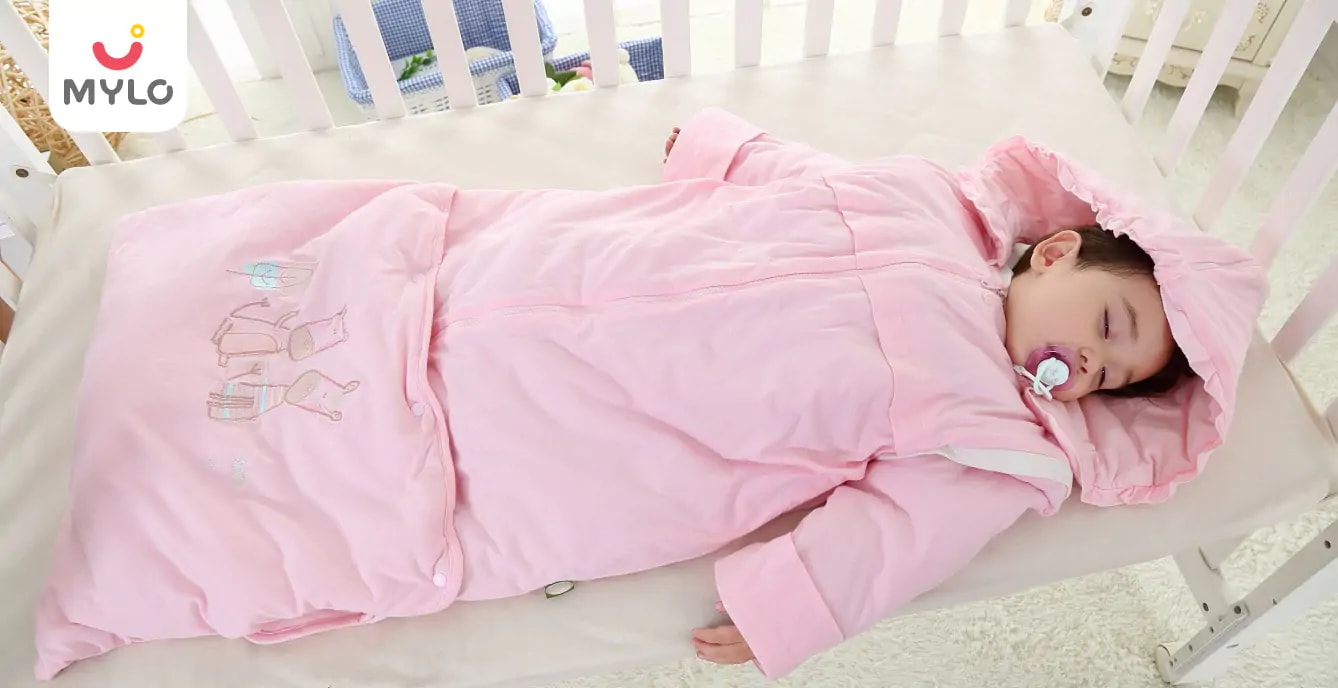
A baby sleeping bag, sometimes called a wearable blanket, is a soft bag with armholes (or short sleeves) and a fitted neck that your baby wears to sleep. It keeps them at a comfortable temperature without loose bedding that could cover their face. It zips or fastens over a baby grow or vest, and is worn instead of blankets in the cot.
Its whole purpose is to give warmth safely, which is why, used correctly, it supports safer sleep.
Are Baby Sleeping Bags Safe?
Yes, when used correctly, and they are actively recommended by safe-sleep authorities. The Lullaby Trust, a leading authority on reducing sudden infant death syndrome (SIDS), lists a sleeping bag as one of the few sleep items parents actually need, precisely because it avoids the risks of loose bedding (The Lullaby Trust).
Why a sleeping bag is safer than loose blankets:
It cannot slip up over your baby's face, so it helps keep the head uncovered, which matters because a covered head is a known risk factor for SIDS.
It cannot be kicked off, so your baby stays at a steady temperature through the night.
It stops your baby wriggling down under blankets.
Two honest clarifications, though. First, a sleeping bag does not "prevent SIDS" on its own; it is one helpful part of a bigger safe-sleep picture (covered below). Second, its safety depends entirely on using the right size and TOG, which is where most mistakes happen.
The Most Important Safety Point: Correct Fit
If you take one thing from this article, take this. The sleeping bag must fit snugly around the neck and shoulders, so your baby cannot wriggle down inside it. A bag that is too big is dangerous, because your baby could slip down and their head could become covered (The Lullaby Trust).
Choose by weight, not age. Most sleeping bags are sized by your baby's weight, so always follow the manufacturer's weight guidance rather than assuming by age.
Check the neck and armholes. Your baby's head should not be able to slip through the neck opening, and the armholes should not be so large that they can slide down. If the armholes are loose, choose a bag with underarm poppers or snugs, which are designed for smaller babies.
Look for a zip guard. Make sure the zip has a fabric guard (sometimes called a "zip garage") at the top, so it cannot rub or pinch your baby's chin and neck.
Do not buy one to "grow into". A too-large bag is not safe now, even if it will fit later.
Choose the newborn size for small babies, and move up as they grow.
Choose the Right TOG for the Room Temperature
Sleeping bags come in TOG ratings, which measure warmth. Using the wrong TOG risks your baby being too hot or too cold, and overheating raises the risk of SIDS, so this matters (The Lullaby Trust).
The recommended room temperature for a sleeping baby is 16 to 20°C. Use a room thermometer, because it is hard to judge by feel. Here is a practical guide.
Room temperature | Suggested TOG | What your baby wears under the bag |
|---|---|---|
Warmer than 24°C (hot weather) | 0.5 TOG, or just light bedding | A short-sleeve bodysuit, or a vest, or just a nappy |
About 20 to 24°C | 0.5 to 1.0 TOG | A short-sleeve bodysuit |
About 16 to 20°C | 1.0 to 2.5 TOG | A baby grow over a vest |
Cooler than 16°C | 2.5 TOG | A baby grow, plus a higher-TOG bag if needed |
Golden rules:
Follow the manufacturer's TOG guide for the exact temperature ranges of your bag.
Never add a blanket on top of a sleeping bag. If your baby is cold, add a clothing layer under the bag or use a higher-TOG bag instead.
Do not use a hooded sleeping bag, because the head must stay uncovered.
A Sleeping Bag Is Part of Safe Sleep, Not All of It
A sleeping bag helps, but it works only alongside the full safe-sleep basics. Every time you put your baby down (The Lullaby Trust):
Always place your baby on their back to sleep, for every sleep, day and night.
Use their own clear, flat, separate sleep space, such as a cot or Moses basket, with a firm, flat mattress and a waterproof cover.
Keep the cot clear: no pillows, duvets, thick bedding, cot bumpers, soft toys, pods or nests, or sleep positioners.
Do not let your baby sleep in a seated or inclined position (such as a bouncer or car seat) when not travelling; move them to their cot on their back.
Share a room, not a bed, for the first 6 months, and keep the environment smoke-free.
Avoid overheating, and keep the room at 16 to 20°C.
For more, see Mylo's guidance on the risks of a baby sleeping on their stomach.
How to Avoid Overheating
Because overheating is a real SIDS risk, check your baby regularly (The Lullaby Trust):
Feel your baby's chest, tummy or the back of the neck, not the hands and feet (which are normally cooler). Warm and dry is right; hot, sweaty or clammy means too hot.
If your baby is too hot, remove a layer or switch to a lower-TOG bag.
Do not cover the head during sleep, and remove hats indoors.
Baby Sleeping Bags in India: Hot Weather and AC Rooms
This is where general advice needs an Indian adjustment.
In hot Indian weather, use a very low TOG (around 0.5) in a light, breathable cotton or muslin sleeping bag, and dress your baby lightly underneath, sometimes just a vest or nappy. Overheating is the bigger risk in a hot climate.
In air-conditioned rooms, set the AC so the room sits around 20 to 24°C, and choose a TOG to match, adjusting what your baby wears underneath.
Watch for overheating during the day and in the monsoon humidity, and check your baby often.
Comfort and coolness matter more than "cosiness" in most Indian conditions.
When Can a Baby Start and Stop Using a Sleeping Bag?
Starting: you can use a correctly-sized sleeping bag from the newborn stage, as long as you choose the right newborn size for your baby's weight and it fits snugly at the neck.
Stopping: you can keep using sleeping bags well into toddlerhood, moving up sizes as your child grows. It is generally sensible to move on from a sleeping bag once your child is big enough to climb out of the cot or is moving into a bed (often around 18 to 24 months or later), when a lightweight toddler duvet becomes appropriate. There is no rush; a sleeping bag remains a safe, tidy option for as long as it fits well.
Sleeping Bag vs Swaddle vs Blanket: Which Is Safest?
Option | Safety notes |
|---|---|
Sleeping bag | The safest long-term option for infants. Eliminates loose bedding, keeps the face clear, and allows arm movement. Must non-weighted and hip-healthy. |
Swaddle | Suitable for young newborns to calm the startle reflex. Must be discontinued at the very first sign of rolling attempts (often 8–12 weeks). Arms must then be left free by transitioning to an arms-free sleeping bag. |
Loose blanket | Riskier, because it can slip over the face. If used, it should be lightweight and firmly tucked in no higher than the shoulders (feet-to-foot position), with no pillows or duvets |
For most babies past the newborn weeks, a well-fitting sleeping bag is the simplest safe option.
Baby Sleeping Bags: Frequently Asked Questions
"Are baby sleeping bags safe for newborns?"
Yes, as long as you use the correct newborn size for your baby's weight, with a snug neck so they cannot slip down inside. Choosing the right size is the key safety point.
"What TOG sleeping bag should I use?"
Match it to the room temperature: roughly 0.5 TOG in hot weather, 1.0 TOG for moderate rooms, and 2.5 TOG for cooler rooms below 16°C. Always follow your bag's own TOG guide, and keep the room at 16 to 20°C.
"Can I put a blanket over my baby in a sleeping bag?"
No. Never add a blanket on top of a sleeping bag, as it can cause overheating and cover the face. If your baby is cold, add a clothing layer underneath or use a higher-TOG bag.
"How do I know if my baby is too hot in a sleeping bag?"
Feel their chest, tummy or the back of the neck, not the hands and feet. If they feel hot, sweaty or clammy, remove a layer or use a lower-TOG bag. Keep the head uncovered.
"Do sleeping bags prevent SIDS?"
A well-fitting sleeping bag helps reduce risk by keeping the head uncovered and avoiding loose bedding, but it does not prevent SIDS on its own. It works together with the safe-sleep basics: back to sleep, a clear flat cot, no overheating, and a smoke-free, room-sharing environment.
"Which sleeping bag is best for Indian summers?"
A low-TOG (around 0.5), lightweight cotton or muslin sleeping bag, with your baby dressed lightly underneath. In hot weather, keeping cool matters more than warmth, so avoid over-layering.
"When should my baby stop using a sleeping bag?"
There is no fixed age. You can keep using larger sizes into toddlerhood, and typically move on when your child can climb out of the cot or moves to a bed, when a lightweight toddler duvet is suitable.
When To Seek Advice
Speak to your paediatrician or health visitor if:
You are unsure how to keep your baby at a safe temperature
Your baby was born prematurely or has any health condition affecting sleep
You have any concerns about your baby's breathing or sleep safety
This article is for information only and does not replace professional medical advice or the official safe-sleep guidance of bodies like The Lullaby Trust and your paediatrician.
Bottom Line
Baby sleeping bags are safe, and are actually a safer choice than loose blankets, because a well-fitting one keeps your baby's head uncovered and cannot be kicked off. The safety is all in how you use it: pick the right size for your baby's weight so they cannot slip inside, match the TOG to a room kept at 16 to 20°C, never add blankets on top or use a hood, and watch for overheating, which matters especially in India's warm climate. Above all, remember that the sleeping bag is one helpful part of safe sleep, not a replacement for it. Keep placing your baby on their back, in their own clear, flat cot, and you are giving them the safest possible sleep.
References
All links verified live on 17 September 2026.
Baby sleeping products: how to choose — The Lullaby Trust (UK SIDS charity). Source for sleeping bags avoiding loose-bedding risks, the safe-sleep basics (back to sleep, clear flat cot, firm mattress, what to avoid), and safety-standard checks.
How to dress your baby for sleep — The Lullaby Trust. Source for the 16 to 20°C room temperature, TOG guidance, correct fit (fitted by weight, snug neck), not adding blankets on top, and checking for overheating.
How to reduce the risk of SIDS for your baby — NHS, UK. Supporting source on safe-sleep practice.
Mylo internal guides: baby sleeping on stomach: risks and advice, do babies sleep well in sleeping bags, and choosing the best baby sleeping bag.
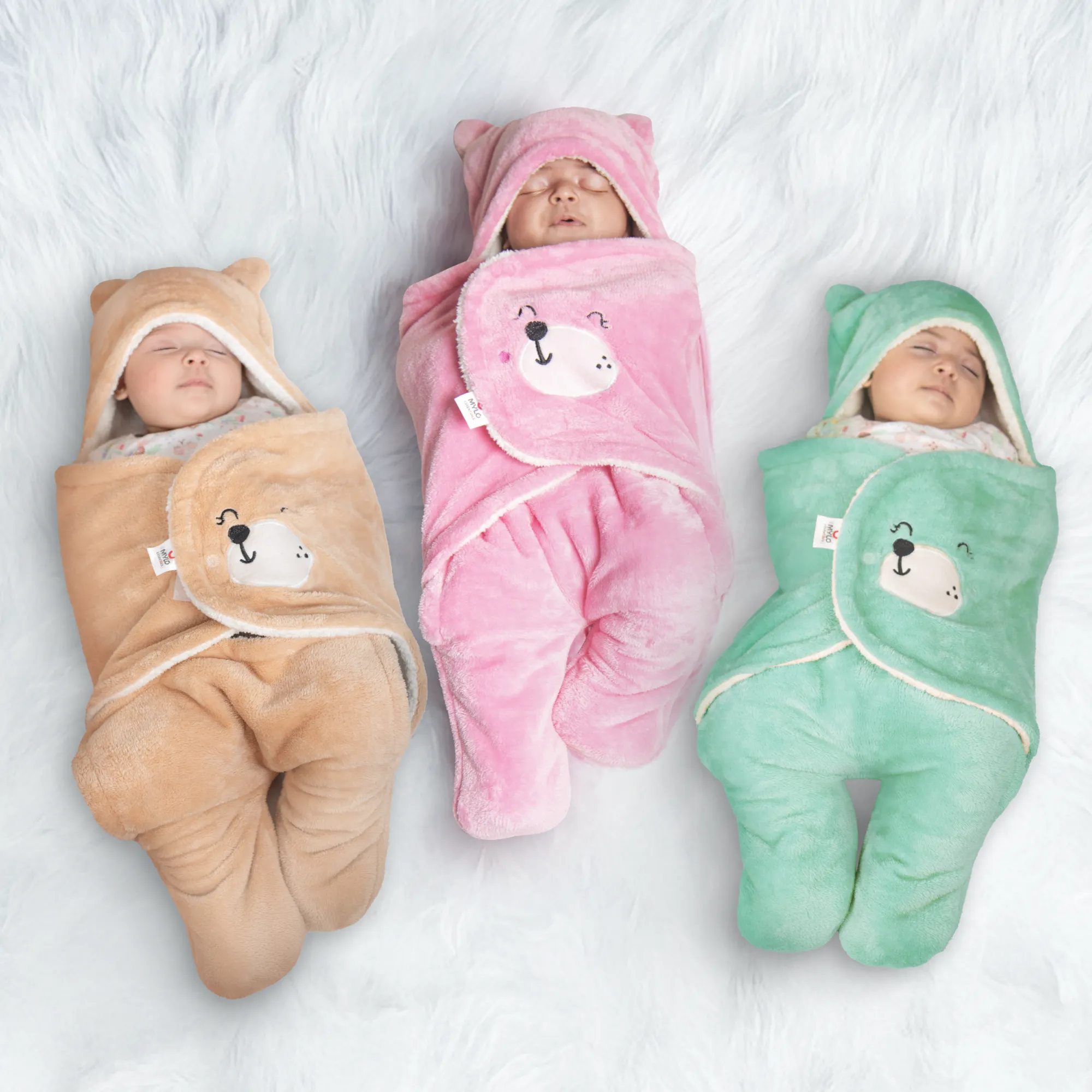

Trusted By Moms For Safe Baby Sleep
Helping your little one sleep soundly and safely - here's what moms rely on for cozy nights.
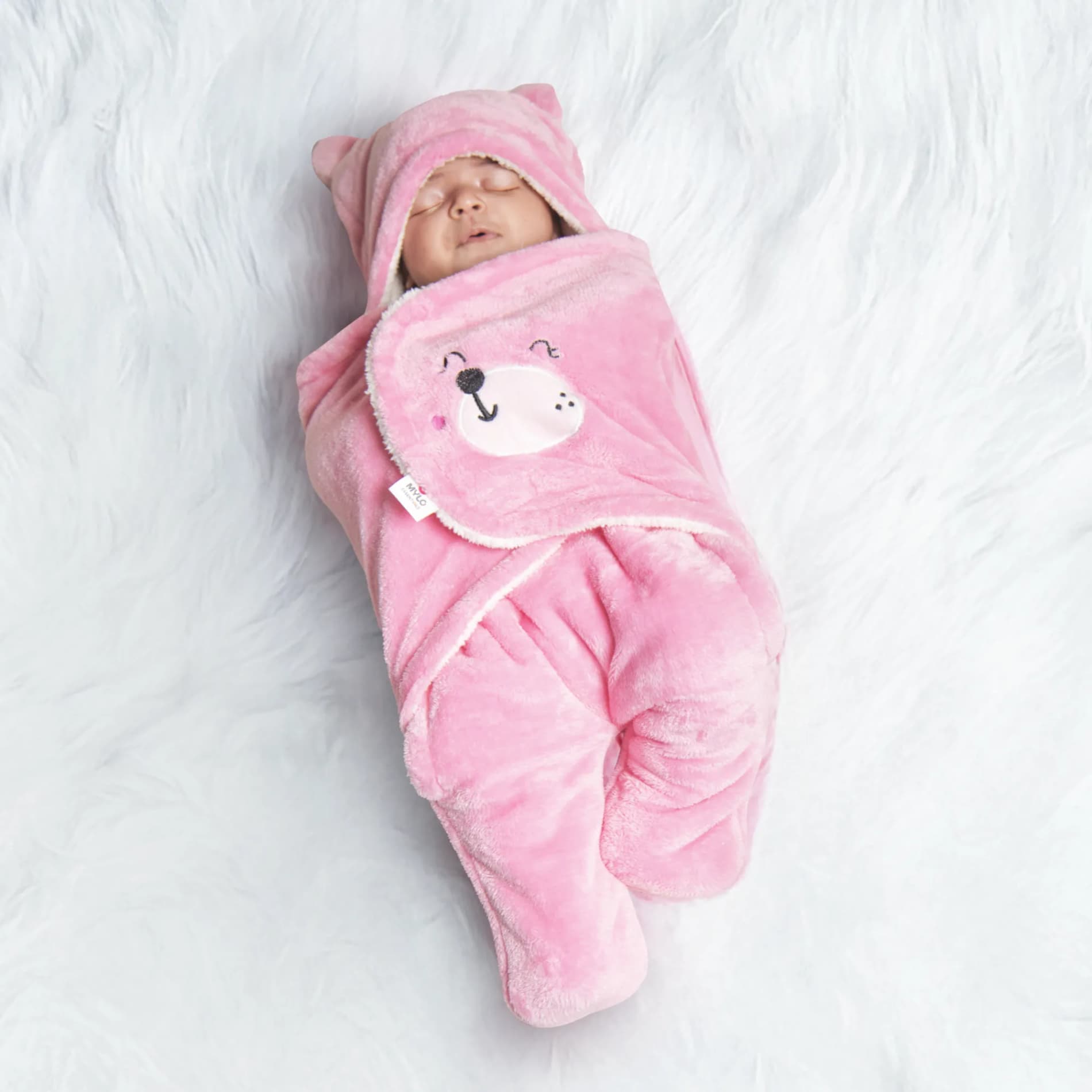
Mylo Baby AC Blanket - Sleeping cum Travel Blanket
Ultra Soft • Suitable for 0-6 Months Babies



Premium Head Shaping Pillow 0-36 Months - Shades of Grey
Provides Neck Support | Prevents Flat Head Syndrome | Portable & Lightweight



Mylo Herb Enriched Baby Massage Oil - 200 ml
Dermatologically Tested | Made Safe Certified | Nourishes Skin | Strengthens Immunity | Ayurvedic Preparation



Article Posted Under
Related Articles
Related Topics
.webp&w=32&q=75)
Medical Disclaimer
This content is for informational purposes only and should not replace professional medical advice. Consult with a physician or other health care professional if you have any concerns or questions about your health. If you rely on the information provided here, you do so solely at your own risk.


AWARDS AND RECOGNITION

Mylo wins Forbes D2C Disruptor award

Mylo wins The Economic Times Promising Brands 2022
AS SEEN IN












- Mylo Care: Effective and science-backed personal care and wellness solutions for a joyful you.
- Mylo Baby: Science-backed, gentle and effective personal care & hygiene range for your little one.
- Mylo Community: Trusted and empathetic community of 10mn+ parents and experts.


Product Categories
Baby Carrier | Baby Soap | Baby Wipes | Stretch Marks Cream | Baby Cream | Baby Shampoo | Baby Massage Oil | Baby Hair Oil | Stretch Marks Oil | Baby Body Wash | Baby Powder | Baby Lotion | Diaper Rash Cream | Newborn Diapers | Teether | Baby Kajal | Baby Diapers Pants | Cloth Diapers | Laundry Detergent | Lactation Granules |