


Orders
.png&w=48&q=75 "login")
Profile


Wallet

5 Bedtime Stories for Babies You Can Read Tonight
 438 Likes|
 14 min
AI-Generated Summary
Quick overview in 30 seconds.webp&w=32&q=75)
- Bedtime stories are a wonderful way to bond with your baby, inculcate a love of reading, and soothe them into a calm, restful sleep.
- Picture books and rhyming stories like 'Goodnight Moon' and 'Hush Little Baby' have a gentle, calming rhythm that lulls babies to sleep quickly.
- Stories like 'The Very Hungry Caterpillar' and 'The Crunching Munching Caterpillar' teach toddlers counting, food names, days of the week, and nature's cycles.
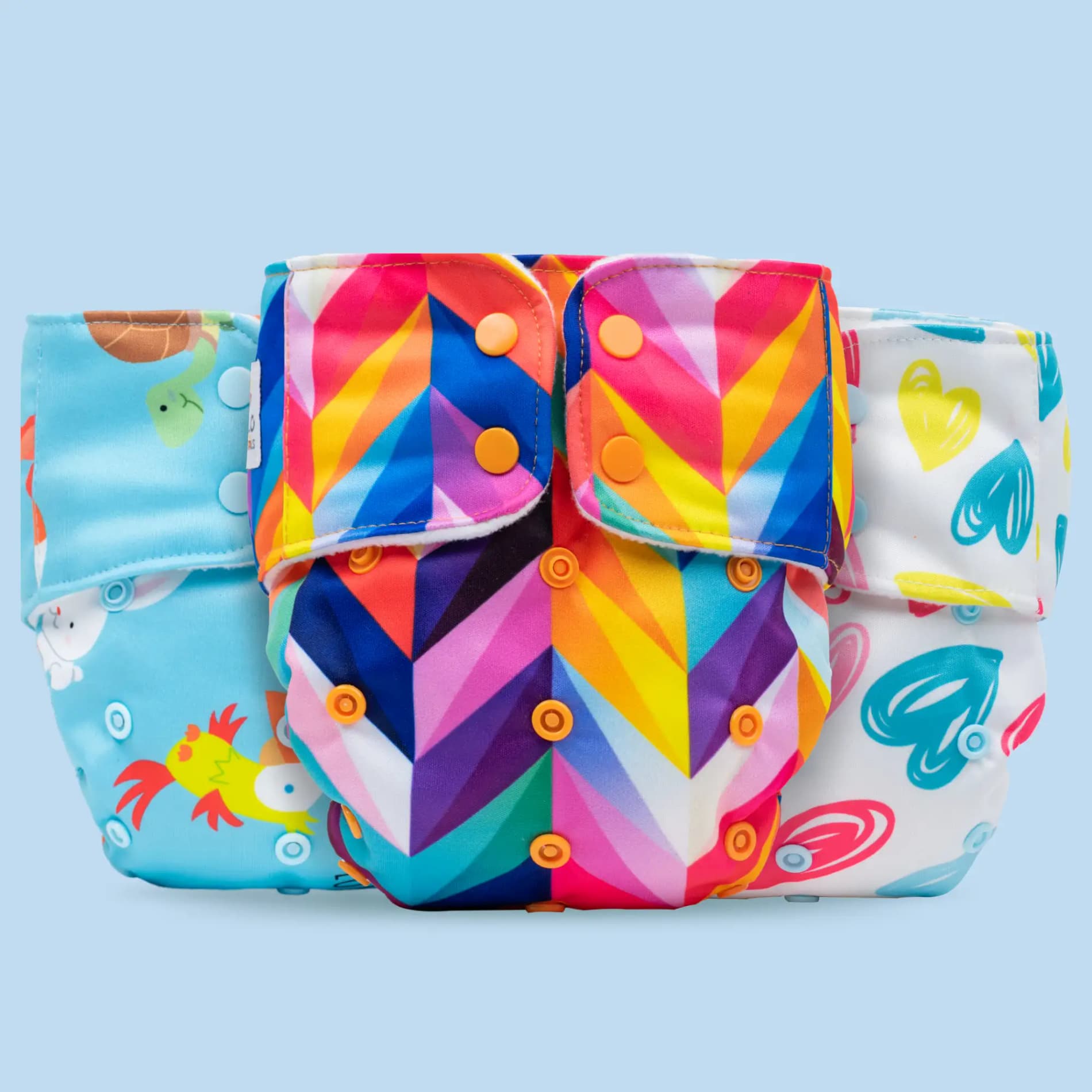
- Which books make bedtime magical for your little one? Explore our Adjustable & Reusable Cloth Diaper - Rainbow, Pet Love & Heart Doodles - Pack of 3.
 4.0
4.0 4.2
4.2Quick answer
Bedtime stories work for babies because of rhythm, repetition and your voice, not because they follow the plot. The five short stories below are written to be read aloud in two to three minutes, with simple language and repeated lines that babies find soothing. Read the same one every night if your baby likes it. Repetition is exactly what helps.
Key takeaways
Your voice matters more than the story. Babies respond to tone, rhythm and closeness long before they understand words.
Reading aloud daily from birth is worth doing, and it is one of the best-supported things you can do for early language development.
The same story every night is a good thing. Repetition is how babies learn, and predictability is what makes a bedtime routine work.
Read in the language you speak most comfortably. Reading well in Hindi, Tamil or Bengali beats reading hesitantly in English.
Keep it short. Two to three minutes is a complete bedtime story for a baby.
Story 1: Goodnight, Little One
Best for 0 to 2 years. Slow and quiet. Read this one last.
The sun has gone down behind the building.
The sky is turning dark and soft.
It is time to say goodnight.
Goodnight, little fan, turning slowly above the bed.
Goodnight, little light, growing dim by the door.
Goodnight, tulsi plant, standing quiet on the balcony.
Goodnight, sparrow, tucked away in your nest.
Goodnight, street below, growing quiet now.
Goodnight, slippers, waiting by the door until morning.
Goodnight, little hands, that held so many things today.
Goodnight, little feet, that kicked and stretched and played.
Goodnight, little eyes, growing heavy and slow.
The moon is outside the window.
The moon is watching over you.
Goodnight, moon.
Goodnight, stars.
Goodnight, my little one.
Sleep now. I am here.
Story 2: The Little Star Who Would Not Sleep
Best for 0 to 2 years. Gentle and repetitive.
High up in the dark sky, all the stars were going to sleep.
One by one they closed their eyes, and one by one their light grew soft and small.
But one little star would not sleep.
"I am not sleepy," said the little star. "I want to keep shining."
So the little star shone, and shone, and shone.
The moon came by, big and round and kind.
"Little star," said the moon, "why are you still awake?"
"I am not sleepy," said the little star.
"Then let us be quiet together," said the moon.
So the moon and the little star sat together in the sky.
The wind grew soft.
The clouds drifted slowly by.
The night grew still.
And the little star began to feel just a little bit sleepy.
"Close your eyes," said the moon. "I will watch the sky tonight."
So the little star closed her eyes, and her light grew soft and small.
And all across the sky, every star was sleeping.
And down below, in a warm little bed, somebody else was sleeping too.
Story 3: Five Little Ducks by the Pond
Best for 6 months to 2 years. Rhythmic, with counting. Good for touching toes and fingers as you read.
By the pond, in the tall green grass, lived five little ducks.
All day they swam. All day they splashed. All day they said, "Quack, quack, quack!"
But now the sun was going down.
The first little duck stopped swimming. She tucked her head under her wing and went to sleep.
Four little ducks left.
The second little duck stopped splashing. He tucked his head under his wing and went to sleep.
Three little ducks left.
The third little duck stopped quacking. She tucked her head under her wing and went to sleep.
Two little ducks left.
The fourth little duck gave one small yawn. He tucked his head under his wing and went to sleep.
One little duck left.
The last little duck looked at the pond, all quiet and still.
She looked at the sky, all dark and soft.
She tucked her head under her wing.
And all five little ducks slept, by the pond, in the tall green grass, until morning.
Story 4: The Thirsty Crow
Best for 18 months to 3 years. A traditional tale, retold simply.
It was a hot, hot day.
A crow flew over the fields, looking for water. He flew and he flew, and he grew very thirsty.
"Caw," said the crow. "I am so thirsty."
He looked under the trees. No water.
He looked near the houses. No water.
He looked by the road. No water.
Then he saw a pot.
The crow flew down and looked inside. There was water at the very bottom of the pot, but the pot was tall and the water was far, far down.
The crow put his beak in. He could not reach.
He tried again. He could not reach.
Then the crow saw some small stones lying on the ground.
He picked up one stone in his beak and dropped it into the pot. Plop.
He picked up another stone and dropped it in. Plop.
Another. Plop. And another. Plop.
And slowly, slowly, the water began to rise.
Higher and higher it came, until at last the crow could reach.
He drank and drank until he was not thirsty any more.
"Caw," said the clever crow, and he flew away home.
Story 5: The Lion and the Mouse
Best for 18 months to 3 years. A traditional tale, retold simply.
In the middle of the forest, a big lion lay sleeping in the sun.
A little mouse came running past. She did not see the lion, and she ran right across his paw.
The lion woke up. He put his big paw on the little mouse and held her tight.
"I am going to eat you," said the lion.
"Please let me go," said the little mouse. "I am very small. And one day, I might help you."
The lion laughed and laughed. "You? Help me? You are the smallest thing in this forest."
But the lion was in a good mood, so he lifted his paw and let the little mouse run away.
Some days later, the lion was walking in the forest when he stepped into a hunter's net. He pulled and pulled, but he could not get free.
"Roar!" cried the lion. "Roar! Help me!"
The little mouse heard him. She ran and ran until she found the lion in the net.
"Do not worry," she said.
And with her small sharp teeth, she began to bite the ropes.
She bit and bit and bit, until the ropes broke apart and the lion was free.
"Thank you, little friend," said the lion. "You were right. Even someone very small can help someone very big."
Why read to a baby who does not understand the story?
Because understanding the plot is not the point.
What your baby is actually getting:
Language exposure. Hearing words, rhythm and sentence patterns repeatedly is how language is built
Your voice and closeness, which is the main reason story time settles a baby
Turn-taking, as your baby coos or babbles and you respond
A predictable sleep cue. A story at the same point each evening tells your baby what comes next
Early book handling. Turning pages, pointing, chewing the corner. All part of it
Reading aloud daily from birth is recommended by paediatric bodies, and shared reading in infancy is linked with stronger later language and literacy.
What suits which age
Age | What works | What to expect |
|---|---|---|
0 to 6 months | High-contrast pictures, faces, rhythmic verse, lullabies | Your baby listens and looks. They will not follow a story |
6 to 12 months | Sturdy board books, bright simple pictures, repeated phrases | Grabbing, chewing, page-turning. Interruption is participation |
12 to 18 months | Very short stories, naming books, animal sounds | Pointing at pictures, joining in with familiar lines |
18 months to 3 years | Simple stories with a beginning and an end, folk tales, rhymes | Wanting the same story endlessly. Finishing your sentences |
How to read aloud to a baby
Go slower than feels natural. Much slower
Use your voice. Different tones, animal sounds, a whisper for the quiet parts
Let them touch, grab and chew. A baby exploring a book is engaging with it
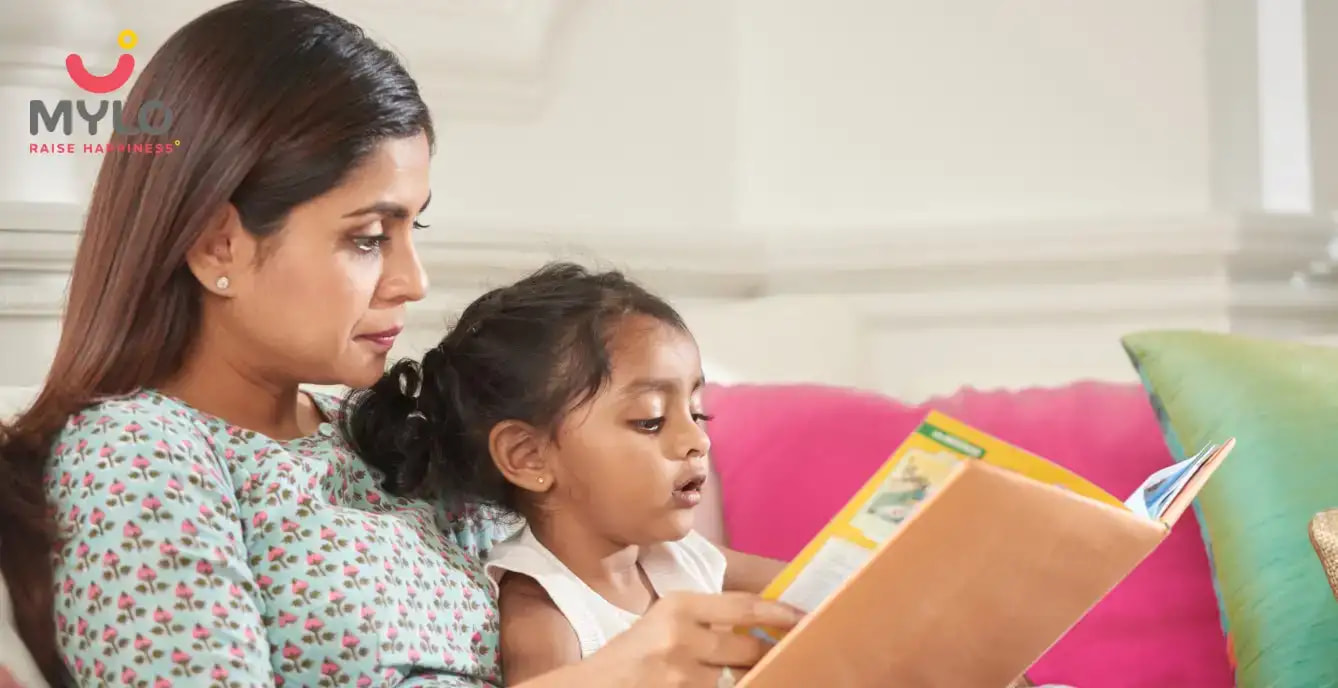
Do not worry about finishing. Two pages is a complete session with a nine-month-old
Point and name things. "Look, a duck. The duck is sleeping"
Pause and respond. When your baby babbles, answer as if they said something
Read the same story again. And again. Familiarity is what makes it soothing
Follow their interest. If they want to stay on one page, stay there
Building a bedtime routine
The story works best as part of a sequence, because the sequence itself is the sleep cue.
Step | Why |
|---|---|
Keep the same order every night | Predictability is the active ingredient. The order matters more than the contents |
Start winding down 30 to 45 minutes before sleep | Lights lower, voices quieter, activity calmer |
Bath or a wash, then a change | A clear marker that the day is ending |
Feed | Before the story rather than after, if you are trying to avoid feeding to sleep |
Story, in the bedroom, low light | The last calm step |
Lullaby, then into the cot | Sleepy but awake, where possible |
Keep the routine short enough to repeat every night, including the nights when you are exhausted or away from home.
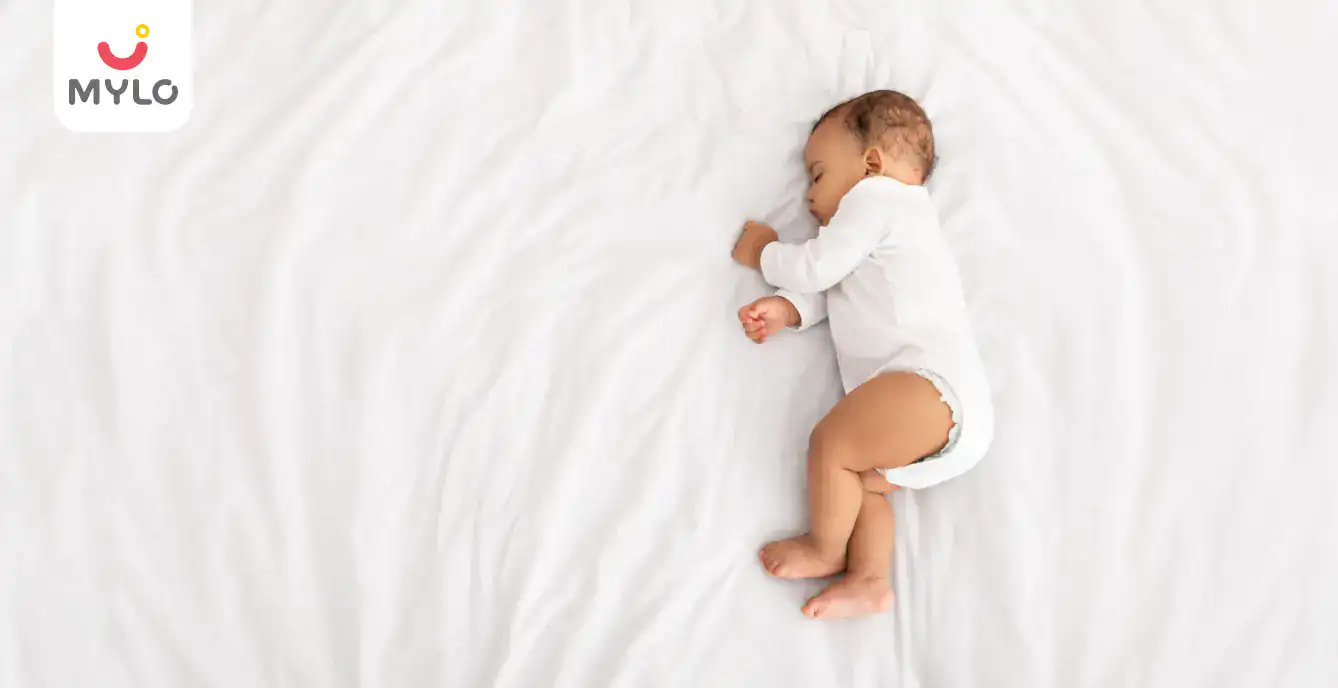
Safe sleep reminder: once the story is over, put the book away. Babies should sleep on their back on a firm, flat surface with nothing in the cot, including books, toys, pillows and loose bedding.
Telling stories in Hindi and regional languages
Read in the language you speak most comfortably. A parent telling a story fluently in Marathi gives their baby far more than the same parent reading haltingly in English.
Growing up with two or three languages does not delay speech. Count your child's words across all languages together
Mixing languages in one sentence is normal, and is a sign of ability rather than confusion
The stories above translate easily. They use simple, everyday words on purpose. Tell them in Hindi, Tamil, Bengali, Marathi or any language you like
Ask your parents what they sang and told you. Lullabies like "Chanda mama door ke" and the folk tales in your family language are usually only one generation from being forgotten, and your voice telling them is worth more than any recording
You do not need a book at all
Some of the best bedtime stories need nothing.
Tell your baby about their own day. "This morning you woke up, and you had milk, and then Nani came and you smiled at her, and then we sat on the balcony and saw the crows." Real words about real things, in your own voice
Sing a lullaby you already know
Tell a story you remember from your own childhood, however roughly
For a baby, this is not a lesser option. It may be the better one.
What about audio stories and screens?
Audio is not the same as you. Recorded stories have their place, especially while travelling or on a night when you have nothing left, but they do not provide the back-and-forth that makes reading valuable for language development.
On screens: guidance advises avoiding screen media other than video calls before about 18 to 24 months, and keeping it short and supervised afterwards. Screens in the hour before bed also make settling harder, so a screen-based story is a poor choice at bedtime specifically.
Frequently asked questions
At what age can I start reading to my baby?
From birth. Newborns respond to rhythm, tone and your voice long before they follow any story.
Does my baby understand the story?
Not the plot, and that is fine. They are getting language exposure, rhythm, closeness and a predictable cue that sleep is coming.
My baby chews the book and turns pages randomly. Am I doing it wrong?
No. That is exactly how babies engage with books. Use board books, follow their lead, and do not worry about finishing.
How long should a bedtime story be?
Two to three minutes is plenty for a baby. Consistency matters far more than length.
My baby wants the same story every night. Should I vary it?
No need. Repetition is how babies learn, and familiarity is part of what settles them.
Should I read in English or my own language?
Your own, if that is what you speak most comfortably.
Are audio stories as good as reading aloud?
They are useful occasionally, but they lack the back-and-forth that makes reading valuable. Your voice and your responses are the active ingredient.
Can I leave a book in the cot?
No. Babies should sleep on their back on a firm, flat surface with nothing in the cot.
What if I am not confident reading aloud?
Then tell a story instead. Narrate your baby's day, sing a lullaby, or tell one of the tales above from memory. All of it works.
The bottom line
Bedtime stories for babies are less about the story than about your voice, a steady rhythm and the same thing happening at the same point every night. Read one of the five above, read it slowly, and read it again tomorrow if your baby liked it. And on the nights when you have nothing left, just tell them about their day. That works too.
Sources
American Academy of Pediatrics, literacy promotion and guidance on media use in young children
World Health Organization, guidelines on physical activity, sedentary behaviour and sleep for children under 5
UNICEF, early childhood development and early learning resources
Indian Academy of Pediatrics, guidance on screen time in early childhood
Chosen by Parents Creating Cozy Bedtime Rituals
Soft lights, snuggly blankets, and calming essentials to make storytime the sweetest part of your baby's day.





Article Posted Under
Related Articles
Related Topics
.webp&w=32&q=75)
Medical Disclaimer
This content is for informational purposes only and should not replace professional medical advice. Consult with a physician or other health care professional if you have any concerns or questions about your health. If you rely on the information provided here, you do so solely at your own risk.


AWARDS AND RECOGNITION

Mylo wins Forbes D2C Disruptor award

Mylo wins The Economic Times Promising Brands 2022
AS SEEN IN












- Mylo Care: Effective and science-backed personal care and wellness solutions for a joyful you.
- Mylo Baby: Science-backed, gentle and effective personal care & hygiene range for your little one.
- Mylo Community: Trusted and empathetic community of 10mn+ parents and experts.


Product Categories
Baby Carrier | Baby Soap | Baby Wipes | Stretch Marks Cream | Baby Cream | Baby Shampoo | Baby Massage Oil | Baby Hair Oil | Stretch Marks Oil | Baby Body Wash | Baby Powder | Baby Lotion | Diaper Rash Cream | Newborn Diapers | Teether | Baby Kajal | Baby Diapers Pants | Cloth Diapers | Laundry Detergent | Lactation Granules |