


Orders
.png&w=48&q=75 "login")
Profile


Wallet

10 Weeks Pregnant Belly Size: What's Normal and What's Not
 216 Likes|
 14 min
MBBS, DGO · 38 years experience

Key Takeaways
Quick overview in 30 seconds.webp&w=32&q=75)
- At 10 weeks pregnancy, the belly starts showing subtly as the embryo becomes a foetus, marking a key milestone with visible veins and mild body changes.
- The baby is about the size of a strawberry (1.2 inches, 0.14 ounces), with limbs, organs, and cartilage forming rapidly during this stage of development.
- Expect morning sickness, fatigue, mood swings, breast growth, and abdomen stretching; the NT test between weeks 10-14 screens for chromosomal abnormalities like Down syndrome.
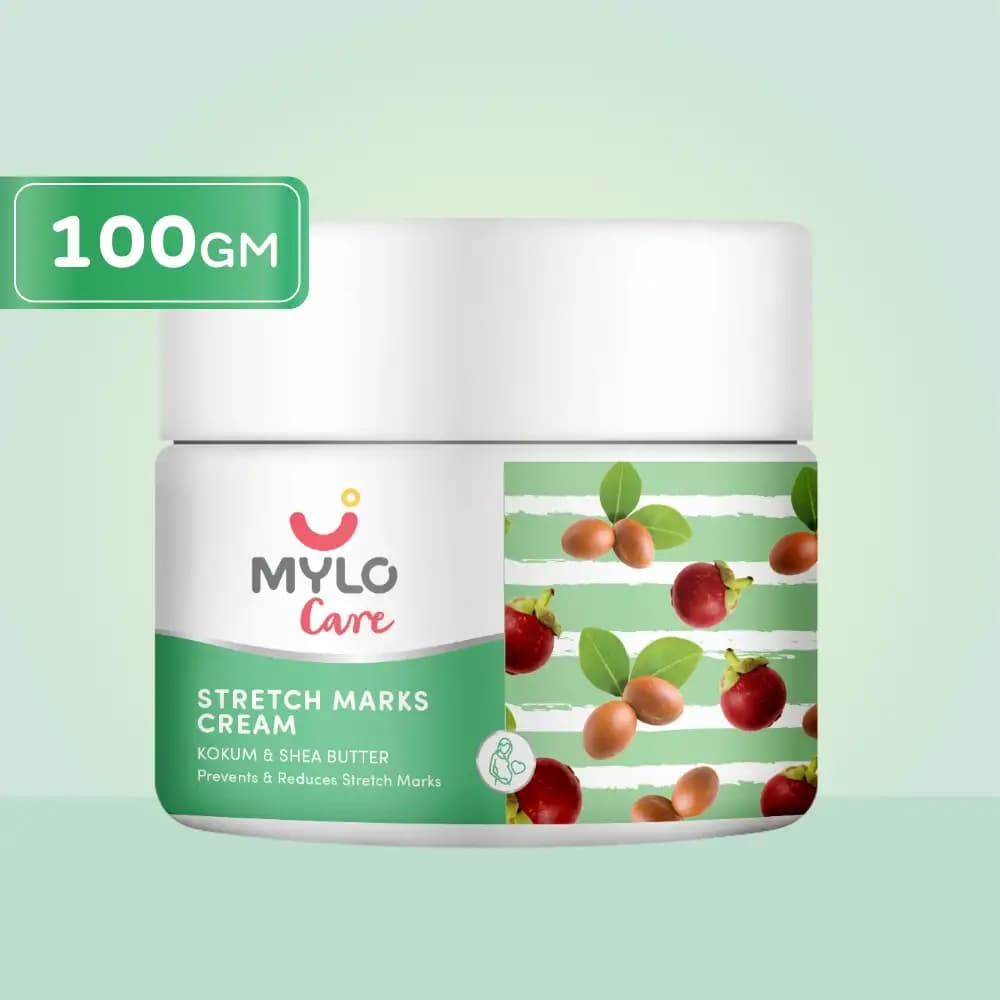
- Worried about stretch marks as your bump grows? Explore our Stretch Marks Cream - 100 gm designed to keep your skin soft, supple, and nourished through pregnancy.
 4.9
4.9 4.2
4.2 4.5
4.5 4.6
4.6Quick answer
At 10 weeks, most women are not showing a pregnancy bump. Your uterus is around the size of a large orange and is still sitting inside the pelvis, so it cannot push the abdomen outward yet. Any roundness you see is almost always bloating from hormonal changes and slower digestion. Visible bumps usually appear between 12 and 16 weeks, later in a first pregnancy.
Key takeaways
A bump at 10 weeks is bloating, not baby. The uterus does not rise above the pubic bone until around 12 weeks, so it physically cannot be creating a visible bump before then.
Not showing at 10 weeks is completely normal, and is what most first-time mothers experience.
Showing early is also normal, and is most common in second and later pregnancies, because the abdominal muscles have stretched before.
Belly size tells you nothing about your baby's health. Growth is assessed on scans, not on how you look.
Severe pain at 10 weeks is not a normal pregnancy symptom. Severe or one-sided abdominal pain, bleeding, fainting or persistent vomiting all need medical assessment, not reassurance.
What is actually happening at 10 weeks?
Your baby is around 3 to 4 centimetres from head to bottom and weighs roughly 4 grams, about the size of a strawberry. Fingers and toes are separating, major organs are forming, and this is one of the fastest periods of development in the whole pregnancy.
Your uterus is around the size of a large orange, roughly double its non-pregnant size. This matters for the question everyone is actually asking, because an organ that size still fits comfortably inside your pelvis. It does not begin to rise above the pubic bone until about 12 weeks.
So if your abdomen looks fuller at 10 weeks, it is almost certainly not the uterus. It is bloating.
Why does my stomach look bigger if it is not the baby?
Cause | What is happening |
|---|---|
Progesterone and slower digestion | Rising progesterone relaxes smooth muscle, including in the gut. Food moves more slowly, which produces gas and bloating |
Constipation | Very common in the first trimester, and it adds visibly to abdominal fullness |
Fluid retention | Blood volume and body fluid both increase from early pregnancy |
Eating differently | Many women eat smaller, more frequent, blander meals for nausea, which changes how the gut feels |
Abdominal muscle relaxation | Particularly in a second or later pregnancy, the abdominal wall gives way sooner |
This is why bloating often looks worse in the evening than first thing in the morning, and why it changes from day to day. A genuine pregnancy bump does not shrink overnight. Bloating does.
When will I actually start showing?
Pregnancy | Typical time to show |
|---|---|
First pregnancy | Usually 12 to 16 weeks, sometimes later |
Second or later pregnancy | Often 8 to 12 weeks, because the abdominal muscles have stretched before |
Twins or more | Usually earlier, since the uterus is larger sooner |
What influences it:
Number of previous pregnancies. The single biggest factor
Abdominal muscle tone. Stronger muscles hold the uterus back for longer
Your build and torso length. A longer torso gives the uterus more room before it pushes forward
Body weight and fat distribution. Both can conceal or exaggerate the early change
The position of your uterus. A retroverted or tilted uterus, which is a normal variation, often shows later
Fibroids, which can make the abdomen appear larger earlier
None of these say anything about your baby. Two women at exactly the same stage, with equally healthy pregnancies, can look completely different.
Does belly size tell you anything about the baby?
No, not at 10 weeks, and not in any reliable way for months afterward.
Your doctor assesses your baby's growth on ultrasound, by measuring specific dimensions and comparing them with expected ranges. Fundal height, the tape measurement over the bump, is only meaningful from around 20 weeks onward, and even then it is a screening measure rather than a precise one.
This is worth internalising early, because comparison is one of the most common sources of anxiety in the first trimester. Social media makes it worse, since early bump photos are frequently bloating, posture, or a later week than stated. The scan is the answer. The mirror is not.
How much weight should I have gained by 10 weeks?
Very little, and possibly none at all.
Most weight gain happens in the second and third trimesters. In the first trimester, typical gain is small, often in the region of half a kilo to two kilos across the whole trimester. Many women gain nothing, and some lose a little because of nausea and food aversions. All of this can be normal.
Recommended total pregnancy weight gain depends on your pre-pregnancy BMI, and Indian guidance uses lower BMI cut-offs than Western charts, since Indians carry more metabolic risk at lower body weights. Ask your obstetrician what range applies to you specifically, rather than using a chart from a general website.
Tell your doctor if:
You are losing weight steadily, particularly once nausea has settled
You cannot keep food or fluids down
You have gained weight rapidly and suddenly, especially with swelling
What else is normal at 10 weeks?
Nausea and vomiting, often worst between 6 and 12 weeks
Extreme tiredness. Frequently the most underestimated first-trimester symptom
Breast tenderness and growth, with more visible veins
Mild cramping or a pulling sensation low down, as ligaments stretch
Increased vaginal discharge, which is normal if it is thin, clear or milky white, and not itchy or foul-smelling
Mood changes
Food aversions, heightened smell, a metallic taste
Needing to urinate more often
Mild constipation and bloating
What is not routine at 10 weeks: severe pain. Mild cramping and stretching sensations are common, but severe or one-sided pain is not something to wait out.
Scans and tests around this time
Test | When | What it is for |
|---|---|---|
Dating or viability scan | Usually 6 to 12 weeks | Confirms pregnancy, heartbeat, number of babies and due date |
NT scan with double marker | 11 weeks 0 days to 13 weeks 6 days, not from 10 weeks | Screens for chromosomal conditions by measuring nuchal translucency, combined with two blood markers |
NIPT (cell-free DNA) | From about 10 weeks | A more sensitive screening blood test. It is a screening test, not a diagnostic one. Usually self-funded in India |
Routine bloods | Early pregnancy | Haemoglobin, blood group and Rh, thyroid, blood sugar, infection screening |
A note on the NT scan. It is commonly written as "10 to 14 weeks," but it is measured accurately only between 11 weeks 0 days and 13 weeks 6 days, when your baby's crown-rump length is in the right range. If you are booked before 11 weeks, check the date, because a scan done too early may need repeating.
And one legal point specific to India. Determining or disclosing the sex of the baby is illegal under the PCPNDT Act. Your scan centre will have a notice displayed, and no doctor or technician will answer that question. This applies to every scan throughout the pregnancy.
When should you see a doctor?
Contact your doctor or go to hospital immediately if you have:
Severe abdominal pain, especially on one side
Vaginal bleeding, whether light spotting or heavier. Some spotting in early pregnancy is common and often harmless, but it should always be reported rather than judged at home
Shoulder tip pain, which alongside abdominal pain can indicate an ectopic pregnancy
Fainting, dizziness on standing, or feeling like you might collapse
Vomiting so persistent that you cannot keep fluids down, or you are passing very little urine, or have lost significant weight. This may be hyperemesis gravidarum and needs treatment
Fever
Burning when passing urine, or pain in your side, which may indicate a urinary or kidney infection
Vaginal discharge that is green, grey, frothy, foul-smelling or itchy
Book an appointment for:
Weight loss continuing after nausea has settled
Ongoing severe constipation
Any symptom that worries you, even if it is not on this list
Do not use the size of your belly as a reason to seek or skip care. A normal-looking abdomen does not rule out a problem, and a larger one does not indicate one.
Can I do anything about the bloating?
It is uncomfortable rather than harmful, and a few things genuinely help:
Eat smaller meals more often rather than three large ones
Drink water steadily through the day, which also helps constipation
Add fibre gradually, through fruit, vegetables, dal and whole grains. Adding a lot at once tends to worsen the gas
Walk after meals, even for ten minutes
Reduce fizzy drinks and chewing gum, both of which increase swallowed air
Wear something comfortable. Tight waistbands make bloating feel far worse, and there is no reason to endure them
Ask your doctor before taking any antacid, laxative or digestive remedy, including traditional preparations
On stretch mark products: there is no need to start at 10 weeks, and no topical product has been shown to reliably prevent stretch marks. Moisturising helps with comfort and itching later on, which is a good enough reason to do it, but do not buy one under the impression it prevents anything.
Frequently asked questions
Is it normal to have no bump at 10 weeks?
Yes, and it is what most women experience, particularly in a first pregnancy. Your uterus is still inside your pelvis at this stage.
Why does my belly look bigger at 10 weeks then?
Almost always bloating, from hormonal slowing of digestion and constipation. It typically looks worse in the evening and better in the morning, which a real bump does not.
I am 10 weeks and already showing. Is something wrong?
Usually not. Showing early is common in second and later pregnancies, and can happen with twins or with fibroids. Your scan will tell you what is going on far better than your reflection.
Does a small belly mean a small baby?
No. Belly size is not a measure of your baby's growth at any stage of the first trimester, and even later it is only a rough screening measure.
How much weight should I have gained by 10 weeks?
Often very little, sometimes nothing, and occasionally a small loss if nausea is severe. Most pregnancy weight gain happens later. Ask your doctor what total range applies to your pre-pregnancy BMI.
When will I feel the baby move?
Usually between 18 and 22 weeks in a first pregnancy, and sometimes a little earlier in later pregnancies. Nothing you feel at 10 weeks is the baby moving.
Can I still wear my normal clothes at 10 weeks?
Most women can, though many find waistbands uncomfortable because of bloating. Comfort is the only consideration here.
Is mild cramping at 10 weeks normal?
Mild cramping and a stretching or pulling sensation are common as ligaments adapt. Severe pain, one-sided pain, or pain with bleeding is not, and needs assessment.
When is the NT scan done?
Between 11 weeks 0 days and 13 weeks 6 days. It cannot be done accurately before 11 weeks, so check your appointment date if it has been booked earlier.
My bump disappears in the morning. Is that normal?
Yes, and it is a strong sign that what you are seeing is bloating rather than uterine growth. A genuine bump does not shrink overnight.
The bottom line
At 10 weeks your uterus is roughly the size of a large orange and still sitting inside your pelvis, so a visible bump at this stage is bloating rather than baby. Most first-time mothers start showing somewhere between 12 and 16 weeks, and showing earlier or later says nothing about how the pregnancy is going. What does matter is your scan, your symptoms, and knowing that severe pain, bleeding or persistent vomiting are reasons to call your doctor rather than wait.
Sources
NHS, your pregnancy week by week, and early pregnancy symptoms
American College of Obstetricians and Gynecologists, first trimester care and weight gain in pregnancy
Royal College of Obstetricians and Gynaecologists, early pregnancy loss and ectopic pregnancy guidance
World Health Organization, recommendations on antenatal care for a positive pregnancy experience
Fetal Medicine Foundation, nuchal translucency screening timing and crown-rump length criteria
Federation of Obstetric and Gynaecological Societies of India, antenatal care guidance
Ministry of Health and Family Welfare, Government of India, Pre-Conception and Pre-Natal Diagnostic Techniques (PCPNDT) Act
This article is for general information and is not a substitute for medical advice. Contact your doctor immediately for severe abdominal pain, bleeding, fainting, fever, or vomiting that prevents you keeping fluids down.

Popular Articles
Trending Articles
Trusted By Moms In Their First Trimester
Your belly is just starting to stretch - these gentle essentials help you stay comfortable and nourished.
Stretch Marks Cream - 100 gm
Removes Stretch Marks | Made Safe Australia Certified | Safe During Pregnancy & Breastfeeding



Stretch Marks Oil - 100 ml
Scars & Stretch Mark Lightening | Natural Skin Care Solution for Pregnant Women



Stretch Marks Kit (Stretch Mark Oil + Stretch Marks Cream - 100ml each)
Made with Natural Ingredients | Tightens Skin | Prevents New and Fades Old Stretch Marks |


MamaGro™ Protein Diskettes - 250gm - Vanilla
Supports Healthy Placenta | Supports Fetal Development

Article Posted Under
Related Articles



Related Topics
.webp&w=32&q=75)
Medical Disclaimer
This content is for informational purposes only and should not replace professional medical advice. Consult with a physician or other health care professional if you have any concerns or questions about your health. If you rely on the information provided here, you do so solely at your own risk.


AWARDS AND RECOGNITION

Mylo wins Forbes D2C Disruptor award

Mylo wins The Economic Times Promising Brands 2022
AS SEEN IN













- Mylo Care: Effective and science-backed personal care and wellness solutions for a joyful you.
- Mylo Baby: Science-backed, gentle and effective personal care & hygiene range for your little one.
- Mylo Community: Trusted and empathetic community of 10mn+ parents and experts.


Product Categories
Baby Carrier | Baby Soap | Baby Wipes | Stretch Marks Cream | Baby Cream | Baby Shampoo | Baby Massage Oil | Baby Hair Oil | Stretch Marks Oil | Baby Body Wash | Baby Powder | Baby Lotion | Diaper Rash Cream | Newborn Diapers | Teether | Baby Kajal | Baby Diapers Pants | Cloth Diapers | Laundry Detergent | Lactation Granules |