


Orders
.png&w=48&q=75 "login")
Profile


Wallet

Best Baby Diapers in India: How to Choose the Right One for Your Baby
 21 min

RMNCH+A, MCH & Midwifery, Program Management & National Trainer (ToT/ToN), WHO, MoHFW, ECHO Model · 11 years experience
Key Takeaways
Quick overview in 30 seconds.webp&w=32&q=75)
- Indian heat and humidity make babies prone to diaper rashes, redness, leaks, and irritation, so choosing skin-friendly, breathable, and absorbent diapers becomes essential for everyday comfort.
- The best baby diapers in India offer multiple protective layers, fast even absorption, breathability with millions of pores, and skin-soothing ingredients like Aloe Vera for gentle care.
- Mylo Baby Diaper Pants feature 5-layer design, ADL technology for 2x faster absorption, OEKO-TEX certified top layer, and up to 12 hours of leak-proof overnight protection.
- Looking for rash-free, breathable diaper pants for your baby? Explore our Airprime Premium Diaper Pants S (5–9 kg, 26 Count) + 100% Plant-Based Baby Wipes (Pack of 2).
Quick Answer
The best diaper is the one that fits your baby without gaps at the thighs, breathes well enough for Indian heat, has no added fragrance, and comes in the size that matches your baby's current weight. Absorbency matters far less than parents expect, because almost every disposable uses the same gel core technology. Fit and breathability are what actually differ.
Key Takeaways
There is no single best diaper. Fit is baby-specific, and the diaper that leaks on one baby seals perfectly on another.
Buy by weight, not by age. A diaper near the top of its weight range fills faster and gaps at the legs, which causes most leaks parents blame on the brand.
Breathability matters more in India than most global diaper advice accounts for, because sweat plus urine keeps skin damp for longer.
Skip added fragrance, especially if your baby has had a rash or there is eczema in the family.
No diaper prevents diaper rash. How often you change is the factor with real evidence behind it.
You can settle the question properly in one week with a simple side by side test at home, described below.
What Does "Best Diaper" Actually Mean?
It means the best fit for one particular baby, at one particular weight, in one particular climate. That is why every published "best diaper" list disagrees with every other one.
Here is the part most buying guides get backwards. The absorbent core is the least differentiated thing about a modern diaper. Nearly every disposable sold in India uses a super absorbent polymer core that turns urine into gel and holds it below the surface. That technology is mature and broadly standard, so comparing two mainstream diapers on absorbency claims tells you very little.
What genuinely varies:
Factor | How much it varies | Why it matters to you |
|---|---|---|
Fit, cut and leg elastic | A great deal | Decides whether the diaper seals or leaks on your baby's build. The single biggest variable |
Breathability of the outer layer | A great deal | In 35 degree heat, a less breathable diaper keeps skin damp for longer |
Price per diaper | A great deal | Over two to three years this is usually the largest practical difference |
Size availability at the extremes | A great deal | New Born and XXL are where ranges run out and families get stuck |
Wetness indicator | Somewhat | Removes the guesswork about when to change. Genuinely useful |
Fragrance, lotions and dyes | Somewhat | Matters a lot for sensitive or eczema prone skin, little otherwise |
Absorbent core capacity | Very little | Standard technology. Adequate absorbency is table stakes, not a feature |
Six Things to Check Before You Buy
Your baby's current weight, measured, not estimated. Sizes are set by weight and this is the most common mistake. If your baby sits between two sizes, the larger one is usually better for overnight.
Whether the size you need is actually stocked. Check that the range extends both below 5 kg and above 15 kg before you commit to a brand, so you are not forced to switch later.
The leg elastic. Soft, and gentle enough not to leave a deep mark. Red indentations after removal mean the fit or size is wrong.
No added fragrance, particularly if there has been any rash or family history of eczema.
A wetness indicator, if you share changes with a grandparent or helper. It replaces a judgement call with a visible signal.
Price per diaper, not price per pack. Divide pack price by count, and compare the same size. Jumbo packs change the answer, but only pay off if your baby stays in that size long enough to finish them.
Which Diaper Is Best for Your Situation?
More useful than a single verdict, because the right answer depends on what is actually going wrong.
Your situation | What to prioritise | What will not fix it |
|---|---|---|
Newborn under 5 kg | A genuine New Born size, and tape style while the umbilical stump heals | An S size folded down at the front |
Rash keeps coming back | Breathability, fragrance free materials, a size that is not tight, and changing promptly | A more absorbent diaper. Rash is about contact time and friction, not capacity |
Sensitive or eczema prone skin | Fragrance free, dye free, and a soft top sheet. Introduce one new product at a time | Assuming a premium price means gentler materials |
Leaks at the thighs | Fit. Pull the leg elastic out so it sits in the thigh crease, then try one size up | Switching brand before checking the fit |
Leaks overnight only | One size up, a high absorbency line, and the diaper sitting high at the back | Changing more often at night when the diaper is simply too small |
Heavy toddler over 12 kg | XL or XXL availability. Many ranges stop at L | Stretching an L by adding a booster |
Indian summer, 35 degrees and above | Breathability, a thinner build, and some nappy free time each day | A thicker diaper, which traps more heat |
Monsoon and high humidity | Breathability, and disposables as backup if cloth inserts are not drying | Committing fully to cloth in a wet month without a bigger stash |
Active baby who rolls and crawls | Pant style rather than tape, with a snug waist | Going up a size to make dressing easier, which causes leaks |
Tight budget | Price per diaper on the largest pack you will finish, or cloth for daytime hours | Premium features you do not need |
Sharing changes with family or a helper | A wetness indicator, and a written routine everyone follows | Assuming everyone will judge wetness the same way |
What Is the Best Diaper for a Newborn?
A genuine New Born size, sized for up to about 5 kg, rather than the smallest size a brand happens to stock. Newborn sizing thins out fast across the market, and an S size on a 3 kg baby gaps at the legs and leaks.
Two newborn-specific points that matter more than any feature:
Tape style is easier while the umbilical stump is healing, because you can fold the front edge below the navel so nothing rubs it. Pull up pants are harder to adjust that precisely on a very small baby.
Buy small packs. Babies often outgrow New Born size within 4 to 6 weeks, so a very large pack frequently goes to waste. This is the most common money wasted in the first month.
Expect 10 to 12 changes a day in the newborn weeks. That is normal and it is a good sign that feeding is going well.
What Is the Best Diaper for a Baby Prone to Diaper Rash?
No diaper prevents rash, so the honest answer is that the best diaper for rash-prone skin is a well fitting, breathable, fragrance free one changed promptly.
Irritant diaper rash develops when three things happen together: skin stays damp and over hydrated, it rubs against a wet surface, and it sits in urine and stool that raise the skin's pH and activate enzymes which break down its protective barrier. Guidance from the NHS, the American Academy of Pediatrics and the Indian Academy of Pediatrics all reduces to the same instruction: change as soon as the diaper is wet or soiled, and keep the area clean and dry.
So prioritise, in this order: change frequency, then fit, then breathability, then fragrance free materials. A diaper cannot outperform a delayed change.
Two things worth knowing. Dry the skin properly before the fresh diaper goes on, because a clean diaper on damp skin undoes the point of changing. And skip talcum powder: the American Academy of Pediatrics advises against baby and talcum powders, because inhaled talc can cause serious lung problems in babies.
If a rash has not improved within 2 to 3 days of frequent changing and a thin barrier cream, that needs a doctor rather than a new brand. For treatment options, see our guide to managing diaper rash.
What Is the Best Diaper for Overnight Use?
The correct size in a high absorbency line, fitted high at the back. Most babies over about 3 months can go through one longer overnight stretch this way, changed once if they wake.
The important correction here: an absorbency figure quoted in hours describes leak protection, not a recommended wear time, and no manufacturer intends it as one. Use a high absorbency diaper for the one stretch you genuinely cannot interrupt, and change on the normal schedule for the rest of the day.
If your baby leaks overnight, work through this before changing brand:
Check the weight against the size range. Near the top of a range, capacity runs out before morning. This is the most common cause
Check how high the diaper sits at the back. Overnight leaks usually escape upwards rather than at the legs, because your baby is lying down
Check the leg elastic sits in the thigh crease rather than bunched inside it
Change the diaper immediately before sleep, not an hour earlier
More detail in our guide on stopping diaper leaks at the legs and waist and on how often to change your baby's diaper.
What Is the Best Diaper for Indian Summer and Monsoon?
A breathable, thinner diaper in both seasons, for two different reasons.
In summer heat, sweat combines with urine to keep skin damp for longer, so a wet diaper becomes uncomfortable faster than it would in a cooler climate. A thicker, less breathable diaper traps more heat against the skin. Change promptly, change in the coolest room you have, and allow a minute of air before the fresh diaper goes on.
In monsoon, ambient humidity means skin dries more slowly after cleaning, so drying the bottom properly matters more than usual. This is also the season when cloth diapering gets difficult, because inserts can take a day or longer to dry indoors and an insert stored damp develops smell and mould.
In North Indian winter, the risk is different: parents layer heavily and check less often. Cold skin still gets diaper rash. Keep the same change interval and simply change in a warm room.
This is a genuine gap in most international diaper advice, which is written for temperate climates where sweat is not a factor for most of the year.
Taped or Pants: Which Is Best for Your Baby Right Now?
Not better or worse, but suited to different stages. Most families use both across the diapering years.
Taped diapers | Diaper pants | |
|---|---|---|
Best stage | Newborn and early months | Once your baby rolls, sits and crawls |
Fit adjustment | Finer, because you set the tapes each time | Fixed by the size and the elastic waist |
Umbilical stump | Easier, you can fold below the navel | Harder to adjust that precisely |
Changing a wriggling baby | Slower | Faster, pull up and pull off |
Checking without removing | Easy, open one tape | Rely on the wetness indicator or feel |
A fuller comparison is in our guide on taped diapers versus diaper pants.
And if you are considering reusables for part of the day, start with our beginner's guide to cloth diapers. Cloth needs changing after roughly every pee, which is a different routine rather than a worse one.
How to Test a Diaper on Your Own Baby in One Week
No published guide, including this one, can tell you which diaper fits your baby. This settles it in a week and costs the price of two small packs.
Weigh your baby, and buy both options in the size matching that weight. Smallest pack of each.
Use option A only for three full days, including nights. Do not mix.
Record three things daily: how many leaks and where they leaked, whether there were red marks at the waist or thighs after removal, and how the skin looks each morning.
Switch to option B for three days, recording exactly the same three things.
Work out price per diaper for both, using the pack size you would realistically buy rather than the trial pack.
Decide. Fewer leaks and no marks beats any claim on the packet. If both perform the same, buy the cheaper one.
Two rules to keep it fair. Hold your change frequency identical across both halves, otherwise you are testing your routine rather than the diaper. And do not run the test during diarrhoea or an active rash, because that will swamp the result.
What Do "Best Diaper" Lists, Awards and Claims Actually Mean?
Worth knowing before you weigh anyone's badges, including ours.
"Best diaper" listicles are usually affiliate content. Rankings often reflect commission rates and retail partnerships rather than testing. Check whether the publisher describes a test method at all. Most do not.
Absorbency claims in hours describe leak protection under laboratory conditions. They are not recommended wear times.
Awards vary enormously in rigour. Some involve panel testing, others are paid industry entries. It is reasonable to ask what an award actually assessed.
Certifications are more meaningful than awards because they test something specific, but check what each one covers. A material safety certification says nothing about absorbency or fit.
"Dermatologically tested" means a test was conducted. It does not mean your baby will not react. Any diaper can irritate a particular baby's skin.
"Biodegradable" on a disposable diaper usually requires industrial composting conditions Indian households do not have access to. In landfill it behaves much like a standard diaper.
Getting the Size Right
Size is the most common cause of leaks and the easiest thing to fix. Weigh your baby, buy for that weight, and move up a size when you reach the top of a range rather than waiting for leaks to tell you.
Two fit checks that take five seconds. Two fingers should slide in at the waist. The leg elastic should sit in the thigh crease without leaving a deep mark.
For the full size and weight breakdown across every size, including which size suits which age, see our diaper size and weight chart.
Where Each Mylo Option Fits
Applying the criteria above to our own range, including where it does not stretch.
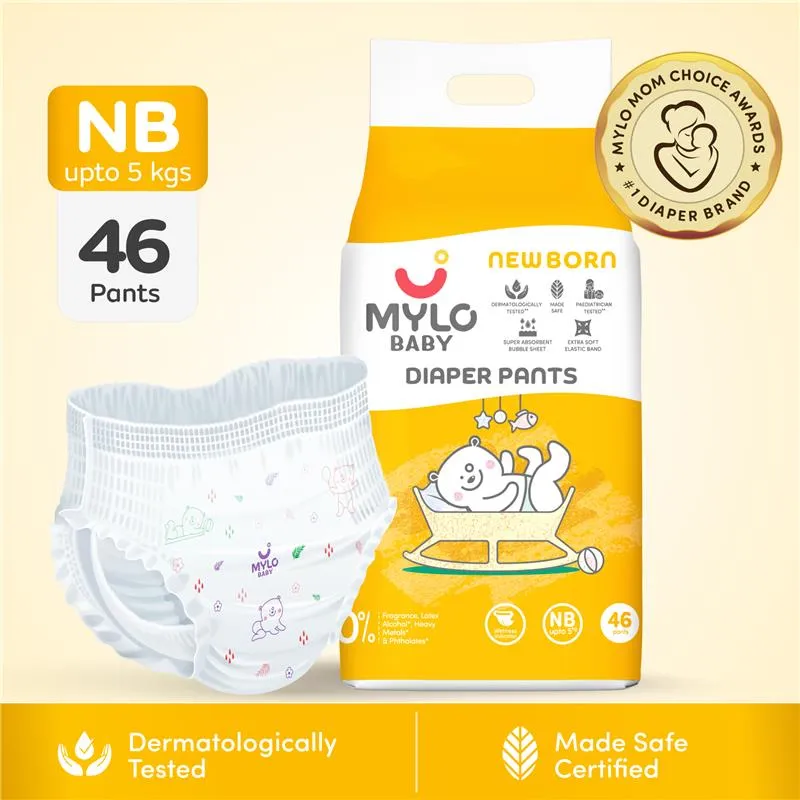
Newborn, up to 5 kg: Mylo Baby Diaper Pants in New Born size, in 46 count and 92 count, both with a wetness indicator. While the umbilical stump heals, the New Born tape style diaper is easier to fold below the navel. Start with the smaller pack.
Everyday use through the middle sizes: the standard Mylo Baby Diaper Pants range covers S at 4 to 8 kg, M at 7 to 12 kg and L at 9 to 14 kg, with jumbo packs bringing down the price per diaper once your baby settles into a size.
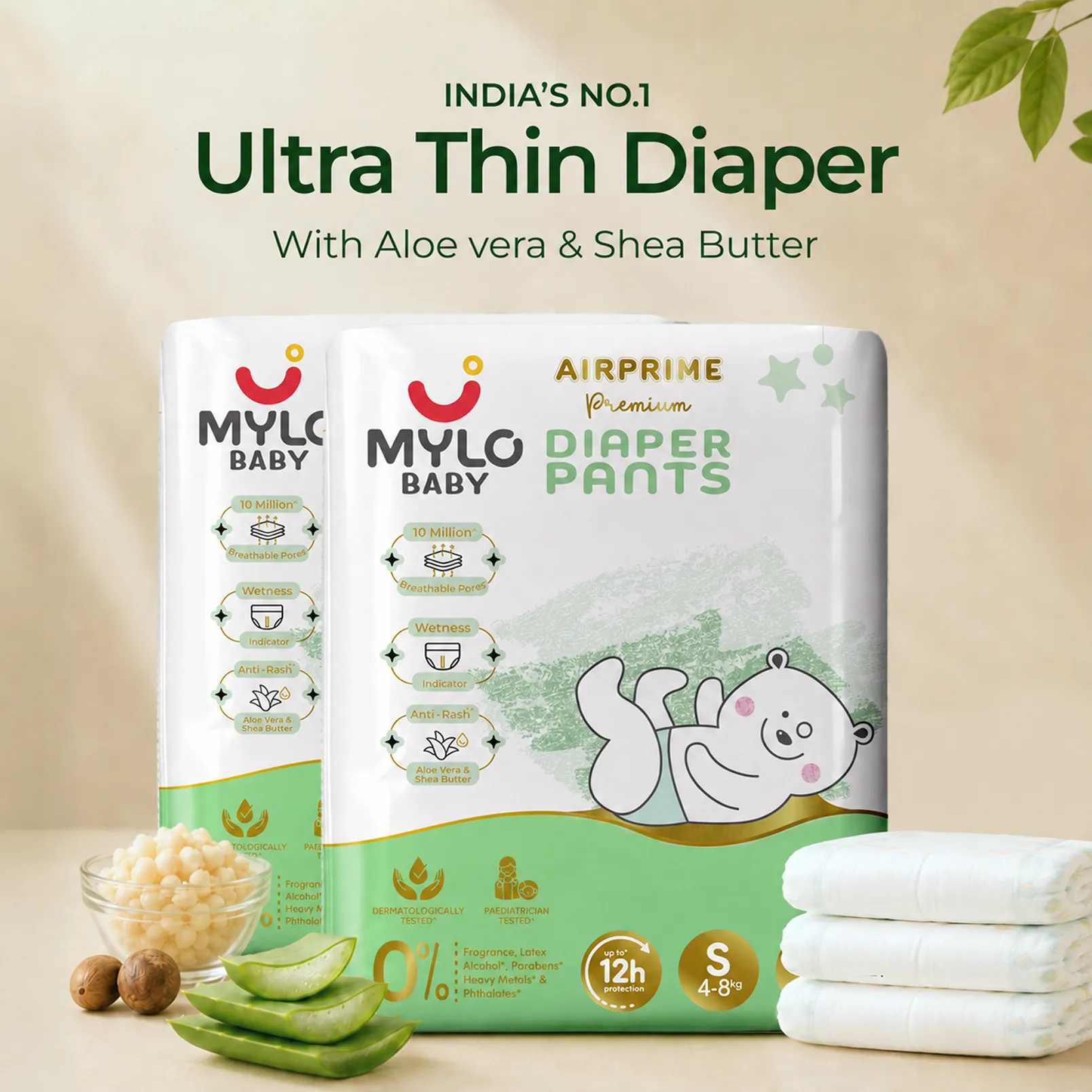
Heavier toddlers, where ranges usually run out: Mylo Airprime Premium Diaper Pants continue into XL, 12 to 17 kg, in 24 count, 48 count and 96 count, and XXL, 15 to 25 kg, in 24 count, 48 count and 96 count. The colour changing wetness indicator is the relevant feature for a toddler you cannot easily check.
Daytime reusables from about 3 months: the adjustable reusable cloth diaper with insert pads, with snap rows at the waist and rise. Compare the full cloth diaper range.
Two honest limits. Our cloth diaper is designed from about 3 months, so if you want to start cloth from birth you will need a newborn-specific cloth diaper, which we do not currently make. And no diaper in our range, or anyone's, prevents diaper rash on its own. Absorbency figures describe capacity under test conditions, not a promise for every baby on every night.
Mylo Parents Asked
Which is the best diaper for a newborn baby in India?
One in a genuine New Born size for up to 5 kg, breathable, fragrance free, and tape style while the umbilical stump heals. Buy a small pack, because most babies outgrow New Born size within 4 to 6 weeks.
Which diaper is best to prevent diaper rash?
No diaper prevents rash. Prioritise changing promptly, then fit, then breathability, then fragrance free materials. A well fitting basic diaper changed every 2 to 3 hours will treat your baby's skin better than a premium diaper left on for six.
What is the best diaper for sensitive skin?
Fragrance free, dye free, with a soft top sheet and a fit that does not leave marks. Introduce only one new product at a time so that if a reaction happens you know the cause. Any diaper can irritate a particular baby, so watch the skin for the first few days on anything new.
Are expensive diapers better?
Sometimes, for specific reasons. A wetness indicator is genuinely useful and better breathability helps in Indian heat. But a premium line will not fix a fit problem, and it will not fix a rash caused by leaving diapers on too long. If your current diaper fits and your baby's skin is fine, the premium version mainly buys convenience.
How do I choose a diaper for overnight use with no leaks?
Correct size for current weight, a high absorbency line, fitted high at the back, and changed immediately before sleep. If leaks continue in the right size, look at the back rather than the legs, because overnight leaks usually escape upwards.
Do breathable diapers really reduce rash?
Breathability helps keep skin less over hydrated, which is one of the three factors behind irritant diaper rash, so it is worth prioritising in a hot and humid climate. It is a contributing factor rather than a preventive. Change frequency remains the main lever.
Are diaper pants better than taped diapers?
Different rather than better. Tape gives finer fit adjustment and folds below a healing umbilical stump, which suits the newborn weeks. Pants are faster on a baby who rolls and crawls. Most families use tape early and pants later.
How many diapers will I need in a month?
Roughly 300 to 360 in the newborn weeks at 10 to 12 a day, dropping to about 180 to 240 by 3 to 12 months. Buy small packs while sizes are changing quickly and jumbo packs once your baby settles into a size.
When Should You Speak to a Doctor?
Diaper choice is not a medical decision, but contact your paediatrician if you notice:
A rash that has not improved within 2 to 3 days of frequent changing and barrier cream
Blisters, open sores, pus, yellow crusting or bleeding in the diaper area
A bright red rash with a clear border and small spots spreading beyond it, which can indicate a fungal infection needing prescribed treatment
Fever alongside a rash in the diaper area
Far fewer wet diapers than usual, dark or strong smelling urine, or a baby who is unusually drowsy or hard to rouse, which can indicate dehydration and needs same day attention
Pain, swelling or crying on passing urine
This article is general information and does not replace an examination. Any diagnosis or medicine for your baby's skin should come from your own doctor.
Bottom Line
Stop shopping for the best diaper and start shopping for the best fit. Weigh your baby, buy for that weight, choose breathable and fragrance free, and check that the range covers the sizes you will need next. Absorbency is standard across the market, so it is rarely the thing worth paying for. If you are torn between two options, the one week test above will tell you more than any list can.
References
NHS, UK. Nappy rash.
AAP, HealthyChildren.org. Common Diaper Rashes and Treatments.
AAP, HealthyChildren.org. Make Baby's Room Safe: Parent Checklist.
Stamatas GN, Tierney NK. Diaper dermatitis. Pediatric Dermatology. 2014;31(1):1-7.
Indian Academy of Pediatrics. IAP Guidelines for Pediatric Skin Care. Indian Pediatrics. 2021.
Indian Academy of Pediatrics. Care of Newborn Skin.
StatPearls. Diaper Dermatitis.

Article Posted Under
Related Articles



Related Topics
.webp&w=32&q=75)
Medical Disclaimer
This content is for informational purposes only and should not replace professional medical advice. Consult with a physician or other health care professional if you have any concerns or questions about your health. If you rely on the information provided here, you do so solely at your own risk.


AWARDS AND RECOGNITION

Mylo wins Forbes D2C Disruptor award

Mylo wins The Economic Times Promising Brands 2022
AS SEEN IN












- Mylo Care: Effective and science-backed personal care and wellness solutions for a joyful you.
- Mylo Baby: Science-backed, gentle and effective personal care & hygiene range for your little one.
- Mylo Community: Trusted and empathetic community of 10mn+ parents and experts.


Product Categories
Baby Carrier | Baby Soap | Baby Wipes | Stretch Marks Cream | Baby Cream | Baby Shampoo | Baby Massage Oil | Baby Hair Oil | Stretch Marks Oil | Baby Body Wash | Baby Powder | Baby Lotion | Diaper Rash Cream | Newborn Diapers | Teether | Baby Kajal | Baby Diapers Pants | Cloth Diapers | Laundry Detergent | Lactation Granules |