


Orders
.png&w=48&q=75 "login")
Profile


Wallet

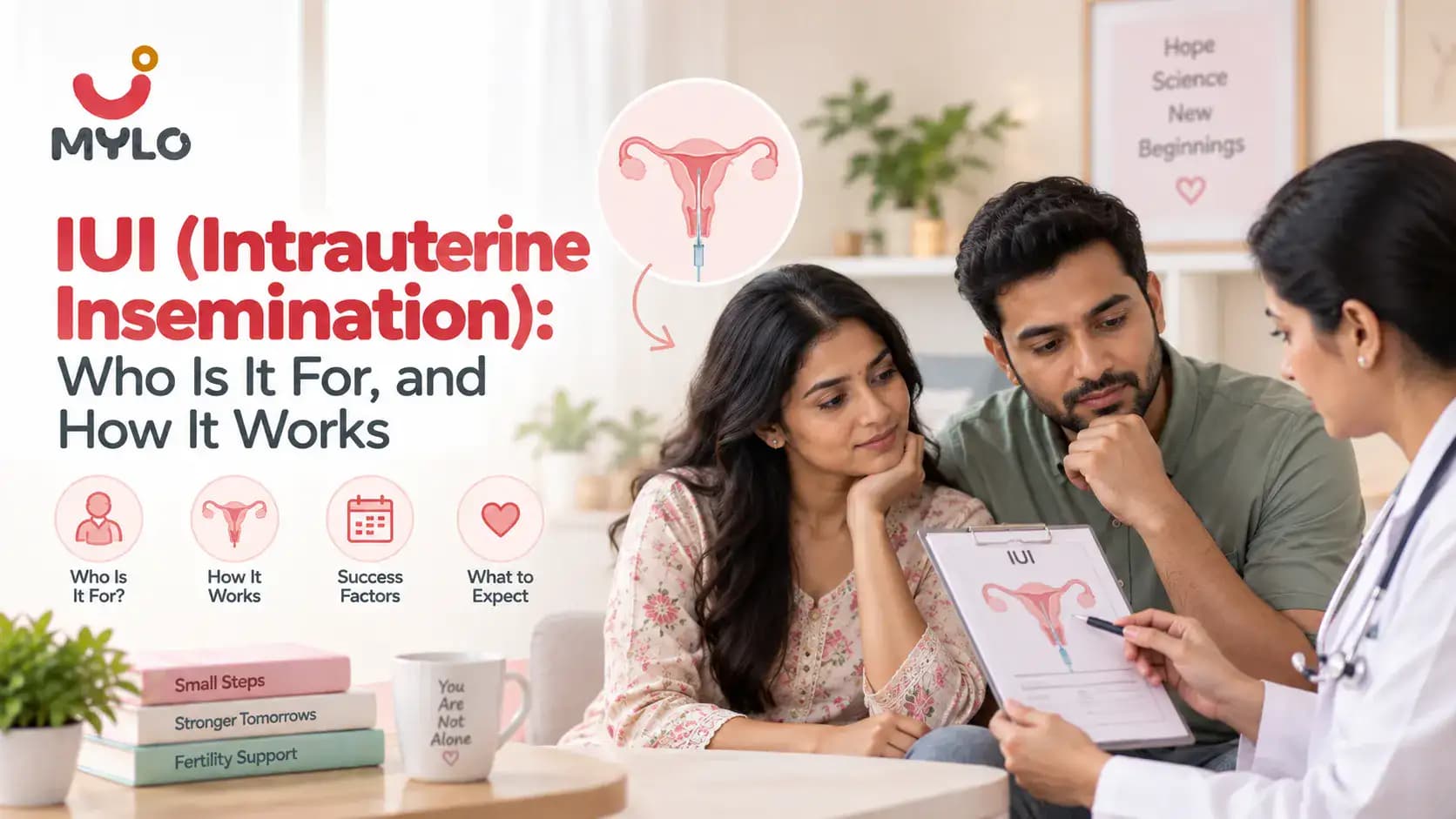
IUI (Intrauterine Insemination): Who Is It For, and How It Works
 12 min
Quick Answer
IUI (intrauterine insemination) is a fertility treatment in which prepared sperm is placed directly into the uterus around the time of ovulation. It is best suited to couples with mild male-factor infertility, unexplained infertility or cervical problems, to women with ovulation issues (alongside fertility medicines), and to single women and same-sex couples using donor sperm. To be a good candidate, you generally need at least one open fallopian tube, the ability to ovulate, and reasonable sperm quality. It is simpler, cheaper and less invasive than IVF, but has lower success per cycle.
Key Takeaways
IUI places washed, concentrated sperm directly into the uterus near ovulation, giving sperm a head start toward the egg.
It suits mild male-factor and unexplained infertility, cervical issues, ovulation problems (with medication), and those using donor sperm.
Good candidates usually need at least one open fallopian tube, the ability to ovulate, and adequate sperm quality.
Success is around 10 to 20 percent per cycle for younger women and declines with age, so several cycles are often needed (HFEA).
It is less invasive and cheaper than IVF, and is often tried first, with IVF considered if IUI does not succeed.
What Is IUI (Intrauterine Insemination)?
IUI is a fertility treatment that helps sperm reach the egg more easily. A semen sample is collected and "washed" in a laboratory to concentrate the healthiest, most active sperm. This prepared sample is then placed directly into the uterus through a thin, soft tube (catheter) passed through the cervix, timed to coincide with ovulation.
By putting a concentrated dose of good-quality sperm right inside the uterus, IUI shortens the journey the sperm must make and bypasses any problems at the cervix. It is one of the more common and accessible fertility treatments, and is often used before moving to more complex options like IVF.
Who Can Get IUI? Who Is It For?
IUI is a good option for several groups (HFEA; peer-reviewed review, PubMed Central):
Couples with mild male-factor infertility, such as a slightly low sperm count or motility. Washing and concentrating the sperm can improve the odds.
Couples with unexplained infertility, where no clear cause is found despite testing.
Cervical factor infertility, where problems with the cervix or cervical mucus make it hard for sperm to get through. IUI bypasses the cervix.
Women with ovulation problems, such as anovulation or PCOS, usually combined with ovulation-inducing medicines.
Single women and same-sex female couples, using donor sperm.
Couples who need donor sperm, for example due to severe male infertility or to avoid passing on a genetic condition.
If you are exploring fertility treatment, IUI is often one of the first options discussed, because it is simpler and less invasive than IVF.
What Makes Someone a Good Candidate for IUI?
IUI works best when certain conditions are met, because it relies on your body doing much of the natural process (peer-reviewed data, PubMed Central):
At least one open (healthy) fallopian tube. Since fertilisation still happens inside the tube, IUI needs a clear path. This is usually checked with a test called a hysterosalpingogram (HSG).
The ability to ovulate, either naturally or with the help of fertility medicines.
Reasonable sperm quality, meaning an adequate number of healthy, moving sperm after preparation. Very severe sperm problems make IUI less likely to work.
A younger age is favourable, as success is higher and declines with age, particularly after 40.
A reasonably healthy uterus and general health.
Your fertility specialist assesses these through tests on both partners before recommending IUI.
Who Is IUI Not Suitable For?
IUI is not the right choice for everyone. IVF or ICSI is usually recommended instead if you have (HFEA):
Both fallopian tubes blocked or badly damaged, since sperm and egg cannot meet.
Severe male-factor infertility, such as a very low count or motility, or no sperm in the semen, where ICSI is more effective.
Moderate to severe endometriosis.
Advanced age with low ovarian reserve, where IVF may offer better chances.
Your doctor will guide you to the treatment most likely to work for your specific situation, rather than a one-size-fits-all approach.
How Does the IUI Procedure Work?
IUI is a straightforward, usually painless procedure spread across a menstrual cycle (HFEA):
Cycle monitoring and, often, fertility medicines. Your cycle is tracked, and you may be given medicines such as letrozole or clomiphene, or sometimes injectable hormones, to encourage one or more eggs to mature.
Tracking ovulation. Ultrasound scans and hormone or ovulation tests pinpoint when you are about to ovulate. Sometimes a "trigger" injection is used to time ovulation precisely.
Sperm preparation. On the day, a semen sample (from your partner or a donor) is collected and washed in the lab to concentrate the healthiest, most active sperm.
The insemination. The prepared sperm is placed into your uterus through a thin, soft catheter passed through the cervix. It takes only a few minutes, does not need anaesthesia, and usually feels like a smear test, with perhaps mild cramping.
The two-week wait. You then wait about two weeks before taking a pregnancy test to see if the cycle worked.
The whole process is much less involved than IVF, and you can usually return to normal activities the same day.
What Are the IUI Success Rates?
Success depends heavily on age and the cause of infertility. As a general guide (HFEA; TFP Fertility):
Age | Approximate success per cycle |
|---|---|
Under 30 | Around 15 to 20 percent |
Around 30 to 35 | Around 15 percent |
35 to 40 | Roughly 10 percent, declining toward 40 |
Over 40 | Often below 5 percent |
A few important points:
Success is per cycle, not overall. Because each cycle has a modest chance, many people need several cycles to conceive.
IUI has lower success per cycle than IVF, which is the trade-off for it being simpler and cheaper.
If about six cycles of IUI have not worked, your doctor will usually review your situation and may suggest tests or moving to IVF.
Setting realistic expectations helps, as does discussing with your specialist how many cycles are reasonable for you.
IUI vs IVF: How to Choose
Both are fertility treatments, but they differ.
IUI | IVF | |
|---|---|---|
What happens | Prepared sperm placed in the uterus; fertilisation happens inside the body | Eggs collected and fertilised with sperm in a lab; an embryo is placed in the uterus |
Invasiveness | Minimal, quick, no anaesthesia | More involved, includes egg collection |
Cost | Lower | Higher |
Success per cycle | Lower (roughly 10 to 20 percent) | Higher |
Best for | Mild male factor, unexplained infertility, cervical issues, donor sperm, ovulation problems | Blocked tubes, severe male factor, failed IUI, older age or low reserve |
Many couples start with IUI and move to IVF if it does not succeed. See Mylo's guide on the difference between IUI and IVF.
What Are the Risks of IUI?
IUI is low-risk, but you should know about (HFEA):
Multiple pregnancy (twins or more), mainly if fertility medicines stimulate more than one egg. This carries added risks for mother and babies, which is why medication and monitoring are careful.
Mild cramping or spotting after the procedure, which usually settles quickly.
A small risk of infection, which is low with sterile technique.
Ovarian hyperstimulation syndrome (OHSS), uncommon, and mainly a risk if injectable hormones are used.
Serious complications are rare, and your team monitors you to keep risks low.
How to Prepare for IUI
Complete the recommended tests, including checks of your fallopian tubes (HSG), ovulation, and a semen analysis for your partner.
Follow your medication and monitoring schedule precisely, as timing to ovulation is key.
Adopt healthy habits: a balanced diet, healthy weight, no smoking or alcohol, and managing stress, all support fertility.
Ask your clinic what to expect, including how many cycles they suggest and what happens after.
A Note for India
IUI is widely available across India and is significantly more affordable and less invasive than IVF, which is why it is often offered as a first-line treatment before considering IVF. As with all fertility procedures in India, remember that under the PC-PNDT Act, no treatment or scan may be used to select or reveal the sex of a baby. Choose a registered, reputable fertility clinic, and discuss realistic success rates and costs before you begin.
IUI: Frequently Asked Questions
"Who is a good candidate for IUI?"
Couples with mild male-factor or unexplained infertility, cervical problems, or ovulation issues (with medication), and single women or same-sex couples using donor sperm. You generally need at least one open fallopian tube, the ability to ovulate, and reasonable sperm quality.
"Is the IUI procedure painful?"
Usually not. It takes a few minutes, does not need anaesthesia, and most women describe it as similar to a smear test, sometimes with mild cramping afterward.
"What is the success rate of IUI?"
Around 15 to 20 percent per cycle for women under 30, roughly 10 to 15 percent in the 30s, and lower after 40. Because each cycle has a modest chance, several cycles are often needed.
"How many IUI cycles should I try before IVF?"
Many couples try a few cycles, and if around six cycles have not worked, doctors usually review the situation and may recommend IVF. Your specialist will advise what is right for you.
"Can IUI be done without fertility medicines?"
Yes, IUI can be done in a natural cycle, tracking your own ovulation. But fertility medicines are often added to improve the chances, especially with ovulation problems, always under medical supervision.
"Is IUI or IVF better?"
Neither is universally better. IUI is simpler, cheaper and less invasive but has lower success per cycle. IVF has higher success and is needed for blocked tubes, severe male factor, or after failed IUI. Your doctor recommends based on your cause of infertility.
"How soon after IUI can I take a pregnancy test?"
Usually about two weeks after the procedure, to allow time for a possible pregnancy to produce enough hormone to detect. Testing too early can give a misleading result. See Mylo's guide on confirming pregnancy after IUI.
When To See a Fertility Specialist
Consider seeing a fertility specialist if you:
Have been trying to conceive for a year (or six months if the female partner is 35 or older) without success
Have irregular or absent periods, or known ovulation problems
Have a known or suspected male-factor issue
Are a single woman or same-sex couple planning to use donor sperm
They can assess whether IUI is suitable for you and guide you through the options.
This article is for information only and does not replace advice from a fertility specialist, who can assess your specific situation.
Bottom Line
IUI is a simpler, gentler and more affordable fertility treatment than IVF, in which prepared sperm is placed directly into the uterus around ovulation. It suits couples with mild male-factor or unexplained infertility, cervical problems, or ovulation issues, as well as single women and same-sex couples using donor sperm, provided there is at least one open fallopian tube, the ability to ovulate, and reasonable sperm quality. Its success is modest per cycle, around 10 to 20 percent and lower with age, so it often takes several attempts, with IVF as the next step if needed. If you are exploring fertility treatment, a specialist can tell you whether IUI is the right first choice for you.
References
All links verified live on 17 September 2026.
Intrauterine insemination (IUI) — Human Fertilisation and Embryology Authority (HFEA), UK. Source for who IUI is for, the procedure, that it is less invasive and cheaper than IVF with lower success per cycle, the multiple-cycle nature, and the guidance to review after around six cycles.
IVF — NHS, UK. Supporting source on fertility treatment and how IVF differs from IUI.
Growing body of evidence supports intrauterine insemination as first-line treatment — peer-reviewed review, PubMed Central. Source for IUI as a first-line, cost-effective option for unexplained and mild male-factor infertility.
IUI success rates — TFP Fertility. Source for approximate per-cycle success rates by age.
Mylo internal guides: anovulation, IVF, difference between IUI and IVF, and confirming pregnancy after IUI.
Article Posted Under
Related Articles
How Long Does it Take to Get Pregnant with an IUI Procedure (Intrauterine Insemination)?
 1·
1· 5 min
5 min What Are the Chances of Getting Pregnant with Intrauterine Insemination?
 3·5 min
 Things to Avoid After IUI: How to Maximize Your Chances of Pregnancy
 6·7 min
 How Is Sperm Collected for IUI? A Step-by-Step Guide
 5·19 min
Related Topics
.webp&w=32&q=75)
Medical Disclaimer
This content is for informational purposes only and should not replace professional medical advice. Consult with a physician or other health care professional if you have any concerns or questions about your health. If you rely on the information provided here, you do so solely at your own risk.


AWARDS AND RECOGNITION

Mylo wins Forbes D2C Disruptor award

Mylo wins The Economic Times Promising Brands 2022
AS SEEN IN













- Mylo Care: Effective and science-backed personal care and wellness solutions for a joyful you.
- Mylo Baby: Science-backed, gentle and effective personal care & hygiene range for your little one.
- Mylo Community: Trusted and empathetic community of 10mn+ parents and experts.


Product Categories
Baby Carrier | Baby Soap | Baby Wipes | Stretch Marks Cream | Baby Cream | Baby Shampoo | Baby Massage Oil | Baby Hair Oil | Stretch Marks Oil | Baby Body Wash | Baby Powder | Baby Lotion | Diaper Rash Cream | Newborn Diapers | Teether | Baby Kajal | Baby Diapers Pants | Cloth Diapers | Laundry Detergent | Lactation Granules |