


Orders
.png&w=48&q=75 "login")
Profile


Wallet

Maternity and Nursing Bras: 5 Reasons to Switch, and How to Get the Size Right

 15 min
Quick answer
Your breasts change size and shape several times through pregnancy and after delivery, and a regular bra stops fitting properly early on. Maternity and nursing bras are built for that: wider straps, extra hooks, stretch fabric, no underwire, and drop-down cups for feeding. Because your size changes more than once, buy two or three at a time rather than stocking up in advance.
Key takeaways
Fit matters more than the type of bra. Any bra that digs in or presses on one spot can contribute to blocked ducts, underwired or not.
Your band size usually increases before your cup size. Your ribcage expands in pregnancy, which is why old bras feel tight around the body first.
Buy fitting on the tightest hook, so you can let it out as your ribcage expands. This is the opposite of normal bra-buying advice.
Do not buy nursing bras too early. Your size changes again when your milk comes in, around days two to five after delivery.
A moulded spacer cup bra is one good option, not the only one. It suits some women and not others, and the comparison below is honest about which.
What happens to your breasts, and why your old bra stops working
Breast changes are often the very first sign of pregnancy, and they happen in stages rather than all at once.
Stage | What changes | What it means for your bra |
|---|---|---|
Weeks 4 to 12 | Tenderness, fullness, darker areolae. Ribcage begins expanding | Band feels tight first. Many women need a new size by 12 to 16 weeks |
Weeks 12 to 28 | Steady growth as milk-producing tissue develops | Cup size usually increases. You may need a second size |
Weeks 28 to 40 | Further growth. Colostrum may leak | Nursing bras become worth buying. Sleep bras help with tenderness |
Days 2 to 5 after delivery | Milk comes in. Breasts become temporarily much fuller and firmer | The largest and briefest size change. Do not buy your whole postpartum wardrobe before this |
6 to 8 weeks postpartum | Supply regulates. Breasts soften and settle | Your longer-term nursing size becomes clear |
Most women need two to three different sizes across pregnancy and feeding. That is normal, and it is the reason buying in bulk early is a waste of money.
5 reasons to switch to a maternity or nursing bra
1. Comfort, on a body that keeps changing
Maternity bras are built with wider, padded straps, a wider band, more hook rows, and stretch fabric that accommodates gradual change. A regular bra is designed for a body that stays roughly the same size. Yours will not.
The extra hook rows matter more than people expect. They let one bra work across several weeks of ribcage expansion rather than being discarded at the first size change.
2. Support without pressure points
Heavier breasts put more load on your shoulders, neck and upper back, which already have enough to deal with as your posture shifts in pregnancy. Good support distributes that load across the band rather than hanging it from the straps.
On the health claim, honestly: you will read that underwired bras cause blocked ducts and mastitis. The more accurate statement is that persistent, localised pressure on the breast can contribute to blocked ducts, and that applies to a badly fitting bra of any kind, a tight blouse, a bag strap, a baby carrier or a sleeping position. Underwires are more likely to dig in when your breast size is changing rapidly and the wire no longer matches your shape, which is exactly why non-wired is usually recommended during pregnancy and feeding. It is a fit issue, not a wire issue.
3. Feeding access that works one-handed
Nursing bras open at the cup, usually with a clip you can undo with one hand while holding your baby. Regular bras have to come off or be pulled down, which is awkward, uncomfortable, and often leaves the band pressing across the breast in exactly the way you want to avoid.
Test the clip in the shop or before you cut the tags. If you cannot open and close it with one hand, without looking, it will frustrate you at 3 am.
4. Convenience for leaking and nursing pads
Most nursing bras are designed to hold a nursing pad in place. Colostrum often leaks from the second trimester onward, and leaking is common in the early weeks of feeding.
Many are also made in moisture-wicking, quick-drying fabric, which matters in Indian humidity where a damp bra worn all day is genuinely uncomfortable and can contribute to skin irritation under the breast.
5. Shape and fit under everyday clothes
Practical, not vanity. A bra that fits gives a smooth line under a kurta, blouse or fitted top, and one that does not creates ridges, gaping and constant adjusting. Moulded cups in particular hold their shape without padding, which is why they work well under thin fabrics.
What is a moulded spacer cup bra, and who is it for?
Moulded means the cup is shaped and holds its form rather than being flat fabric. Spacer refers to a three-dimensional knit fabric with an air layer built into it, which gives structure without foam padding.
Good for | Breathability in hot and humid weather. Smooth shape under thin clothing. Keeps shape without padding. Holds a nursing pad well. Usually non-wired |
Less suitable if | You dislike any structure in the cup. Your size is changing very rapidly, since a moulded cup is less forgiving than a stretch cup. You prefer a soft cotton feel. You want a sleep bra, where an unstructured stretch bra is more comfortable |
Not the same as | A padded bra. Spacer fabric provides structure and air flow, not padding |
A practical approach: a moulded spacer cup bra for daytime and going out, a soft stretch nursing bra for home, and an unstructured sleep bra for nights. Most women end up with a mix rather than one type.
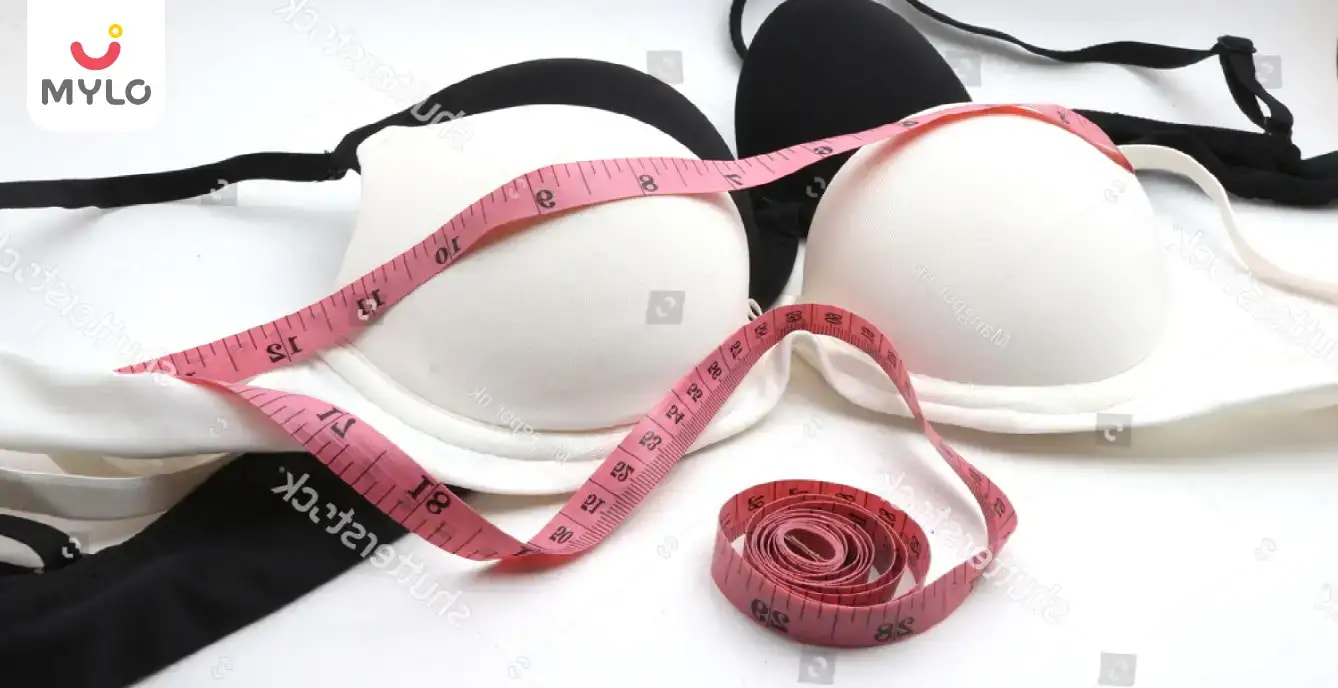
How to measure your size at home
Do this over a non-padded bra, or without one. Stand straight and keep the tape level.
Step 1: Band size. Measure snugly around your ribcage, directly under your bust. Breathe out. Round to the nearest even number, which gives you 32, 34, 36 and so on.
Step 2: Bust size. Measure around the fullest part of your bust, keeping the tape level and not pulling it tight.
Step 3: Cup size. Subtract the band from the bust.
Difference | Cup |
|---|---|
1 inch | A |
2 inches | B |
3 inches | C |
4 inches | D |
5 inches | DD or E |
6 inches | F |
Two rules specific to pregnancy:
Buy fitting on the tightest hook. Your ribcage will expand, and you want room to let the band out. This is the reverse of normal bra advice
Re-measure every 6 to 8 weeks. Size changes more than once, and a bra that fit at 20 weeks may not at 32
When to buy, and how many
When | What to buy | How many |
|---|---|---|
First size change, often 12 to 16 weeks | Maternity bras, non-wired, stretch or moulded | 2 to 3 |
Around 24 to 28 weeks | Re-measure. Replace if the band is at its loosest hook or cups are tight | 1 to 2 |
36 to 38 weeks | Nursing bras, measured now. Allow room in the cup for milk coming in | 2 to 3 |
Through pregnancy | Soft sleep or lounge bra for tenderness and night leaking | 1 to 2 |
2 to 3 weeks after delivery | Re-measure once engorgement settles, then buy the rest | 2 to 3 |
Why two to three at a time: one on, one in the wash, one spare. Leaking, spit-up and Indian humidity mean you will wash them often, and drying is genuinely slow during monsoon, which is a practical reason to own a third.
Do not buy your full postpartum set before delivery. The size change when your milk comes in is the largest and the least predictable.
The fit test
Check all five. A bra that fails any one of them is the wrong size, however comfortable it feels in the shop.
The band sits level all the way round and does not ride up at the back. Most of the support comes from here, not the straps
Two fingers slide under the band comfortably, and no more
Straps do not dig in or slip. Grooves on your shoulders mean the band is too loose and the straps are doing work they should not
The cup contains everything, with no spilling over the top or sides and no gaping
No single spot feels pressed. Run your finger around the whole edge. Any point that digs in is worth taking seriously while breastfeeding
Also check: can you take a deep breath comfortably, and can you open and close the nursing clip with one hand?
Choosing by stage
Stage | What usually works best |
|---|---|
Early pregnancy | Soft, stretch, non-wired. Extra hooks |
Later pregnancy | Wider straps and band for extra support. Moulded or stretch cup |
Night, any stage | Soft, unstructured sleep bra. Optional, but helpful for tenderness and leaking |
Feeding | Nursing bra with one-handed clips, room for pads |
Exercise | Non-wired maternity sports bra, supportive but not compressive |
Pumping | A hands-free pumping bra if you pump regularly |
During mastitis or a blocked duct | Supportive but non-compressive, no underwire. Keep pressure off the affected area entirely |
Caring for them
Hand wash, or machine wash in a mesh bag on a gentle cycle
Cool water, and avoid harsh detergents and bleach
Never wring or twist the cups, particularly moulded ones, which lose their shape
Dry flat or hang by the centre, out of direct sun. Hanging by one strap stretches it
Rotate between bras rather than wearing the same one daily, which lets the elastic recover
In monsoon, make sure they are fully dry before wearing, since a damp bra encourages fungal irritation under the breast, which is common in Indian humidity
When your bra is causing a problem
Contact a doctor or lactation consultant if you notice:
A firm, tender, wedge-shaped area in the breast, particularly where the band or a seam sits. This can be a blocked duct
Redness, warmth and pain with fever or flu-like symptoms, which suggests mastitis and needs assessment
Recurrent blocked ducts in the same place, which very often points to steady pressure from a bra, strap, carrier or sleeping position
Persistent soreness, chafing or a rash under the breast
Our guide to lumps in the breast while breastfeeding covers what to do, including the current guidance that deep massage and prolonged heat are no longer first-line.
Any lump that remains after the pain and redness settle, or persists beyond two weeks, should be examined regardless of what you are wearing.
Frequently asked questions
When should I start wearing a maternity bra?
Most women need one somewhere between 12 and 16 weeks, when the ribcage expands and the old band feels tight. There is no fixed rule. Buy when your current bra stops passing the fit test.
Are underwired bras unsafe in pregnancy or while breastfeeding?
Not inherently. The problem is persistent pressure from a bra that no longer fits, which is more likely with a wire when your size is changing. Non-wired is the safer default during this period.
How do I know my nursing bra size before the baby arrives?
Measure at 36 to 38 weeks and allow extra room in the cup for when your milk comes in. Buy only two or three, then re-measure two to three weeks after delivery.
What is a spacer cup bra?
A bra with a moulded cup made from a three-dimensional knit fabric with an air layer in it. It gives shape and breathability without foam padding, which suits hot and humid weather.
Is a moulded cup the same as a padded bra?
No. Moulded means the cup holds its shape. Padded means extra material has been added for volume.
How many maternity and nursing bras do I need?
Two to three at each stage, plus one or two sleep bras. One on, one washing, one spare, which matters because drying is slow in monsoon.
Can I wear a normal bra while breastfeeding?
You can, but it is awkward. Nursing bras open at the cup with one hand and avoid pulling a band across the breast while feeding.
Should I wear a bra at night?
It is optional. Many women find a soft, unstructured sleep bra helpful for tenderness and for holding nursing pads. Avoid anything tight or wired at night.
My bra leaves a red mark. Is that a problem?
A light temporary mark from the band is common. A mark that persists, or a spot that consistently feels pressed, means the fit is wrong and is worth correcting while breastfeeding.
Can I keep wearing my maternity bras after I stop feeding?
You can, though your size will change again once feeding ends. Re-measure a few months after weaning before replacing your everyday bras.
The bottom line
A maternity or nursing bra is worth switching to because your body changes in stages, and a bra designed for one fixed size cannot follow it. Get the band right first, buy fitting on the tightest hook, re-measure every six to eight weeks, and resist buying your whole postpartum set before your milk comes in. A moulded spacer cup works well in Indian heat and under thin clothing, but the type matters far less than the fit, and any bra that presses on one spot is the wrong one.
Sources
Academy of Breastfeeding Medicine, Clinical Protocol #36: The Mastitis Spectrum
NHS, breastfeeding and mastitis, and breast changes in pregnancy
American College of Obstetricians and Gynecologists, breastfeeding and common breast concerns
La Leche League International, plugged ducts and mastitis
World Health Organization, infant and young child feeding guidance
This article is for general information and is not a substitute for medical advice. See a doctor for a breast lump that persists, or for redness and pain with fever.
Article Posted Under
Related Articles
When is The Right Time to Start Wearing a Maternity Bra in Pregnancy?
 6·
6· 4 min
4 min What kind of fabrics & styles to look for while shopping for a maternity bra?
 4·5 min
 Is It Safe To Wear A Padded Bra During Pregnancy?
 1·6 min
 Top 5 tips to Get an Exact Size and Perfect Fit Maternity or Nursing Bra During Pregnancy or Breastfeeding
 1·7 min
Related Topics
.webp&w=32&q=75)
Medical Disclaimer
This content is for informational purposes only and should not replace professional medical advice. Consult with a physician or other health care professional if you have any concerns or questions about your health. If you rely on the information provided here, you do so solely at your own risk.


AWARDS AND RECOGNITION

Mylo wins Forbes D2C Disruptor award

Mylo wins The Economic Times Promising Brands 2022
AS SEEN IN













- Mylo Care: Effective and science-backed personal care and wellness solutions for a joyful you.
- Mylo Baby: Science-backed, gentle and effective personal care & hygiene range for your little one.
- Mylo Community: Trusted and empathetic community of 10mn+ parents and experts.


Product Categories
Baby Carrier | Baby Soap | Baby Wipes | Stretch Marks Cream | Baby Cream | Baby Shampoo | Baby Massage Oil | Baby Hair Oil | Stretch Marks Oil | Baby Body Wash | Baby Powder | Baby Lotion | Diaper Rash Cream | Newborn Diapers | Teether | Baby Kajal | Baby Diapers Pants | Cloth Diapers | Laundry Detergent | Lactation Granules |