


Orders
.png&w=48&q=75 "login")
Profile


Wallet

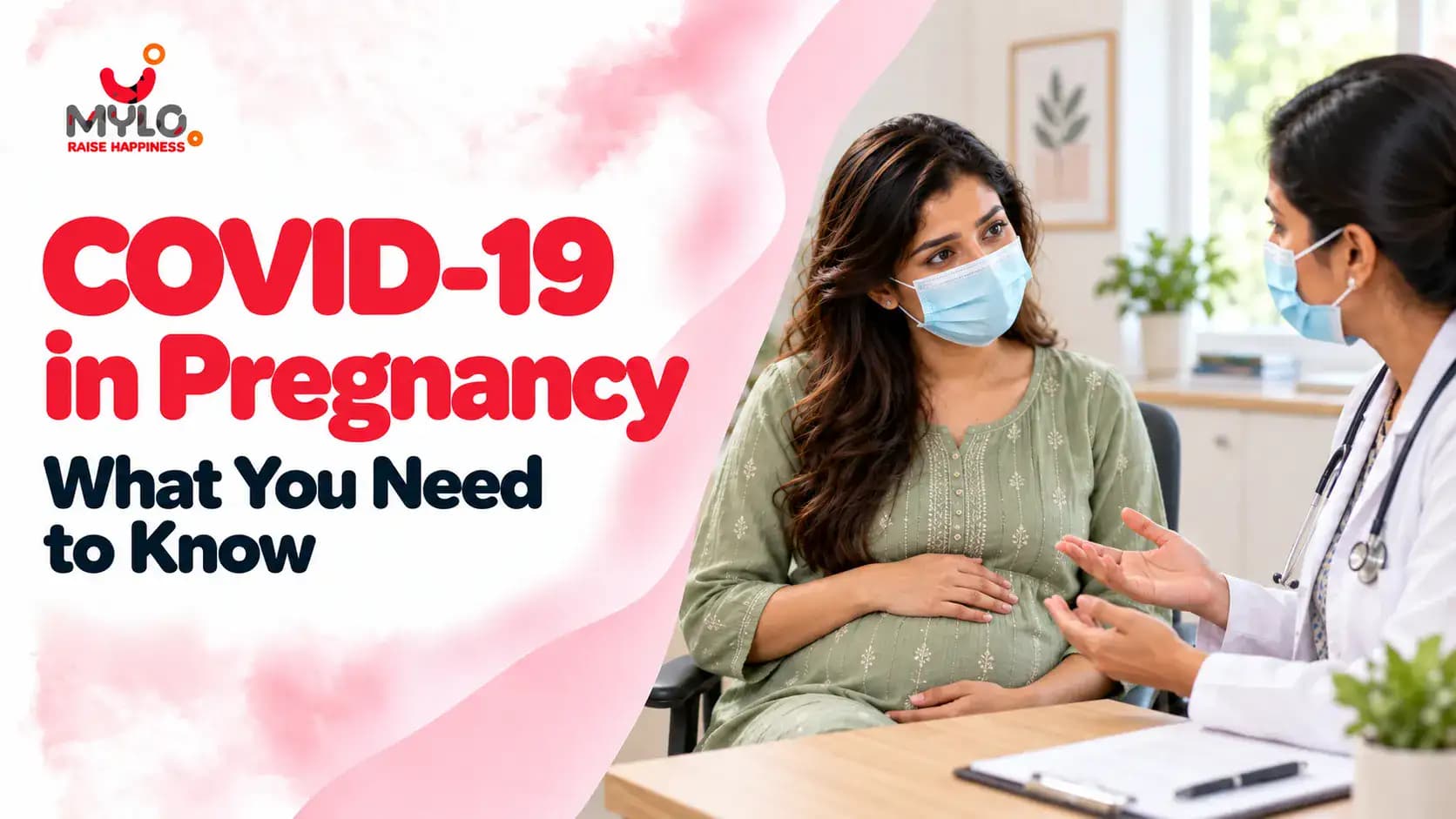
COVID-19 in Pregnancy: What You Need to Know


BDS (Gold Medalist), Certified Lactation Consultant – BPNI Delhi, Maternal & Infant Nutrition Expert · 15 years experience
 10 Likes|
 12 min
Quick answer
Pregnancy increases the risk of severe illness from COVID-19 compared with non-pregnant women of the same age, and severe illness is associated with preterm birth and other complications. Vaccination during pregnancy is recommended by major health authorities, is considered safe, and passes protective antibodies to your baby. Most pregnant women who catch COVID-19 have mild illness and recover at home.
Key takeaways
Vaccination in pregnancy is the single most effective thing you can do, and it protects your baby as well as you. Check the current schedule with your doctor, since recommendations are updated over time.
Treat fever promptly with paracetamol. High fever in early pregnancy carries its own risks, separate from the infection.
Breathlessness at rest, chest pain or confusion needs emergency care, and so does any change in your baby's movements.
Keep breastfeeding if you are unwell. Your milk is safe and passes antibodies to your baby.
This is a topic where guidance changes. Use your doctor and your national health authority for current recommendations rather than any article, including this one.
Does pregnancy change your risk?
Yes. Pregnancy alters immune function and reduces lung capacity as the uterus grows, and both contribute to a higher risk of severe illness from respiratory infections generally.
What is established about COVID-19 specifically:
Pregnant women are at higher risk of severe disease than non-pregnant women of the same age, including a higher likelihood of needing intensive care and respiratory support
Severe illness is associated with preterm birth, and with a raised risk of other complications
Most pregnant women who catch it have mild illness, and recover at home
Risk is higher with additional factors such as later pregnancy, higher BMI, diabetes, high blood pressure, asthma, heart disease, or being unvaccinated
The practical point: most cases are mild, and the measures that reduce the small chance of a serious outcome are vaccination and getting seen early if you deteriorate.
Vaccination in pregnancy
Major health authorities recommend COVID-19 vaccination in pregnancy, and large-scale data collected since vaccines became available supports its safety in pregnancy.
What is worth knowing:
It can be given in any trimester
It reduces the risk of severe illness, hospitalisation and complications
Antibodies pass to your baby through the placenta, and later through breast milk, giving some protection in the early months when your baby cannot be vaccinated
It is considered safe while breastfeeding
It does not affect fertility. This has been studied and the claim is not supported
Side effects are the same as outside pregnancy, most commonly a sore arm, tiredness, headache or a mild fever for a day or two. Take paracetamol if you develop a fever
Ask your doctor what is currently recommended for you, including whether a booster applies, since schedules and formulations are updated as circulating strains change. Do not rely on an article for the current schedule.
Other vaccines matter too. Discuss influenza vaccination, which is recommended in pregnancy, and the tetanus or Td schedule your hospital follows.
Symptoms
Symptoms are the same in pregnancy as outside it, and they overlap with several ordinary pregnancy symptoms, which is why testing is useful.
Common symptoms | Notes |
|---|---|
Fever or chills | Treat promptly. See below |
Cough | Usually dry |
Sore throat | Common |
Runny or blocked nose | Also common in pregnancy anyway, from increased blood flow to the nasal lining |
Headache | Common |
Body aches and fatigue | Overlaps with normal pregnancy tiredness |
Loss or change of taste or smell | Less common than in earlier stages of the pandemic |
Nausea, vomiting or diarrhoea | Overlaps with pregnancy nausea |
Breathlessness | Mild breathlessness on exertion is common in later pregnancy. Breathlessness at rest is not |
If you are unsure whether symptoms are pregnancy or infection, test and tell your doctor. That is the simplest way to resolve it.
Managing it at home
Most pregnant women with mild COVID-19 recover at home.
Tell your obstetrician that you have tested positive, even if you feel well. They may want to adjust appointments or monitor you
Treat fever promptly with paracetamol, at the dose your doctor advises. High fever in the first trimester carries its own risks, separate from the infection, so it is worth controlling rather than riding out
Avoid NSAIDs such as ibuprofen and diclofenac from 20 weeks, and check with your doctor about earlier use
Rest, and drink fluids steadily
Keep an eye on your breathing. Breathlessness at rest is the symptom to act on
Keep track of your baby's movements from around 24 weeks, and report any change the same day
Do not take any other medicine, supplement or herbal preparation without asking, including anything sold for immunity
Isolate as your national guidance advises, and protect others in the household
Do not delay antenatal care because you are positive. Contact your hospital and ask how they want to manage your appointments. Scans, blood tests and monitoring still matter, and they will arrange a safe way to do them.
Treatment
Some antiviral and antibody treatments exist for people at higher risk of severe illness. Whether any is appropriate in pregnancy depends on the specific medicine, your gestation, your risk factors and what is currently available.
This is a specialist decision. If you are at higher risk, ask your doctor early rather than waiting, because these treatments generally work best when started soon after symptoms begin.
Do not self-medicate. Antibiotics do not treat COVID-19, and several treatments that circulated informally have no evidence behind them and some carry real risk in pregnancy.
When to seek urgent care
Go to hospital immediately if you have:
Breathlessness at rest, or difficulty completing a sentence
Chest pain or tightness
Blue or grey lips, face or fingertips
Confusion, or difficulty staying awake
Coughing up blood
A fever you cannot bring down, or a very high fever
Fainting or collapse
Reduced or changed baby movements, from around 24 weeks. Do not wait until morning
Any vaginal bleeding
Leaking of fluid
Regular contractions before 37 weeks
Severe headache with visual changes, pain under the ribs, or sudden swelling of the face and hands
Contact your doctor the same day if you have:
Symptoms that are worsening rather than settling after several days
Persistent vomiting, or being unable to keep fluids down
Pain or burning when passing urine
Any symptom that worries you
Our full guide to pregnancy symptoms sorted by urgency covers the obstetric warning signs.
Labour, delivery and your baby
Having COVID-19 does not by itself mean you need a caesarean. Delivery decisions are made for obstetric reasons
Hospitals have protocols for positive mothers, which may affect visitor policies and where you deliver within the hospital. Ask your hospital in advance what theirs are
Ask about your birth companion, since policies have changed repeatedly over time
Most babies born to mothers with COVID-19 are not affected, and those who are generally have mild illness
Skin-to-skin contact and keeping your baby with you are generally supported, with hygiene precautions, because the benefits are substantial
Breastfeeding
Keep breastfeeding if you are able. Major health authorities support continued breastfeeding when a mother has COVID-19.
The virus has not been shown to transmit meaningfully through breast milk
Your milk contains antibodies that help protect your baby
Take precautions while feeding: wash your hands before touching your baby, wear a mask if you have symptoms, and clean surfaces
If you are too unwell to feed directly, express and have someone else give the milk
Vaccination is considered safe while breastfeeding
Our guide to breastfeeding after a caesarean covers expressing and maintaining supply if you are separated from your baby.
If you are trying to conceive
COVID-19 vaccination does not affect fertility in women or men. This has been studied, and the claim is not supported
A high fever from any infection can temporarily affect sperm production, with effects lasting around three months, since sperm takes that long to develop
Fertility treatment cycles may be postponed if you are acutely unwell. Ask your clinic
There is no need to delay trying to conceive after vaccination
Our guide to what actually matters when trying to conceive covers the evidence-backed factors.
Children and babies
Most children have mild illness
Any fever in a baby under 3 months is a medical emergency, whatever the cause. Do not wait
Watch breathing in young children. Fast breathing, chest pulling in below or between the ribs, nostril flaring, grunting or blue lips all need immediate care
Watch hydration. Fewer wet nappies, a dry mouth, no tears when crying, or refusing feeds all need attention
Do not give cough and cold syrups to children under four without a paediatrician's advice
Our guides to cough and cold in infants and in toddlers cover the breathing thresholds in detail.
Reducing your risk
Stay up to date with vaccination, as your doctor advises
Ventilation matters. Open windows, and prefer outdoor or well-ventilated spaces
Masks in crowded indoor settings, particularly in late pregnancy or if you have other risk factors
Hand hygiene
Avoid contact with people who are unwell, and ask household members to test if they have symptoms
Ask your household to stay up to date with vaccination, which protects you indirectly
Get your influenza vaccination too
A note on changing guidance
This is a topic where recommendations are updated regularly. Vaccine formulations, booster schedules, isolation advice and treatment availability all change as circumstances do.
Use your doctor and your national health authority as the current source, rather than any article. In India, the Ministry of Health and Family Welfare publishes current guidance, and your obstetrician will know what applies to you.
Frequently asked questions
Is the COVID vaccine safe during pregnancy?
Major health authorities recommend it in pregnancy, and large-scale data supports its safety. It can be given in any trimester, and it passes protective antibodies to your baby.
Does the COVID vaccine affect fertility?
No. This has been studied in both women and men, and the claim is not supported.
Am I at higher risk if I am pregnant?
Pregnant women are at higher risk of severe illness than non-pregnant women of the same age, though most cases are mild.
What can I take for fever while pregnant?
Paracetamol, at the dose your doctor advises. Treat fever promptly, since high fever in early pregnancy carries its own risks. Avoid NSAIDs from 20 weeks.
Can I breastfeed if I have COVID-19?
Yes, and it is supported. Wash your hands, wear a mask while feeding if you have symptoms, and continue.
Will I need a caesarean if I test positive?
Not because of the infection itself. Delivery decisions are made for obstetric reasons.
Can my baby catch it from me?
Transmission around birth is uncommon, and most affected babies have mild illness. Hygiene precautions are advised while you are symptomatic.
Should I still attend my antenatal appointments?
Yes. Contact your hospital, tell them you are positive, and ask how they want to manage your appointments. Do not simply skip them.
What symptoms mean I should go to hospital?
Breathlessness at rest, chest pain, confusion, blue lips, a fever you cannot control, or any change in your baby's movements.
Is this article current?
Guidance on vaccination, treatment and isolation changes over time. Check the current position with your doctor and your national health authority.
The bottom line
Pregnancy raises the risk of severe illness from COVID-19, and vaccination is the most effective thing you can do about it, with the added benefit of passing antibodies to your baby. Most pregnant women who catch it recover at home, so treat fever promptly with paracetamol, rest, and keep your obstetrician informed. Learn the short list of emergency signs, particularly breathlessness at rest and any change in your baby's movements, and check current guidance with your doctor rather than relying on any article, including this one.
Sources
Royal College of Obstetricians and Gynaecologists, coronavirus infection in pregnancy
American College of Obstetricians and Gynecologists, COVID-19 vaccination and pregnancy
Centers for Disease Control and Prevention, pregnancy and COVID-19
Ministry of Health and Family Welfare, Government of India, current COVID-19 guidance and vaccination programme
Federation of Obstetric and Gynaecological Societies of India, guidance on COVID-19 in pregnancy
This article is for general information and is not a substitute for professional medical advice. Guidance on vaccination, treatment and isolation is updated over time, so confirm the current position with your doctor. Seek emergency care for breathlessness at rest, chest pain, confusion, or any change in your baby's movements.
Article Posted Under
Related Articles




Medical Disclaimer
This content is for informational purposes only and should not replace professional medical advice. Consult with a physician or other health care professional if you have any concerns or questions about your health. If you rely on the information provided here, you do so solely at your own risk.


AWARDS AND RECOGNITION

Mylo wins Forbes D2C Disruptor award

Mylo wins The Economic Times Promising Brands 2022
AS SEEN IN












- Mylo Care: Effective and science-backed personal care and wellness solutions for a joyful you.
- Mylo Baby: Science-backed, gentle and effective personal care & hygiene range for your little one.
- Mylo Community: Trusted and empathetic community of 10mn+ parents and experts.


Product Categories
Baby Carrier | Baby Soap | Baby Wipes | Stretch Marks Cream | Baby Cream | Baby Shampoo | Baby Massage Oil | Baby Hair Oil | Stretch Marks Oil | Baby Body Wash | Baby Powder | Baby Lotion | Diaper Rash Cream | Newborn Diapers | Teether | Baby Kajal | Baby Diapers Pants | Cloth Diapers | Laundry Detergent | Lactation Granules |