


Orders
.png&w=48&q=75 "login")
Profile


Wallet

Can a Breastfeeding Mom Eat Mango? Benefits, Myths and Safety (2026 Guide)
 1 Likes|
 10 min
AI-Generated Summary
Quick overview in 30 seconds.webp&w=32&q=75)
Summary
- Many myths claim mango can cause allergies, colic, or reduce milk supply, but experts confirm these concerns lack scientific evidence for breastfeeding mothers.
- Mango is a nutritional powerhouse rich in vitamin C, vitamin A, fiber, antioxidants, and water, supporting immunity, digestion, and hydration during breastfeeding.
- Breastfeeding moms can safely enjoy ripe, washed mango in moderation, watching for rare sensitivities and including it in smoothies, salads, or oats.
- Looking for nourishing support during your breastfeeding journey? Explore our MamaGro™ Protein Diskettes - High Protein & No Added Sugar - 250gm (50 Diskettes).
TL;DR
Yes, breastfeeding mothers can safely eat mango as part of a balanced diet. Mango is a nutritious fruit rich in vitamin C, vitamin A, fibre, antioxidants and water, and it does not reduce milk supply, harm your baby, or cause allergies or colic in most cases (NHS) (AAP)。 The popular belief that mango is a "heaty" fruit to avoid while breastfeeding is a cultural myth with no scientific basis. Enjoy ripe, well-washed mango in moderate amounts. Only reduce it if your baby clearly and repeatedly reacts after you eat it, which is uncommon. Mango is a healthy, hydrating and tasty addition to a breastfeeding mother's diet.
Quick Answer
Yes, breastfeeding mothers can safely eat mango. It is rich in vitamin C, vitamin A, fibre and antioxidants, and does not reduce milk supply or harm the baby. The belief that mango is a "heaty" fruit to avoid is a myth with no scientific basis. Enjoy ripe, washed mango in moderation. Only reduce it if your baby clearly reacts, which is uncommon.
Author: Anandita Sharma, Senior Nutrition Content Editor, Mylo Parenting Desk Reviewed for accuracy against: NHS, AAP and ICMR nutrition guidance Last updated: 29 June 2026
Medical Disclaimer: This article is for informational purposes only and is not a substitute for professional medical or dietary advice. If you have gestational/postpartum diabetes, a known mango or latex allergy, or your baby shows a clear reaction after you eat certain foods, consult your doctor or a lactation consultant.
Key Takeaways
- Breastfeeding mothers can safely eat mango in moderation (NHS)
- Mango is rich in vitamin C, vitamin A, fibre, antioxidants and water
- It does not reduce milk supply or harm the baby
- The "heaty fruit" belief is a myth with no scientific basis
- Mango does not typically cause allergies or colic in breastfed babies
- Eat ripe, well-washed mango in moderate amounts
- Only reduce it if your baby clearly and repeatedly reacts (uncommon)
- Watch portions if you have postpartum diabetes (mango is naturally sweet)
Can Breastfeeding Mothers Eat Mango?
Yes, absolutely. Mango is a safe, nutritious and hydrating fruit for breastfeeding mothers when eaten as part of a balanced diet (NHS)。
There is no need to avoid mango while breastfeeding. It does not:
- Reduce your milk supply
- Harm or "heat up" your baby
- Cause allergies or colic in most babies
In fact, mango adds valuable vitamins, fibre and antioxidants to your diet at a time when good nutrition matters.
➡️ Related read: Foods that help boost breast milk production
What Are the Benefits of Mango for Breastfeeding Mothers?
Mango is genuinely nutritious (USDA) (Harvard Nutrition Source):
| Nutrient | Benefit |
|---|---|
| Vitamin C | Supports immunity and iron absorption |
| Vitamin A (beta-carotene) | Supports vision, skin and immunity |
| Fibre | Aids digestion and prevents constipation |
| Antioxidants | Help protect cells from oxidative stress |
| Water content | Adds to hydration, important while breastfeeding |
| Natural energy | Gentle energy boost during demanding days |
These nutrients support your own health and recovery, which in turn supports breastfeeding.
Common Myths About Mango and Breastfeeding (Debunked)
Many myths discourage mothers from eating mango. Here is the truth (AAP) (NHS):
| Myth | Fact |
|---|---|
| "Mango is a heaty fruit, avoid it" | A cultural belief with no scientific basis |
| "Mango causes allergies in the baby" | No evidence it causes allergies through breast milk |
| "Mango causes colic in babies" | No documented link to colic |
| "Mango reduces milk supply" | False, it does not lower milk production |
| "Mango upsets the baby's stomach" | Generally well tolerated; reactions are rare |
The "heaty" or "garam" food concept is traditional, not medical. Nutritious foods like mango should not be cut out for this reason (ICMR)。
How Much Mango Can You Eat While Breastfeeding?
Enjoy mango in moderation as part of a varied diet (Harvard Nutrition Source):
- A moderate serving (about one small mango or a cup of pieces) is a healthy amount
- Rotate mango with other fruits for variety
- If you have postpartum diabetes, watch portions (mango is naturally sweet) and pair it with protein or nuts
- Choose ripe, fresh, well-washed mango
You do not need to limit mango strictly unless you have a medical reason like diabetes, just enjoy it sensibly.
How Do You Know If Mango Affects Your Baby?
It is uncommon, but every baby is different. Watch for a clear, repeated pattern after you eat mango (AAP):
- Unusual fussiness a few hours after feeds
- Excessive gas or a rash
- Diarrhea or vomiting beyond normal
What to Do
- Remove mango for a week and watch if symptoms improve
- Reintroduce it and see if symptoms return
- Confirm with your pediatrician before permanently cutting it
Change one food at a time so you know what is responsible. Most babies have no reaction to mango at all.
Are There Any Precautions With Mango?
A few sensible tips (NHS):
- Wash and peel mango well (to reduce pesticide residue)
- Eat it ripe and fresh, not overripe or spoiled
- Moderate portions, especially with diabetes
- Rare allergy: If you have a mango or latex allergy, avoid it; seek care for hives or breathing difficulty
- Avoid heavily sugared mango products (canned mango in syrup, very sweet milkshakes)
Easy Ways to Enjoy Mango While Breastfeeding
- Fresh mango slices as a snack
- Mango overnight oats (oats, milk, curd, mango, chia seeds)
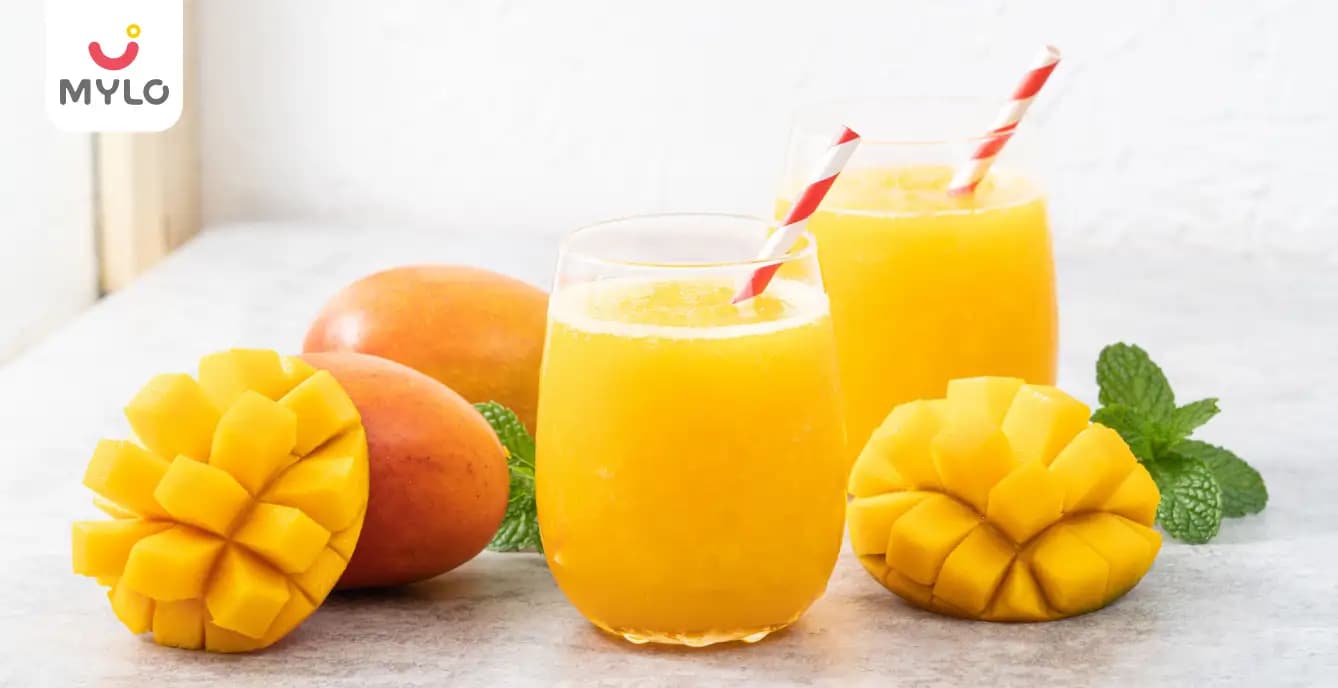
- Mango smoothie or lassi (with curd, light on sugar)
- Mango in a fruit or vegetable salad (with nuts for protein)
- Mango salsa with meals
- Mango with curd as a cooling dessert
Pairing mango with protein (curd, nuts) slows sugar absorption, helpful if you are watching blood sugar.
Indian Context: What Indian Mothers Should Know
- "Garam/thanda" beliefs: Many families call mango "heaty" and discourage it postpartum; this has no scientific basis, you can enjoy it (ICMR)
- Summer fruit: Mango is hydrating and nutritious, a good summer choice for breastfeeding mothers
- Hygiene: Wash and peel well; soak in water before cutting if you wish
- Postpartum diabetes: Common in India; if you have it, enjoy mango in smaller portions with protein and follow your dietitian's advice (FOGSI)
- Do not over-restrict: Cutting out nutritious foods unnecessarily can leave you under-nourished
- Variety: Enjoy mango alongside other seasonal fruits for balanced nutrition
FAQs: Mango While Breastfeeding
Can a breastfeeding mother eat mango?
Yes. Mango is safe and nutritious for breastfeeding mothers in moderation (NHS)。 It provides vitamin C, vitamin A, fibre and antioxidants, and does not reduce milk supply or harm the baby. The belief that it is "heaty" and should be avoided is a myth.
Breastfeeding mein aam (mango) kha sakte hain? (Hinglish)
Haan, breastfeeding mein aam khana bilkul safe aur faydemand hai. Ismein vitamin C, vitamin A, fibre aur antioxidants hote hain, aur yeh na doodh kam karta hai na baby ko nuksaan pahunchata hai. "Aam garam hota hai isliye avoid karein" yeh ek myth hai, iska koi scientific base nahi. Ripe aur dhula hua aam moderation mein khayein.
Does mango reduce breast milk supply?
No. Mango does not reduce milk supply (AAP)。 Milk supply depends mainly on frequent, effective feeding, not on eating mango. You can enjoy mango as part of a balanced diet without worrying about your supply.
Can mango cause gas or colic in my breastfed baby?
Usually not. There is no documented link between mango and colic, and most babies tolerate it well (AAP)。 Only a small number of babies may react to any food. If you notice a clear, repeated pattern of fussiness after mango, reduce it and check with your pediatrician.
Aam khane se baby ko garmi ya rash hoti hai kya? (Hinglish)
Nahi, aam khane se baby ko "garmi" hone ka koi scientific proof nahi hai, yeh ek cultural belief hai. Aam aksar baby ke liye safe hota hai. Kabhi-kabhi koi baby kisi bhi food par react kar sakta hai, lekin yeh rare hai. Agar aam ke baad baby clearly fussy ho ya rash aaye, toh thoda kam karein aur doctor se poochein.
How much mango can I eat while breastfeeding?
A moderate serving (about one small mango or a cup of pieces) is healthy (Harvard Nutrition Source)。 Rotate it with other fruits. If you have postpartum diabetes, keep portions smaller and pair mango with protein or nuts to slow sugar absorption.
Is mango safe if I have postpartum diabetes?
In moderation, yes. Mango is naturally sweet, so keep to a smaller portion, pair it with protein (curd, nuts), and avoid sugary mango products (Harvard Nutrition Source)。 Follow your doctor or dietitian's personalised advice.
Should I avoid mango because it is a "heaty" fruit?
No. The idea that mango is a "heaty" fruit to avoid while breastfeeding is a cultural belief with no scientific basis (ICMR)。 Mango is nutritious and safe in moderation. There is no medical reason to cut it out.
References
- NHS UK. "Breastfeeding and Diet." https://www.nhs.uk/conditions/baby/breastfeeding-and-bottle-feeding/breastfeeding-and-lifestyle/breastfeeding-and-diet/
- American Academy of Pediatrics (AAP) / HealthyChildren.org. "Nutrition Tips for Breastfeeding Mothers." https://www.healthychildren.org/English/ages-stages/baby/breastfeeding/Pages/Nutrition-Tips-for-Breastfeeding-Mothers.aspx
- Harvard T.H. Chan School of Public Health. "Mango." https://www.hsph.harvard.edu/nutritionsource/food-features/mango/
- Harvard T.H. Chan School of Public Health. "Carbohydrates and Blood Sugar." https://www.hsph.harvard.edu/nutritionsource/carbohydrates/carbohydrates-and-blood-sugar/
- USDA FoodData Central. "Mango, Raw." https://fdc.nal.usda.gov/
- ICMR / NIN. "Dietary Guidelines for Indians." https://www.nin.res.in/dietaryguidelines/pdfjs/locale/DGI07052024P.pdf
- FOGSI (Federation of Obstetric and Gynaecological Societies of India). https://www.fogsi.org/
Related Articles



Medical Disclaimer
This content is for informational purposes only and should not replace professional medical advice. Consult with a physician or other health care professional if you have any concerns or questions about your health. If you rely on the information provided here, you do so solely at your own risk.


AWARDS AND RECOGNITION

Mylo wins Forbes D2C Disruptor award

Mylo wins The Economic Times Promising Brands 2022
AS SEEN IN












- Mylo Care: Effective and science-backed personal care and wellness solutions for a joyful you.
- Mylo Baby: Science-backed, gentle and effective personal care & hygiene range for your little one.
- Mylo Community: Trusted and empathetic community of 10mn+ parents and experts.


Product Categories
Baby Carrier | Baby Soap | Baby Wipes | Stretch Marks Cream | Baby Cream | Baby Shampoo | Baby Massage Oil | Baby Hair Oil | Stretch Marks Oil | Baby Body Wash | Baby Powder | Baby Lotion | Diaper Rash Cream | Newborn Diapers | Teether | Baby Kajal | Baby Diapers Pants | Cloth Diapers | Laundry Detergent | Lactation Granules |