


Orders
.png&w=48&q=75 "login")
Profile


Wallet

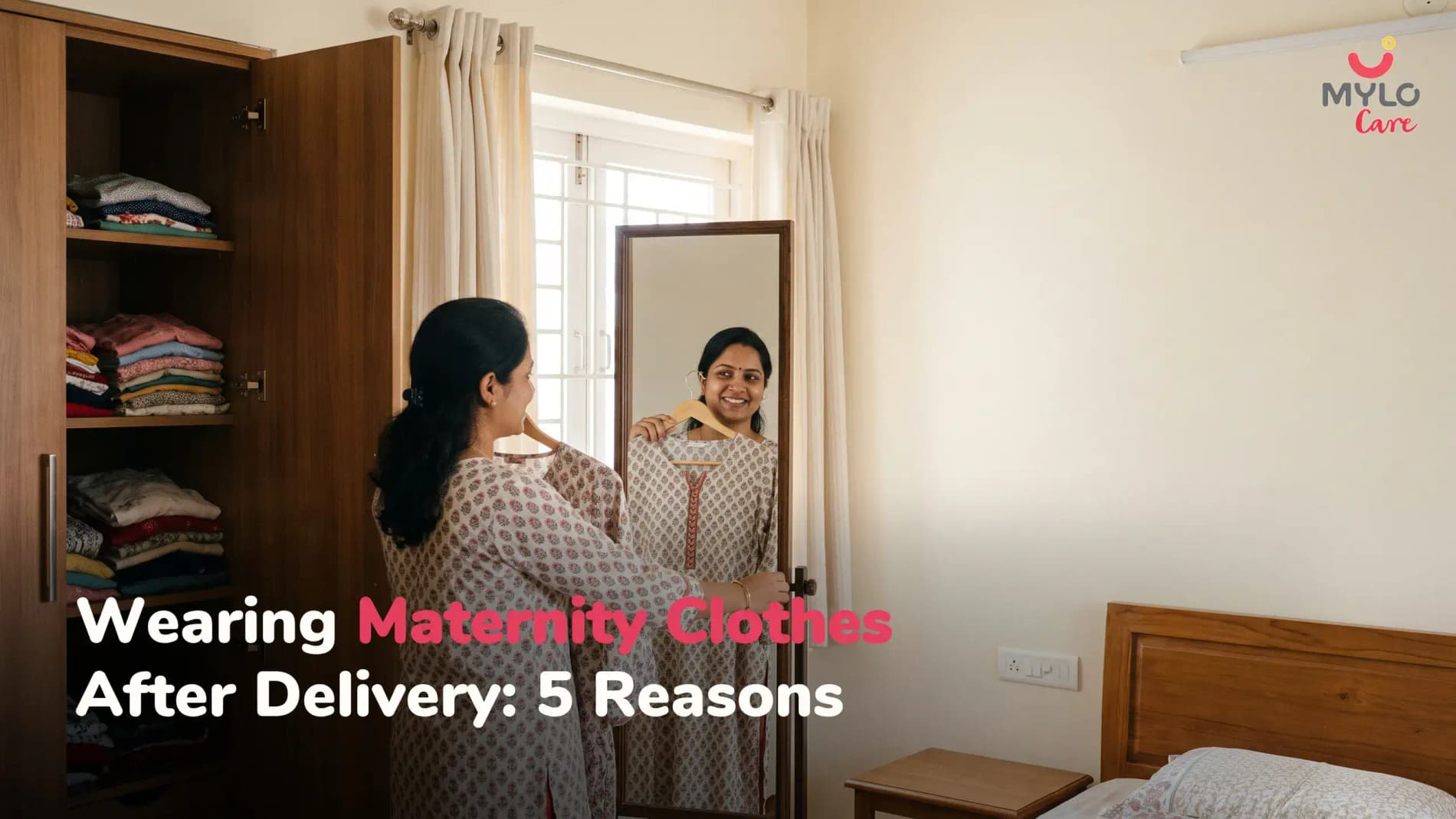
5 Reasons to Keep Wearing Maternity Clothes After Delivery


RMNCH+A, MCH & Midwifery, Program Management & National Trainer (ToT/ToN), WHO, MoHFW, ECHO Model · 11 years experience
 427 Likes|
 13 min
Quick answer
Your body does not return to its pre-pregnancy shape the moment you deliver. Your uterus takes around six weeks to shrink back, and most women still look several months pregnant in the first week. Maternity clothes are the ones that actually fit during this period, and many are also the easiest to feed in, which is why keeping them out for a few more months makes practical sense.
Key takeaways
You will still look pregnant after delivery, and that is normal. Most women leave hospital in the clothes they arrived in.
Pack maternity clothes for going home. This is the single most common packing mistake, and it catches nearly everyone out.
Swelling often gets worse before it gets better, sometimes peaking around days three to five, so tight waistbands and fitted sleeves are a poor idea in week one.
If you had a caesarean, the waistband is the thing to get right. Nothing should sit on or press against the incision.
Abdominal binders may feel supportive, but they do not reduce belly fat or correct muscle separation. Ask your doctor before using one, and never over an unhealed wound.
What your body is actually like after delivery
Nobody tells you this clearly, so here it is.
What happens | Timeline |
|---|---|
Your uterus is still enlarged. Immediately after birth it is around the level of your navel, and it shrinks gradually | Roughly 6 weeks to return to pre-pregnancy size |
Your belly stays soft and rounded. Most women look around five to six months pregnant on day one | Improves over weeks to months |
Swelling in the hands, feet, legs and face. Often worse in the days after delivery than before it, partly from fluid given during labour | Usually settles over 1 to 2 weeks |
Postpartum bleeding (lochia). Heavy at first, then gradually lighter | 4 to 6 weeks |
Night sweats. Sometimes drenching, as your body clears extra fluid | First 1 to 2 weeks |
Breast changes. Milk coming in makes breasts much fuller and firmer for a few days | Days 2 to 5, settling by 6 to 8 weeks |
Ribcage and feet may not return to exactly their pre-pregnancy size | Sometimes permanent |
All of this is normal. None of it means anything has gone wrong, and none of it needs fixing with clothing.
5 reasons to keep wearing maternity clothes
1. They are the clothes that actually fit
Your pre-pregnancy jeans will not fasten in week one, and trying is a demoralising exercise that serves no purpose. Maternity clothes were designed for a changing shape, with soft waistbands, stretch panels and room through the middle.
Practically: pack maternity clothes in your hospital bag for going home. Almost everyone assumes they will need something smaller, and almost nobody does.
2. Easy feeding access
Many maternity tops, kurtas and dresses have front openings, wrap styles, buttons or stretchy necklines, which are exactly what you want for feeding, particularly in the first weeks when you are feeding eight to twelve times a day.
They are also useful for skin-to-skin contact, which is easier in something that opens at the front than something you have to remove.
3. Comfort over a recovering body
Soft fabrics, no rigid waistbands, and nothing pressing on a tender abdomen, a caesarean incision or engorged breasts. Elastic that sits across a healing scar or a sore uterus is genuinely uncomfortable, and maternity waistbands sit differently.
They also handle the realities of this period: maternity pads, leaking breasts, night sweats and frequent changes.
4. Versatility across a long, uncertain stretch
You do not know how long you will need them, and that is the point. Some women are back in regular clothes at eight weeks, others at eight months, and both are normal. Maternity clothes bridge that gap without you having to buy a whole intermediate wardrobe.
Many maternity kurtas, dresses and loungewear pieces are indistinguishable from regular clothes, which means they work for visitors, appointments and going out.
5. Cost, which is not a small point
You have just spent on a delivery and are about to spend on a baby. Buying a transitional wardrobe you will wear for a few weeks is avoidable spending. Maternity clothes you already own cover the same period for nothing.
What to wear, and when
Stage | What works |
|---|---|
Hospital, and going home | Loose maternity clothes, front-opening top, dark colours, slip-on footwear. Nothing fitted |
Week 1 to 2 | Maternity leggings or pyjamas, front-opening kurtas or nighties, nursing bra, old or dark underwear you do not mind about |
Week 2 to 6 | Same, adding a few nursing-friendly tops. Nothing with a firm waistband |
6 weeks to 3 months | Maternity clothes still fit most women. Start reintroducing regular clothes as they feel comfortable |
3 to 6 months | Gradual transition. Feeding access still matters more than fit |
Night, throughout | Front-opening nightwear, a soft sleep bra, and something that copes with night sweats |
Things worth having a few of: dark colours, which hide leaks and spills; anything machine washable, because you will be washing constantly; and slip-on footwear, since bending is awkward for weeks after any delivery.
If you had a caesarean
The waistband is the thing that matters.
Choose high-waisted or very loose waistbands that sit well above the incision, or fall from the shoulder entirely, like a maxi dress or a long kurta
Avoid anything with elastic that sits across the scar line. This is the most common source of discomfort in the first weeks
Front-opening tops matter more after a caesarean, because raising your arms to pull something over your head is uncomfortable for a while
Loose, breathable cotton around the incision. Anything that traps sweat against a healing wound is a poor idea, particularly in Indian heat
High-waisted cotton underwear that sits above the scar rather than on it
Slip-on footwear, since bending to fasten shoes is difficult for several weeks
🚩 Contact your doctor if the incision becomes more painful, red or swollen, starts discharging, opens, or you develop a fever. Those are infection signs, not healing.
About belly binders and belts
Abdominal binding after delivery is very common in India, and the belief that it "gets your belly back" is widespread. The honest position:
What a binder may do: provide a feeling of support and improve comfort when moving in the early days, particularly after a caesarean. Some women find it genuinely helpful in the first week or two.
What it does not do: reduce abdominal fat, tighten skin, or correct separation of the abdominal muscles (diastasis recti). There is no good evidence for any of that.
If you use one:
Ask your doctor first, particularly after a caesarean
Never over an unhealed incision
Never tight. Excessive compression is uncomfortable, can affect breathing, and pushes pressure downward onto a pelvic floor that is already recovering
Short periods, not all day and not at night
Stop if it causes pain, numbness or breathlessness
For abdominal recovery, the thing with actual evidence behind it is guided exercise, ideally with a women's health physiotherapist, not a belt. If you have a visible gap or doming down the middle of your abdomen when you sit up, ask for an assessment.
What Indian families should know
Jaappa clothing is usually well suited to this period anyway. Loose cotton, layered, easy to wash, and modest enough for a house full of visitors
Feeding in a joint family is easier in clothes that open at the front than in ones you have to lift. A dupatta or a light cotton stole doubles as a feeding cover if you want one
Heat and humidity. Breathable cotton matters when you are sweating heavily in the first weeks and may be discouraged from bathing as often as you would like
Washing volume is high, between lochia, leaking and spit-up, so several inexpensive sets beat two good ones, and drying is slow during monsoon
Sarees are harder in the early weeks, especially after a caesarean, because of the waist tying. Most women find kurtas, nighties and loose salwars easier until the scar settles
A note on how you look
The existing version of this article, like most writing on this topic, leans on the word "flattering." It is worth saying something different.
Your body in the weeks after delivery is doing exactly what it is supposed to do. A soft belly at six weeks is not a problem to be solved with shapewear or a diet, and the pressure to look otherwise arrives remarkably fast, often from well-meaning people.
Wear what is comfortable, wear what lets you feed, and let the timeline be whatever it is. If you want to talk about fitness or weight later, that conversation belongs at your six-week check with your doctor, once bleeding has settled and you have been cleared for exercise.
If you feel persistently low, anxious, tearful or disconnected, particularly beyond the first two weeks, tell your doctor. Postnatal depression is common and treatable, and it is not something to wait out.
When to see a doctor
Seek care immediately for:
Heavy bleeding, soaking a pad in an hour, or passing large clots
Fever, chills, or feeling generally unwell
A caesarean or perineal wound that is more painful, red, swollen, discharging or opening
Severe headache with visual changes, or sudden swelling, which can indicate postpartum pre-eclampsia
Pain, swelling, warmth or redness in one calf
Chest pain or breathlessness
A hot, hard, painful area on the breast with fever
Thoughts of harming yourself or your baby
Book an appointment for: swelling that is not settling after two weeks, ongoing pain, a visible gap down the middle of your abdomen, or low mood that persists.
Frequently asked questions
How long will I look pregnant after delivery?
Most women still look around five to six months pregnant in the first week. The uterus takes roughly six weeks to return to its pre-pregnancy size, and the belly softens gradually over the following months.
What should I wear home from the hospital?
Maternity clothes. Loose, front-opening, dark coloured, with slip-on footwear. This is the most common packing mistake.
Why are my feet and hands more swollen after delivery than before?
Fluid shifts and any fluids given during labour can make swelling peak a few days after birth. It usually settles within one to two weeks. Sudden swelling with headache or visual changes needs urgent assessment.
What should I wear after a C-section?
High-waisted or very loose clothing that keeps all pressure off the incision, front-opening tops so you do not have to lift your arms, breathable cotton, and slip-on shoes.
Do belly belts help flatten your stomach after delivery?
No. They may aid short-term comfort and support, especially after a caesarean, but there is no good evidence they reduce fat or correct muscle separation. Ask your doctor before using one, and never wear one tightly or over an unhealed wound.
When can I wear my normal clothes again?
There is no set point. Some women at eight weeks, others much later, and both are normal. Comfort and feeding access matter more than fit for the first few months.
Can I wear a saree after delivery?
Yes, when it is comfortable. Most women find the waist tying difficult in the early weeks, particularly after a caesarean, and switch to kurtas and loose salwars until the scar settles.
Do I need special nursing clothes?
Not necessarily. Anything that opens at the front or has a stretchy neckline works. Dedicated nursing wear is convenient rather than essential.
The bottom line
Keep the maternity clothes out, and pack them for going home, because they are the clothes that will actually fit for the next several weeks. Prioritise a soft waistband, front-opening tops and breathable cotton, and get the waistband right above all else if you had a caesarean. Your body needs around six weeks just to return the uterus to its previous size, so give the rest of it more time than that, and let comfort and feeding access decide what you wear rather than how quickly you fit into anything.
Sources
World Health Organization, recommendations on postnatal care of the mother and newborn
American College of Obstetricians and Gynecologists, postpartum care and optimising postpartum recovery
NHS, your body after the birth, and recovery from caesarean section
Centers for Disease Control and Prevention, urgent maternal warning signs
Royal College of Obstetricians and Gynaecologists, postnatal recovery guidance
Federation of Obstetric and Gynaecological Societies of India, postnatal care recommendations
This article is for general information and is not a substitute for medical advice. Seek care immediately for heavy bleeding, fever, wound problems, one-sided calf pain, or severe headache with visual changes.
Article Posted Under
Related Articles
Best Pregnancy and Parenting App in India: 5 Must-Have Features to Look For (2026)
 20 min
 Best Hairstyles for Postpartum Hair Loss and Regrowth
 10 min
 HairVivine Pro: What This Pumpkin Seed Hair Active Does and What the Studies Show
 15 min
 Postpartum Hair Loss and Confidence: Why It Hits So Hard and What Helps
 9 min
9 min
Related Topics
.webp&w=32&q=75)
Medical Disclaimer
This content is for informational purposes only and should not replace professional medical advice. Consult with a physician or other health care professional if you have any concerns or questions about your health. If you rely on the information provided here, you do so solely at your own risk.


AWARDS AND RECOGNITION

Mylo wins Forbes D2C Disruptor award

Mylo wins The Economic Times Promising Brands 2022
AS SEEN IN













- Mylo Care: Effective and science-backed personal care and wellness solutions for a joyful you.
- Mylo Baby: Science-backed, gentle and effective personal care & hygiene range for your little one.
- Mylo Community: Trusted and empathetic community of 10mn+ parents and experts.


Product Categories
Baby Carrier | Baby Soap | Baby Wipes | Stretch Marks Cream | Baby Cream | Baby Shampoo | Baby Massage Oil | Baby Hair Oil | Stretch Marks Oil | Baby Body Wash | Baby Powder | Baby Lotion | Diaper Rash Cream | Newborn Diapers | Teether | Baby Kajal | Baby Diapers Pants | Cloth Diapers | Laundry Detergent | Lactation Granules |