


Orders
.png&w=48&q=75 "login")
Profile


Wallet

What to Do If My Child Has Measles
 10 Likes|
 18 min
Measles is a highly contagious viral infection that can be serious, and occasionally fatal, in young children. It begins like a bad cold, and the characteristic rash only turns up a few days later, by which time your child has already been spreading it.
Children who have not been vaccinated are at the greatest risk of complications. The best protection is the MMR vaccine, given on schedule.
If you are reading this because you think your child has measles right now, start here.
What to do first
Phone your doctor rather than walking into the clinic. Measles spreads through the air and a waiting room full of babies is exactly where it should not go. Tell them you suspect measles so they can arrange to see your child separately.
Ask specifically about vitamin A. The World Health Organization recommends two doses of vitamin A for every child under five with suspected measles, given on the day of diagnosis and repeated the next day. It reduces the risk of complications and death. Do not assume it will be offered automatically.
Keep your child at home, away from other children, from four days before the rash appeared until four days after it appeared.
Tell anyone your child has been near, especially unvaccinated children, babies under one, pregnant women and anyone with a weak immune system. They may be able to have protective treatment, but only within a narrow window of a few days.
Watch for the emergency signs listed further down, particularly breathing difficulty, drowsiness, a fit, or a rash that does not fade under pressure.
What is measles, and what causes it?
Measles is caused by the measles virus, sometimes called rubeola. It is one of the most contagious infections known.
One thing worth clearing up: measles is not the same as rubella, which is often called German measles. They are two different viruses causing two different illnesses, and the MMR vaccine protects against both. If someone tells you your child "only has German measles", that is a separate diagnosis.
How does measles spread?
When an infected person coughs, sneezes or even just breathes and talks, tiny droplets carrying the virus go into the air. The virus can remain infectious in the air and on surfaces for up to two hours after the person has left the room.
Your child can catch it by breathing that air or by touching a contaminated surface and then touching his eyes, nose or mouth. Sharing a room or having face to face contact with an infected person is more than enough exposure. Measles is so contagious that in an unprotected group, one infected person typically infects twelve to eighteen others.
The part that catches families out: a child with measles is infectious from about four days before the rash appears until four days after it appears. Those first four days look like an ordinary cold, so children are usually at nursery, at a birthday party or in a crowded clinic while they are at their most infectious. This is why measles moves through a community so fast.
Who is likely to catch it:
If your child has not been immunised and has not had measles before, he is very likely to catch it if exposed
If he has been fully vaccinated with two doses, the chance of catching it is small, and if he does, the illness is usually much milder
If he has had measles before, he is almost certainly immune for life and very unlikely to get it again
What are the symptoms of measles?
Measles follows a fairly predictable sequence, which helps you know where you are in the illness.
Stage | Timing | What happens |
|---|---|---|
Incubation | 10 to 14 days after exposure | No symptoms at all |
Early stage | 2 to 4 days before the rash | Fever, runny nose, cough, sore red watery eyes. Your child seems generally unwell |
Koplik spots | 1 to 2 days before the rash | Small grey white spots inside the mouth and cheeks, like grains of salt or sand |
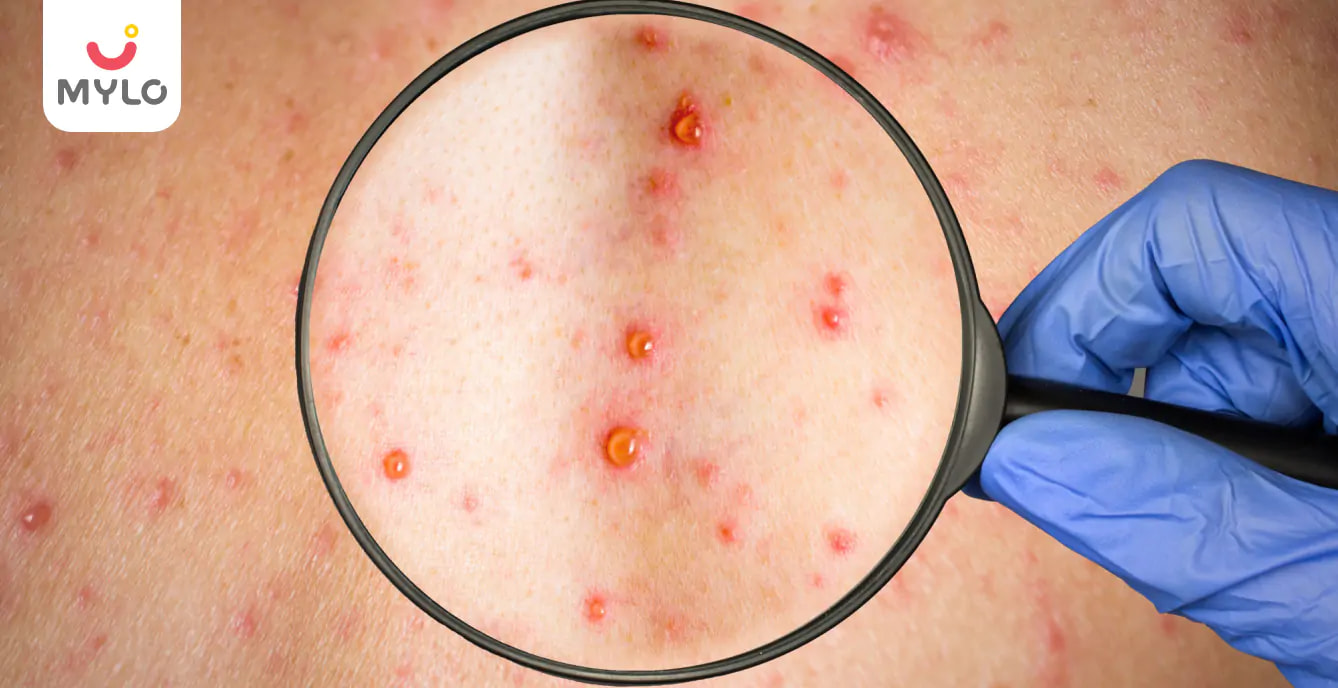
Rash appears | Day 0 | Red brown blotchy rash starting at the hairline, face and upper neck. Fever often spikes to around 40°C, or 104°F |
Worst days | Days 1 to 3 of the rash | Rash spreads downwards over the body. This is when your child feels most unwell |
Recovery | Days 4 to 7 of the rash | Fever settles, rash fades in the order it appeared, turning brownish and leaving skin dry and flaky |
The early symptoms are often remembered as the three Cs: cough, coryza which means a runny nose, and conjunctivitis which means sore red eyes. A cold with all three, plus a fever, in an unvaccinated child, deserves a phone call.
The rash itself may be flat or slightly raised, and patches often join together into larger blotches. It can be a little itchy but often is not. On brown and darker skin the rash may look purple, dusky or simply darker than the surrounding skin rather than red, and it can be easier to feel than to see, so run your hand over the skin as well as looking.
Alongside the rash your child is likely to:
Be tired and irritable
Lose his appetite and go off feeds
Have aching muscles
Have a worsening cough, often worst at night
Dislike bright light, because of the sore eyes
What should I do if I suspect measles?
Call your doctor the same day if:
You suspect your child has measles
Your child has been exposed to someone with measles
You live in an area with a measles outbreak
Your child was exposed and has had only one of his two MMR doses
Your child was exposed and is fully vaccinated. It is very unlikely he will develop measles, but the doctor still needs to know
Phone first, do not just turn up. Because measles is airborne, your clinic will want to see your child at a quiet time, in a separate room, or in some cases assess him at home. Walking into a full waiting room can expose babies too young to be vaccinated.
Expect it to be reported. Measles is a notifiable disease, so your doctor will inform the local health authority. This is routine and is how outbreaks get contained. Someone may contact you about who else your child has been in contact with.
At the appointment, the doctor will examine the rash, look inside the mouth for Koplik spots and ask about the sequence of symptoms and your child's vaccination history. A blood or throat swab test, or a urine sample, may be taken to confirm it, since several other illnesses cause similar rashes.
Is there any treatment for measles?
There is no antiviral medicine that kills the measles virus. Antibiotics do not work on viruses, so they are only used if a secondary bacterial infection such as pneumonia or an ear infection develops on top of the measles.
So the illness does have to run its course, usually over about seven to ten days. But "no cure" is not the same as "nothing to do", and this is where most articles stop too early.
Vitamin A: the treatment to ask about
The World Health Organization recommends two doses of vitamin A for all children under five with suspected measles, the first given as soon as measles is diagnosed and the second the following day. The dose depends on your child's age and must be given by a health worker.
Why it matters:
Measles depletes vitamin A even in well nourished children
Low vitamin A is what drives the eye complications of measles, including corneal damage and, in severe cases, blindness
Vitamin A supplementation has been shown to reduce deaths from measles by around half in developing countries, and has a clear protective effect in children with measles complicated by pneumonia
This is the single most effective thing available for a child who already has measles, and it is inexpensive and widely available in India. If your doctor has not mentioned it, ask.
Everything else is supportive care
Your doctor will focus on keeping your child comfortable, hydrated and monitored for complications.
How should I care for my child at home?
Rest. Let him sleep as much as he wants, in a darkened, quiet room if the light bothers his eyes
Fluids, offered little and often. Extra breastfeeds if he is exclusively breastfed, or cooled boiled water alongside feeds if he is on formula or solids. Fever and poor appetite dehydrate children quickly, so watch wet nappies
Paracetamol for fever and aches, at the dose your doctor advises for his weight. Ibuprofen may also be suitable, but check first. Never give aspirin to a child, because of the risk of Reye's syndrome
Moisten the air to ease the cough. A cool mist humidifier is the safest option. If you are using a bowl of hot water, keep it well out of reach and never in a room where a toddler is alone, as scald injuries from exactly this are common
No cough medicine. It does not help and can cause side effects in young children
Honey and warm water can soothe a cough, but only for children over one year. Honey must never be given below one because of the risk of infant botulism
Saline nasal drops can thin mucus if a blocked nose is stopping him feeding. Worth trying only if he tolerates them, and not worth the distress if he does not
Eye care. Wipe crusting away gently with cotton wool and clean warm water, from the inner corner outwards, using a fresh piece for each eye. Keep the room dimly lit
Keep him home from creche, playschool or daycare until at least four days after the rash appeared
Keep him away from high risk people in the household and outside it: babies under one, unvaccinated children, pregnant women and anyone with a weakened immune system
What about the people my child has exposed?
Act quickly on this, because the protective options have short windows.
MMR vaccine within 72 hours of exposure can prevent measles or make it milder in an eligible person who is not immune
Immunoglobulin within 6 days of exposure can provide temporary protection, and is used particularly for babies too young to be vaccinated, pregnant women and people who are immunocompromised
So tell people the same day rather than waiting to see whether they fall ill. Your doctor or the local health authority will advise who needs what.
Can measles cause complications?
Most children recover without problems. But measles is not a trivial illness, and complications are more common than people expect. Babies under one, malnourished children, children low in vitamin A, and children with weakened immunity are the most vulnerable.
More common complications
Diarrhoea and vomiting
Ear infection, which can lead to hearing loss
Eye infection
Laryngitis, a swollen voice box
Chest and airway infections such as bronchitis, croup and pneumonia. Pneumonia is the commonest cause of measles deaths in young children
Febrile convulsions
Less common but serious
Inflammation of the nerves and muscles of the eye
Meningitis, inflammation of the membranes around the brain and spinal cord
Encephalitis, inflammation of the brain itself
Corneal damage and blindness, strongly linked to vitamin A deficiency
Rare but worth knowing about
Subacute sclerosing panencephalitis (SSPE), a devastating and fatal brain condition that can appear years after a measles infection has apparently resolved. Risk is highest in children infected under the age of two. There is no treatment, and vaccination is the only way to prevent it
Immune amnesia. Research over recent years has shown that measles can wipe out a portion of the immune system's memory of infections it had previously learned to fight, leaving a child more vulnerable to other illnesses for months to years afterwards. This is one of the strongest modern arguments for prevention rather than "letting them catch it"
Get emergency help immediately if your child
Is struggling to breathe, breathing fast, grunting, or you can see the chest or ribs sucking in
Finds breathing painful, or is coughing up blood
Has a fit or convulsion, especially a first one
Is unusually drowsy, floppy, or very difficult to wake
Has a rash that does not fade when you press a clear glass against it
Has a severe headache, a stiff neck, or is confused, or is bothered intensely by light
Is vomiting repeatedly and cannot keep fluids down
Shows dehydration: very few wet nappies, a dry mouth, no tears, a sunken soft spot on the head, cold hands and feet
Has severe eye pain, or vision that seems affected
Is a baby under three months with a fever
Just seems very unwell, or worse in a way you cannot explain
Call an ambulance on 108 or go straight to the nearest hospital emergency department. Trust your instinct here. Nobody will mind you coming in unnecessarily.
How can I protect my child from measles?
Vaccination, and nothing else comes close. The measles vaccine is given in India in two different schedules depending on where you get it.
Government programme (UIP) | Indian Academy of Pediatrics (IAP) | |
|---|---|---|
Vaccine | MR (measles and rubella) | MMR (measles, mumps and rubella) |
Dose 1 | 9 to 12 months | 9 months |
Dose 2 | 16 to 24 months | 15 months |
Dose 3 | Not applicable | 4 to 6 years |
Both schedules give strong protection. The IAP schedule adds mumps cover and a third dose. Ask your paediatrician which applies to your child, and follow one schedule consistently.
Two doses are what matter. One dose gives good but incomplete protection. Two doses are highly effective, and most children who catch measles despite vaccination have only had one.
If your child has missed doses, it is not too late. Catch up vaccination is available at any age and your doctor or Anganwadi centre can put together a revised schedule. During an outbreak, a dose may be given earlier than usual.
Babies under nine months cannot usually be vaccinated, which is exactly why keeping an infectious child away from them matters so much. The best protection for a young baby is everyone around them being vaccinated.
Is the measles vaccine a live vaccine?
Yes. The MMR is a live attenuated vaccine, meaning it contains a weakened form of the virus that prompts the body to build antibodies without causing the disease.
What to expect afterwards. Some children get a mild fever and a faint rash about a week to ten days after the first dose, as the immune system responds. It is mild, lasts a couple of days and is not contagious in the way real measles is. Soreness at the injection site is common.
Who should not have it, or should delay: children with a significantly weakened immune system, children on high dose steroids or certain treatments, and anyone with a confirmed severe allergic reaction to a previous dose. Tell your doctor about any of these. A mild cough or cold is not a reason to postpone.
On the safety question. Very large studies involving millions of children have found no link between the MMR vaccine and autism. The original claim behind that fear was retracted and the research discredited. Measles itself, by contrast, causes brain inflammation in a small proportion of children. If you have concerns, take them to your paediatrician rather than acting on them alone.
Frequently asked questions
How long is my child contagious?
From roughly four days before the rash appears until four days after. Plan on keeping him home for at least four full days after the rash first showed up.
Can my vaccinated child still get measles?
It is possible but uncommon after two doses, and the illness is usually much milder and less contagious. Still tell your doctor if a vaccinated child is exposed.
Can measles come back a second time?
Almost never. One measles infection gives lifelong immunity in nearly everyone.
My child was exposed today. What should I do?
Call your doctor today, not in a few days. If he is not immune, MMR within 72 hours or immunoglobulin within six days may prevent the illness or reduce its severity. That window closes fast.
Is it better for my child to catch measles naturally?
No. Natural infection carries a real risk of pneumonia, brain inflammation, hearing loss, the later risk of SSPE, and the erasure of existing immune memory. The vaccine gives the protection without the illness.
Should I use calamine or any lotion on the rash?
The measles rash is usually not very itchy and needs nothing. If it is itchy, ask your doctor before applying anything, and keep to plain water for washing.
Can I bathe my child while he has measles?
Yes. A lukewarm bath is fine and can be soothing. Avoid soaps and bubble baths, and pat him dry gently.
When can he go back to playschool?
At least four days after the rash appeared, and once he is well in himself. Tell the school he has had measles either way, so they can alert other families.
The bottom line
If you think your child has measles: phone the doctor rather than going in, ask about the two doses of vitamin A, keep him home for four days after the rash appears, tell the people he has been near so they can get protective treatment in time, and watch closely for breathing trouble, drowsiness, fits or a rash that does not fade.
And once he is better, check the vaccination record for every child in the house. Measles is one of the few serious childhood illnesses that is almost entirely preventable, and two doses is all it takes.
References
World Health Organization. Measles fact sheet. https://www.who.int/news-room/fact-sheets/detail/measles
World Health Organization. What you need to know about measles. https://www.who.int/news-room/questions-and-answers/item/what-you-need-to-know-about-measles
Centers for Disease Control and Prevention. Clinical Questions about Measles. https://www.cdc.gov/measles/hcp/clinical-overview/questions.html
Centers for Disease Control and Prevention. Measles Vaccine Recommendations. https://www.cdc.gov/measles/hcp/vaccine-considerations/index.html
Centers for Disease Control and Prevention. Immune globulin for Measles Post-Exposure Prophylaxis. https://www.cdc.gov/measles/downloads/measles-immune-globulin-post-exposure-prophylaxis.pdf
NHS. Measles. https://www.nhs.uk/conditions/measles/
Indian Academy of Pediatrics. Q and A for parents: Why should my child receive the MMR/MR vaccine? https://iapindia.org/pdf/vaccine-information/MMR-VACCINE.pdf
Indian Journal of Medical Research. Two-dose measles-rubella vaccine schedule for measles-rubella elimination. https://ijmr.org.in/two-dose-measlesrubella-vaccine-schedule-for-measlesrubella-elimination/

Related Articles
Medical Disclaimer
This content is for informational purposes only and should not replace professional medical advice. Consult with a physician or other health care professional if you have any concerns or questions about your health. If you rely on the information provided here, you do so solely at your own risk.


AWARDS AND RECOGNITION

Mylo wins Forbes D2C Disruptor award

Mylo wins The Economic Times Promising Brands 2022
AS SEEN IN













- Mylo Care: Effective and science-backed personal care and wellness solutions for a joyful you.
- Mylo Baby: Science-backed, gentle and effective personal care & hygiene range for your little one.
- Mylo Community: Trusted and empathetic community of 10mn+ parents and experts.


Product Categories
Baby Carrier | Baby Soap | Baby Wipes | Stretch Marks Cream | Baby Cream | Baby Shampoo | Baby Massage Oil | Baby Hair Oil | Stretch Marks Oil | Baby Body Wash | Baby Powder | Baby Lotion | Diaper Rash Cream | Newborn Diapers | Teether | Baby Kajal | Baby Diapers Pants | Cloth Diapers | Laundry Detergent | Lactation Granules |