


Orders
.png&w=48&q=75 "login")
Profile


Wallet

Low BP (Hypotension) in Pregnancy: Symptoms, Causes, Effects and Treatment (2026 Guide)


BDS (Gold Medalist), Certified Lactation Consultant – BPNI Delhi, Maternal & Infant Nutrition Expert · 15 years experience
 8 Likes|
 16 min
Key Takeaways
Quick overview in 30 seconds.webp&w=32&q=75)
Summary
- Low BP in pregnancy is common, especially in the first trimester, as your body reroutes blood to your baby and dilates blood vessels to accommodate it.
- Symptoms of hypotension during pregnancy include nausea, dizziness, blurred vision, weakness, dehydration, breathlessness, and cold clammy skin that you should discuss with your doctor.
- Treat low blood pressure with a healthy balanced diet, light exercises like walking or yoga, adequate rest, sleeping on your left side, and plenty of fluids.
- What can keep you nourished and hydrated during pregnancy? Explore our MamaGro™ Protein Diskettes - High Protein & No Added Sugar - 250gm (50 Diskettes).
TL;DR
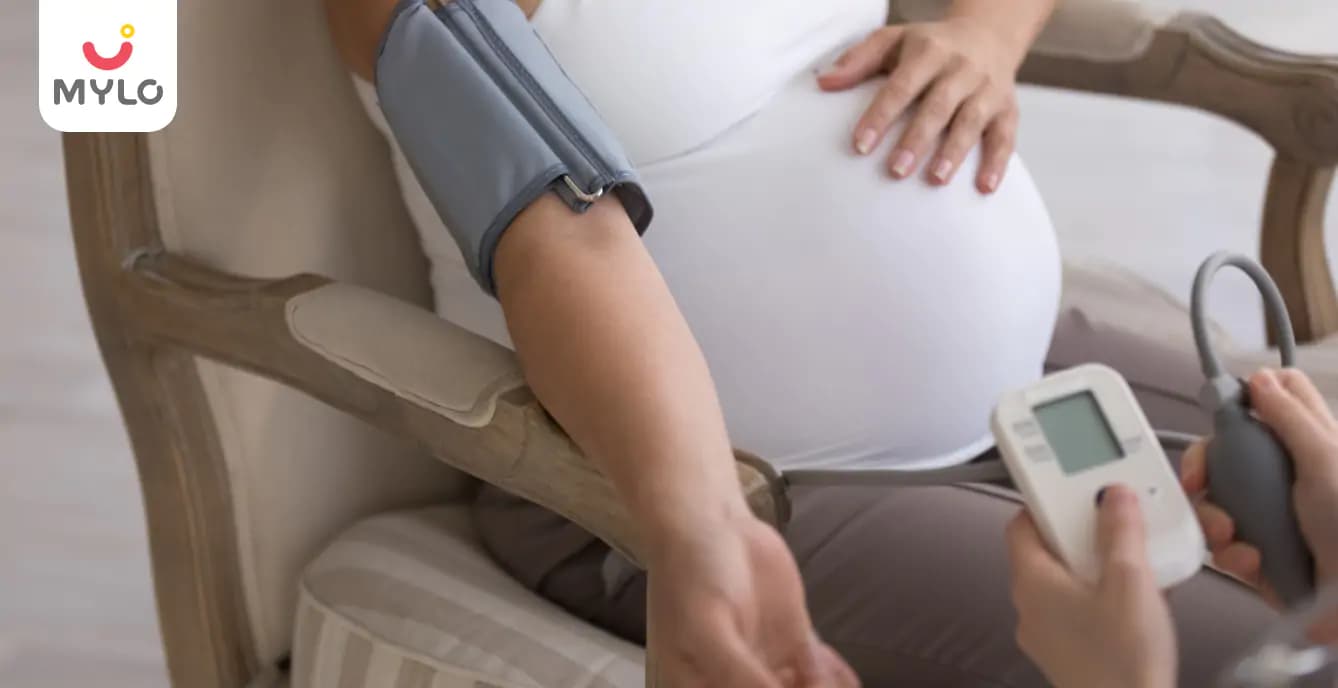
Low blood pressure (hypotension) during pregnancy is common and usually normal, especially in the first and second trimesters, because pregnancy hormones (mainly progesterone) relax and widen your blood vessels (Cleveland Clinic) (NHS). A reading below 90/60 mmHg is generally considered low (Mayo Clinic). It can cause dizziness, lightheadedness, nausea, fatigue and fainting, but in most cases it does not harm the baby and improves on its own by the third trimester. Manage it with slow position changes, hydration, frequent small meals, left-side sleeping and not standing too long. See a doctor urgently if you have fainting, severe dizziness, vaginal bleeding, breathlessness or a very low reading, as these need evaluation.
Quick Answer
Low blood pressure in pregnancy (below 90/60 mmHg) is common and usually harmless, caused by hormones widening blood vessels, especially in the first half of pregnancy. It can cause dizziness, nausea and fainting but rarely harms the baby. Manage it with hydration, slow movements, small frequent meals and left-side sleeping. Seek care if you faint or bleed.
Author: Mylo Editorial Team, Mylo Parenting Desk Medically reviewed by: Mylo Editorial Board, aligned with ACOG, NHS and FOGSI guidance Last updated: 11 June 2026
Medical Disclaimer: This article is for informational purposes only and is not a substitute for professional medical advice. If you experience fainting, severe dizziness, vaginal bleeding, chest pain, breathlessness or a very low blood pressure reading, contact your doctor or go to the hospital immediately, as these may signal a serious condition.
Key Takeaways
- Low BP is common and usually normal in pregnancy, especially the first half (Cleveland Clinic)
- A reading below 90/60 mmHg is generally considered low (Mayo Clinic)
- Caused mainly by progesterone widening blood vessels and blood being redirected to the baby
- Common symptoms: dizziness, lightheadedness, nausea, fatigue, fainting
- It usually does NOT harm the baby and often improves by the third trimester
- Manage with hydration, slow movements, small frequent meals, left-side sleeping
- Sudden or severe low BP with fainting or bleeding needs urgent medical care
- Low BP differs from high BP/pre-eclampsia, which is the more dangerous pregnancy BP problem
What Is Low Blood Pressure in Pregnancy?
Blood pressure is the force of blood against your artery walls, written as two numbers: systolic (top) over diastolic (bottom), measured in mmHg (Cleveland Clinic).
| Category | Reading (mmHg) |
|---|---|
| Normal | Around 120/80 |
| Low (hypotension) | Below 90/60 |
| High (hypertension) | 140/90 or above |
In pregnancy, it is normal for blood pressure to drop in the first and second trimesters, often reaching its lowest around the middle of pregnancy (around 24 weeks), then gradually returning toward normal before delivery (NHS).
Why Does Blood Pressure Drop During Pregnancy?
Several normal pregnancy changes lower blood pressure (Cleveland Clinic) (Mayo Clinic):
| Cause | How It Lowers BP |
|---|---|
| Progesterone rise | Relaxes and widens blood vessel walls |
| Blood redirected to the uterus | More blood flow to the baby lowers pressure elsewhere |
| Expanding circulatory system | Blood vessels grow faster than blood volume early on |
| Dehydration | Low fluid volume reduces blood pressure |
| Lying flat on the back | The uterus presses on a large vein (vena cava), reducing return of blood to the heart |
| Standing up too quickly | Causes a sudden drop (postural or orthostatic hypotension) |
| Long periods of standing | Blood pools in the legs |
| Anaemia | Common in Indian women, can worsen low BP symptoms |
| Not eating regularly | Low blood sugar adds to dizziness |
| Hot weather or hot baths | Widen blood vessels further |
What Are the Symptoms of Low BP in Pregnancy?
Common symptoms include (NHS) (Cleveland Clinic):
- Dizziness or lightheadedness (especially when standing up)
- Fainting or feeling faint (syncope)
- Nausea
- Blurred or dimmed vision
- Fatigue and weakness
- Difficulty concentrating ("brain fog")
- Cold, clammy or pale skin
- Rapid or shallow breathing
- Feeling unusually thirsty (dehydration)
- Headache
Symptoms are often worse when you stand up quickly, stand for a long time, or lie flat on your back in later pregnancy.
Does Low BP Harm the Baby?
In most cases, no. Mild to moderate low blood pressure usually does not harm the baby and is a normal part of pregnancy (Cleveland Clinic).
However, watch for these concerns:
- Fainting and falls: The biggest risk is injury from a fall when you faint, protect yourself by moving slowly
- Severe, persistent low BP: Very low pressure that does not improve may reduce blood flow to the baby in rare cases
- Underlying causes: Low BP from heavy bleeding, severe dehydration or infection needs urgent treatment
- Early pregnancy with severe low BP and pain: Could rarely signal an ectopic pregnancy, seek care (NHS Ectopic)
The key is to distinguish normal pregnancy low BP from a sudden drop with worrying symptoms, which always needs medical attention.
How Is Low BP in Pregnancy Treated and Managed?
Most cases need lifestyle measures, not medication (NHS) (Mayo Clinic):
1. Move Slowly
- Stand up gradually from sitting or lying down
- Sit on the edge of the bed for a moment before standing in the morning
- Avoid sudden position changes
2. Stay Hydrated
- Drink 2.5 to 3 litres of water daily
- Coconut water, buttermilk (chaas) and lemon water (nimbu pani) help
- Increase fluids in hot weather (ICMR)
3. Eat Small, Frequent Meals
- Eat every 2 to 3 hours to avoid low blood sugar
- Do not skip breakfast
- Keep a healthy snack (nuts, fruit) handy for dizziness
4. Sleep and Rest on Your Left Side
- Left-side sleeping improves blood flow to the heart and baby
- Avoid lying flat on your back in later pregnancy
- Rest when tired
5. Avoid Triggers
- Don't stand for long periods; shift your weight or walk a little
- Avoid very hot baths, saunas and hot, stuffy rooms
- Avoid getting overheated
6. Gentle Exercise
- Light walking, prenatal yoga and swimming improve circulation
- Avoid sudden, strenuous activity
7. Compression Stockings
- May help reduce blood pooling in the legs (ask your doctor)
8. Treat Underlying Causes
- Correct anaemia with doctor-advised iron-rich diet or supplements
- Manage dehydration, infection or other causes
Medication for low BP is rarely needed in pregnancy and only used under specialist supervision for severe, symptomatic cases.
What Foods Help With Low BP in Pregnancy? (Indian Diet)
A balanced Indian diet supports healthy blood pressure (ICMR):
| Food / Habit | How It Helps |
|---|---|
| Plenty of fluids (water, coconut water, chaas) | Maintains blood volume |
| Small frequent meals | Prevents blood sugar dips |
| Iron-rich foods (palak, methi, beetroot, dates, jaggery) | Corrects anaemia |
| Vitamin C foods (amla, citrus, lemon) | Improves iron absorption |
| Vitamin B12 and folate (dairy, eggs, leafy greens, dals) | Supports healthy blood |
| A little extra salt (only if your doctor approves) | May help raise very low BP |
| Soaked raisins and dates | Traditional energy and iron source |
| Nuts and seeds | Steady energy, prevent dizziness |
Important: Do NOT increase salt on your own. Extra salt is only advised by a doctor for specific low-BP cases, because too much salt can be harmful, especially if you later develop high BP (ACOG).
How to Prevent Fainting from Low BP
Fainting is the main practical risk. Reduce it by (NHS):
- Rising slowly from bed or a chair
- Sitting or lying down immediately if you feel dizzy
- Lying on your side if you feel faint (not flat on your back)
- Putting your head between your knees when seated if dizzy
- Eating regularly and carrying a snack
- Staying cool and hydrated
- Avoiding long hot showers or crowded, stuffy places
- Not standing still for long, keep moving gently
If you feel faint, get down to a safe position before you fall. A controlled sit or lie-down prevents injury.
When Should You See a Doctor?
Contact your doctor or seek urgent care if you have (Cleveland Clinic) (NHS):
- Fainting (passing out) or repeated near-fainting
- Severe or constant dizziness that does not improve
- Very low BP reading (well below 90/60) with symptoms
- Vaginal bleeding with dizziness (urgent, possible serious cause)
- Severe abdominal pain with low BP (rule out ectopic pregnancy in early pregnancy)
- Chest pain, palpitations or breathlessness
- Confusion or extreme weakness
- Cold, clammy, pale skin with rapid breathing (possible shock, emergency)
- Severe headache or vision changes
- Falls or injury from fainting
- Signs of dehydration (very little urine, dark urine, intense thirst)
Sudden severe low BP with bleeding, pain or breathlessness is a medical emergency, call 108 or go to the hospital immediately.
Low BP vs High BP in Pregnancy: Which Is More Dangerous?
Both matter, but they are very different (ACOG):
| Feature | Low BP (Hypotension) | High BP (Hypertension/Pre-eclampsia) |
|---|---|---|
| Reading | Below 90/60 mmHg | 140/90 mmHg or higher |
| Commonly when | First and second trimester | More often after 20 weeks |
| Main risk | Fainting, falls, dizziness | Pre-eclampsia, organ damage, growth problems |
| Danger level | Usually mild, manageable | Can be serious, needs close monitoring |
| Baby impact | Usually none | Can affect growth and require early delivery |
| Action | Lifestyle measures | Urgent medical management |
Important: While low BP is usually less dangerous, high BP (pre-eclampsia) is a serious condition. Attend all antenatal checkups so your BP is monitored both ways (ACOG).
Indian Context: What Indian Mothers Should Know
- Anaemia is very common: A large share of Indian pregnant women are anaemic, which worsens low-BP symptoms like dizziness and fatigue. Get your haemoglobin checked and follow iron advice (ICMR)
- Hot climate: India's heat widens blood vessels and causes dehydration, worsening low BP. Stay hydrated and avoid the afternoon sun
- Fasting and vrat: Skipping meals during fasts can drop blood sugar and BP; if you fast, discuss safe practices with your doctor
- Coconut water and chaas: Traditional, effective hydrating drinks that help maintain blood volume
- Standing for long pujas or ceremonies: Take breaks, sit when possible, and stay hydrated
- Do not over-salt: Some families push salty foods for low BP; only increase salt if your doctor specifically advises it
- Antenatal visits: Free BP monitoring is available under government schemes (JSY, PMSMA); never skip checkups
Myths vs Facts About Low BP in Pregnancy
| Myth | Fact | Source |
|---|---|---|
| "Low BP always harms the baby" | False. Mild low BP usually does not harm the baby | Cleveland Clinic |
| "Eat lots of salt to fix low BP" | False. Only increase salt if your doctor advises it | ACOG |
| "Low BP needs medication" | False. It is usually managed with lifestyle measures | NHS |
| "Coffee is the best fix for low BP" | False. Hydration and regular meals matter more; limit caffeine in pregnancy | Mayo Clinic |
| "Low BP and high BP are equally dangerous" | False. Pre-eclampsia (high BP) is generally more serious | ACOG |
| "Fainting in pregnancy is always harmless" | False. The fall can cause injury; repeated fainting needs evaluation | NHS |
| "Lying flat on your back is best for rest" | False. In later pregnancy this can lower BP; sleep on your left side | Cleveland Clinic |
FAQs: Low BP in Pregnancy
What is considered low BP in pregnancy?
A blood pressure reading below 90/60 mmHg is generally considered low (Mayo Clinic). In pregnancy, BP naturally drops in the first and second trimesters, so a slightly low reading without symptoms is usually normal.
Pregnancy mein low BP normal hai? (Hinglish)
Haan, pregnancy mein low BP (90/60 se kam) bilkul common aur aksar normal hai, khaas kar pehle aur doosre trimester mein, kyunki hormones blood vessels ko relax kar dete hain. Isse chakkar, kamzori aur thakan ho sakti hai, lekin baby ko aksar koi nuksaan nahi hota. Paani khoob peeyein, dheere uthein, aur thodi thodi der mein khaayein. Agar behosh ho jayein ya bleeding ho, toh turant doctor se milein.
Does low BP affect the baby during pregnancy?
Usually not. Mild to moderate low blood pressure typically does not harm the baby (Cleveland Clinic). The main risk is fainting and falling. Only severe, persistent low BP from causes like heavy bleeding or severe dehydration may reduce blood flow to the baby and needs urgent care.
When is low BP at its lowest during pregnancy?
Blood pressure usually reaches its lowest point around the middle of pregnancy (around 24 weeks), then gradually rises back toward your normal level before delivery (NHS).
How can I raise my low BP naturally during pregnancy?
Safe, natural measures include (NHS):
- Drink plenty of fluids (water, coconut water, chaas)
- Eat small, frequent meals every 2 to 3 hours
- Stand up slowly
- Sleep on your left side
- Avoid long standing and hot environments
- Correct anaemia with iron-rich foods
- Wear compression stockings if advised
Pregnancy mein low BP ke liye kya khana chahiye? (Hinglish)
Low BP mein ye khaayein:
- Khoob paani, coconut water aur chaas
- Iron-rich foods: palak, methi, chukandar (beetroot), khajoor (dates), gud (jaggery)
- Amla aur citrus fruits (iron absorption ke liye)
- Thodi thodi der mein chhote meals
- Nuts aur soaked raisins Salt sirf tab badhayein jab doctor kahein.
Why do I feel dizzy when I stand up while pregnant?
This is postural (orthostatic) hypotension, a sudden BP drop when you stand up quickly (Cleveland Clinic). Pregnancy hormones and pooling of blood in the legs make it more common. Stand up slowly and sit on the edge of the bed before rising to prevent it.
Is fainting during pregnancy dangerous?
Fainting itself is often due to low BP, but the fall can cause injury to you and your bump (NHS). Occasional lightheadedness is common, but actual fainting, repeated near-fainting, or fainting with bleeding or pain needs prompt medical evaluation.
Can low BP cause miscarriage?
There is no strong evidence that mild low blood pressure causes miscarriage. However, severe low BP from serious causes like heavy bleeding or an ectopic pregnancy is dangerous and needs emergency care (NHS Ectopic). If you have low BP with bleeding and severe pain in early pregnancy, seek care immediately.
Should I increase salt to treat low BP in pregnancy?
Only if your doctor specifically tells you to. While a little extra salt can sometimes help very low BP, too much salt can be harmful, especially if you are at risk of high BP or pre-eclampsia later (ACOG). Never self-prescribe a high-salt diet.
Is coffee safe to raise BP in pregnancy?
Caffeine can temporarily raise BP, but pregnancy limits caffeine to under 200 mg per day (about one to two small cups) (ACOG). It is not a reliable treatment for low BP. Hydration, regular meals and slow movements work better and are safer.
How is low BP different from anaemia symptoms?
They overlap (both cause dizziness, fatigue and weakness) and often occur together (ICMR). Low BP is about blood pressure, while anaemia is about low haemoglobin (iron). A simple blood test checks for anaemia. Treating anaemia often improves low-BP symptoms, so get your haemoglobin checked.
Can low BP in pregnancy be a sign of something serious?
Most of the time it is harmless, but sudden, severe low BP can signal serious problems like heavy internal bleeding, ectopic pregnancy, severe infection or dehydration (Cleveland Clinic). Low BP with bleeding, severe pain, breathlessness or fainting is an emergency, seek immediate care.
References
- Cleveland Clinic. "Low Blood Pressure (Hypotension)." https://my.clevelandclinic.org/health/diseases/21156-low-blood-pressure-hypotension
- Mayo Clinic. "Low Blood Pressure (Hypotension)." https://www.mayoclinic.org/diseases-conditions/low-blood-pressure/symptoms-causes/syc-20355465
- Mayo Clinic. "Low Blood Pressure Diagnosis and Treatment." https://www.mayoclinic.org/diseases-conditions/low-blood-pressure/diagnosis-treatment/drc-20355470
- NHS UK. "Low Blood Pressure (Hypotension)." https://www.nhs.uk/conditions/low-blood-pressure-hypotension/
- American College of Obstetricians and Gynecologists (ACOG). "Preeclampsia and High Blood Pressure During Pregnancy." https://www.acog.org/womens-health/faqs/preeclampsia-and-high-blood-pressure-during-pregnancy
- ACOG. "Nutrition During Pregnancy." https://www.acog.org/womens-health/faqs/nutrition-during-pregnancy
- NHS UK. "Ectopic Pregnancy." https://www.nhs.uk/conditions/ectopic-pregnancy/
- ICMR / NIN. "Dietary Guidelines for Indians." https://www.nin.res.in/dietaryguidelines/pdfjs/locale/DGI07052024P.pdf
- ICMR (Indian Council of Medical Research). https://www.icmr.gov.in/
- FOGSI (Federation of Obstetric and Gynaecological Societies of India). https://www.fogsi.org/
Article Posted Under
Related Articles


Related Topics
.webp&w=32&q=75)
Medical Disclaimer
This content is for informational purposes only and should not replace professional medical advice. Consult with a physician or other health care professional if you have any concerns or questions about your health. If you rely on the information provided here, you do so solely at your own risk.


AWARDS AND RECOGNITION

Mylo wins Forbes D2C Disruptor award

Mylo wins The Economic Times Promising Brands 2022
AS SEEN IN












- Mylo Care: Effective and science-backed personal care and wellness solutions for a joyful you.
- Mylo Baby: Science-backed, gentle and effective personal care & hygiene range for your little one.
- Mylo Community: Trusted and empathetic community of 10mn+ parents and experts.


Product Categories
Baby Carrier | Baby Soap | Baby Wipes | Stretch Marks Cream | Baby Cream | Baby Shampoo | Baby Massage Oil | Baby Hair Oil | Stretch Marks Oil | Baby Body Wash | Baby Powder | Baby Lotion | Diaper Rash Cream | Newborn Diapers | Teether | Baby Kajal | Baby Diapers Pants | Cloth Diapers | Laundry Detergent | Lactation Granules |