


Orders
.png&w=48&q=75 "login")
Profile


Wallet

How to Develop Social Skills in Toddlers: Greeting Elders, Manners and More (2026 Guide for Indian Parents)


MBBS, DCH, DNB (Pediatrics), FICM (Fellowship in Intensive Care Medicine), FIDM (Fellowship in Diabetes Mellitus), MNAMS · 18 years experience
 18 min
TL;DR
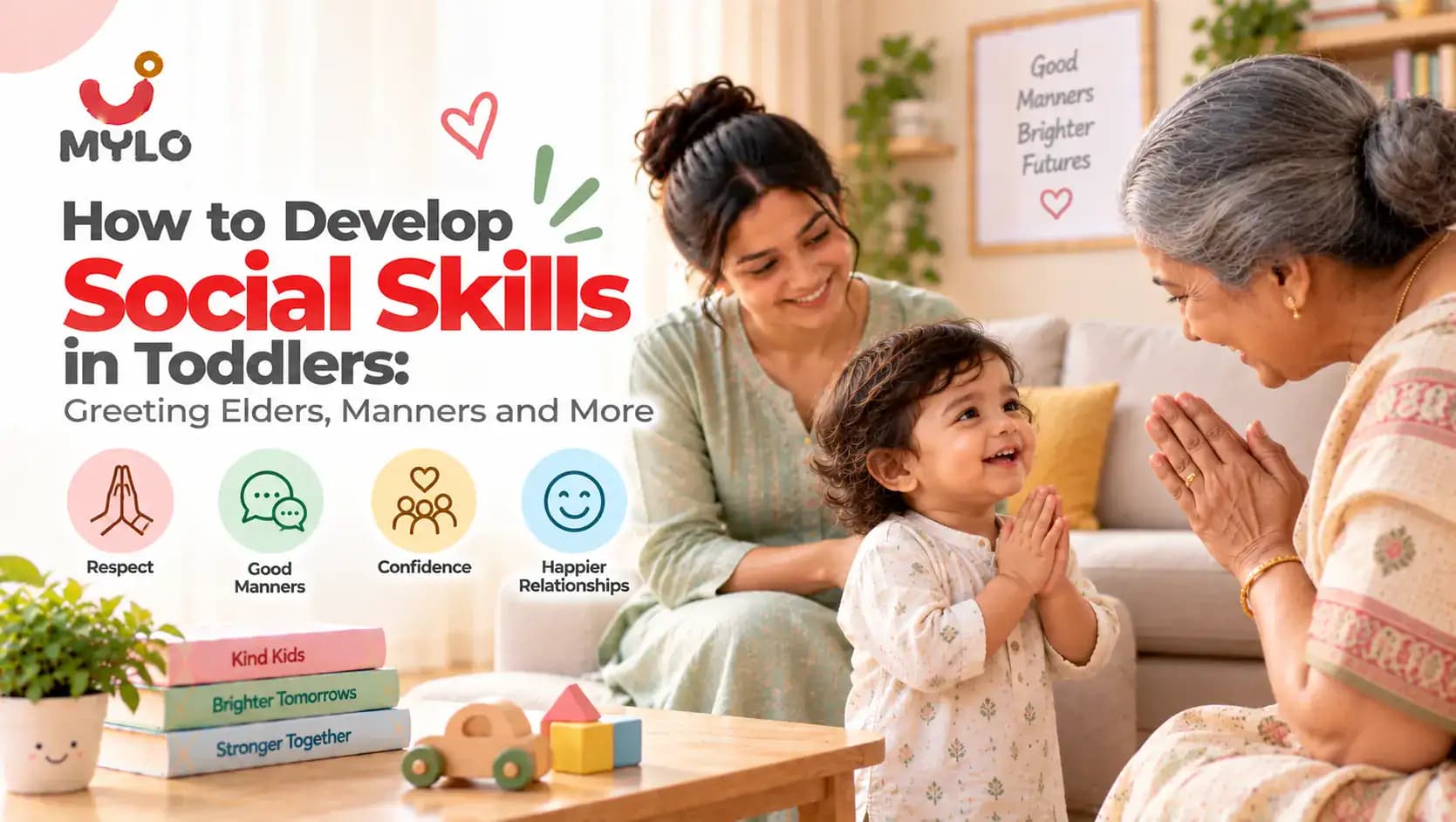
Greeting elders with a "Namaste", saying "please" and "thank you", and waiting for a turn are skills toddlers learn over time, mainly by watching you. Toddlers can start waving bye-bye around 12 months and saying "please" and "thank you" from about 18 months to 2 years. By 3 to 5 years, most can greet guests, share, say sorry and follow simple table manners with reminders. Here's what works:
Model manners yourself
Practise with role-play and games
Praise effort
Give your toddler a choice of greeting
A namaste, a wave, a high five or a hug are all polite options. Experts now advise not forcing hugs or kisses, so toddlers learn respect and body safety together. Shy toddlers need patience, not labels.
Key Takeaways
Social skills and manners develop gradually from 1 to 5 years
Toddlers copy how you greet, talk and behave
"Please", "thank you", "sorry" and "excuse me" are the four golden words to start with
Give your toddler a "greeting menu": namaste, wave, high five, handshake or hug
Don't force hugs or kisses. Respectful greetings and body safety can go together (Today's Parent).
Role-play and pretend play are powerful ways to practise
Praise specific efforts: "You said namaste to Dadi all by yourself!"
Shy toddlers often warm up with time. Never shame or label them.
Manners should come from kindness, not fear
Why Social Skills and Manners Matter for Toddlers
Social skills help toddlers:
Make friends and get along with other children
Feel confident in new places, like playschool, family functions and parks
Show respect and kindness
Handle conflicts and take turns
Build strong family bonds, especially with grandparents and elders
In Indian families, greeting elders is a deep part of culture. Starting in the toddler years teaches respect, gratitude and connection across generations.
Why This Is Trending in 2026
The consent conversation: More parents are asking, "Should I force my child to hug relatives?" Experts say no, and suggest giving toddlers a choice of respectful greetings.
Namaste is back: Since the pandemic, the contact-free namaste has become popular worldwide as a respectful greeting.
Screen time and social skills: Parents worry that more screen time means fewer chances for toddlers to practise real-life conversation.
Post-pandemic kids: Many children born around 2020 to 2022 had less early social exposure, and parents are working harder on social skills.
The "hand on shoulder" rule: A viral tip for teaching toddlers to interrupt politely (see below).
Social Skills and Manners by Age
Age | What Most Toddlers Can Do | What to Teach |
|---|---|---|
9 to 12 months | Waves bye-bye, plays peekaboo, smiles at familiar people | Wave hello and bye-bye together |
12 to 18 months | Copies gestures, gives you things, may fold hands for namaste | Namaste with folded hands, "ta-ta" and blowing kisses |
18 months to 2 years | Starts saying "please" and "thank you" with reminders, plays near other children | The magic words, gentle hands, greeting family |
2 to 3 years | Greets familiar people, takes turns with help, notices others' feelings | Taking turns, saying "sorry", simple table manners |
3 to 4 years | Joins other children in play, uses manners more often, says "excuse me" | Greeting guests, waiting to talk, sharing, touching feet or namaste for elders |
4 to 5 years | Comforts others, follows rules in games, talks to adults politely | Phone manners, visiting manners, asking before taking |
Based on CDC developmental milestones and child development experts. Every toddler develops at their own pace.
According to the Center for Parenting Education, toddlers as young as 18 months can start learning "please" and "thank you".
Greeting Elders: How to Teach Your Toddler
Indian Greetings Your Toddler Can Learn
Greeting | When to Use It |
|---|---|
Namaste or Namaskar (folded hands) | Greeting elders, guests and teachers |
Pranam or touching feet (charan sparsh) | Showing respect to grandparents and elders, especially at festivals |
Sat Sri Akal, Adaab, Vanakkam, Namaskara, Jai Shri Krishna | Based on your family's culture and language |
"Hello Aunty" or "Good morning Uncle" | With neighbours, teachers and family friends |
Wave, high five or handshake | For friends, or when a toddler isn't ready for more |
Hug | Only if your toddler wants to |
Step-by-Step: Teaching Your Toddler to Greet
Model it every time: Greet elders warmly in front of your toddler. Toddlers copy you.
Explain in simple words: "When Nani comes, we say Namaste. It makes her happy."
Practise at home: Greet soft toys, family members and each other in the morning.
Prepare before visits: "We're going to Chacha's house. Who will you say namaste to?"
Give a choice: "Would you like to say namaste, wave or give a high five?"
Praise the effort: "You folded your hands so nicely for Dadi!"
Keep it low-pressure: If your toddler freezes, greet for both of you: "Riya says hello too!"
The "Greeting Menu": Respect Without Force
Experts increasingly advise not forcing children to hug or kiss relatives, even loving ones. Forcing physical affection can send mixed messages about body safety. Instead, offer your toddler a greeting menu:
🙏 Namaste
👋 Wave
✋ High five
🤝 Handshake
🤗 Hug (only if they want)
😊 A smile and "Hello!"
How to explain it to elders: "We're teaching her that she can choose how to greet. She'll say namaste today. She'll give you a hug when she's ready!" Most grandparents understand when it's explained kindly.
Touching Feet: A Beautiful Tradition
Touching the feet of elders is a meaningful sign of respect in many Indian families. You can:
Show your toddler how you do it, and explain what it means in simple words
Invite them to join you, especially during festivals, birthdays and when elders visit
Let them start with namaste if they're shy, and try touching feet when they feel comfortable
The 4 Magic Words (and a Few More)
Magic Word | When to Use It | How to Practise |
|---|---|---|
Please | When asking for something | "Can I have water, please?" |
Thank you | When receiving something or help | Say it every time you give them something |
Sorry | After hurting someone or making a mistake | Model it: "Sorry, I bumped you." |
Excuse me | Interrupting or passing someone | Use it at home when walking past |
May I...? | Asking permission | "May I play with your toy?" |
Welcome | When someone thanks you | "You're welcome!" or "Most welcome!" |
Tip: Use the magic words with your toddler, not just around them. "Please pass me the spoon." "Thank you for helping me." This is the fastest way they learn. As Sanford Health notes, modelling is the best way to teach manners to toddlers.
Avoid forcing a "sorry": A forced sorry doesn't teach empathy. Instead ask, "He's crying. How can we help him feel better?"
Everyday Manners to Teach Your Toddler
🍽️ Table Manners
Wash hands before eating
Wait for everyone, or for elders to start
Say "please pass the..." instead of grabbing
Chew with the mouth closed
No screens at the table
Say "thank you for the food" to the cook
Ask "May I get down?" when finished
📞 Phone and Video Call Manners
Say "Hello, Namaste Nani!" when joining a call
Don't shout or grab the phone
Say bye-bye before ending the call
🏠 When Guests Visit
Greet them at the door
Offer water (with your help), a lovely way to show hospitality
Share a toy or show them a drawing
Say bye and "Please come again!" when they leave
🚪 Visiting Someone's Home
Greet everyone
Ask before touching things
Take off shoes if that's the custom
Say "thank you" before leaving
🙋 Interrupting Politely: The "Hand on Shoulder" Rule
A popular tip for teaching toddlers patience: when your toddler wants to talk while you're speaking to someone, they gently place a hand on your shoulder or arm. You place your hand on theirs to say, "I know you're waiting." Then you turn to them as soon as you can. It teaches respect and patience, and your toddler feels heard. This works best from around 3 years.
🛕 Manners in Public Places
Wait in queues
Use a quiet voice in temples, hospitals and libraries
Say "thank you" to shopkeepers, auto drivers and delivery staff
Help pick up things someone drops
🤝 Kindness to Everyone
Teach your toddler to greet and thank everyone, including house help, security guards, drivers and cleaners. Toddlers notice how you treat people.
Other Important Social Skills for Toddlers
Skill | How to Teach It |
|---|---|
Sharing and turn-taking | Use a timer: "Your turn for 2 minutes, then Aarav's turn." |
Listening | Play "Simon Says" and read stories together |
Making eye contact | Gently encourage looking at the face when talking, without pressure |
Understanding feelings | Name emotions in books and daily life: "She looks sad." |
Joining play | Teach phrases like "Can I play too?" |
Handling "no" | Practise hearing no in games and staying calm |
Saying no politely | "No, thank you" when they don't want something |
Apologising and repairing | Help them fix mistakes: rebuild a tower, bring a tissue |
For tips on sharing between siblings, see our guide on sibling rivalry.
Fun Ways to Practise Social Skills With Your Toddler
Pretend play: Set up a pretend tea party or shop. Take turns being the guest, host and shopkeeper.
Soft toy greetings: "Teddy is visiting! What should we say to him?"
Puppet shows: Use puppets to act out greeting, sharing and saying sorry
"Magic word" game: Give a sticker every time they use a magic word without a reminder
Storybooks: Read picture books about manners, friendship and feelings
Video calls with grandparents: Great practice for greeting and conversation
Playdates: Short, small playdates are best for toddlers
Family "manners of the week": Pick one manner to practise all week
Helping a Shy Toddler Greet People
Many toddlers hide behind a parent's leg when meeting people. This is normal, especially between 1 and 3 years.
Do:
Give them time to warm up
Prepare them before meeting people
Greet on their behalf if they freeze: "Arjun is feeling shy today, but he's happy to see you."
Praise small steps, like a wave or a smile
Practise at home with role-play
Don't:
Label them as "shy" in front of others. It can become how they see themselves.
Force or scold them
Compare them with other children: "Look how nicely your cousin says namaste!"
Read our full guide on helping your toddler overcome shyness.
What to Avoid When Teaching Manners to Toddlers
Forcing hugs, kisses or touching feet when your toddler is uncomfortable
Shaming in public: "Why are you so rude?"
Expecting too much too soon. Toddlers forget, and that's normal.
Lecturing: Keep reminders short and gentle
Comparisons with siblings or cousins
Rewarding manners with sweets. Praise and hugs work better.
Being inconsistent: Expecting manners from your toddler while not using them yourself
The Role of Parents: Toddlers Copy What You Do
Toddlers learn manners mainly by watching adults. If you:
Greet elders warmly, your toddler will too
Say "please" and "thank you" to your toddler and others, they'll pick it up
Shout or speak rudely, they'll copy that as well
Read more in our guide on positive parenting and why kids copy what you do.
Screen Time and Toddler Social Skills
Too much screen time can mean fewer chances for toddlers to practise real conversations, eye contact and play.
Keep meals and family time screen-free
Choose slow-paced, interactive shows and watch together
Replace some screen time with pretend play, outdoor play and playdates
The AAP advises no screens under 18 months (except video calls), and about 1 hour a day of good-quality content for ages 2 to 5
When to Talk to Your Pediatrician
Speak to your doctor if your toddler:
Doesn't wave bye-bye or use gestures by 12 to 15 months
Doesn't respond to their name or make eye contact by 12 months
Doesn't show interest in other people or children by 18 months to 2 years
Loses social or language skills they had before
Seems extremely anxious in all social situations
Shows very strong reactions to sounds, touch or crowds
Isn't meeting other developmental milestones
Read our guide on identifying developmental disorders in toddlers. Early support makes a big difference.
Indian Context: What Indian Parents Should Know
Joint families are a great classroom: Grandparents, uncles and cousins give toddlers daily practice in greeting and respect
Festivals are perfect practice: Diwali, Eid, Raksha Bandhan, Pongal and Christmas visits are natural chances to greet and thank elders
Respect doesn't need fear: Teach manners with warmth, not scolding
Explain the "greeting menu" kindly to elders so they don't feel hurt if a toddler chooses a namaste instead of a hug
Teach respect for all: Greeting and thanking house help, drivers and guards teaches equality
Mix languages: It's great for toddlers to greet in your mother tongue and in English
Body safety matters: Teach your toddler that they can say no to touch that makes them uncomfortable, and tell a parent
Myths vs Facts
Myth | Fact |
|---|---|
"A toddler who doesn't greet is rude" | Toddlers are still learning. Shyness is normal and not rudeness. |
"Forcing hugs teaches love and respect" | Experts advise offering greeting choices to respect body boundaries (Today) |
"Manners are learned by telling" | Toddlers learn mostly by watching adults (Sanford Health) |
"Toddlers are too young for manners" | From 18 months, they can start learning please and thank you (Center for Parenting Education) |
"A forced sorry teaches empathy" | Helping them repair and notice feelings teaches empathy better |
"Shy toddlers won't have good social skills" | Many shy toddlers develop excellent social skills with time and support |
FAQs: Social Skills and Greeting Elders for Toddlers
At what age should a toddler start greeting people?
Most babies wave bye-bye around 12 months. By 2 to 3 years, many toddlers greet familiar people with reminders. By 4 to 5 years, most can greet guests on their own.
Bachche ko bado ko namaste karna kaise sikhayein? (Hinglish)
Sabse pehle khud bado ko pyaar se namaste karein, bachcha dekhkar seekhega. Ghar par teddy ya family ke saath practice karein, kisi ke ghar jaane se pehle bataayein ki kisko namaste karna hai, aur jab bachcha kare toh uski tareef karein. Zabardasti na karein.
How do I teach my toddler to say please and thank you?
Use the words with your toddler every day, give gentle reminders, and praise them when they use the words on their own.
Should I force my toddler to hug or kiss relatives?
Experts advise against it. Offer a choice of greetings like namaste, a wave or a high five. This teaches respect and body safety together.
Kya bachche ko rishtedaaron ko hug karne ke liye force karna chahiye? (Hinglish)
Nahi. Bachche ko choice dein, jaise namaste, haath hilana ya high five. Isse bachcha izzat bhi seekhta hai aur apne sharir ki suraksha bhi. Bado ko pyaar se samjha dein.
My toddler hides when guests come. What should I do?
Give them time to warm up, prepare them beforehand, greet on their behalf and praise small steps. Don't label or force them.
How do I teach my toddler to touch the feet of elders?
Show them how you do it, explain what it means, and invite them to join you. Let them start with namaste if they're not ready.
Should I make my toddler say sorry?
Instead of forcing it, help them notice the other person's feelings and fix the problem. Model saying sorry yourself.
How do I teach my toddler not to interrupt?
From about 3 years, try the "hand on shoulder" rule: your toddler places a hand on your arm, you place yours on theirs to show you know, and you turn to them soon.
Does screen time affect a toddler's social skills?
Too much screen time can reduce chances to practise conversation and play. Keep meals screen-free and encourage real-life play.
What are basic table manners for toddlers?
Washing hands, sitting while eating, saying please and thank you, not grabbing, and saying "thank you for the food".
When should I worry about my toddler's social skills?
See your doctor if your toddler doesn't wave, point or respond to their name by 12 to 15 months, shows little interest in people, or loses skills.
Related Reads on Mylo
References
Centers for Disease Control and Prevention (CDC). "CDC's Developmental Milestones." https://www.cdc.gov/act-early/milestones/index.html
Centers for Disease Control and Prevention (CDC). "Milestone Checklists by Age." https://www.cdc.gov/act-early/resources/milestones-checklist-by-age.html
Today's Parent. "Teaching Consent: Why You Shouldn't Force Your Kids to Hug Relatives." https://www.todaysparent.com/family/parenting/why-you-shouldnt-force-your-kids-to-hug-relatives/
Today. "Is It Ever OK to Force Your Kids to Hug Relatives? Experts Say No." https://www.today.com/parents/why-it-s-never-ok-parents-force-kids-hug-adults-t118863
Today. "Are There Situations Where a Child Should Be Required to Hug or Kiss a Relative?" https://www.today.com/parents/family/is-it-ok-to-make-kids-hug-kiss-relatives-rcna242601
Michigan State University Extension. "Should You Force Your Child to Show Affection to Relatives?" https://www.canr.msu.edu/news/should_you_force_your_child_to_show_affection_to_relatives
Center for Parenting Education. "Teaching Children Manners." https://centerforparentingeducation.org/library-of-articles/baby-through-preschool-articles/teaching-children-manners/
Sanford Health News. "Model Good Manners for Toddlers." https://news.sanfordhealth.org/parenting/model-good-manners-for-toddlers/
Gerber Life. "Age by Age Guide to Teaching Kids Manners." https://www.gerberlife.com/learn/teaching-kids-manners
Medical Disclaimer
This article is for information only and does not replace professional medical advice. If you're concerned about your toddler's social development, speech or behaviour, please consult your pediatrician.


Shop Now
Baby Essentials




Article Posted Under
Related Articles
Related Topics
.webp&w=32&q=75)
Medical Disclaimer
This content is for informational purposes only and should not replace professional medical advice. Consult with a physician or other health care professional if you have any concerns or questions about your health. If you rely on the information provided here, you do so solely at your own risk.


AWARDS AND RECOGNITION

Mylo wins Forbes D2C Disruptor award
Mylo wins The Economic Times Promising Brands 2022
AS SEEN IN













- Mylo Care: Effective and science-backed personal care and wellness solutions for a joyful you.
- Mylo Baby: Science-backed, gentle and effective personal care & hygiene range for your little one.
- Mylo Community: Trusted and empathetic community of 10mn+ parents and experts.


Product Categories
Baby Carrier | Baby Soap | Baby Wipes | Stretch Marks Cream | Baby Cream | Baby Shampoo | Baby Massage Oil | Baby Hair Oil | Stretch Marks Oil | Baby Body Wash | Baby Powder | Baby Lotion | Diaper Rash Cream | Newborn Diapers | Teether | Baby Kajal | Baby Diapers Pants | Cloth Diapers | Laundry Detergent | Lactation Granules |