


Orders

Profile


Wallet

10 Ways to Protect Your Child from Air Pollution: A Practical Guide for Indian Parents
 14 min
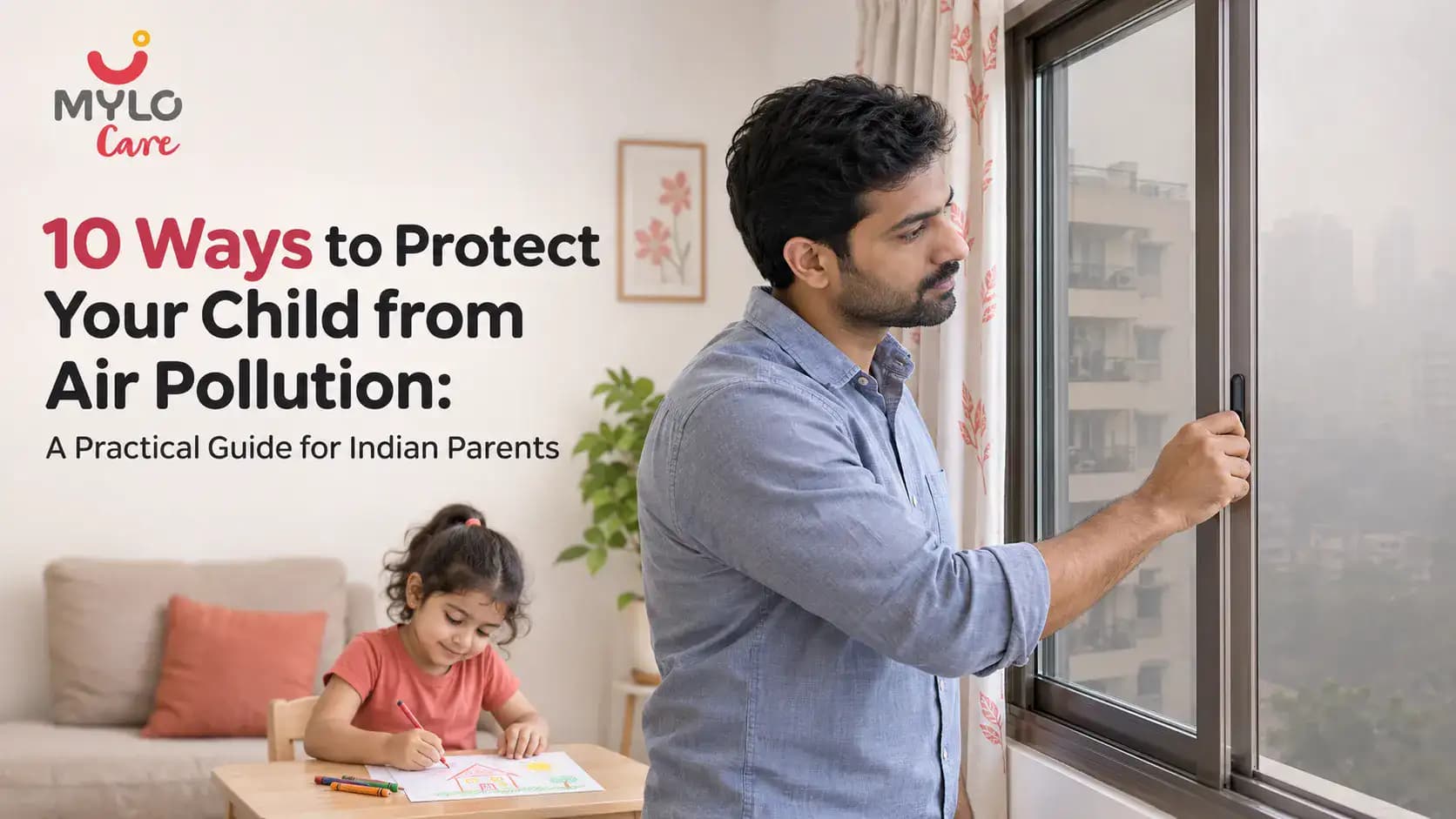
When the AQI turns red and your child is coughing at night, it is hard not to feel helpless. You cannot change the air outside overnight, but you can change how much of it your child breathes, at home, on the way to school and during play. These 10 steps, drawn from paediatric and UNICEF guidance, are the ones that make the biggest difference.
Quick Answer
To protect your child from air pollution, check the AQI every day, move play indoors when it is above 200, keep away from busy roads, run a HEPA air purifier in the bedroom, and remove smoke sources at home such as agarbatti, mosquito coils and cigarettes. Never put a mask on a child under 2. Watch for fast breathing or a cough that keeps getting worse, and see a doctor if you notice either.
Why Children Are More Affected by Pollution Than Adults
Children take in more pollution than adults for their size, and their bodies are still growing. According to UNICEF:
they breathe faster and take in more air for their body weight
their noses filter pollutants less effectively
they breathe closer to the ground, where dust and vehicle exhaust collect
their lungs, brains and immune systems are still developing, so harm can last a lifetime
Children with asthma, those living near busy roads or factories, and those in homes that burn wood, coal or kerosene are at the highest risk.
The harm can start even before birth. The State of Global Air report by the Health Effects Institute and UNICEF notes that some pollutants can cross the placenta, and links pollution in childhood to asthma, pneumonia and slower cognitive development. If you are expecting, read our guide to air pollution during pregnancy.
1. Check the AQI Every Morning
Start each day by checking the air quality, the way you check the weather. CPCB’s free SAMEER app shows the hourly Indian AQI from the government monitoring station nearest you.
Use this as a simple guide for children:
Indian AQI | Level | What to do with your child |
|---|---|---|
0 to 100 | Good or Satisfactory | Normal outdoor play. |
101 to 200 | Moderate | Shorter outdoor time, away from busy roads. Children with asthma should take it easy. |
201 to 300 | Poor | Keep play mostly indoors. Limit running and sports outside. |
301 to 500 | Very Poor or Severe | Stay indoors except for essential trips. Keep windows closed and the purifier on. |
Many international apps show the US AQI, which uses a different scale and gives higher numbers for the same air. Check which scale your app uses before you decide.
2. Time Outdoor Play Wisely
On high-pollution days, move active play indoors, because children breathe faster and deeper when they run. In Indian winters, pollution is usually worst in the early morning and late evening, so if you must go out, the afternoon is often a better window.
Indoor ideas that keep children moving:
dancing, skipping or obstacle courses in the living room
stair climbing in the building with a parent
yoga or stretching in the room where the purifier runs
block building, puzzles and pretend play for younger children
UNICEF advises limiting strenuous play especially for children with asthma or a chest infection.
3. Keep Away From Busy Roads
Vehicle exhaust is thickest right next to traffic and at a small child’s height. When walking:
choose quieter lanes or parks over main roads, even if the route is a little longer
walk on the side of the footpath farthest from traffic
carry a young child instead of using a low pram on busy roads, since UNICEF notes this keeps them higher above exhaust
avoid places where garbage or leaves are being burned
In the car or cab, keep windows closed and switch the AC to recirculation mode in heavy traffic.
4. Create a Clean-Air Room at Home
Children spend most of their time indoors, especially sleeping, so make their bedroom the cleanest room in the house.
Use a True HEPA air purifier sized for the room, in the bedroom or playroom. The American Academy of Pediatrics’ HealthyChildren.org recommends a room-sized unit where your child spends the most time.
Keep doors and windows closed while it runs, and clean or change filters on schedule. Filters clog faster in smog season.
No purifier? Choose one room, keep it well sealed on high-AQI days, and keep the family in it as much as possible.
Ventilate when the air is better. Open windows briefly when the AQI drops, usually in the afternoon.
5. Remove Smoke Sources From Your Home
What you burn inside the home goes straight into your child’s lungs. Pediatric and UNICEF guidance agrees on these steps:
No smoking or vaping anywhere near your child: not in the home, balcony, car or garage. Smoke residue on clothes and furniture also matters, so change clothes and wash hands after smoking outside.
Limit agarbatti, dhoop, camphor and scented candles, especially in closed rooms and on high-AQI days.
Avoid mosquito coils. Use mosquito nets or plug-in repellents instead.
Skip air fresheners and strong perfumes indoors. A clean home does not need a scent.
Do not burst firecrackers, and keep children inside with windows closed when others are bursting them.
For more ways your family can cut the pollution it adds, see how to reduce air pollution in your daily life.
6. Cook Clean and Keep Children Away From Kitchen Smoke
Cooking smoke is one of the biggest sources of indoor pollution in Indian homes.
Cook on LPG, piped gas, induction or other electric stoves wherever possible. UNICEF lists these as cleaner options than wood, coal or kerosene.
Turn on the chimney or exhaust fan, or open a window, whenever you cook, especially while frying or making tadka.
Keep babies and small children out of the kitchen during heavy frying or tempering.
If a chulha is the only option, cook outdoors or in a well-ventilated space, and keep children and pregnant family members away from the smoke.
7. Clean Without Stirring Up Dust
Dry sweeping and dusting throw fine particles back into the air your child breathes.
Wet-mop floors and wipe surfaces with a damp cloth instead of dry dusting.
If you have a vacuum cleaner, a HEPA vacuum traps fine dust better.
Clean while children are out of the room, where possible.
Choose mild, fragrance-free cleaners, and keep paints, glues and strong chemicals away from children.
8. Use Masks Only at the Right Age and With the Right Fit
Masks can help older children outdoors, but they are not safe or useful for every child.
Child’s age | Mask advice |
|---|---|
Under 2 years | Never use a mask. There is a risk of suffocation. Protect babies with clean indoor air instead. |
2 to 5 years | Experts differ. WHO generally advises that children under 5 should not wear masks, while US paediatric environmental health specialists (PEHSU) say a well-fitting child-size mask can be used from age 2. Ask your paediatrician. |
5 to 7 years | A well-fitting child-size mask may help. N95s rarely fit at this age. |
7 years and above | An adult small or extra-small N95 often fits. |
A child should wear a mask only when they are awake, supervised, and able to tell you if it feels uncomfortable. Cloth masks do not filter fine pollution particles. A mask is not permission to play outside longer on a bad day, and children with asthma or heart conditions should use one only after checking with their doctor.
9. Keep Your Child’s Body Strong
No food or drink removes pollution from the body, but good overall health helps children cope with illness. UNICEF recommends:
Breastfeeding for at least the first six months if you can.
Keeping vaccinations up to date, since chest infections are a major risk in polluted air.
A varied diet with vitamin C (amla, guava, oranges, papaya), vitamin E (nuts, seeds, leafy greens) and omega-3 fats (walnuts, flaxseeds, fish if your family eats it), suited to your child’s age.
Staying active indoors and getting enough sleep and fluids.
Haldi doodh, kadha, honey and tulsi may soothe a sore throat, but a paediatrician quoted in The Week warns they are not protection against pollution, and relying on them can delay real care. Do not give honey to babies under one year.
10. Make a Plan With Your Doctor and Your Child’s School
A plan made before the smog season saves panic later.
If your child has asthma, ask your paediatrician for a written asthma action plan, and share it with the school, day care and any sports coach, as the AAP advises.
Ask the school how it decides on outdoor assembly and sports on high-AQI days, and whether classrooms have air purifiers.
Brief grandparents and caregivers on the same rules: AQI checks, no agarbatti, no smoking near the child.
Know the red flags below, so you are not deciding in a hurry at night.
When to See a Doctor
Contact your paediatrician the same day if your child has:
a cough that keeps getting worse or does not go away
coughing that wakes them at night
wheezing, or more asthma attacks than usual
burning or red eyes, or unusual tiredness
in babies and toddlers, unusual irritability or difficulty feeding
Go to hospital immediately if:
your child is breathing very fast or working hard to breathe
the skin below or between the ribs pulls in with each breath, or the nostrils flare
the lips or face look blue or grey
a baby shows any sign of difficulty breathing (UNICEF treats this as an emergency)
an asthma attack is not relieved by the usual inhaler
Our guides to cough and cold in babies and cough and cold in toddlers explain how to tell a routine cold from something more serious.
Myths vs Facts
Myth | Fact |
|---|---|
“Morning air is the freshest for children.” | In Indian winters, early mornings are often the most polluted time of day. |
“Indoor plants will clean the air.” | Plants give only a small benefit and cannot replace an air purifier on smoggy days. |
“Kadha and haldi doodh protect against pollution.” | They may soothe symptoms but do not protect the lungs. Reducing exposure is what works. |
“A cloth mask is fine for kids.” | Cloth masks do not filter fine particles. Only well-fitting respirators do, and only for older children. |
“Keeping windows open always keeps air fresh.” | On high-AQI days, open windows let polluted air in. Ventilate when the AQI is lower. |
Frequently Asked Questions
What AQI is safe for children to play outside?
On the Indian AQI, up to 100 is fine for normal outdoor play. Between 101 and 200, shorten outdoor time and avoid busy roads. Above 200, keep play mostly indoors.
At what age can a child wear an N95 mask?
Children under 2 should never wear a mask. Between 2 and 5, expert advice differs, so ask your paediatrician. From around 7 years, an adult small N95 often fits well.
Do air purifiers really help children?
Yes, a True HEPA purifier reduces fine particles in the room where it runs. Place it where your child sleeps or plays, and keep doors and windows closed while it is on.
Is it safe to take a newborn outside when the AQI is high?
Keep outings short and only for essentials such as doctor visits. Babies cannot wear masks, so protect them with a clean-air room at home and avoid busy roads and smoke.
Can air pollution cause cough and cold in children?
Polluted air can irritate the airways and cause cough, sore throat and watery eyes, and it can worsen asthma. A cough with fever is more likely to be an infection, so see a doctor if symptoms persist or come with fast breathing.
Should I send my child to school on high-pollution days?
Follow your local government’s and school’s AQI advice. In severe pollution, Delhi-NCR’s GRAP rules may move schools online or restrict outdoor activities. If your child has asthma, check with your paediatrician.
Which foods help children cope with pollution?
No food removes pollution from the body, but fruits and vegetables rich in vitamin C, nuts and seeds, and omega-3 sources support overall health. Pair a good diet with reduced exposure.
What can I do if I cannot afford an air purifier?
Choose one room, keep it sealed on bad days, wet-mop daily, remove all smoke sources, and use the chimney or exhaust while cooking. These free steps make a real difference.
Medical disclaimer: This article is for general information and is not a substitute for medical advice. Always consult your paediatrician about your child’s health, especially if your child has asthma, allergies or any breathing problem.
References
UNICEF East Asia and Pacific. How can I protect my child from air pollution? May 2026. UNICEF
American Academy of Pediatrics, HealthyChildren.org. Indoor air pollution and children’s health: tips for healthier breathing at home. May 2026. HealthyChildren.org
Pediatric Environmental Health Specialty Units. Masks to protect children and pregnant people from wildfire smoke. 2021. PEHSU
Why Delhi’s toxic air can be dangerous for children’s lungs. The Week, December 2025. The Week
Health Effects Institute and UNICEF. State of Global Air 2024: children and air pollution. PDF
Central Pollution Control Board. SAMEER National AQI app. Google Play
Article Posted Under
Related Articles
Related Topics

Medical Disclaimer
This content is for informational purposes only and should not replace professional medical advice. Consult with a physician or other health care professional if you have any concerns or questions about your health. If you rely on the information provided here, you do so solely at your own risk.


AWARDS AND RECOGNITION

Mylo wins Forbes D2C Disruptor award

Mylo wins The Economic Times Promising Brands 2022
AS SEEN IN












- Mylo Care: Effective and science-backed personal care and wellness solutions for a joyful you.
- Mylo Baby: Science-backed, gentle and effective personal care & hygiene range for your little one.
- Mylo Community: Trusted and empathetic community of 10mn+ parents and experts.


Product Categories
Baby Carrier | Baby Soap | Stretch Marks Cream | Baby Cream | Baby Shampoo | Baby Massage Oil | Baby Hair Oil | Stretch Marks Oil | Baby Body Wash | Baby Powder | Baby Lotion | Diaper Rash Cream | Teether | Baby Kajal |