


Orders

Profile


Wallet

Hair Colour During Pregnancy: Is It Safe? Trimester Guide, Mehndi and Safer Options
 14 min


RMNCH+A, MCH & Midwifery, Program Management & National Trainer (ToT/ToN), WHO, MoHFW, ECHO Model · 11 years experience
Quick Answer
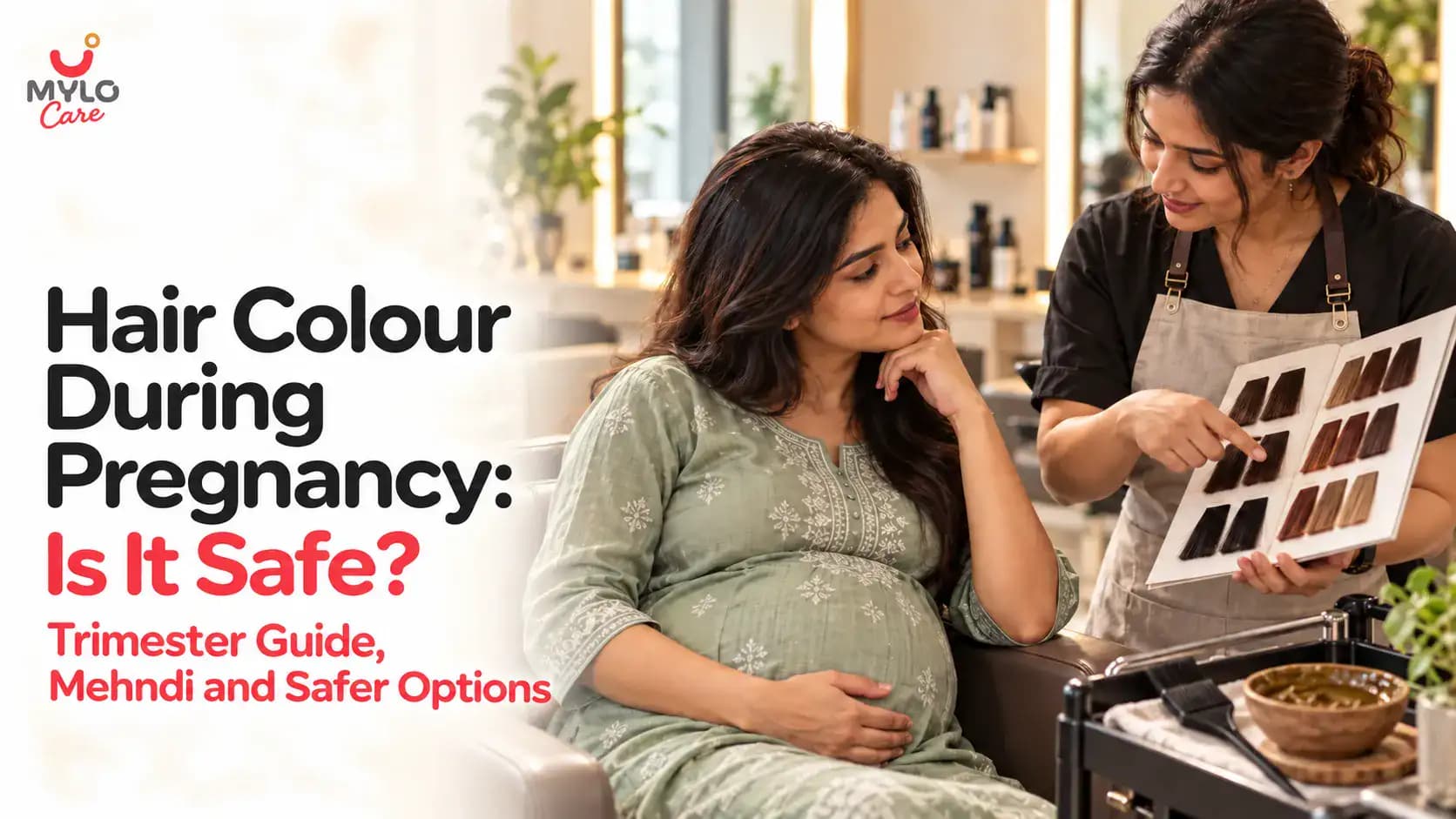
Colouring your hair during pregnancy is generally considered safe. The NHS says most research shows it is fine, because only a very small amount of dye is absorbed through healthy skin on your scalp. Many women still choose to wait until after the first trimester (12 weeks) to be extra cautious. To lower your exposure further, choose highlights or balayage (where dye doesn’t touch the scalp), work in a well-ventilated space, wear gloves, and do a patch test first. Pure henna (mehndi) is a good natural option, but avoid “black henna,” which can contain a harsh chemical called PPD. Skip keratin or smoothening treatments that release formaldehyde.
Introduction
Grey roots growing out, a family wedding coming up, or simply wanting to feel like yourself again: there are plenty of reasons to want to colour your hair while pregnant. But the moment you are expecting, even everyday beauty routines come with a new question: is this safe for my baby?
The good news is that hair colour is one of the better-studied beauty questions in pregnancy, and the answer is mostly reassuring. This guide explains what the experts say, which trimester is best, how different types of colour compare, whether mehndi and ammonia-free colours are safer, and the simple steps that keep your exposure as low as possible.
Is It Safe to Colour Your Hair During Pregnancy?
For most women, yes. Here is why:
Very little dye is absorbed. According to MotherToBaby, a service run by pregnancy medicine experts, when hair dye is used as directed, the amount absorbed through healthy, unbroken skin on the scalp is small.
Harm would need very high doses. The NHS notes that the chemicals in hair dye could only cause harm in very high doses, far more than you are exposed to when colouring your hair.
The research is reassuring, but limited. There are no large studies showing hair dye harms babies, but there also isn’t a lot of research on pregnant women specifically. That is why many doctors suggest a few simple precautions rather than a strict “no.”
A note on the smell: hair colour often contains ammonia, hydrogen peroxide, and alcohol, which can irritate your eyes, nose, and throat. MotherToBaby points out that a strong smell doesn’t mean you are getting a high dose, but if you feel nauseous or dizzy (common in pregnancy anyway), take a break and get some fresh air.
Hair Colour by Trimester: When Is It Safest?
Trimester | Is It OK? | What to Know |
|---|---|---|
First trimester (0 to 12 weeks) | Many women choose to wait | This is when your baby’s organs are forming. The NHS says you might choose to wait until after 12 weeks, when the risk of chemicals affecting the baby is lower. Morning sickness can also make the smell hard to handle. |
Second trimester (13 to 26 weeks) | Generally considered the best time | Nausea usually eases, your energy is better, and the most sensitive stage of development has passed. |
Third trimester (27 weeks to birth) | Generally fine with precautions | Sitting in a salon chair for a long time may be uncomfortable, so choose a shorter appointment and take breaks. |
Already coloured your hair before you knew you were pregnant? Don’t panic. This is very common, and given how little dye is absorbed, it is very unlikely to have caused harm. Mention it to your doctor at your next visit if you are worried.
Types of Hair Colour Compared
Type | How It Works | Exposure Level | Pregnancy Notes |
|---|---|---|---|
Highlights, balayage, foils | Colour painted on strands, not the scalp | Lowest | Often the most comfortable choice, as dye stays off your skin |
Semi-permanent colour | Coats the hair; washes out over weeks | Lower | Usually fewer harsh chemicals than permanent colour |
Ammonia-free permanent colour | Uses other chemicals instead of ammonia | Moderate | Less smell, but still contains other dye chemicals |
Permanent colour (with ammonia) | Opens the hair shaft to change colour | Moderate | Fine for most; use precautions below |
Box dye at home | Permanent or semi-permanent, applied yourself | Moderate | Follow every label instruction; wear gloves; ventilate well |
Pure henna (mehndi) | Plant-based dye from henna leaves | Low | A good natural option if it is pure henna with no added chemicals |
“Black henna” | Henna mixed with PPD for a dark colour | Higher risk | Avoid; can cause severe skin reactions |
Bleach | Strips colour with peroxide | Moderate | Strong fumes; foils keep it off the scalp |
Highlights and Balayage: The Lowest-Exposure Option
If you want to colour your hair while pregnant, highlights, balayage, or foils are the most cautious choice. According to the NHS, when colour is painted only onto the strands, the chemicals are absorbed by your hair, not your scalp or bloodstream. This makes them a popular pick, especially in the first trimester.
Is Ammonia-Free Hair Colour Safer in Pregnancy?
Ammonia-free colours are very popular with pregnant women, and they do have one clear benefit: much less strong smell, which helps if you have morning sickness or a sensitive nose.
But “ammonia-free” doesn’t automatically mean “chemical-free” or proven safer for your baby. These colours usually use other chemicals to open the hair shaft and may still contain dye ingredients like PPD. Think of ammonia-free colour as a more comfortable option, not a completely different category. The same precautions still apply.
Can You Apply Mehndi or Henna on Hair During Pregnancy?
This is one of the most common questions in India, and the answer depends on what is in the pack.
Pure henna (mehndi)
Pure henna comes from the dried leaves of the henna plant. It gives a reddish-brown colour and is widely used in Indian households. The NHS describes semi-permanent pure vegetable dyes such as henna as a safe alternative to chemical colour during pregnancy.
“Black henna”: avoid it
Pure henna can’t make hair black. To get darker shades, some products add para-phenylenediamine (PPD), a strong chemical dye. According to the US Food and Drug Administration, “black henna” containing PPD can cause serious skin reactions, including blistering and scarring, and can make you allergic to hair dyes in future.
Packaged mehndi powders
Many ready-made mehndi powders and “natural” hair colours contain more than just henna. Before using one during pregnancy:
Read the ingredient list. Look for 100% henna (Lawsonia inermis) with no added chemicals.
Avoid products listing PPD (para-phenylenediamine) or vague terms like “colour enhancer.”
Be careful with “black,” “dark brown,” or “burgundy” mehndi, which are more likely to contain added dyes.
Indigo is a plant dye often mixed with henna for darker shades. Pure indigo is generally considered gentle, but check it is free of added chemicals.
Patch test first, even with natural products. Some women develop sensitivity during pregnancy.
How to Colour Your Hair Safely During Pregnancy
Whether you go to a salon or colour at home, these steps keep your exposure as low as possible:
Consider waiting until after 12 weeks.
Do a patch test 48 hours before, even with a colour you have used for years. Pregnancy can make your skin more sensitive.
Do a strand test. The NHS notes that pregnancy hormones can change how your hair takes colour, so results may be different from usual.
Choose highlights or balayage if you want the lowest exposure.
Work in a well-ventilated space. Open windows at home, or ask for a seat near a door or window at the salon.
Wear gloves if you colour at home.
Leave the dye on for the minimum time stated on the pack, not longer.
Rinse your scalp thoroughly afterwards.
Don’t colour over broken skin, cuts, or an irritated scalp, as this increases absorption.
Never mix different products or brands.
Tell your hairdresser you are pregnant, so they can suggest gentler options and help you stay comfortable.

What About Keratin and Hair Smoothening Treatments?
Hair smoothening, straightening, and keratin treatments are a different story from hair colour, and they need more caution.
Many of these treatments contain formaldehyde (sometimes listed as formalin or methylene glycol), which is released as a gas when the hair is heated with a flat iron. The US Food and Drug Administration warns that formaldehyde gas can irritate the eyes, nose, and throat, cause breathing problems, and is a known cancer-causing chemical, with the biggest risk in poorly ventilated salons.
During pregnancy, it is best to avoid formaldehyde-releasing smoothening and keratin treatments. If you really want one, ask your salon for the full ingredient list, choose a formaldehyde-free treatment, and check with your doctor first. Simple blow-drying or a temporary straightener on low heat is a safer way to get smooth hair for now.
Can You Colour Your Hair While Breastfeeding?
Generally, yes. Very little dye gets into your bloodstream through the scalp, so very little could reach breast milk. e-lactancia, a breastfeeding medicine database, rates hair dyes as low risk while breastfeeding. Use the same precautions: ventilation, gloves, and no dye on broken skin. For a full guide, read our article on hair products to avoid while breastfeeding.
When Should You Talk to Your Doctor?
Check with your doctor before colouring your hair if:
You have had a reaction to hair dye or black henna in the past
Your scalp is irritated, broken, or has a skin condition like eczema or psoriasis
You have a high-risk pregnancy or have been advised to avoid certain chemicals
You work with hair dyes every day, for example as a hairdresser, since your exposure is much higher than a client’s
Stop and seek medical help if you notice swelling, blistering, severe itching, or difficulty breathing after colouring your hair.
Other Hair Changes During Pregnancy
Pregnancy can change your hair in other ways too. Some women find it thicker and shinier, while others notice more shedding. If you are worried about hair fall, read our guide to hair fall during pregnancy: causes and when to worry. If you are thinking about other hair products, our guide on whether hair growth products are safe during pregnancy explains which ingredients need caution. And for more on how pregnancy changes your looks, see is pregnancy glow a real thing?
Key Takeaway
Hair colour during pregnancy is generally considered safe because very little is absorbed through your scalp. For extra peace of mind, wait until after the first trimester, choose highlights or balayage, ventilate well, wear gloves, and patch test first. Pure henna is a good natural option, but avoid black henna and formaldehyde-based smoothening treatments.
Frequently Asked Questions
Is it safe to colour your hair during pregnancy?
Generally, yes. Most research shows hair dye is safe in pregnancy because only a small amount is absorbed through healthy skin on the scalp. Many women still prefer to wait until after 12 weeks and take simple precautions.
Can I dye my hair in the first trimester?
There is no proof it causes harm, but many doctors and the NHS suggest you might choose to wait until after 12 weeks, when your baby’s organs have formed and the risk is lower. If you have already coloured your hair, it is very unlikely to have caused any harm.
Is it safe to colour hair in the second trimester?
Yes. The second trimester is generally considered the best time, as the most sensitive stage of development has passed and nausea usually eases.
Can I colour my hair in the third trimester?
Yes, with the usual precautions. Choose a shorter appointment, take breaks, and make sure the space is well ventilated.
Is ammonia-free hair colour safe during pregnancy?
It is generally fine and has a much milder smell, which helps with nausea. But it still contains other dye chemicals, so follow the same precautions as with regular colour.
Can I apply mehndi on my hair during pregnancy?
Pure henna (mehndi) is considered a safe, natural option. Check the pack to make sure it is 100% henna, and avoid “black henna” or mehndi powders with added chemicals like PPD.
Is black henna safe during pregnancy?
No. Black henna often contains PPD, which can cause severe skin reactions, blistering, and scarring, and can make you allergic to hair dyes in future.
Can I get highlights while pregnant?
Yes. Highlights and balayage are often considered the lowest-exposure option because the colour is painted on the hair and doesn’t touch your scalp.
Can I use box dye at home while pregnant?
Yes, if you follow every instruction on the pack. Do a patch test, wear gloves, work in a well-ventilated room, and leave the dye on only for the minimum time.
Is natural or organic hair colour safer in pregnancy?
Not automatically. “Natural” and “organic” labels can still include chemical dyes. Read the full ingredient list and look for pure plant dyes like henna or indigo without added chemicals.
Is keratin treatment safe during pregnancy?
It is best avoided. Many keratin and smoothening treatments release formaldehyde gas when heated, which the US FDA warns can irritate your eyes, nose, and lungs.
Can I colour my hair while breastfeeding?
Generally, yes. Very little dye reaches your bloodstream, so very little could reach breast milk. Breastfeeding medicine databases rate hair dye as low risk.
References
Shop Pregnancy Hair Care
Gentle Care for Coloured Hair in Pregnancy




Article Posted Under


Medical Disclaimer
This content is for informational purposes only and should not replace professional medical advice. Consult with a physician or other health care professional if you have any concerns or questions about your health. If you rely on the information provided here, you do so solely at your own risk.


AWARDS AND RECOGNITION

Mylo wins Forbes D2C Disruptor award

Mylo wins The Economic Times Promising Brands 2022
AS SEEN IN












- Mylo Care: Effective and science-backed personal care and wellness solutions for a joyful you.
- Mylo Baby: Science-backed, gentle and effective personal care & hygiene range for your little one.
- Mylo Community: Trusted and empathetic community of 10mn+ parents and experts.


Product Categories
Baby Carrier | Baby Soap | Baby Wipes | Stretch Marks Cream | Baby Cream | Baby Shampoo | Baby Massage Oil | Baby Hair Oil | Stretch Marks Oil | Baby Body Wash | Baby Powder | Baby Lotion | Diaper Rash Cream | Newborn Diapers | Teether | Baby Kajal | Baby Diapers Pants | Cloth Diapers | Laundry Detergent | Lactation Granules |