


Orders
.png&w=48&q=75 "login")
Profile


Wallet

Sibling Rivalry: Meaning, Causes and How to Handle It (2026 Guide for Indian Parents)


MBBS, DCH, DNB (Pediatrics), FICM (Fellowship in Intensive Care Medicine), FIDM (Fellowship in Diabetes Mellitus), MNAMS · 18 years experience
 2 Likes|
 18 min
TL;DR
Sibling rivalry is the jealousy, competition and fighting between brothers and sisters. It is a normal part of growing up. It often starts when a new baby arrives and a toddler suddenly has to share their parents. Most rivalry comes from a need for attention, fairness and identity. You can reduce it by preparing your older child before the baby comes, never blaming the baby for less time, giving each child 10 to 15 minutes of one-on-one time daily, avoiding comparisons and teaching turn-taking instead of forced sharing. Step in when fights turn physical, and seek help if one child is regularly hurt, scared or bullied.
Quick Answer
Sibling rivalry meaning: Sibling rivalry is the jealousy, competition and conflict between siblings, usually caused by competing for parents' love, attention and approval. It is common and normal, especially when a new baby arrives or when children are close in age. Calm, fair and consistent parenting helps siblings build a strong bond over time.
Key Takeaways
Sibling rivalry is normal and very common, especially between ages 1 and 6
It often begins when a new baby arrives and the older child feels replaced
Regression (baby talk, bedwetting, wanting a bottle) in the older child is common and temporary
Never blame the baby ("I can't play, the baby needs me"). It builds resentment.
10 to 15 minutes of daily one-on-one time is one of the most effective fixes
Comparisons ("Look how nicely your brother eats") make rivalry worse
Teach turn-taking instead of forcing toddlers to share
Step in when fights turn physical or one child is always the target
Regular hurting, fear or one-sided aggression is sibling bullying, not rivalry, and needs help
What Is Sibling Rivalry?
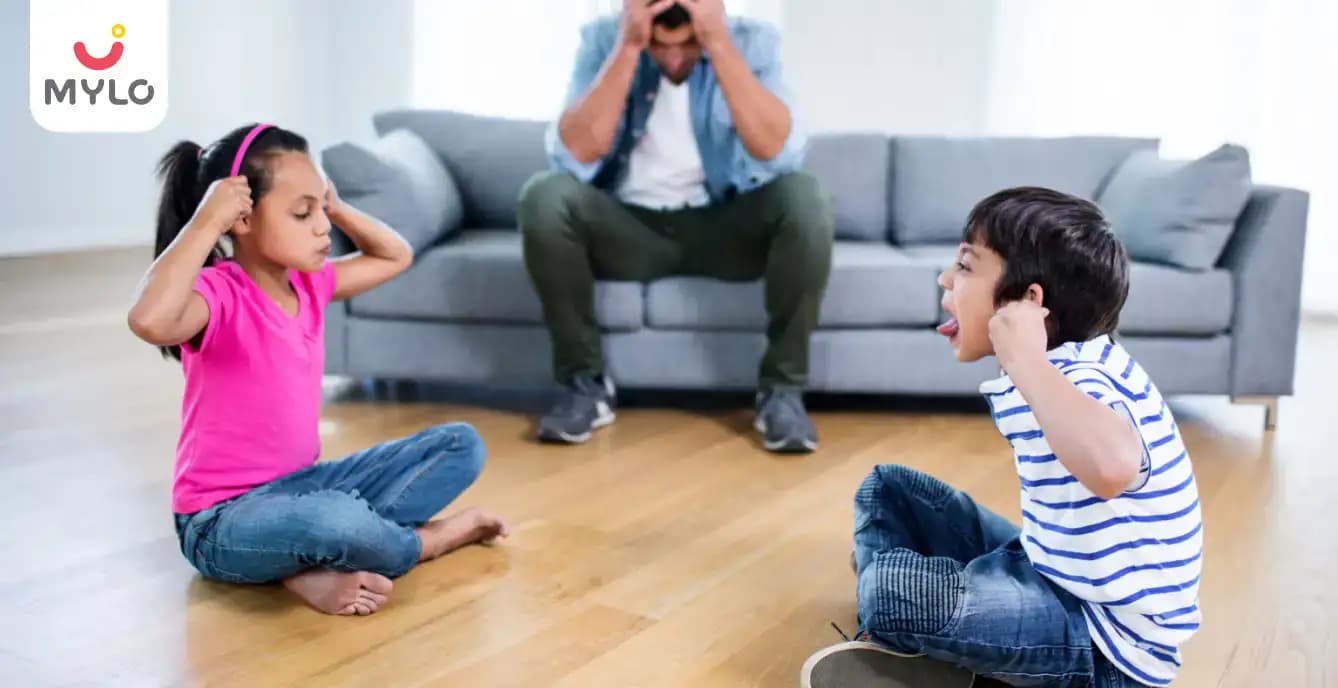
Sibling rivalry is the jealousy, competition and fighting between brothers and sisters. Almost every parent with two or more children sees it. It usually starts after the birth of a second child and can continue on and off through childhood.
The good news: sibling relationships are where children first learn to share, negotiate, apologise and solve problems. With the right support, most siblings who fight a lot in early childhood grow close later.
Featured Answer: Sibling rivalry is the jealousy, competition and fighting between siblings, often caused by competing for parents' attention and approval. It commonly begins when a new baby arrives. It is a normal part of child development and usually improves with fair treatment, one-on-one time, no comparisons and calm, consistent rules.
Is It Normal for Siblings to Fight?
Yes. Research suggests young siblings can have several conflicts every hour of play. Most are short arguments over toys, space or attention. Brothers, sisters and mixed pairs all fight, and children close in age often fight more because they want the same things at the same time.
Fighting is a concern only when it is constant, physical, one-sided or leaves a child scared or hurt (see "Rivalry vs Sibling Bullying" below).
What Causes Sibling Rivalry?
Cause | What Is Happening |
|---|---|
A new baby | The older child suddenly shares parents' time, lap and attention |
Need for attention | Children compete for parents' love, praise and time |
Unequal treatment (real or felt) | Different rules, discipline or gifts feel unfair |
Building their own identity | Children try to show they are different, better or special |
Age and stage | Toddlers can't yet share, wait or control big feelings |
Hunger, tiredness or boredom | Small irritations turn into fights |
Comparisons and labels | "The clever one" and "the naughty one" create resentment |
Family stress | Busy or stressed parents have less patience and time |
Screens and devices | Fights over the phone, TV remote or tablet are now a top trigger |
Toddler and New Baby: Handling Jealousy
This is the most common time for sibling rivalry to start. For a toddler, a new baby can feel like a big loss. Everyone is looking at the baby, Mumma is always feeding, and routines change overnight.
Signs Your Toddler Is Jealous of the New Baby
Acting like a baby again: baby talk, wanting a bottle, crawling
Toilet-training setbacks or bedwetting
More tantrums, clinginess or crying
Being rough with the baby: poking, pushing or "hugging too hard"
Saying "Send the baby back" or ignoring the baby
Sleep problems or refusing food
These reactions are normal and usually settle within a few months.
Before the Baby Arrives
Tell them early, in simple words, and read picture books about becoming an older sibling
Make routine changes early. If your toddler is moving to a new bed or starting playschool, do it a few months before the baby arrives, so it doesn't feel like the baby "took their bed"
Let them help: choosing a baby outfit, packing the hospital bag or picking a soft toy
Plan a gift "from the baby" to the older sibling
After the Baby Arrives
Don't blame the baby. Instead of "I can't play, the baby needs me," say "I'll play with you as soon as I finish this feed." Or blame something neutral: "Let me finish this first."
Give them helper jobs: fetching a nappy, singing to the baby, choosing the baby's socks
Protect special time with the older child every day, even 10 minutes
Let visitors greet the older child first, before the baby
Accept big feelings: "You're upset that I'm holding the baby. That's okay. You can tell me."
Stay calm about regression. Don't shame baby talk or accidents. Give extra cuddles and praise "big kid" moments.
Does the Age Gap Matter?
Age Gap | What to Expect | What Helps |
|---|---|---|
Under 2 years | Older child is still a baby themselves; more physical fights over the same toys | Duplicate favourite toys, close supervision, lots of cuddles |
2 to 4 years | Most jealousy; the older child notices the change most | Preparation during pregnancy, helper jobs, daily special time |
Over 4 years | Less physical fighting, but more comments about fairness | Explain things, give them responsibility and private space for their things |
Every age gap has pros and cons. How parents respond matters more than the gap itself.
How Can I Help My Kids Get Along Better?
Strategy | Why It Works |
|---|---|
Daily one-on-one time (10 to 15 minutes each) | Fills their need for attention, so they fight for it less |
Avoid comparisons | Each child feels valued for who they are |
Treat fairly, not equally | Give each child what they need, not the exact same thing |
Praise teamwork | "You two built that tower together!" encourages cooperation |
Teach turn-taking instead of forced sharing | "You can have it when you are done" feels fair and teaches waiting |
Give each child their own special things | A few toys they don't have to share reduces fights |
Plan family time | Games, cooking or walks together build good memories |
Name feelings | "You feel angry because he knocked your blocks" helps children calm down |
💛 Special Time Tips
Keep it short and daily, 10 to 15 minutes per child
Let the child choose the activity
Put your phone away
Call it by a name, like "Mumma-and-me time", so they look forward to it
Sibling Fights: When to Step In
Let them try to solve it themselves when:
It is a small argument over a toy, game or seat
No one is being hurt or called names
Both children are about equal in age and strength
Step in when:
Anyone is hitting, biting, pushing or throwing things
One child is much younger or smaller
There is name-calling or hurtful teasing
The same child is always the target
A toddler and newborn are involved (always supervise)
How to Step In: The "Sportscasting" Method
Instead of deciding who is right, describe what you see, like a sports commentator:
"I see two children who both want the red car. Rohan, you are holding it. Anaya, you want a turn."
This keeps you neutral and helps children find a solution themselves. If it's getting physical, separate them first: "I won't let you hit. Let's take a break."
Handling Sibling Fights Constructively
Don't take sides. Unless you saw exactly what happened, avoid blaming one child.
Separate, then calm down. No one can solve a problem while upset.
Set clear family rules, like "No hitting, no name-calling, ask before taking"
Spot the triggers. Hunger, tiredness, the evening rush or screen time often set off fights.
Focus on repair, not forced sorry. Ask "How can you help your brother feel better?" instead of forcing "Say sorry!"
Praise peaceful moments more than you react to fights
Problem-Solving After a Fight (For Children 4 and Older)
Once everyone is calm:
Tell them you'll solve it together
Ask each child what they think the problem is
Let each say what they want, without interrupting
Brainstorm solutions together, even silly ones
Pick a solution everyone can accept
If no solution works, it's fine to take a break and try later
Try the solution and check how it went. Start again if needed.
Rivalry vs Sibling Bullying: Know the Difference
Normal rivalry is two-way and usually harmless. Sibling bullying is repeated, one-sided and meant to hurt. Research shows sibling aggression is one of the most common forms of family conflict and is often wrongly dismissed as "just rivalry". It has been linked to anxiety, depression and loneliness later in childhood.
Normal Sibling Rivalry | Possible Sibling Bullying |
|---|---|
Both children argue and fight back | One child is always the target |
Fights are about toys, turns or attention | The aim is to hurt, scare or humiliate |
Children make up and play again | One child avoids or fears the other |
Occasional pushing, quickly stopped | Regular hitting, threats or injuries |
Balanced in power | One child is much older, bigger or stronger |
If you see signs of bullying, step in every time, protect the younger or weaker child, and speak to your pediatrician or a child psychologist.
Is "Sibling Rivalry Disorder" Real?
Yes, but it is rare. The WHO's ICD-10 classification lists sibling rivalry disorder (F93.3) as an emotional disorder of childhood. It is diagnosed only when a child's jealousy and distress are unusually strong or long-lasting and seriously affect their daily life. It usually begins after the birth of a younger sibling.
Signs may include:
Intense, ongoing jealousy and anger towards the sibling
Constant competition for parents' attention
Frequent aggression or hostility towards the sibling
Strong regression, such as losing toilet training for a long time
Sleep problems, tantrums or clinginess that don't improve
Most children with sibling jealousy do not have a disorder. If your child's reaction is severe or lasts longer than 6 months, speak to your pediatrician.
Handling Your Own Emotions
Sibling fights can be exhausting, especially with a newborn in the house.
Take a deep breath or count to 10 before responding
Step away for a minute if you feel angry, once the children are safe
Ask your partner or another family member to take over
Remember that children learn how to handle conflict by watching you
Look after yourself too. Rest, support and time to yourself make it easier to stay calm.
When to Seek Help for Sibling Fighting
Talk to your child's pediatrician or a child psychologist if:
Fights are constant and getting worse
One child is regularly hurt, scared or bullied
There are injuries or the use of objects as weapons
Your older child's regression or distress lasts more than a few months
A child seems very sad, withdrawn or anxious
There may be underlying issues like ADHD, autism or anxiety
You feel overwhelmed and unable to manage
What Does Help for Sibling Rivalry Cost in India?
Item | Typical Cost (₹) | Note |
|---|---|---|
One-on-one time, family rules, calm responses | Free | Most effective approach |
Pediatrician consultation | ₹500 to ₹1,500 | First point of contact |
Child psychologist session | ₹800 to ₹2,500 per session | For ongoing aggression, anxiety or regression |
Family therapy session | ₹1,000 to ₹3,000 per session | If the whole family needs support |
Parenting workshops | Free to ₹2,000 | Offered by some hospitals and NGOs |
Government mental health services | Free or low cost | At district hospitals; Tele-MANAS helpline 14416 |
Indian Context: What Indian Parents Should Know
Avoid "Tum bade ho, adjust karo": Constantly asking the older child to give in feels unfair and builds resentment
Stop comparisons: "Dekho tumhari behen kitni achhi hai" or comparing marks, looks or skin colour deeply hurts children
Watch for gender bias: Treating sons and daughters differently in chores, freedom or expectations fuels rivalry
Joint family dynamics: Grandparents or relatives may favour one child. Gently ask for fairness with both children.
Use festivals to build bonds: Raksha Bandhan and Bhai Dooj are great chances to talk about caring for each other, for all siblings, not just brother-sister pairs
Set screen rules: Use a timer or turn chart for the TV or phone to avoid daily fights
Emergency number: Dial 112 for emergencies, or 1098 (Childline) if a child is unsafe
Myths vs Facts About Sibling Rivalry
Myth | Fact | Source |
|---|---|---|
"Good parents have children who never fight" | Some sibling conflict is normal in every family | AAP |
"Let them fight it out, they'll learn" | Physical fights and one-sided aggression need adult help | AAP |
"Treating children equally stops rivalry" | Treating them fairly, based on each child's needs, works better | NHS |
"Forcing them to share teaches kindness" | Turn-taking teaches patience and feels fairer to toddlers | Child development experts |
"The older child should always give in" | This creates resentment and damages the sibling bond | Child psychologists |
"Sibling fights are harmless" | Repeated one-sided aggression is bullying and can affect mental health | Research on sibling aggression |
FAQs: Sibling Rivalry
What is the meaning of sibling rivalry?
Sibling rivalry is the jealousy, competition and fighting between brothers and sisters, usually over parents' attention, love and approval. It is a normal part of growing up.
Is it normal for brothers to fight all the time?
Frequent arguments are common, especially between brothers close in age. It becomes a concern if fights are physical, one-sided or leave a child hurt or scared.
Why do siblings fight?
Siblings fight over attention, fairness, toys, space and identity. Hunger, tiredness, boredom, comparisons and family stress make fights more likely.
What is sibling rivalry disorder?
It is a rare condition listed in the WHO's ICD-10 (F93.3). A child's jealousy of a sibling, usually a new baby, is unusually strong or long-lasting and affects daily life. Most sibling jealousy is not a disorder.
How do I prepare my toddler for a new baby?
Tell them early, read books about becoming a big brother or sister, make big routine changes before the birth, let them help get ready, and plan special time with them after the baby comes.
My toddler is hitting the new baby. What should I do?
Calmly stop them: "I won't let you hurt the baby." Never leave them alone together. Show gentle touch, name their feelings, and give extra one-on-one time. It usually improves as they settle.
Bada bachcha chhote bhai-behen se jealous hai, kya karein? (Hinglish)
Ye bilkul normal hai. Roz 10 se 15 minute sirf bade bachche ke saath bitaiye, usse chhote kaamon mein madad karne dijiye, aur "baby ki wajah se time nahi hai" jaise shabd mat boliye. Tulna bilkul na karein.
Bachche aapas mein bahut ladte hain, kaise rokein? (Hinglish)
Chhoti ladai mein turant beech mein mat aaiye; unhe khud suljhane dijiye. Agar maar-peet ho, toh dono ko alag karein, shaant karein, phir saath baithkar solution nikalein. Kisi ek ka paksh na lein.
Should I force my children to share?
Not with toddlers. Teach turn-taking instead: "You can have it when your sister is done." Let each child keep a few special toys that they don't have to share.
Should I punish both children after a fight?
Focus on calming down and repairing the relationship, not punishment. Help them find a solution, and use consistent consequences for breaking family rules like hitting.
How do I stop comparing my children?
Praise each child for their own effort and qualities, avoid labels like "the smart one", and ask family members to do the same.
When should I seek help for sibling rivalry?
If one child is regularly hurt or scared, fights are getting worse, regression or distress lasts for months, or you feel overwhelmed, speak to your pediatrician or a child psychologist.
References
American Academy of Pediatrics (AAP). "Sibling Rivalry." HealthyChildren.org. https://www.healthychildren.org
NHS UK. "Sibling Rivalry." https://www.nhs.uk
Nationwide Children's Hospital. "Sibling Rivalry: Helping Hand." https://www.nationwidechildrens.org/family-resources-education/health-wellness-and-safety-resources/helping-hands/sibling-rivalry
Anna Freud Centre. "Sibling Rivalry: Under Fives Wellbeing." https://www.annafreud.org/resources/under-fives-wellbeing/common-difficulties/sibling-rivalry/
Association of Child Psychotherapists. "Sibling Rivalry: The Arrival of a Baby Brother or Sister." https://childpsychotherapy.org.uk/resources-families/understanding-childhood/sibling-rivalry-arrival-baby-brother-or-sister
World Health Organization. ICD-10, F93.3 "Sibling Rivalry Disorder." https://gesund.bund.de/en/icd-code-search/f93-3
"Sibling Aggression and Abuse: Invisible and Widespread Public Health Problems." PMC. https://pmc.ncbi.nlm.nih.gov/articles/PMC12332304/
"Sibling Bullying During Childhood: A Scoping Review." ScienceDirect. https://www.sciencedirect.com/science/article/pii/S1359178923000496
Ministry of Health and Family Welfare. "Tele-MANAS National Tele Mental Health Programme." https://telemanas.mohfw.gov.in


Article Posted Under
Related Articles
Related Topics
.webp&w=32&q=75)
Medical Disclaimer
This content is for informational purposes only and should not replace professional medical advice. Consult with a physician or other health care professional if you have any concerns or questions about your health. If you rely on the information provided here, you do so solely at your own risk.


AWARDS AND RECOGNITION

Mylo wins Forbes D2C Disruptor award

Mylo wins The Economic Times Promising Brands 2022
AS SEEN IN













- Mylo Care: Effective and science-backed personal care and wellness solutions for a joyful you.
- Mylo Baby: Science-backed, gentle and effective personal care & hygiene range for your little one.
- Mylo Community: Trusted and empathetic community of 10mn+ parents and experts.


Product Categories
Baby Carrier | Baby Soap | Baby Wipes | Stretch Marks Cream | Baby Cream | Baby Shampoo | Baby Massage Oil | Baby Hair Oil | Stretch Marks Oil | Baby Body Wash | Baby Powder | Baby Lotion | Diaper Rash Cream | Newborn Diapers | Teether | Baby Kajal | Baby Diapers Pants | Cloth Diapers | Laundry Detergent | Lactation Granules |