


Orders
.png&w=48&q=75 "login")
Profile


Wallet

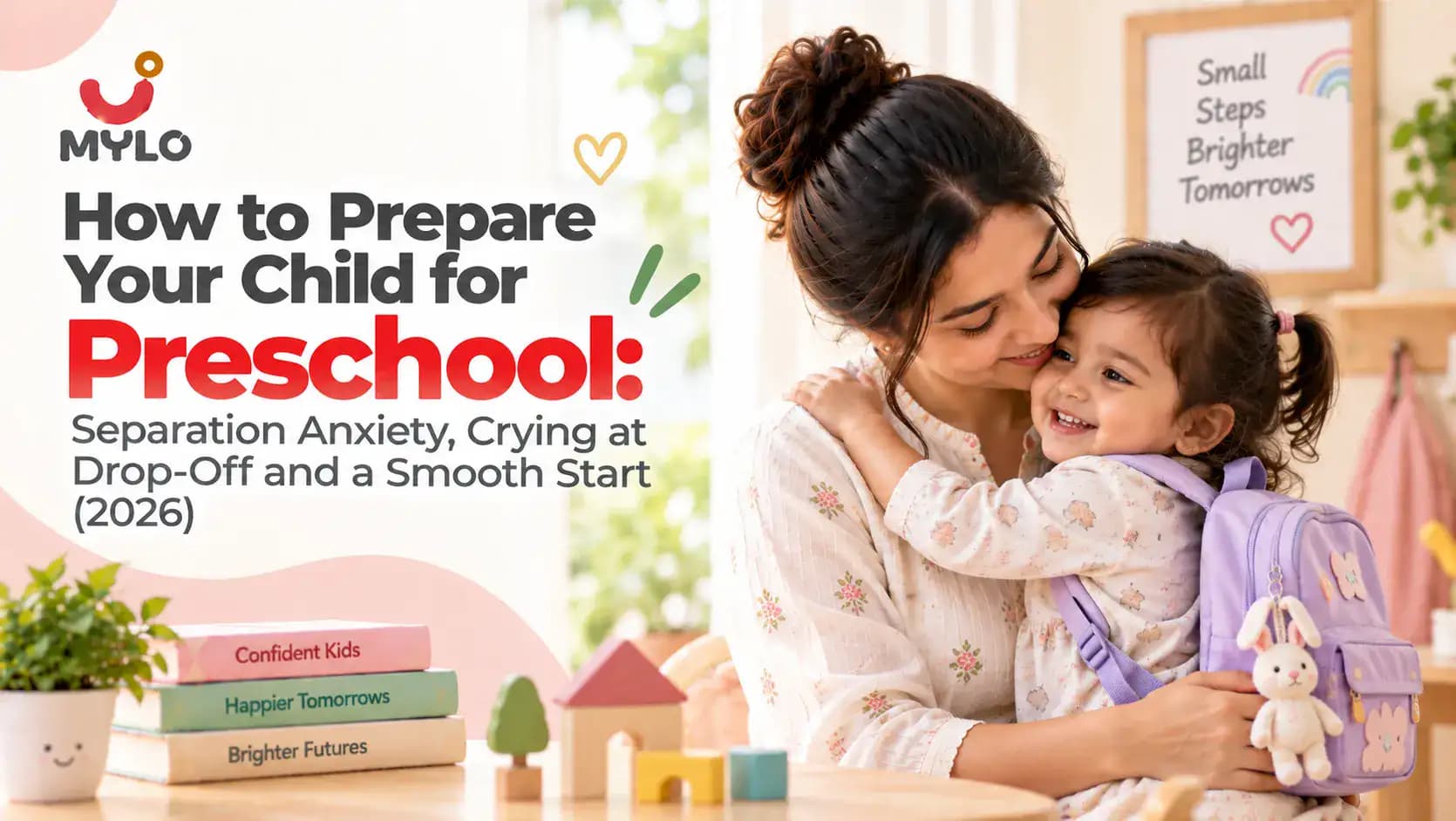
How to Prepare Your Child for Preschool: Separation Anxiety, Crying at Drop-Off and a Smooth Start (2026)


RMNCH+A, MCH & Midwifery, Program Management & National Trainer (ToT/ToN), WHO, MoHFW, ECHO Model · 11 years experience
 141 Likes|
 17 min
TL;DR
Starting preschool or playschool is a big step. Most children cry, cling or protest at drop-off in the first few weeks, and that's normal separation anxiety, not a sign that something is wrong. Prepare your child ahead by talking about school, visiting it, practising short separations and building simple skills like eating from a tiffin and asking for the toilet. At drop-off, create a short goodbye ritual, say goodbye every time (never sneak away), keep it brief and leave confidently. Pick up on time and keep the same routine every day. Most children settle within a few weeks. Talk to your pediatrician if intense distress lasts more than a month or affects sleep, eating or daily life.
Key Takeaways
Separation anxiety is normal from about 8 months to 4 years, and often returns when preschool starts
Crying at drop-off usually settles within a few weeks with a consistent routine
A short, loving goodbye ritual is one of the most helpful things you can do (AAP)
Never sneak away. It breaks trust and can make the next drop-off harder.
Keep goodbyes brief. Long goodbyes make anxiety worse.
Practise short separations with trusted adults before school starts
A comfort object, like a small photo or a soft toy, can help
Meltdowns after pick-up are common. Your child is releasing a long day of holding it together.
Seek help if distress is severe or lasts beyond 4 weeks
Why Preschool Feels So Big for a Toddler
For many Indian toddlers, preschool is the first time they spend hours away from their parents or grandparents. Everything is new: the building, the teachers, other children, the language, the toilet and the routine. Toddlers don't yet understand time, so "Mumma will come back after lunch" can feel like forever.
Separation anxiety is a healthy sign of a strong bond with you. According to the AAP, it's a normal stage that can begin before the first birthday and come and go until about age 4.
What Is Separation Anxiety?
Separation anxiety is a child's fear or distress when separated from a parent or main caregiver. At preschool drop-off, it can look like:
Crying, screaming or clinging to your leg
Tantrums in the morning or refusing to get dressed or leave the house
Tummy aches or headaches before school
Refusing to let go of your hand
Regression at home: more clinginess, sleep problems, bedwetting or baby talk
Being quiet or withdrawn at school for the first few days
Normal Separation Anxiety vs When to Worry
Normal Separation Anxiety | Possible Separation Anxiety Disorder |
|---|---|
Cries at drop-off but calms within 10 to 15 minutes | Cries for most of the day, every day |
Improves over 2 to 4 weeks | Stays the same or gets worse after 4 weeks |
Enjoys school once settled | Refuses to take part in anything at school |
Sleeps and eats normally at home | Nightmares, poor sleep, eating less |
Mild tummy aches that pass | Frequent physical complaints with no medical cause |
Happy to see you at pick-up and talks about school | Extreme fear that something bad will happen to you |
Before School Starts: How to Prepare Your Child
1. Talk About School in a Positive Way
Describe what happens at school in simple, happy words: "You'll play with blocks, sing songs, eat your tiffin with friends and then Mumma will pick you up." Share your own happy school memories. Don't overdo it. A few short chats a week are enough.
2. Read Storybooks About School
Picture books about starting school, making friends and saying goodbye help your child imagine the day. Talk about how the characters feel.
3. Visit the School
Go for a school tour or orientation. Show them the classroom, the toilet, where the bags go and where you'll pick them up. Meet the teacher together if possible.
4. Play "School" at Home
Children learn best through play. Take turns being the teacher and the student. Practise circle time, snack time, washing hands and saying goodbye to a soft toy "going to school".
5. Practise Short Separations
Leave your child with a trusted family member or friend for short periods, starting with 30 minutes and slowly increasing. Always say goodbye and always come back when you said you would. This teaches: "Mumma and Papa always come back."
6. Practise Your Goodbye Ritual
The AAP recommends creating a goodbye ritual before the first day. Practise it at home when you leave for short trips.
7. Build Simple Independence Skills
Children feel more confident when they can manage small tasks:
Eating from a tiffin: Practise opening the box and eating on their own. Pack easy finger foods.
Toilet: Practise telling an adult "I need to go to the toilet" and washing hands afterwards
Putting on shoes, carrying their bag and using their water bottle
Read our guide on toddler self-care skills like dressing, handwashing and eating.
8. Set a Sleep and Morning Routine
Start the school routine 2 weeks early. Toddlers need about 11 to 14 hours of sleep a day, including naps. A calm, unhurried morning makes drop-off much easier.
9. Shop for School Things Together
Let your child choose their bag, bottle or tiffin box. It builds excitement and a sense of ownership.
10. Build Social Confidence
Arrange playdates, visit parks and practise sharing, taking turns and saying "hello". If your child is shy, read our tips on helping your toddler overcome shyness.
How to Handle Crying at Drop-Off
The 6-Step Drop-Off Routine
Arrive on time, not too early and not rushed
Help them settle: Hang up the bag together and point out a friend or activity
Do your goodbye ritual: Keep it short and the same every day
Say a clear goodbye: "I'm going now. I'll pick you up after lunch." Use events, not clock times.
Hand over to the teacher and let them comfort your child
Leave confidently, even if your child is crying. Don't come back in.
Goodbye Ritual Ideas
A special handshake, high five or "kiss in the palm" to keep for later
A secret phrase: "See you later, alligator!"
Drawing a small heart on both your hands
Tucking a family photo or small soft toy into their bag
A note or doodle in the tiffin box for older preschoolers
Tips from AAP's HealthyChildren.org show that keeping the same ritual at the same time each day builds trust and makes goodbyes easier.
What to Say (and What Not to Say)
Say This | Avoid This |
|---|---|
"I know you feel sad. It's okay to miss me." | "Stop crying, big boys don't cry." |
"I'll pick you up after snack time." | "I'll be back in 5 minutes" (if you won't) |
"Your teacher will take care of you. I love you." | "If you cry, I'll be sad." |
"You can hold your photo when you miss me." | "If you don't stop, I won't come back." |
"I always come back." | Bribes like "I'll buy you chocolate if you don't cry" |
Don't Sneak Away
It's tempting to slip out when your child is distracted, but this can cause more stress later in the day. Your child may start watching you anxiously every day, afraid you'll disappear. A clear goodbye, even with tears, builds trust.
Don't Linger
Long goodbyes, coming back after you've left, or waiting outside the window make anxiety worse. Most children stop crying within a few minutes of the parent leaving. Ask the teacher to send you a quick message or photo once your child has settled.
A 2-Week Settling-In Plan
Many Indian preschools offer a settling-in period with shorter days. If yours does, use it. If not, ask whether a gradual start is possible.
Days | Plan |
|---|---|
Days 1 to 2 | Stay with your child in class for part of the time, or attend the orientation together |
Days 3 to 4 | Stay for 15 minutes, then do your goodbye ritual and leave for 1 hour |
Days 5 to 7 | Short goodbye at the door; your child stays for half the school day |
Week 2 | Full school day with the same goodbye ritual every morning |
Be consistent. Missing days or changing the routine often restarts the crying. Try to have the same parent do drop-off for the first couple of weeks.
What If the Crying Starts Again Later?
It's very common for a child to settle well and then start crying again after a few weeks, or after:
A holiday, illness or long weekend
A new sibling (see sibling rivalry and new baby jealousy)
Moving house or a change in teacher
Stress at home
Go back to your goodbye ritual, keep drop-offs short, and give extra cuddles and one-on-one time at home. It usually settles again within a week or two.
After Pick-Up: Why Your Child Melts Down at Home
Many parents notice their child is "good" at school but has tantrums, cries or gets clingy after pick-up. This is often called after-school restraint collapse. Your child has worked hard all day to follow rules and manage big feelings, and they finally let go with the person they feel safest with: you.
How to help:
Offer a snack and water right away. Hunger makes meltdowns worse.
Give cuddles and quiet time before asking questions
Keep evenings calm, and avoid too many classes or outings in the first weeks
Ask specific questions later: "Who did you play with?" or "What song did you sing?" instead of "How was school?"
Put your phone away and give 10 to 15 minutes of full attention
Handling Your Own Feelings
It's completely normal for parents to feel guilty, sad or anxious at drop-off. Children pick up on our emotions.
Stay calm and cheerful at the gate, even if you cry in the car afterwards
Remind yourself that crying is normal and temporary
Trust the teachers. They handle tears every day.
Talk to other parents. You're not alone.
Ask the school for updates if it helps you feel reassured
Choosing the Right Age and School
Age: In India, most playschools accept children from about 2 to 2.5 years, and nursery or pre-primary usually starts around age 3. There's no need to rush. Readiness matters more than age.
Signs your child may be ready: can spend a little time away from you, shows interest in other children, can follow simple instructions, and can communicate basic needs
What to look for in a school: a warm, patient teacher, a small class size, a clean and safe space, child-sized toilets, a gentle settling-in policy and a play-based approach
When to See a Doctor or Child Psychologist
Talk to your pediatrician if your child:
Is still extremely distressed at drop-off after 4 weeks
Cries most of the day at school, every day
Refuses to eat, sleep or play at home because of worry
Complains of tummy aches or headaches that seem linked to school
Shows extreme fear that something bad will happen to you
Has a sudden change in behaviour, or you notice signs of fear of a particular person
Has delays in speech, social skills or other milestones (see identifying developmental disorders in toddlers)
These may be signs of separation anxiety disorder or another concern that needs support. Early help works well.
What Does Preschool Preparation Cost in India?
Item | Typical Cost (₹) | Note |
|---|---|---|
Talking, practising, reading and play | Free | Most effective preparation |
Picture books about starting school | ₹150 to ₹500 | Or borrow from a library |
School bag, bottle and tiffin box | ₹500 to ₹2,000 | Let your child choose |
Comfort object (small soft toy, photo keyring) | ₹100 to ₹400 | Check the school's rules |
Pediatrician consultation | ₹500 to ₹1,500 | If distress is severe or long-lasting |
Child psychologist session | ₹800 to ₹2,500 | For ongoing separation anxiety |
Indian Context: What Indian Parents Should Know
First time away from family: Many children in India are cared for by grandparents or parents at home until preschool. Plan more practice separations for them.
Grandparents at drop-off: If grandparents do drop-off, share the goodbye ritual so it stays consistent. Avoid long, emotional goodbyes at the gate.
Language differences: If your child mainly speaks Hindi or another regional language at home, teach them a few simple English words used at school, like "toilet", "water" and "help". Also let the teacher know which words your child uses.
Don't use school as a threat: Avoid saying "I'll send you to school if you're naughty." It makes school feel like a punishment.
Tiffin: Pack familiar, easy foods your child can eat on their own. School isn't the place to try new foods in the first weeks. See our picky eating guide for ideas.
More colds in the first year are normal: Children catch more infections when they start school. Keep vaccinations up to date and teach handwashing.
Emergency number: Dial 108 or 112.
Myths vs Facts
Myth | Fact |
|---|---|
"If my child cries, they're not ready for school" | Crying at drop-off is normal and usually settles in a few weeks (AAP) |
"Sneaking away is easier on the child" | It can increase anxiety and break trust |
"Staying longer will calm them down" | Long goodbyes usually make crying worse |
"Separation anxiety means I've spoiled my child" | It's a sign of a healthy, secure bond |
"A child who doesn't cry isn't attached" | Every child reacts differently. Not crying is normal too. |
FAQs: Preparing for Preschool and Separation Anxiety
Is it normal for my child to cry at preschool drop-off?
Yes, very normal. Most children cry or cling in the first few weeks. It usually settles within 2 to 4 weeks with a consistent routine.
Bachcha school jaate waqt rota hai, kya karein? (Hinglish)
Ye bilkul normal hai. Roz ek chhota sa goodbye ritual banayein, jaise high five ya "see you later". Pyaar se bye bolein, teacher ko saunpein aur confident hokar nikal jaayein. Chupke se mat jaayein aur der tak mat rukein. Zyada tar bachche 2 se 4 hafte mein adjust ho jaate hain.
How long does separation anxiety last at preschool?
For most children, a few weeks. It may come back briefly after holidays or illness. If intense distress lasts more than 4 weeks, talk to your doctor.
Should I stay with my child until they stop crying?
No. Stay briefly to help them settle, do your goodbye ritual, and leave confidently. Most children calm down soon after the parent leaves.
Is it okay to sneak out while my child is distracted?
It's better not to. Sneaking away can make your child more anxious and watchful. Always say a short, clear goodbye.
What is a goodbye ritual?
A short, loving routine you do every time you leave, like a special handshake, a hug and a phrase such as "See you after lunch!"
My child was fine for weeks and now cries again. Why?
This is common after holidays, illness, a new sibling or changes at home. Go back to your routine and keep goodbyes short. It usually settles quickly.
Why does my child have tantrums after school?
Often because they've held it together all day and release their feelings with you. Offer a snack, cuddles and quiet time.
What age should my child start preschool in India?
Many playschools accept children from 2 to 2.5 years, and nursery usually starts around 3. Readiness matters more than age.
Pehli baar school bhejne se pehle bachche ko kaise taiyaar karein? (Hinglish)
School ke baare mein pyaar se baat karein, school dikhayein, ghar par "school-school" khelein, thodi der ke liye bachche ko kisi apne ke paas chhodkar practice karein, aur tiffin khud khana aur toilet bolna sikhayein. 2 hafte pehle se sone-uthne ka time fix karein.
When should I worry about separation anxiety?
If your child is still very distressed after 4 weeks, cries all day, stops eating or sleeping well, or has frequent tummy aches linked to school, speak to your pediatrician.
Related Reads on Mylo
References
American Academy of Pediatrics (AAP). "How to Ease Your Child's Separation Anxiety." HealthyChildren.org. https://www.healthychildren.org/English/ages-stages/toddler/Pages/Soothing-Your-Childs-Separation-Anxiety.aspx
American Academy of Pediatrics (AAP). "Making Baby Drop Off at Child Care Easier." HealthyChildren.org. https://www.healthychildren.org/English/family-life/work-and-child-care/Pages/making-baby-drop-off-at-child-care-easier.aspx
PBS KIDS for Parents. "Helping Preschoolers Cope With Separation Anxiety." https://www.pbs.org/parents/thrive/helping-preschoolers-cope-with-separation-anxiety
National Center for Youth Issues. "5 Ways to Ease Separation Anxiety in Children Before School." https://ncyi.org/separation-anxiety-in-children/
Medical Health Associates of Western New York. "Handling Separation Anxiety in Toddlers" (2026). https://mhawny.com/2026/03/18/handling-separation-anxiety-in-toddlers/
TulsaKids. "Separation Anxiety: Tips for Surviving Hard Goodbyes." https://www.tulsakids.com/how-to-survive-separation-anxiety/
Medical Disclaimer
This article is for information only and does not replace professional medical advice. Please consult your pediatrician or a child psychologist if your child's distress is severe, lasts longer than 4 weeks or affects daily life.
Article Posted Under
Related Articles
Baby Growth Stages Month-by-Month (0 to 12): The Complete 2026 Chart with Milestones, Weight, Height & Development Guide
 100·18 min
 7 Tips to Help Your Toddler Transition From Potty to Toilet
 27·4 min
 Top 5 Best Practices You Must Follow While Changing Your Baby’s Disposable Diaper
 3·5 min
 A Pregnant Woman's Guide To Prenatal Visits
 9·9 min
Related Topics
.webp&w=32&q=75)
Medical Disclaimer
This content is for informational purposes only and should not replace professional medical advice. Consult with a physician or other health care professional if you have any concerns or questions about your health. If you rely on the information provided here, you do so solely at your own risk.


AWARDS AND RECOGNITION

Mylo wins Forbes D2C Disruptor award

Mylo wins The Economic Times Promising Brands 2022
AS SEEN IN













- Mylo Care: Effective and science-backed personal care and wellness solutions for a joyful you.
- Mylo Baby: Science-backed, gentle and effective personal care & hygiene range for your little one.
- Mylo Community: Trusted and empathetic community of 10mn+ parents and experts.


Product Categories
Baby Carrier | Baby Soap | Baby Wipes | Stretch Marks Cream | Baby Cream | Baby Shampoo | Baby Massage Oil | Baby Hair Oil | Stretch Marks Oil | Baby Body Wash | Baby Powder | Baby Lotion | Diaper Rash Cream | Newborn Diapers | Teether | Baby Kajal | Baby Diapers Pants | Cloth Diapers | Laundry Detergent | Lactation Granules |