


Orders
.png&w=48&q=75 "login")
Profile


Wallet

Aliv Seeds in Pregnancy: Are They Safe, and Do You Need Them?
 5 Likes|
 11 min
Key Takeaways
Quick overview in 30 seconds.webp&w=32&q=75)
- Aliv seeds, also called halim or garden cress seeds, are nutrient-dense functional foods rich in iron, folic acid, vitamins A, C, E, and antioxidants for pregnancy.
- Halim seeds benefits in pregnancy include improving haemoglobin levels, increasing red blood cell count, strengthening foetal bones and teeth through calcium, and aiding healthy weight management.
- Consuming a single teaspoon of soaked aliv seeds daily is sufficient; however, women with low blood pressure or thyroid issues should consult a doctor before adding them.
- Looking for nutrient-rich support during your pregnancy journey? Explore our Pregnancy Wellness Super Saver Combo - Stretch Marks Cream for Women 100g + Long Grain Pure Saffron for Pregnant Women (Kesar) - 2g.
 4.7
4.7 4.4
4.4 4.6
4.6Quick answer
Aliv seeds, also called halim or garden cress, are traditionally used after delivery to support breast milk production, not during pregnancy. In Indian tradition they are usually avoided in pregnancy, and human evidence for their safety or benefit during pregnancy is lacking. Ask your doctor before taking them, and do not rely on them instead of your iron tablets.
Key takeaways
Aliv seeds are a postpartum food in Indian tradition, given to new mothers, and traditionally avoided during pregnancy.
They cannot replace your iron and folic acid tablets. A teaspoon of seeds provides a fraction of the iron you need in pregnancy, and plant iron is poorly absorbed.
Human evidence in pregnancy is essentially absent, so the honest position is uncertainty rather than either benefit or harm.
Avoid if you have thyroid disease, low blood pressure, or take diuretics, without your doctor's advice.
You do not need them. Nothing in pregnancy depends on eating aliv seeds, which makes the risk-benefit calculation straightforward.
What are aliv seeds?
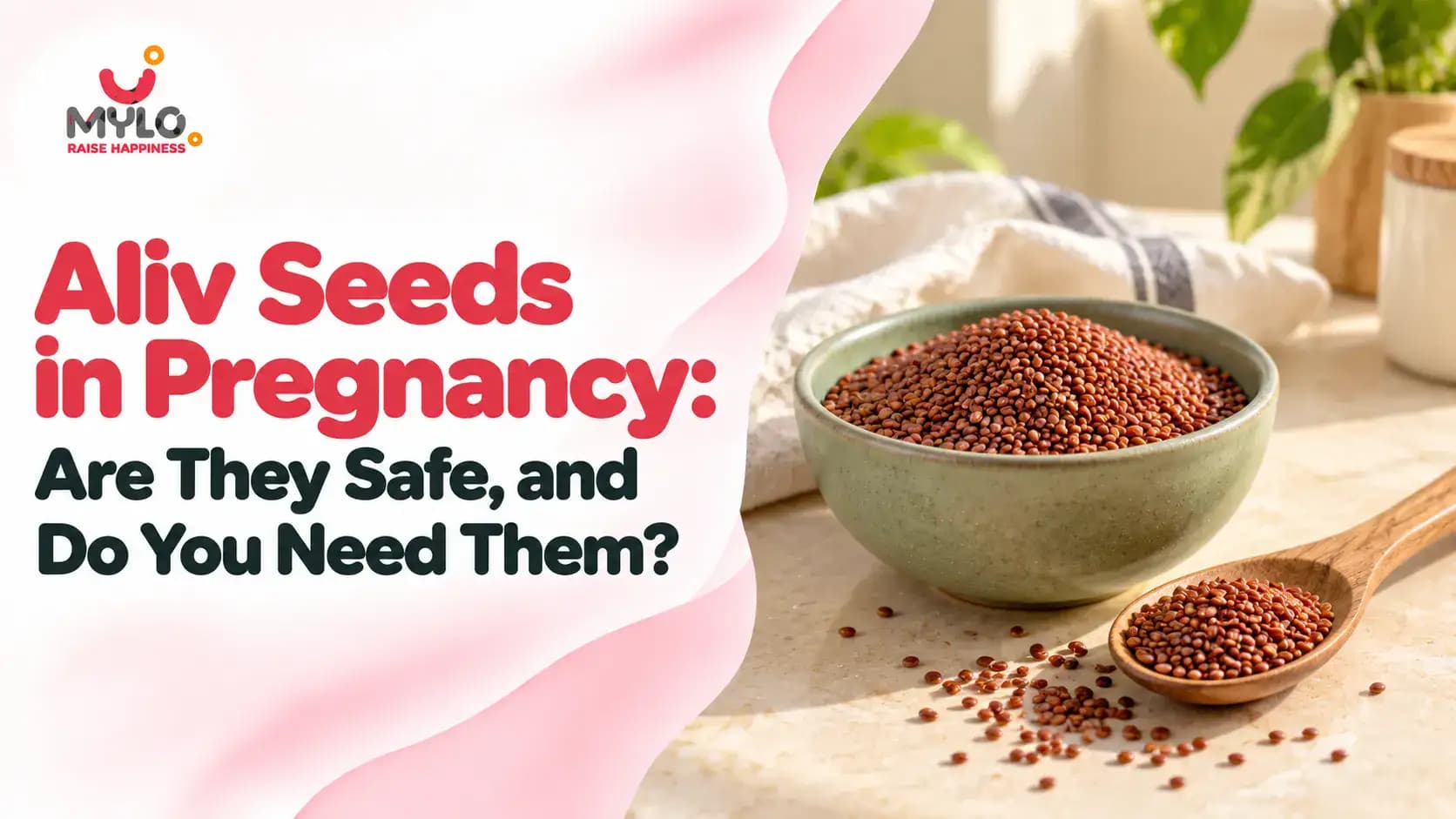
Small reddish-brown seeds from the garden cress plant, Lepidium sativum. They are known as aliv in Maharashtra, halim in North India, allivinthalu in the south, and garden cress seeds in English.
They are usually soaked overnight, which makes them swell and form a gel, and are eaten in laddoos, kheer or mixed into milk.
Nutritionally they are genuinely dense, containing iron, folate, calcium, protein, fibre and vitamins A, C and E. That nutritional profile is real. The question is whether pregnancy is the right time to eat them.
Can you eat aliv seeds during pregnancy?
The honest answer is that they are not a pregnancy food, and there is no good reason to start taking them while pregnant.
What Indian tradition says: aliv seeds are given to women after delivery, during the postpartum period, to support recovery and milk production. They are traditionally avoided during pregnancy, on the basis that they may stimulate the uterus.
What the evidence says: there is very little human research either way. Some laboratory and animal work has looked at uterine effects, but human studies in pregnancy do not exist in any meaningful quantity. That means neither "safe" nor "harmful" can be stated with confidence.
What follows from that:
There is no benefit you can only get from aliv seeds. Iron, folate and calcium are all available from your prescribed supplements and from ordinary food
Where evidence is absent and tradition advises caution, the sensible course in pregnancy is to wait
Ask your doctor before taking them, particularly in any concentrated form
If you have eaten them without knowing, a small culinary amount is very unlikely to have caused a problem. Mention it at your next visit and stop, rather than worrying
The iron claim needs correcting
You will read that a spoonful of aliv seeds covers most of your daily iron requirement in pregnancy. That is substantially overstated, and acting on it is risky.
Why the arithmetic does not work:
A teaspoon of seeds weighs only a few grams
Plant iron, known as non-haem iron, is absorbed far less efficiently than iron from animal foods or from supplements
Iron requirements rise considerably in pregnancy, which is precisely why supplementation is standard rather than optional
What actually prevents and treats anaemia in pregnancy:
Iron and folic acid tablets, provided free at government health facilities and recommended daily through pregnancy and for months after delivery under the national programme
A haemoglobin test at your first visit and again later in pregnancy
Treatment if you are anaemic, which may be oral iron, and sometimes intravenous iron
Dietary iron alongside, from dal, green leafy vegetables, ragi, jaggery, eggs, chicken and fish
Vitamin C with iron-rich meals, such as lemon, amla or tomato, which improves absorption
Tea and coffee away from meals, since they reduce iron absorption
No seed replaces an iron tablet. If you are anaemic, you need treatment, not a food.
If your iron tablets make you nauseous or constipated, do not stop them. Ask your doctor about taking them at night, with food, or switching to a different formulation.
When aliv seeds do have a traditional role
After delivery.
Aliv seeds are widely given to new mothers across India, usually as laddoos, and they are one of the traditional foods believed to support milk production.
The honest position on that too: the evidence that any food meaningfully increases breast milk supply is limited. Frequent, effective feeding and a good latch drive supply far more than anything you eat. Aliv laddoos are nutritionally dense and calorie-rich, which is genuinely useful after childbirth, and that is a good enough reason to eat them.
Our guides to foods that support milk production and what actually increases supply cover this in more detail.
Check with your doctor before starting them after delivery too, particularly if you have thyroid disease or are on any medication.
Who should avoid them entirely
Whether pregnant, breastfeeding or neither.
Avoid or check with your doctor if you | Why |
|---|---|
Have thyroid disease | Garden cress belongs to the cruciferous family, which has goitrogenic potential |
Have low blood pressure | They may lower blood pressure further |
Take diuretics | Potential additive effect on fluid and potassium balance |
Take blood pressure or diabetes medication | Possible interactions. Check first |
Are prone to dehydration or low potassium | Excess intake has been associated with potassium loss |
Have a known allergy to cruciferous vegetables | Cross-reactivity is possible |
In any case, keep to culinary amounts rather than concentrated supplements or large daily quantities.
What you actually need in pregnancy
Rather than adding a seed, these are the things with genuine evidence behind them.
What | Why |
|---|---|
Folic acid, 400 micrograms daily through the first 12 weeks | Reduces the risk of neural tube defects. A higher dose applies to some women |
Iron and folic acid tablets as prescribed, usually from around 14 weeks in India | Prevents and treats anaemia, which is very common in Indian pregnancies |
Calcium, commonly recommended from around 14 weeks under Indian guidance | Take at a different time of day from iron |
Vitamin D, as advised | Deficiency is very common in India |
Protein at every meal | Dal, curd, paneer, eggs, chicken, fish, nuts |
Haemoglobin checked at the first visit and again later | Anaemia is treatable and matters |
A varied diet | Over-restriction is more common than under-restriction in Indian pregnancy advice |
Our guides to the first and second trimesters cover supplements and timing in detail.
A note on herbal and seed remedies generally
Aliv is one of several seeds and herbs commonly recommended in pregnancy, and the same principles apply to all of them.
Traditional use tells you a thing has been used, not that it works or that it is safe
Culinary amounts and concentrated supplements are different things. Methi as a vegetable is not the same as methi capsules
Unregulated and unbranded preparations carry contamination risk, and heavy metals have been documented in some traditional products
Tell your doctor everything you take, including Ayurvedic, homeopathic and herbal products
Where evidence is absent in pregnancy, waiting is the low-cost option, because there is rarely anything you lose by not taking it
Our guide to foods that are wrongly blamed for miscarriage covers the opposite problem, which is over-restriction of ordinary foods that are perfectly safe.
When to see a doctor
Contact your doctor if:
You have been told you are anaemic, or feel breathless, very tired or dizzy
Your iron tablets are causing side effects you cannot tolerate
You have been taking aliv seeds or any herbal preparation regularly and are unsure whether to continue
You have thyroid disease, low blood pressure or take any regular medication and want to add a supplement
Seek care immediately if you have:
Vaginal bleeding
Severe abdominal pain, especially on one side
Regular cramping or tightening before 37 weeks
Fainting or collapse
Fever
Our full guide to pregnancy symptoms sorted by urgency covers these.
Frequently asked questions
Can I eat aliv seeds during pregnancy?
They are traditionally avoided in pregnancy and are used after delivery instead. Human evidence in pregnancy is lacking, so ask your doctor before taking them, and do not start them without advice.
Do aliv seeds increase haemoglobin in pregnancy?
They contain iron, but a teaspoon provides only a fraction of what pregnancy requires, and plant iron is poorly absorbed. They do not replace iron and folic acid tablets.
Are aliv seeds safe after delivery?
They are traditionally given to new mothers and are nutritionally dense. Check with your doctor if you have thyroid disease or take any medication.
Do aliv seeds increase breast milk?
They are traditionally believed to, though evidence is limited. Frequent, effective feeding drives supply far more than any food.
How many aliv seeds can I have in a day?
Keep to small culinary amounts rather than concentrated supplements, and ask your doctor what is appropriate for you.
I ate aliv seeds before I knew I was pregnant. Should I worry?
A small culinary amount is very unlikely to have caused a problem. Stop, mention it at your next visit, and try not to dwell on it.
Can I take aliv seeds if I have thyroid problems?
Not without your doctor's advice. Garden cress belongs to the cruciferous family, which has goitrogenic potential.
What is the best way to get iron in pregnancy?
Take your prescribed iron and folic acid tablets, eat iron-rich foods with a source of vitamin C, keep tea and coffee away from meals, and have your haemoglobin checked.
The bottom line
Aliv seeds are a nutritious food with a genuine traditional role, and that role is after delivery rather than during pregnancy. Human evidence in pregnancy is essentially absent, tradition advises caution, and there is nothing you gain by taking them while pregnant that you cannot get from your prescribed supplements and ordinary food. Most importantly, no seed replaces an iron tablet, so if anaemia is the reason you are considering them, that needs treating properly instead.
Sources
World Health Organization, recommendations on antenatal care for a positive pregnancy experience
World Health Organization, daily iron and folic acid supplementation in pregnancy
Indian Council of Medical Research and National Institute of Nutrition, nutrient requirements and dietary guidelines for Indians
Ministry of Health and Family Welfare, Government of India, Anemia Mukt Bharat guidance on iron and folic acid supplementation
Federation of Obstetric and Gynaecological Societies of India, antenatal care recommendations
Peer-reviewed literature on the composition of Lepidium sativum
This article is for general information and is not a substitute for professional medical advice. Do not start any seed, herb or supplement in pregnancy without your doctor, and do not stop prescribed iron tablets.
Trusted Nutrition Choices for Expecting Mamas
Pair iron-rich aliv seeds with gentle prenatal essentials that support your haemoglobin, energy, and growing baby's needs.
Pregnancy Massage Oil + Coconut Oil - 200 ml each



Organic Aloe Vera (300 ml)
Nurtures Skin & Hair | Reduces Suntan | Soothes Burns | Enhances Hair Resilience

MamaGro™ Protein Diskettes - 250gm - Vanilla
Supports Healthy Placenta | Supports Fetal Development
Article Posted Under
Related Articles

Related Topics
.webp&w=32&q=75)
Medical Disclaimer
This content is for informational purposes only and should not replace professional medical advice. Consult with a physician or other health care professional if you have any concerns or questions about your health. If you rely on the information provided here, you do so solely at your own risk.


AWARDS AND RECOGNITION

Mylo wins Forbes D2C Disruptor award

Mylo wins The Economic Times Promising Brands 2022
AS SEEN IN












- Mylo Care: Effective and science-backed personal care and wellness solutions for a joyful you.
- Mylo Baby: Science-backed, gentle and effective personal care & hygiene range for your little one.
- Mylo Community: Trusted and empathetic community of 10mn+ parents and experts.


Product Categories
Baby Carrier | Baby Soap | Baby Wipes | Stretch Marks Cream | Baby Cream | Baby Shampoo | Baby Massage Oil | Baby Hair Oil | Stretch Marks Oil | Baby Body Wash | Baby Powder | Baby Lotion | Diaper Rash Cream | Newborn Diapers | Teether | Baby Kajal | Baby Diapers Pants | Cloth Diapers | Laundry Detergent | Lactation Granules |