


Orders
.png&w=48&q=75 "login")
Profile


Wallet

Fenugreek (Methi) During Pregnancy: Is It Safe? Benefits, Risks and Safe Amount (2026)
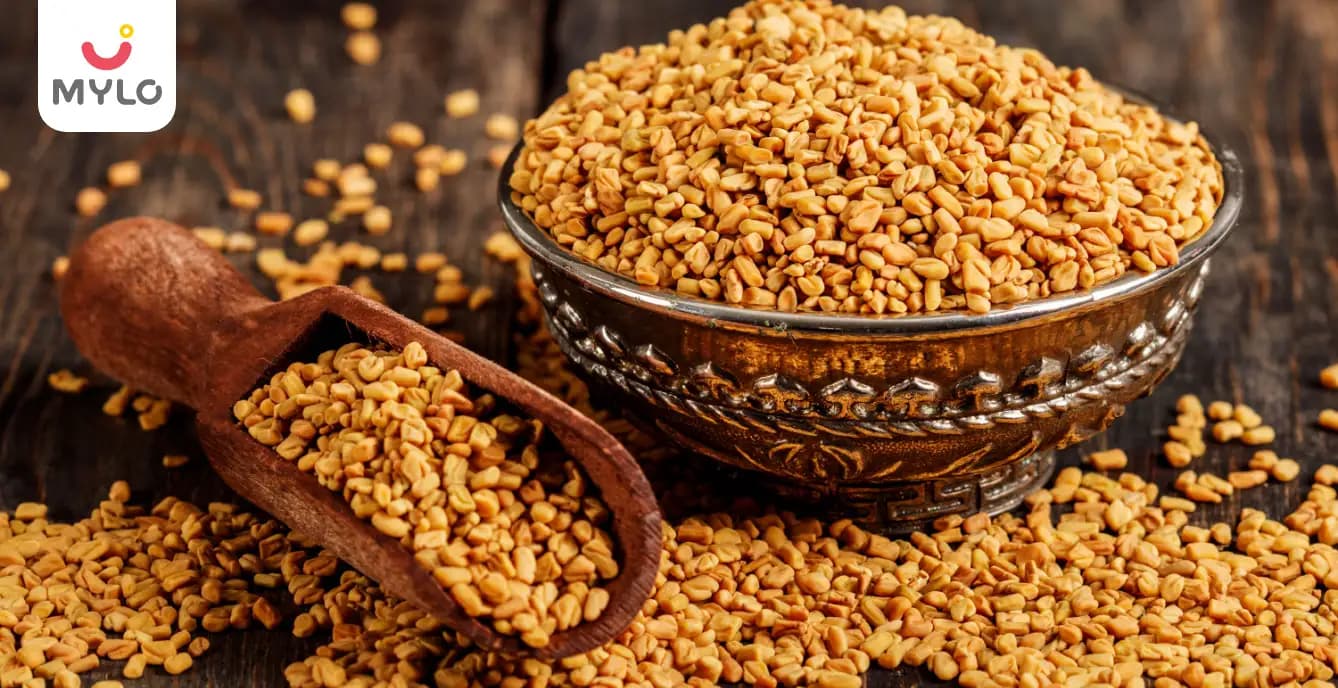
 5 Likes|
 11 min
Key Takeaways
Quick overview in 30 seconds.webp&w=32&q=75)
Summary
- Fenugreek (methi) is a strong herb that can trigger uterine contractions during pregnancy, potentially leading to miscarriage, premature labour, or complications, so it is generally avoided.
- Excessive fenugreek consumption in the first trimester has been linked to birth defects, congenital malformations, reproductive toxicity, and even unusual body odour in newborn babies.
- Small culinary amounts of methi leaves are safe in moderation, but fenugreek seeds, tea, or supplements should only be considered after the 37th week with doctor's approval.
- Looking for safe pregnancy nutrition support? Explore our Pregnancy Massage Oil + Coconut Oil - 200 ml each.
TL;DR
Methi (fenugreek) used in normal cooking amounts is generally safe during pregnancy, the small quantities you use as a spice, or cooked methi leaves in a sabzi, are fine and nutritious (NHS) (NCBI/LactMed)。 The real caution is about large or medicinal amounts: high-dose fenugreek seeds, concentrated methi water/tea, or fenugreek supplements are not recommended in pregnancy, because in large amounts fenugreek may stimulate the uterus and lower blood sugar. So enjoy methi as a regular cooking ingredient in moderation, but avoid fenugreek supplements, strong methi seed water and concentrated teas unless your doctor approves. Fenugreek is more commonly used after delivery to support milk supply. If you have a high-risk pregnancy, gestational diabetes or any concern, check with your doctor first.
Quick Answer
Methi (fenugreek) in normal cooking amounts is generally safe in pregnancy, as a spice or cooked methi leaves in food. The caution is about large or medicinal amounts, like high-dose fenugreek seeds, strong methi water or fenugreek supplements, which are not recommended because they may stimulate the uterus and lower blood sugar. Enjoy culinary methi in moderation, but avoid concentrated forms unless your doctor approves.
Author: Sanju Rathi, Senior Nutrition Content Editor, Mylo Parenting Desk Reviewed for accuracy against: NHS, NCBI/LactMed and ICMR guidance Last updated: 11 June 2026
Medical Disclaimer: This article is for informational purposes only and is not a substitute for professional medical advice. Normal culinary amounts of methi are generally safe, but avoid concentrated fenugreek supplements, large amounts of methi seeds or strong methi water in pregnancy without your doctor's approval, especially if you have a high-risk pregnancy, gestational diabetes, or are on any medication.
Key Takeaways
- Methi in normal cooking amounts is generally safe in pregnancy (NHS)
- Cooked methi leaves in a sabzi are nutritious and fine in moderation
- Avoid large or medicinal amounts (high-dose seeds, supplements, strong methi water) (NCBI/LactMed)
- In large amounts, fenugreek may stimulate the uterus and lower blood sugar
- Fenugreek supplements are not recommended in pregnancy without medical advice
- Methi is more commonly used after delivery to support milk supply
- Watch with gestational diabetes (fenugreek lowers blood sugar)
- High-risk pregnancy or any concern: check with your doctor first
Is Methi (Fenugreek) Safe During Pregnancy?
In normal cooking amounts, yes. The everyday way methi is used in Indian kitchens, a little in tempering, methi leaves cooked in a sabzi or dal, kasuri methi as a flavouring, is generally safe in pregnancy (NHS)。
The key is the amount and form:
- Culinary amounts (spice, cooked leaves): Generally safe and nutritious
- Large or medicinal amounts (high-dose seeds, fenugreek supplements, concentrated methi water or tea): Best avoided (NCBI/LactMed)
The caution comes from the fact that, in large concentrated amounts, fenugreek may have uterine-stimulating and blood-sugar-lowering effects. Normal cooking amounts do not reach these levels, which is why culinary methi is considered safe.
How Much Methi Is Safe in Pregnancy?
| Form | Guidance |
|---|---|
| Methi in cooking (spice/tempering) | Safe as a normal flavouring |
| Cooked methi leaves (sabzi/dal) | Moderate amounts (about half to one cup, a few times a week) are generally fine |
| Kasuri methi (dried leaves) | Safe as a small flavouring |
| Soaked methi seeds (large amounts) | Avoid or limit; ask your doctor |
| Strong methi water / fenugreek tea | Avoid concentrated amounts |
| Fenugreek supplements / capsules | Avoid unless doctor-approved |
A simple rule: food amounts are fine, medicinal or concentrated amounts are not. When unsure, check with your doctor.
What Are the Benefits of Methi (in Normal Amounts)?
In normal cooking amounts, methi adds genuine nutrition (ICMR):
| Benefit | How It Helps |
|---|---|
| Iron | Methi leaves provide iron, helpful for anaemia-prone pregnancy |
| Fibre | Aids digestion and helps with constipation |
| Vitamins and minerals | Methi leaves add vitamins A and C, calcium and folate |
| Flavour | Enhances food without extra salt |
| May support blood sugar | Fibre helps slow sugar absorption (in food amounts) |
These are the benefits of methi as a food. They do not require taking high-dose supplements, which carry risks in pregnancy.
What Are the Risks of Large Amounts of Fenugreek?
The risks relate to large or concentrated amounts, not normal cooking (NCBI/LactMed):
- Uterine stimulation: In large medicinal doses, fenugreek may stimulate the uterus, which is why high-dose use is avoided in pregnancy
- Low blood sugar: Fenugreek can lower blood sugar; large amounts may cause it to drop too much, especially with diabetes medication
- Blood thinning: Very large amounts may affect clotting, relevant if you are on blood thinners
- Maple-syrup-like body odor: High-dose fenugreek can cause a sweet body or urine smell, a harmless but noticeable effect, mostly with supplements
- Allergy (rare): Some people are sensitive to fenugreek (it is related to peanuts and chickpeas)
Bottom line: Normal culinary methi is safe. Avoid fenugreek supplements, capsules, strong methi water and large amounts of seeds unless your doctor specifically approves.
Methi for Blood Sugar and Gestational Diabetes: What to Know
Methi has a reputation for helping blood sugar. In pregnancy (Harvard Nutrition Source):
- In food amounts, methi's fibre can gently support blood sugar control
- But do not use high-dose methi seeds or supplements to "treat" gestational diabetes on your own
- If you have gestational diabetes, manage it with your doctor's plan, and tell them about any methi you use, especially if you are on diabetes medication (to avoid blood sugar dropping too low)
When Is Fenugreek Actually Used?
| Stage | Fenugreek Use |
|---|---|
| During pregnancy | Only in normal cooking amounts; avoid supplements and concentrated forms |
| After delivery (breastfeeding) | Often used (methi in food, sometimes supplements) to support milk supply (NCBI/LactMed) |
So the high-dose / supplement use of fenugreek belongs to the postpartum (breastfeeding) phase, not pregnancy, and even then, supplements should be discussed with your doctor.
When Should You Avoid Fenugreek or Check With Your Doctor?
Be cautious and ask your doctor if you (NCBI/LactMed):
- Have a high-risk pregnancy or a history of miscarriage or preterm labour
- Have gestational diabetes or are on diabetes medication
- Are on blood-thinning medication
- Have a peanut or chickpea allergy (fenugreek is related)
- Are tempted to take fenugreek supplements or strong methi water (avoid these)
Indian Context: What Indian Mothers Should Know
- A kitchen staple: Methi leaves, seeds and kasuri methi are common in Indian cooking and are safe in normal food amounts during pregnancy (ICMR)
- Avoid strong "totke": Do not drink concentrated methi seed water as a home remedy in pregnancy without your doctor's advice
- No supplements: Avoid fenugreek capsules or galactagogue supplements during pregnancy; these belong to the postpartum phase, with medical advice
- Gestational diabetes: Common in India; do not self-treat it with methi seeds, follow your doctor's plan (FOGSI)
- Iron-rich methi leaves: Cooked methi sabzi is a good iron source, helpful against anaemia
- Balanced diet first: Methi is a healthy ingredient, not a medicine or a substitute for a varied diet
Myths vs Facts About Methi in Pregnancy
| Myth | Fact | Source |
|---|---|---|
| "Methi is completely unsafe in pregnancy" | False. Normal cooking amounts are safe | NHS |
| "A methi sabzi causes miscarriage" | False in food amounts; only large medicinal doses are a concern | NCBI/LactMed |
| "Methi seed water cures gestational diabetes" | False. Do not self-treat; follow your doctor's plan | Harvard Nutrition Source |
| "Fenugreek supplements are the same as food methi" | False. Concentrated supplements should be avoided | NCBI/LactMed |
| "Methi during pregnancy boosts milk supply" | Misplaced. Fenugreek for milk is used after delivery | NCBI/LactMed |
| "More methi is healthier" | False. Large amounts carry risks in pregnancy | NCBI/LactMed |
FAQs: Fenugreek (Methi) in Pregnancy
Is methi safe to eat during pregnancy?
Yes, in normal cooking amounts. Using methi as a spice, or eating cooked methi leaves in a sabzi or dal in moderation, is generally safe and nutritious (NHS)。 Avoid large medicinal amounts, fenugreek supplements and strong methi water.
Pregnancy mein methi kha sakte hain? (Hinglish)
Haan, normal cooking amount mein methi khana pregnancy mein safe hai. Methi ki sabzi ya tadke mein thodi methi theek hai aur iron deti hai. Lekin bahut zyada matra, fenugreek supplements, ya strong methi seed water avoid karein, kyunki large amount mein iska uterus par halka asar ho sakta hai aur blood sugar kam ho sakta hai. Gestational diabetes ho toh doctor se poochein.
How much methi can I eat in pregnancy?
Normal cooking amounts are fine, for example, cooked methi leaves (about half to one cup, a few times a week) or a small amount of seeds in tempering (NCBI/LactMed)。 Avoid concentrated methi water, large amounts of soaked seeds, and fenugreek supplements.
Can methi cause miscarriage in pregnancy?
Normal food amounts do not. The concern is only with large, concentrated or medicinal amounts (high-dose seeds, fenugreek supplements, strong methi water), which may stimulate the uterus (NCBI/LactMed)。 Stick to small culinary amounts and avoid concentrated forms.
Methi seeds ka paani pregnancy mein pi sakte hain? (Hinglish)
Halka, normal amount theek ho sakta hai, lekin strong ya concentrated methi seed water "remedy" ke roop mein pregnancy mein avoid karein, kyunki large amount mein yeh uterus ko stimulate kar sakta hai aur blood sugar kam kar sakta hai. Gestational diabetes ya high-risk pregnancy ho toh doctor se zaroor poochein.
Can I use methi for gestational diabetes in pregnancy?
Not as a self-treatment. Methi in food amounts may gently help, but do not use high-dose methi seeds or supplements to treat gestational diabetes (Harvard Nutrition Source)。 Follow your doctor's plan, and tell them about any methi you use, especially if you are on diabetes medication.
Is fenugreek good for milk supply during pregnancy?
Fenugreek for milk supply is used after delivery (while breastfeeding), not during pregnancy (NCBI/LactMed)。 In pregnancy, avoid high-dose fenugreek. If you want to support milk supply later, discuss it with your doctor after the baby arrives.
Should I avoid methi if I have a high-risk pregnancy?
Use only small culinary amounts and check with your doctor, especially if you have bleeding, a history of miscarriage or preterm labour, gestational diabetes, or are on blood thinners (NCBI/LactMed)。 Avoid fenugreek supplements and strong methi water entirely.
References
- NHS UK. "Foods to Avoid in Pregnancy." https://www.nhs.uk/pregnancy/keeping-well/foods-to-avoid/
- NCBI / LactMed (Drugs and Lactation Database). "Fenugreek." https://www.ncbi.nlm.nih.gov/books/NBK501779/
- Harvard T.H. Chan School of Public Health. "Carbohydrates and Blood Sugar." https://www.hsph.harvard.edu/nutritionsource/carbohydrates/carbohydrates-and-blood-sugar/
- ICMR / NIN. "Dietary Guidelines for Indians." https://www.nin.res.in/dietaryguidelines/pdfjs/locale/DGI07052024P.pdf
- FOGSI (Federation of Obstetric and Gynaecological Societies of India). https://www.fogsi.org/
Article Posted Under
Related Articles
Fennel Seeds (Saunf) in Pregnancy: Benefits, Safe Amount and Risks (2026 Guide)
 3·11 min
 Do All Women Require Folic Acid & Progesterone Tablets After A Positive Pregnancy Test Result?
 248·6 min
 What to eat when trying to conceive
 1378·5 min
 Coconut in Pregnancy: The Ultimate Guide to Benefits, Myths and Precautions
 11·8 min
Related Topics
.webp&w=32&q=75)
Medical Disclaimer
This content is for informational purposes only and should not replace professional medical advice. Consult with a physician or other health care professional if you have any concerns or questions about your health. If you rely on the information provided here, you do so solely at your own risk.


AWARDS AND RECOGNITION

Mylo wins Forbes D2C Disruptor award

Mylo wins The Economic Times Promising Brands 2022
AS SEEN IN













- Mylo Care: Effective and science-backed personal care and wellness solutions for a joyful you.
- Mylo Baby: Science-backed, gentle and effective personal care & hygiene range for your little one.
- Mylo Community: Trusted and empathetic community of 10mn+ parents and experts.


Product Categories
Baby Carrier | Baby Soap | Baby Wipes | Stretch Marks Cream | Baby Cream | Baby Shampoo | Baby Massage Oil | Baby Hair Oil | Stretch Marks Oil | Baby Body Wash | Baby Powder | Baby Lotion | Diaper Rash Cream | Newborn Diapers | Teether | Baby Kajal | Baby Diapers Pants | Cloth Diapers | Laundry Detergent | Lactation Granules |