


Orders
.png&w=48&q=75 "login")
Profile


Wallet

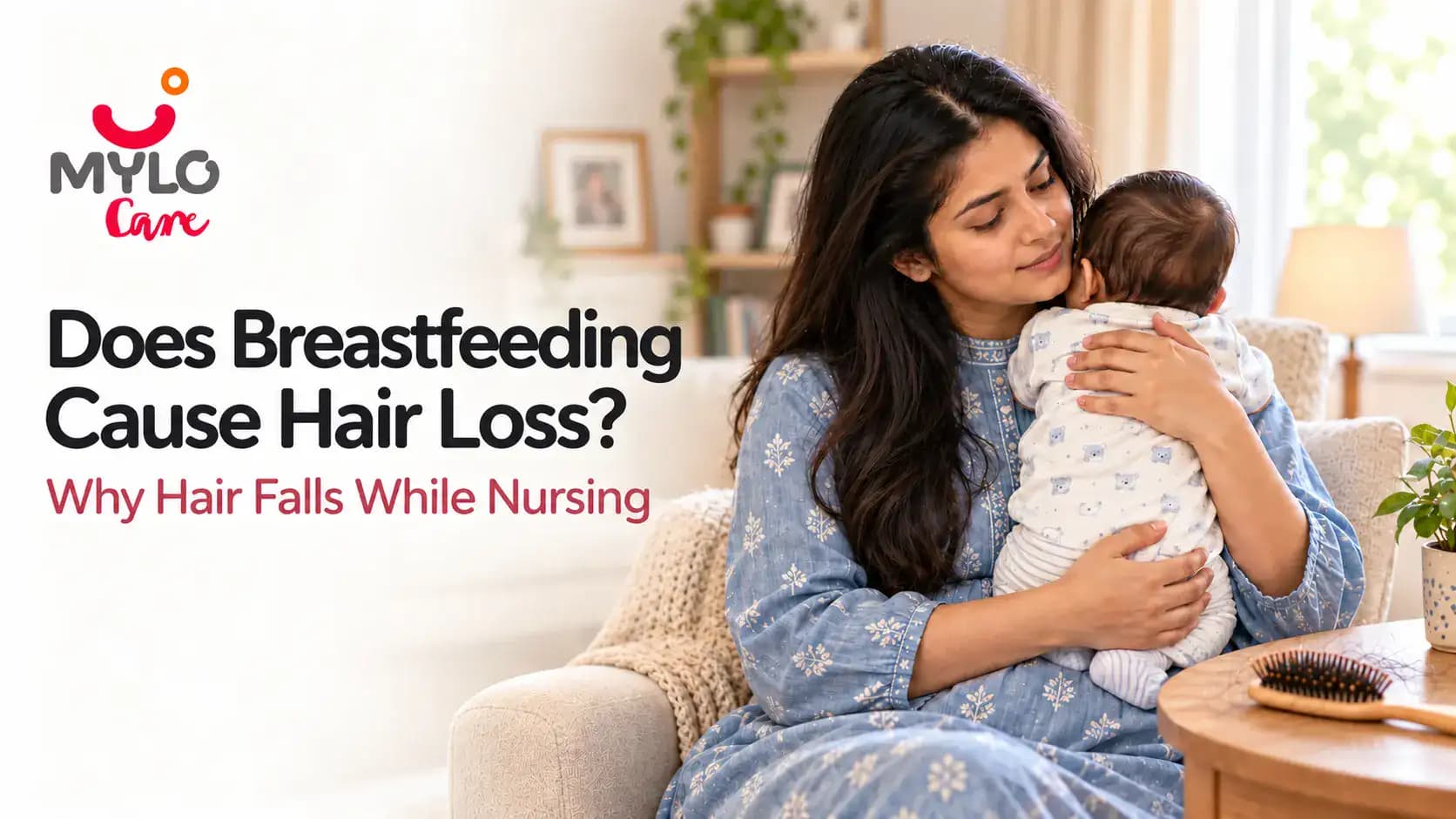
Does Breastfeeding Cause Hair Loss? Why Hair Falls While Nursing
 15 min
Quick Answer
Breastfeeding is usually not the direct cause of your hair loss. The real trigger is the natural drop in pregnancy hormones after delivery, which pushes a large batch of hair into its shedding phase, a temporary condition called postpartum telogen effluvium. It feels connected to breastfeeding because both happen in the same postpartum window. What breastfeeding does do is raise your nutritional needs, so if your diet falls short on protein, iron, vitamin D, or B12, shedding can feel worse and regrowth can be slower. You do not need to stop breastfeeding because your hair is falling out. The fix is to nourish yourself well enough to cover both you and your baby.
Introduction
If you are nursing your baby and watching your hair collect on the pillow and in the shower drain, it is natural to wonder whether breastfeeding is somehow "taking" from your body and thinning your hair. Please set that guilt down. You are doing something wonderful for your baby, and the honest answer to "is breastfeeding causing my hair loss?" is almost always no.
Breastfeeding does raise your nutrient needs, and running low can affect your hair. But the shedding itself is driven by hormones. Understanding the difference matters, because it points you toward the real solution, nourishing yourself well, rather than a false choice between feeding your baby and keeping your hair.
Quick Summary
Question | Quick Answer |
|---|---|
Does breastfeeding directly cause hair loss? | Usually no |
What is the main cause? | The drop in pregnancy hormones after delivery |
When does hair fall usually start? | Around 2 to 4 months after delivery |
Can nutrition affect it? | Yes, if your intake or nutrient levels are low |
Should I stop breastfeeding? | No, not for normal postpartum shedding |
When should I see a doctor? | If hair loss is severe, patchy, lasts beyond 12 months, or comes with other symptoms |
Does Breastfeeding Cause Hair Loss?
Directly? No. The confusion comes down to timing: postpartum shedding often begins right when a mother is deep in the breastfeeding months, so the two get linked in our minds. According to the American Academy of Dermatology, the excess shedding new mothers notice is caused by falling estrogen levels, and it happens whether or not you breastfeed.
Here is what is actually going on:
During pregnancy, higher estrogen keeps more hair in its growth phase
Fewer hairs than usual shed, so your hair felt thick and full
After childbirth, hormone levels drop sharply
The "held-on" hairs all move into the resting phase together
About three months later, they shed at once
This synchronised shed looks alarming precisely because it all happens together, not because anything is wrong. For the full explanation, read our guide on why your hair falls out 3 months after delivery.
Does Breastfeeding Drain Your Nutrition?
It does raise your needs, more than many mothers realise. The CDC recommends an extra 330 to 400 calories a day for well-nourished breastfeeding mothers, and your needs for several nutrients also rise while you nurse.
Your body treats milk production as a top priority. If your diet does not supply enough of a nutrient to cover both your needs and your milk, your body draws the difference from your own stores. Your baby gets fed either way; the question is whether it comes from your plate or from your reserves.
Why hair loses out first
Hair is biologically non-essential. When nutrients run short, your body sends them to vital organs and milk production first, and the hair follicle is low on the priority list. Low protein and low iron are both recognised triggers of telogen effluvium, according to StatPearls, so a nutritional gap can deepen the shedding or slow regrowth.
But breastfeeding is not the root cause
This is the crucial distinction. Breastfeeding on a nutrient-poor diet can act as an aggravating factor. Breastfeeding on a reasonably balanced diet usually supports both you and your baby without harming your hair. So the goal is not to stop nursing; it is to make sure your nutrition covers the extra demand.
Which Nutrients Does Breastfeeding Draw On?
Nutrient | Breastfeeding Demand | Link to Hair |
|---|---|---|
Protein | High; milk is protein-rich, and your body uses its own stores if your diet falls short | Hair is built from the protein keratin |
Iron | Mostly depleted by pregnancy and delivery blood loss (see note below) | Carries oxygen to the follicle |
Vitamin D | Often low after pregnancy | Linked to the follicle growth cycle |
Vitamin B12 | Comes only from food; easier to run low on a vegetarian diet | Supports healthy cell function |
Calcium | Drawn from your bones for milk if intake is low | Supports overall recovery |
Calories | About 330 to 400 extra a day | Fuel for recovery and hair growth |
Protein. Since hair is essentially built from keratin, a shortfall shows up as weaker, slower-growing strands. Aim for a protein source at every meal: dal, eggs, paneer, curd, chicken, or fish.
Iron, with an important nuance. Pregnancy and delivery blood loss both deplete iron, and a review in the Journal of the American Academy of Dermatology names women who have just given birth as a group at higher risk of iron-related hair shedding. Breastfeeding itself is not the main drain: according to the NIH Office of Dietary Supplements, iron needs are actually lower while nursing, partly because many mothers do not have periods during this time. The real risk is starting out iron-depleted after delivery, which is why testing your ferritin (iron stores) is better than guessing.
Vitamin D and B12. Both are linked to hair health, and B12 comes only from food, so vegetarian mothers are more likely to run low. Sunlight, eggs, and fortified milk help with vitamin D; dairy, eggs, and fortified foods (or a doctor-advised supplement) cover B12.
Calcium. Your body will take calcium from your bones to keep milk supply steady. This does not harm most mothers in the short term, but keep milk, curd, ragi, and leafy greens on the menu to protect your bones.
Is My Hair Fall From Breastfeeding or Just Normal?
Normal Postpartum Shedding | Nutrition-Aggravated Shedding |
|---|---|
Caused by the hormone drop after birth | Made worse by low nutrient reserves |
Happens whether you nurse or not | More likely on an under-nourished diet |
Peaks around 4 months, settles by 6 to 12 months | Improves once nutrition is corrected |
Cannot be prevented | Responds to eating well and treating any deficiency |
If your shedding follows the normal timeline and you otherwise feel well, it is very likely the hormonal wave passing. If it comes with fatigue or dizziness, or drags on past a year, nutrition or another issue may be involved. For a month-by-month picture, see our guide on how long postpartum hair loss lasts.
Should I Stop Breastfeeding Because of Hair Fall?
No. Normal postpartum hair loss is not a reason to stop breastfeeding, and stopping is unlikely to switch off the shedding anyway, because it is driven by the hormone shift after delivery, not by nursing. If you are thinking about changing how you feed your baby because of hair loss, please talk to your doctor first. There is almost always a better path than weaning.
What to Eat to Cover Both You and Your Baby
The principle is simple: eat enough, eat a variety of foods, and do not skip meals. This is not the time for restrictive dieting, which can make shedding worse.
Nutrient | Everyday Indian Sources |
|---|---|
Protein | Dal, rajma, chana, paneer, curd, eggs, chicken, fish, milk |
Iron | Spinach, lentils, chickpeas, dates, jaggery, red meat |
Calcium | Milk, curd, paneer, ragi, sesame (til), leafy greens |
Vitamin D | Sunlight, fatty fish, fortified milk, eggs |
Vitamin B12 | Dairy, eggs, meat, fortified foods (or a doctor-advised supplement) |
Vitamin C | Amla, orange, guava, lemon, tomato |
Two habits worth keeping:
Pair iron-rich foods with a vitamin C source (lemon over dal, amla with a meal) to boost absorption, and keep tea or coffee between meals rather than right after, since they reduce iron absorption.
Drink plenty of water. Breastfeeding noticeably increases your fluid needs.
For meal ideas, our Diet Chart for Breastfeeding Mothers has a full plan. For a deeper look at the nutrients behind hair recovery, read our guide on which nutrient deficiencies cause hair fall after delivery.
How Can I Reduce Hair Fall Safely While Breastfeeding?
You cannot always prevent hormonal shedding, but you can support regrowth and avoid extra breakage:
Eat adequate protein at each meal
Include iron-rich foods regularly
Do not skip meals, even when you are exhausted
Continue any postnatal supplements your doctor has prescribed
Use a gentle shampoo and conditioner
Avoid tight hairstyles that pull at the roots
Reduce heat styling and chemical treatments
Detangle gently, from the ends up
Rest whenever you realistically can
.webp)

Postpartum shedding is hormone-driven and resolves with time, so no product can switch it off. What gentle hair care can do is reduce breakage and keep your scalp comfortable while your body recovers. For a fuller routine, see our guide on how to control hair fall after delivery.
Which Hair Products Are Safe While Breastfeeding?
Mild cosmetic products like gentle shampoos and conditioners are generally used without concern while nursing. Check with your doctor before using any of these:
Minoxidil
Prescription hair treatments
High-dose supplements
Herbal capsules
Essential oils
Medicated scalp products
For a full ingredient-by-ingredient breakdown, read our guide on hair care ingredients to avoid while breastfeeding. If you use onion-based products, our guide on whether onion oil is safe during breastfeeding explains what is known.
When Should I Worry About Hair Loss While Breastfeeding?
See a doctor or dermatologist if you notice:
Clearly defined bald patches
Hair loss continuing beyond 12 months
Rapidly worsening thinning
Eyebrow or eyelash loss
Scalp pain, redness, sores, or severe itching
Extreme fatigue, dizziness, breathlessness, or pale skin (possible iron-deficiency anaemia)
Unexplained weight changes, feeling unusually cold or hot, or palpitations (possible thyroid problems, including postpartum thyroiditis)
Ask your doctor about ferritin and thyroid tests alongside a standard blood count. One important tip: if you take biotin (including biotin hair gummies), tell your doctor before any blood test. High-dose biotin can give falsely abnormal results on some lab tests, including thyroid tests, according to Singapore's Health Sciences Authority. Your doctor may ask you to pause it for a few days first.
Key Takeaway
Breastfeeding and postpartum hair loss often happen at the same time, but breastfeeding is usually not the cause. Hormones are. Breastfeeding does raise your nutrient needs, so eating enough to cover both you and your baby protects your recovery and your hair, without ever having to choose between them.
Frequently Asked Questions
Does breastfeeding cause hair loss?
Not directly. Postpartum hair loss is caused by the drop in pregnancy hormones after delivery. It overlaps with breastfeeding, which is why the two feel connected.
Will my hair stop falling if I stop breastfeeding?
Not necessarily. The shedding is driven by the estrogen drop after birth, not by nursing. Stopping breastfeeding is not a treatment for hair fall, and the shedding usually settles on its own by 6 to 12 months.
Does breastfeeding cause nutrient deficiency?
It raises your nutritional needs, but a balanced diet usually supports both you and your baby. Deficiencies happen when intake is low, not simply because you nurse.
What nutrients does breastfeeding draw on most?
Protein, calories, vitamin D, B12, and calcium. If your intake is low, your body uses its own stores to keep milk supply going.
How many extra calories do I need while breastfeeding?
The CDC recommends about 330 to 400 extra calories a day for well-nourished breastfeeding mothers. This is not the time for restrictive dieting.
Is iron deficiency common in breastfeeding mothers?
It can be, mainly because of pregnancy and delivery blood loss rather than nursing itself. A ferritin test is the best way to know. Ask your doctor about testing rather than self-prescribing iron.
What vitamins help with hair loss during breastfeeding?
There is no magic vitamin, but adequate protein, iron, zinc, vitamin D, and B12 support hair health. Take supplements only as your doctor advises.
Should vegetarian breastfeeding mothers do anything differently?
Yes. Pay extra attention to B12, iron, and protein, and pair iron-rich foods with vitamin C. Ask your doctor whether you need a B12 supplement.
Is hair-growth serum safe while breastfeeding?
Check the ingredients first. Some contain minoxidil, which should only be used while nursing if a doctor advises it. Always read labels and ask.
Will my hair grow back after breastfeeding?
For the vast majority of mothers, yes. Postpartum shedding is temporary, and hair typically returns to its previous fullness within about a year.
When should I see a doctor for hair loss while breastfeeding?
See one for bald patches, shedding beyond 12 months, scalp pain or sores, eyebrow or eyelash loss, or hair fall with fatigue, dizziness, weight changes, or other symptoms.
References
American Academy of Dermatology: Hair loss in new moms, dermatologist tips
Hughes EC, Saleh D. Telogen Effluvium. StatPearls, NCBI Bookshelf
Centers for Disease Control and Prevention: Maternal Diet and Breastfeeding
NIH Office of Dietary Supplements: Iron Fact Sheet for Health Professionals
Health Sciences Authority, Singapore: Biotin interference with clinical laboratory tests
Hair Fall Control Kit for Moms
Stronger, healthier hair after pregnancy
.webp&w=1900&q=75)




Article Posted Under
Related Articles

Related Topics
.webp&w=32&q=75)
Medical Disclaimer
This content is for informational purposes only and should not replace professional medical advice. Consult with a physician or other health care professional if you have any concerns or questions about your health. If you rely on the information provided here, you do so solely at your own risk.


AWARDS AND RECOGNITION

Mylo wins Forbes D2C Disruptor award

Mylo wins The Economic Times Promising Brands 2022
AS SEEN IN













- Mylo Care: Effective and science-backed personal care and wellness solutions for a joyful you.
- Mylo Baby: Science-backed, gentle and effective personal care & hygiene range for your little one.
- Mylo Community: Trusted and empathetic community of 10mn+ parents and experts.


Product Categories
Baby Carrier | Baby Soap | Baby Wipes | Stretch Marks Cream | Baby Cream | Baby Shampoo | Baby Massage Oil | Baby Hair Oil | Stretch Marks Oil | Baby Body Wash | Baby Powder | Baby Lotion | Diaper Rash Cream | Newborn Diapers | Teether | Baby Kajal | Baby Diapers Pants | Cloth Diapers | Laundry Detergent | Lactation Granules |