


Orders
.png&w=48&q=75 "login")
Profile


Wallet

Which Vitamin Deficiency Causes Postpartum Hair Loss? Iron, Protein, Vitamin D and More
 15 min
Quick Answer
Postpartum hair loss is mainly caused by the natural hormone drop after childbirth, not by a vitamin deficiency. But deficiencies can make shedding worse and slow your recovery. The ones most often linked to hair fall after delivery are iron (especially low ferritin) and protein, followed by vitamin D, with vitamin B12, zinc, and vitamin C also playing a part. Correcting a real deficiency through food, your postnatal supplements, and doctor-guided testing supports healthier regrowth. Nutrition cannot stop the hormonal shed, but it removes the obstacles standing in your hair's way.
Introduction
Somewhere around three months after your baby arrives, you start finding hair everywhere: on the pillow, in the shower drain, wrapped around your fingers. It is alarming, but it is also incredibly common, and it has a name: postpartum telogen effluvium.
The main driver is hormonal. During pregnancy, high estrogen keeps more hair in its growing phase, which is why your hair felt so thick. After delivery, estrogen drops and a large batch of hair moves into shedding all at once. No supplement can override that reset. For the full explanation, read our guide on why your hair falls out 3 months after delivery.
But here is what many new mothers don't hear: nutrition sits right alongside those hormones. Pregnancy, blood loss during delivery, and breastfeeding all draw on your nutrient reserves, and when those reserves run low, hair is one of the first tissues your body deprioritises. Knowing which deficiencies matter is one of the most practical things you can control during recovery.
Why Is Hair So Sensitive to Nutrient Gaps?
Your body treats hair as non-essential. When resources are scarce, it sends nutrients to vital organs and, if you are breastfeeding, to milk production first, leaving the hair follicle low on the priority list.
Hair is also demanding to grow. Each active follicle needs a steady supply of oxygen, protein, vitamins, and minerals. According to StatPearls, low protein intake, crash dieting, and iron deficiency are all recognised triggers of telogen effluvium, so a gap on top of the hormonal shed can mean heavier shedding and finer, weaker regrowth.
The Main Deficiencies Linked to Postpartum Hair Fall
Nutrient | Role in Hair Health | Why It Runs Low After Delivery | Strength of Evidence |
|---|---|---|---|
Iron (ferritin) | Carries oxygen to the follicle | Delivery blood loss; pregnancy demands | Strongest link |
Protein | Provides building blocks for keratin | Irregular meals; higher needs while nursing | Strong link |
Vitamin D | Linked to the follicle growth cycle | Limited sun exposure; low stores | Moderate |
Vitamin B12 | Supports healthy cell function | Comes only from food; low in some vegetarian diets | Limited |
Zinc | Needed for keratin and tissue repair | Increased demand; dietary shortfall | Limited |
Vitamin C | Boosts iron absorption | Inconsistent fruit and vegetable intake | Indirect (via iron) |
Iron and low ferritin
Iron is the most important nutrient in the postpartum hair conversation. It is part of haemoglobin, which carries oxygen in your blood, and follicles need a reliable oxygen supply to grow healthy hair. A review in the Journal of the American Academy of Dermatology found that iron deficiency may contribute to hair loss in women and names women who have just given birth as a higher-risk group. Cleveland Clinic also lists iron deficiency as one of the first things to check if postpartum shedding continues beyond six months.
Ferritin is the number that matters. You can have "normal" haemoglobin and still have low iron stores. Ferritin measures those stores, and hair can be affected by low ferritin even before full anaemia shows up. That is why testing ferritin, not just haemoglobin, is the more useful step.
Why delivery leaves you iron-depleted:
Blood loss during delivery directly reduces iron
Pregnancy has already drawn heavily on your stores
Iron-poor or vegetarian diets make it harder to rebuild
Breastfeeding is not the main drain here. According to the NIH Office of Dietary Supplements, iron needs are actually lower while nursing, partly because many mothers do not have periods during this time. If you want to understand how breastfeeding fits in, read our guide on whether breastfeeding causes hair loss.
Protein
Hair is made almost entirely of keratin, a protein built from amino acids like methionine and cysteine. When protein intake falls short, your body puts essential functions first, and follicles get fewer building blocks. The result is hair that grows in finer, weaker, and more prone to breakage, on top of the hormonal shed.
Why new mothers run low on protein:
Meals become irregular and rushed: toast, tea, whatever can be eaten one-handed
Breastfeeding raises your daily protein needs
Recovery from delivery needs extra protein for tissue repair
Appetite and routine are turned upside down by newborn sleep
None of this is a personal failing. It is simply the reality of the early months, which is why protein is often the first thing to slip when your hair needs it most. If you noticed thinning while pregnant, our guide on hair fall during pregnancy and low protein traces where it begins.
Vitamin D
A review in Dermatology and Therapy links low vitamin D with several types of hair loss, including telogen effluvium. Vitamin D deficiency is also common after pregnancy: one study of postpartum women found that three in four had low or insufficient levels at six weeks after delivery. Many new mothers spend far more time indoors than usual, which makes this a frequent gap.
Vitamin B12
B12 supports healthy cell function throughout the body. Because your body cannot make it and it comes only from food, vegetarian and vegan mothers are more likely to run low. The direct evidence linking B12 to hair loss is limited, but a deficiency is worth correcting for your overall energy and health, and it is often checked in the same blood test.
Zinc
Zinc is involved in building keratin and repairing tissue. A real deficiency can affect hair, but the same Dermatology and Therapy review found there is not enough evidence to recommend zinc supplements for hair loss unless you are actually deficient. Getting it from food is the sensible approach.
Vitamin C
Vitamin C plays an indirect but useful role: it boosts how much iron your body absorbs from plant foods. A vitamin C gap can quietly undermine your iron status, so pairing vitamin C foods with iron-rich meals is a simple, effective habit.
What about biotin?
Biotin (vitamin B7) is widely marketed for hair, but genuine biotin deficiency is uncommon, and the Dermatology and Therapy review found no good evidence that biotin supplements help this type of shedding in people who are not deficient. More often, it is the combination of low iron, stretched protein, low vitamin D, and a general calorie shortfall from newborn life that tips hair into heavier shedding.
Important if you take biotin: high-dose biotin can give falsely abnormal results on some lab tests, including thyroid tests, according to Singapore's Health Sciences Authority. Tell your doctor if you take it, including biotin hair gummies, before any blood test.
Is It Hormones or Nutrition? Usually Both
It helps to separate the two, because they call for different responses.
Hormonal Shedding (Telogen Effluvium) | Nutrition-Related Hair Fall |
|---|---|
Triggered by the estrogen drop after birth | Triggered by low reserves and dietary gaps |
Typically starts around 3 months postpartum | Can appear whenever stores run low |
Usually settles within 6 to 12 months | Improves once the deficiency is corrected |
Cannot be switched off by diet | Responds to diet and doctor-guided supplements |
Affects most new mothers to some degree | Varies with individual nutrition |
The honest takeaway: the hormonal wave will pass on its own, but nutrition decides how well your hair recovers once it does. Fixing a deficiency won't stop the initial shed, but it clears the way for stronger regrowth. For a month-by-month picture, see our guide on how long postpartum hair loss lasts.
How to Test and Confirm a Deficiency
Rather than guessing, ask your doctor about checking:
Ferritin and haemoglobin (iron stores and anaemia)
Vitamin D
Vitamin B12
Thyroid function, since an untreated thyroid problem can mimic or worsen postpartum shedding. Our guide on postpartum hair fall and thyroid tests explains when to ask for one.
Zinc, if your diet or symptoms suggest a gap
A simple blood panel takes the guesswork out and stops you over-supplementing nutrients you don't need, which can carry its own risks. Too much iron, for example, can be harmful, so never start an iron supplement without testing.
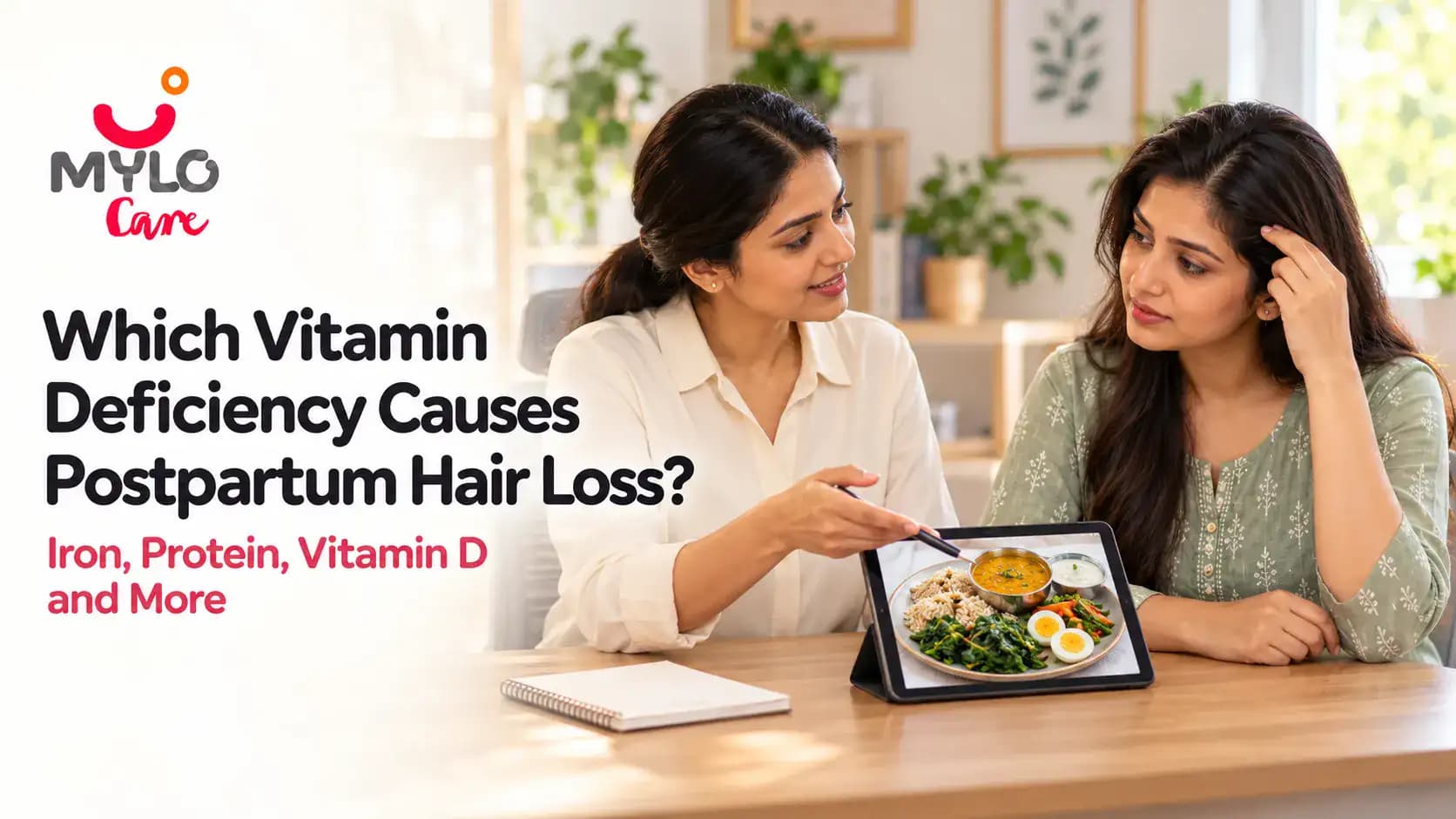
Foods That Help Rebuild Your Reserves
Small, consistent choices matter more than perfection. Aim for a protein and an iron source at most meals.
Nutrient | Everyday Indian Food Sources |
|---|---|
Iron | Spinach and other leafy greens, lentils, chickpeas, poha, dates, jaggery, red meat, eggs |
Protein | Dal, rajma, chana, paneer, eggs, curd, chicken, fish, nuts, milk |
Vitamin D | Sunlight, fortified milk, eggs, fatty fish |
Vitamin B12 | Dairy, eggs, meat, fortified foods (or a doctor-advised supplement if vegetarian) |
Zinc | Pumpkin seeds, chickpeas, cashews, dairy, meat |
Vitamin C | Amla, lemon, orange, guava, tomato, capsicum |
The one trick that makes iron work harder: iron from plant foods is absorbed better with vitamin C. A squeeze of lemon over your dal, or amla alongside a meal, meaningfully boosts how much iron you take in. Tea and coffee right after meals can block iron absorption, so keep them for between meals.
For full meal plans, see our Postpartum Diet Plan and our guide to the top nutrients a lactating mother should include in her diet.
Everyday Habits That Support Recovery
Nutrition works best alongside a gentle routine:
Keep taking your postnatal supplements as your doctor advises
Eat regular meals, even simple ones; don't skip
Stay well hydrated, especially while breastfeeding
Wash with a gentle, sulphate-free shampoo to reduce breakage
Avoid tight hairstyles and high heat styling
Protect your sleep and manage stress where you realistically can
If you want a structured plan, our 90-day postpartum hair recovery routine walks through it week by week.
Where Targeted Hair Care Fits In
Food rebuilds your reserves from the inside; gentle hair care protects your scalp and strands from the outside. Neither replaces the other.
.webp)

The most sensible way to view any hair care kit is as one supportive layer. It can help care for your scalp and reduce breakage while your diet and your body do the deeper work. It does not replace testing or treatment for a real deficiency like low iron.
When to See a Doctor
Book an evaluation if you notice:
Hair loss continuing beyond 12 months after delivery
Bald patches or a widening parting that keeps getting worse
Scalp redness, pain, or severe itching
Extreme fatigue, dizziness, breathlessness, or pale skin (possible iron-deficiency anaemia)
Symptoms of a thyroid problem, such as weight changes, feeling unusually hot or cold, or mood changes
Shedding that is rapidly getting worse
These can point to a correctable deficiency or an underlying condition that deserves proper testing rather than a wait-and-see approach.
Key Takeaway
Postpartum hair fall is mostly hormonal and temporary, but deficiencies, especially iron, protein, and vitamin D, can deepen the shedding and slow regrowth. Testing instead of guessing, eating to rebuild your reserves, and giving your hair time is the combination that works.
Frequently Asked Questions
Which vitamin deficiency causes postpartum hair loss?
The main shed is hormonal, not caused by a deficiency. But low iron (especially low ferritin) is the deficiency most closely linked to worse postpartum shedding, followed by low protein and low vitamin D. A blood test is the best way to know which applies to you.
Can low iron alone cause postpartum hair loss?
Low iron rarely acts alone, but it is a significant contributor. Because delivery involves blood loss and pregnancy depletes your stores, checking ferritin after delivery is genuinely worthwhile.
What is the difference between low haemoglobin and low ferritin?
Haemoglobin shows how well your blood carries oxygen right now, while ferritin shows your iron reserves. You can have normal haemoglobin but low ferritin, and hair is sensitive to low ferritin. Ask your doctor to test both.
Can low protein cause hair fall after delivery?
Yes. Hair is made of the protein keratin, so when intake is low, your body diverts protein to essential functions and hair grows in weaker and thinner, adding to the hormonal shedding.
What are the best vitamins for postpartum hair loss?
There is no single best vitamin. Correcting a real deficiency in iron, vitamin D, or B12 helps, and adequate protein matters most of all. Take only the supplements your doctor recommends after testing.
Is biotin deficiency the reason for postpartum hair loss?
Usually not. True biotin deficiency is uncommon, and there is little evidence that biotin supplements help if you are not deficient. Postpartum hair fall is more often hormonal plus a mix of iron, protein, and vitamin D gaps.
Does breastfeeding make nutrient-related hair fall worse?
It can. Breastfeeding raises your needs for protein, calories, and several vitamins, so a low-nutrient diet while nursing can worsen shedding or slow regrowth. Breastfeeding itself is not the cause.
Should I take supplements without testing?
It is better to test first. Over-supplementing, especially iron, can be harmful. Ask your doctor for a blood panel so you take only what you actually need.
Are vegetarian mothers more at risk?
They can be more prone to B12, iron, and sometimes zinc shortfalls, since these are richest in animal foods and plant iron is absorbed less easily. Fortified foods, vitamin C pairing, and doctor-advised supplements help.
How long does it take for better nutrition to improve hair fall?
Hair grows slowly. Expect to see a difference after about three months of correcting a deficiency, with fuller recovery over the following months.
When should I worry that it is not just normal postpartum shedding?
See a doctor if shedding lasts beyond 12 months, you develop bald patches or scalp pain, or you have signs of anaemia or a thyroid problem.
References
Hughes EC, Saleh D. Telogen Effluvium. StatPearls, NCBI Bookshelf
NIH Office of Dietary Supplements: Iron Fact Sheet for Health Professionals
Nutritional status of iron and vitamin D in postpartum women in northern Taiwan. NCBI PubMed Central
Health Sciences Authority, Singapore: Biotin interference with clinical laboratory tests
Hair Fall Control Kit for Moms
Stronger, healthier hair after pregnancy
.webp&w=1900&q=75)




Article Posted Under
Related Articles


Related Topics
.webp&w=32&q=75)
Medical Disclaimer
This content is for informational purposes only and should not replace professional medical advice. Consult with a physician or other health care professional if you have any concerns or questions about your health. If you rely on the information provided here, you do so solely at your own risk.


AWARDS AND RECOGNITION

Mylo wins Forbes D2C Disruptor award

Mylo wins The Economic Times Promising Brands 2022
AS SEEN IN













- Mylo Care: Effective and science-backed personal care and wellness solutions for a joyful you.
- Mylo Baby: Science-backed, gentle and effective personal care & hygiene range for your little one.
- Mylo Community: Trusted and empathetic community of 10mn+ parents and experts.


Product Categories
Baby Carrier | Baby Soap | Baby Wipes | Stretch Marks Cream | Baby Cream | Baby Shampoo | Baby Massage Oil | Baby Hair Oil | Stretch Marks Oil | Baby Body Wash | Baby Powder | Baby Lotion | Diaper Rash Cream | Newborn Diapers | Teether | Baby Kajal | Baby Diapers Pants | Cloth Diapers | Laundry Detergent | Lactation Granules |