


Orders
.png&w=48&q=75 "login")
Profile


Wallet

Why Is My Hair Falling Out 3 Months After Delivery? Postpartum Hair Loss Explained
 16 min
Quick Answer
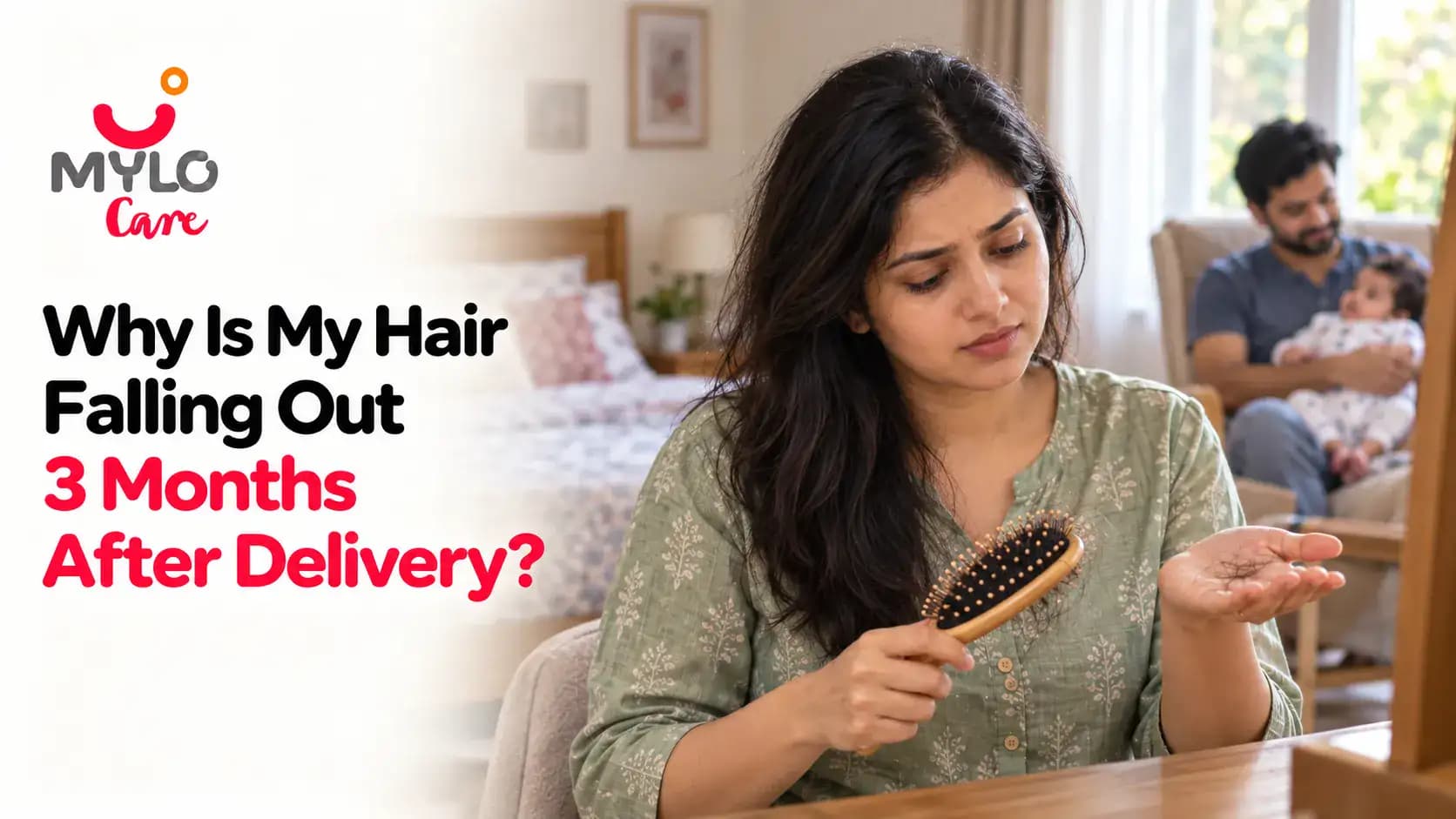
If your hair is falling out around three months after delivery, it is almost certainly postpartum hair loss, a temporary, hormone-driven shedding called telogen effluvium. During pregnancy, high estrogen keeps extra hair in its growth phase. After birth, estrogen drops sharply, and all that "held-on" hair enters the shedding phase together, becoming visible about 3 to 4 months after delivery. It looks alarming, but it is normal, extremely common, and not a sign of permanent baldness. Most women return to their pre-pregnancy hair thickness between 6 and 12 months after birth.
Introduction
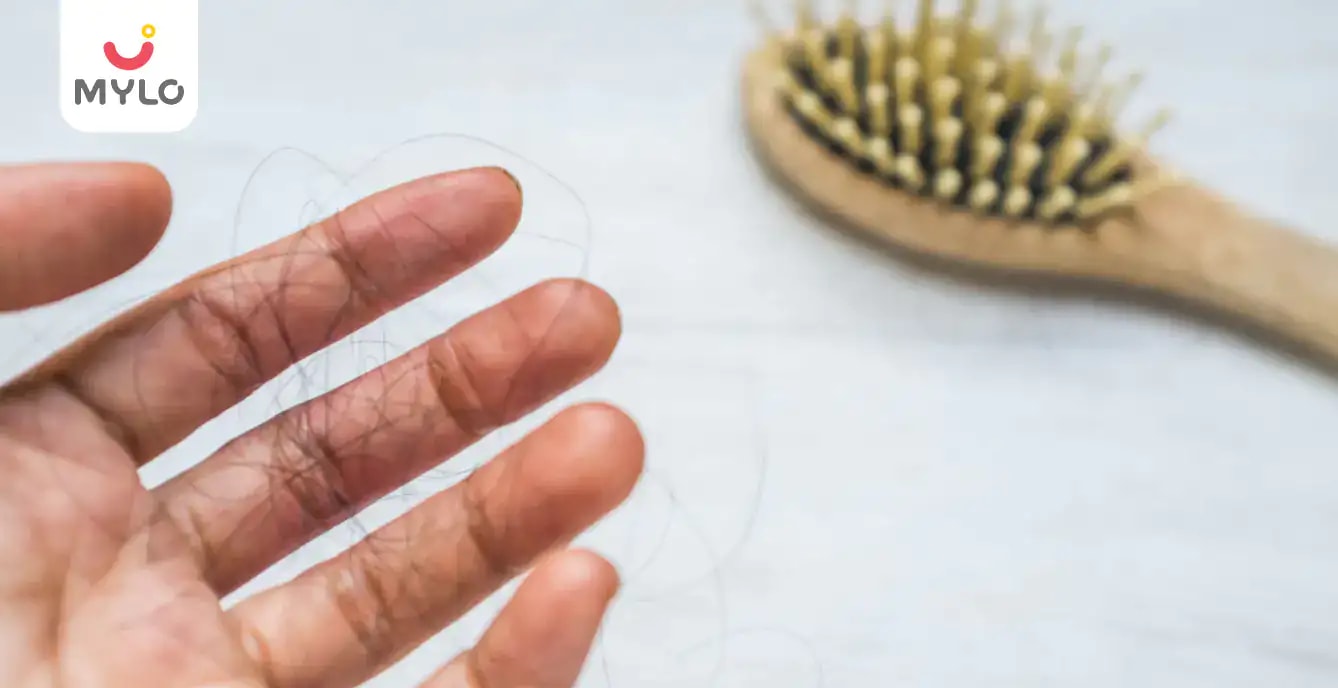
You survived pregnancy, delivery, and those blurry newborn weeks, and just when you are finding your rhythm, you start seeing hair everywhere. On your brush. On your pillow. Clogging the shower drain. Wrapped around your fingers when you shampoo. For many new mothers, this shedding hits around the three-month mark and feels genuinely frightening.
Take a deep breath. This is not your body failing you; it is your body resetting. The lush, thick hair you may have enjoyed during pregnancy was a temporary gift of high hormone levels. Now those levels are returning to normal, and your hair cycle is catching up all at once. According to the American Academy of Dermatology, this is not true hair loss but excess shedding triggered by the fall in estrogen.
This guide walks you through exactly why it happens, whether breastfeeding plays a role, and the evidence-based ways to support healthy regrowth, plus when it is worth checking in with your doctor.
While you are here, these guides pair well with this one: our How to Control Hair Fall After Delivery piece covers hands-on remedies, and Top 5 Nutrients to Include in Your Diet After Childbirth breaks down what your body needs to recover.
Question | Answer |
|---|---|
Why does it happen? | Estrogen levels drop after delivery, pushing many hairs from the growth phase into the shedding phase at once (telogen effluvium) |
When does it start? | Typically 2 to 4 months postpartum, often most noticeable around month 3 to 4 |
How long does it last? | Usually resolves within 6 to 12 months as your hair cycle normalises |
Is it normal? | Yes, it is one of the most common postpartum experiences and is temporary |
Is it permanent? | No. Hair regrows, though a few women notice slightly less fullness than before |
When to see a doctor? | If shedding continues beyond 6 to 12 months, comes in patches, or pairs with fatigue, weight change, or other symptoms |
Why Does Your Hair Fall Out 3 Months After Delivery?
To understand postpartum shedding, it helps to know that hair grows in cycles, not all at once. According to Cleveland Clinic, each hair moves through three phases:
Anagen (growth phase): Hair actively grows for two to six years. At any given time, roughly 85% to 90% of your hair is in this phase.
Catagen (transition phase): A short stage in which the follicle shrinks.
Telogen (resting phase): The hair rests for about three months, then the follicle lets it go and it falls out.
During pregnancy, high estrogen changes this balance. Rising estrogen in the later months slows normal shedding, which is why your hair may have looked lush and thick. More hairs than usual stay locked in the growth phase instead of cycling out.
Then you deliver, and estrogen falls fast. As estrogen returns to its pre-pregnancy range, a large number of hairs move into the resting phase at the same time. Research describes this as follicles with a prolonged growth phase rapidly switching to the resting phase after birth, which leads to heavy shedding a few months later.
That is the key insight: you are not losing more hair over your lifetime, you are losing it all at once instead of gradually. The hairs that "should have" shed during those nine months were held back, and now they release together, which makes the volume look dramatic.
Why does it start after a few months, not immediately?
This trips up a lot of mothers: why the delay? The answer is simply the length of the resting phase. When hair enters telogen, it does not fall out that day; it rests for around three months first. Childbirth is a well-known trigger of telogen effluvium, and shedding usually becomes visible two to three months after the trigger. So the shed you notice at month three is the hair that shifted into resting right around delivery. It typically peaks around the fourth month and tapers off by the baby's first birthday.
Is Postpartum Hair Loss Normal?
Yes, overwhelmingly so. This is one of the most universal postpartum experiences, and it is not a warning sign of illness or poor health. Although it can look dramatic, postpartum shedding does not mean permanent baldness or unhealthy hair; it is your body resetting after pregnancy.
The shedding is usually diffuse, meaning it thins across the whole scalp rather than in bald spots. Some women notice the thinning more around the hairline and temples. The reassuring part is that no treatment is needed, and most women find their hair back to its usual fullness by their child's first birthday, often sooner.
How Long Will the Shedding Last?
For most women, active shedding settles within 3 to 6 months of starting, and hair returns to its pre-pregnancy fullness between 6 and 12 months after birth. Short new "baby hairs" around your hairline from about month six are an early sign that regrowth has begun. For the full month-by-month picture, read our guide on how long postpartum hair loss lasts.
Does Breastfeeding Cause Hair Loss?
This is one of the most-searched postpartum questions, and the answer is nuanced. Breastfeeding is not the direct cause of hair loss; the estrogen drop after delivery is. Some experts believe the hormonal environment that supports milk production may slightly delay the return to a normal hair-growth cycle, but the evidence here is limited.
There is also a nutritional angle worth knowing. Breastfeeding raises your daily need for nutrients, and low iron and protein intake are recognised triggers of telogen effluvium. A review in the Journal of the American Academy of Dermatology specifically names women who have just given birth as a group at higher risk of iron deficiency related hair shedding. In other words, if your own intake is low, your hair (a non-essential tissue, biologically speaking) is among the first things to feel it.
The takeaway: keep breastfeeding with confidence but pay real attention to your own nutrition during this window.
If you are breastfeeding, our Diet Chart for Breastfeeding Mothers will help you nourish yourself through this phase.
Factors That Can Worsen Postpartum Hair Fall
While the hormonal shed itself is unavoidable, several factors can add extra breakage or prolong thinning on top of the normal process:
Nutritional gaps, particularly low iron and protein, which are common after blood loss during delivery and during breastfeeding
Physical and emotional stress: major physical stress, including childbirth, is a recognised trigger
Thyroid problems: an underactive thyroid (hypothyroidism) is a known cause of hair shedding
Harsh hair practices: tight ponytails, aggressive brushing, and high-heat styling add mechanical breakage
Genetics: in some women, postpartum shedding reveals underlying female pattern hair loss (androgenetic alopecia)
Knowing these helps you separate the shed you cannot control from the damage you can reduce.
Tips to Reduce Postpartum Hair Loss Naturally
Let us be honest and medically accurate: you cannot stop the hormonal shed. No shampoo, oil, or supplement reverses telogen effluvium. But you absolutely can minimise added breakage and support stronger regrowth. Here is what trusted sources recommend:
Use gentle, volumising products. Dermatologists suggest a volumising shampoo, skipping heavy "conditioning shampoos", and using a light conditioner made for fine hair, mainly on the ends. Gentle, sulfate-free formulas can also reduce dryness and breakage.
Massage your scalp with natural oils. A gentle scalp massage with coconut or argan oil can feel soothing and help keep the scalp and hair moisturised. It will not stop the shed, but it reduces dryness and friction.
Handle hair with care. Be gentle when washing and combing, use lower heat settings on dryers and styling irons, and avoid tight ponytails and braids that pull on the roots.
Consider a shorter style. Some haircuts make hair look fuller and are easier to manage with a newborn.
Eat a hair-supportive diet. Foods rich in iron and protein, plus fresh fruit and vegetables, give your follicles the building blocks they need.
If you smoke, stop. Smoking is linked to poorer hair and scalp health, and quitting also benefits you and your baby.
Be patient. Regrowth is coming; the single most effective "treatment" is time plus good nutrition.
.webp)

For more home remedies, see our guide on How to Control Hair Fall After Delivery.
Nutrients and Foods That Support Healthy Hair
Because your body prioritises your baby's needs, especially while breastfeeding, replenishing your own nutrient stores is one of the most meaningful things you can do for hair recovery. Here are the key nutrients and where to find them:
Nutrient | Why it matters for hair | Everyday food sources |
|---|---|---|
Iron | Low iron is a common cause of ongoing hair shedding, especially after blood loss at delivery | Spinach, lentils, rajma, dates, jaggery, lean meat, eggs |
Protein | Hair is made of keratin, a protein; low intake weakens strands | Dal, paneer, eggs, chicken, fish, Greek yogurt, soya |
Biotin (B7) | Supports keratin structure; deficiency is rare, so get it from food rather than high-dose pills | Eggs, nuts, seeds, sweet potato, whole grains |
Vitamin D | Linked to the follicle growth cycle | Sunlight, fortified milk, eggs, fatty fish |
Zinc | Supports follicle repair and tissue growth | Chickpeas, pumpkin seeds, cashews, dairy |
Vitamin C | Boosts iron absorption and supports collagen | Amla, oranges, guava, lemon, bell peppers |
Omega-3s | Nourish the scalp and support hair density | Walnuts, flaxseed, chia, fatty fish |
For deeper guidance, explore our articles on Top 5 Nutrients to Include in Your Diet After Childbirth and 10 Super-Foods for New Moms.
Supporting Your Postpartum Recovery Through Nutrition
Here is the honest framing: hair recovery is really whole-body recovery. When you nourish yourself well after delivery, you are supporting your energy, your milk supply, your mood, and the raw materials your hair follicles need to cycle back to normal.
The challenge is that new motherhood makes consistent, balanced eating genuinely hard. Between round-the-clock feeds and broken sleep, many mothers simply cannot cover every nutrient gap through food alone, which is exactly when everyday deficiencies in iron, protein, or key vitamins tend to appear.
This is where Mylo's upcoming postpartum wellness and nutrition range is designed to help, not as a hair-loss cure, but as convenient nutritional support for the demanding postpartum months. Thoughtfully formulated with new and breastfeeding mothers in mind, these products aim to help you meet your daily nutritional needs when a busy schedule gets in the way of balanced meals. Think of them as a supportive layer alongside a good diet, helping your body get the nutrients it is working hard to provide for both you and your baby.
Important: No supplement can prevent or stop postpartum hair loss, because the shed is hormonal and resolves on its own. What good nutrition can do is support your overall recovery and give your hair the building blocks it needs to grow back healthy once the cycle normalises.
Discover more in our Postpartum Diet Plan: Your Postpartum Nutrition Guide.
When to Consult a Doctor
Postpartum shedding is normal, but a few signs warrant a medical check-up. See your doctor if:
Shedding continues beyond 6 to 12 months. Ongoing hair loss past six months can point to another condition, such as iron deficiency or thyroid disease. If your hair has not regained its normal fullness by one year, see a dermatologist.
You notice distinct bald patches rather than diffuse, all-over thinning.
Hair loss comes with other symptoms like extreme fatigue, unexplained weight change, or feeling low. Postpartum shedding that lasts more than 12 months may be linked to female pattern hair loss, iron deficiency, or an underactive thyroid.
Your doctor may run simple blood tests, such as ferritin (iron stores) and thyroid function, to find the root cause. These are quick, reassuring steps, and if something like low iron or a thyroid issue is found, it is very treatable.
Frequently Asked Questions
Why is my hair falling out exactly 3 months after delivery?
Because the hair that shifted into its resting phase around the time of delivery takes about three months to actually shed. The estrogen drop after birth triggers the change, but the visible fall shows up 2 to 4 months later, often peaking around month 3 to 4.
Is postpartum hair loss normal?
Yes, it is extremely common and completely normal. Dermatologists describe it as excess shedding caused by falling estrogen rather than true hair loss, and it is temporary.
Is postpartum hair loss permanent?
No. Hair loss after childbirth is not permanent; new hair grows back as the old hair falls out, though a few women notice slightly less fullness than before pregnancy.
Does breastfeeding increase hair fall?
Breastfeeding does not directly cause hair loss. However, the extra nutrient demands of breastfeeding may add to shedding if your diet is low in iron and protein.
Which vitamin deficiency causes postpartum hair loss?
The main hormonal shed is not caused by a deficiency, but ongoing or worsened hair loss is often linked to low iron, and sometimes low vitamin D, zinc, or thyroid problems. A blood test can confirm.
Can I stop postpartum hair loss?
You cannot stop the hormonal shed itself, but you can reduce added breakage with gentle hair care and good nutrition, which also supports healthier regrowth.
Do postpartum vitamins help with hair loss?
They do not prevent the shed, but they help close nutritional gaps (like iron and protein) that can otherwise worsen or prolong thinning, supporting overall recovery and healthy regrowth.
Is it normal to lose hair in clumps after delivery?
Seeing more hair than usual on your brush, pillow, and shower floor is normal. However, distinct bald patches (versus all-over thinning) are worth showing to a doctor.
Will my hairline grow back?
In most cases, yes. Thinning around the hairline and temples is common and typically fills back in as your hair cycle normalises over the following months.
When should I worry about postpartum hair loss?
If shedding lasts beyond 6 to 12 months, appears in patches, or comes with fatigue, weight changes, or low mood, see your doctor to rule out iron deficiency or thyroid problems.
Does postpartum hair loss affect my baby?
Not your baby's health, but a shed hair can rarely wrap tightly around a baby's finger or toe (a "hair tourniquet"). These cases are most common in the first few months of life, when maternal shedding peaks. Check your baby's fingers and toes if they cry without an obvious reason, and gently remove any hair you spot.
References
Hair Fall Control Kit for Moms
Stronger, healthier hair after pregnancy
.webp&w=1900&q=75)



Article Posted Under
Related Articles

Medical Disclaimer
This content is for informational purposes only and should not replace professional medical advice. Consult with a physician or other health care professional if you have any concerns or questions about your health. If you rely on the information provided here, you do so solely at your own risk.


AWARDS AND RECOGNITION

Mylo wins Forbes D2C Disruptor award

Mylo wins The Economic Times Promising Brands 2022
AS SEEN IN













- Mylo Care: Effective and science-backed personal care and wellness solutions for a joyful you.
- Mylo Baby: Science-backed, gentle and effective personal care & hygiene range for your little one.
- Mylo Community: Trusted and empathetic community of 10mn+ parents and experts.


Product Categories
Baby Carrier | Baby Soap | Baby Wipes | Stretch Marks Cream | Baby Cream | Baby Shampoo | Baby Massage Oil | Baby Hair Oil | Stretch Marks Oil | Baby Body Wash | Baby Powder | Baby Lotion | Diaper Rash Cream | Newborn Diapers | Teether | Baby Kajal | Baby Diapers Pants | Cloth Diapers | Laundry Detergent | Lactation Granules |