


Orders
.png&w=48&q=75 "login")
Profile


Wallet

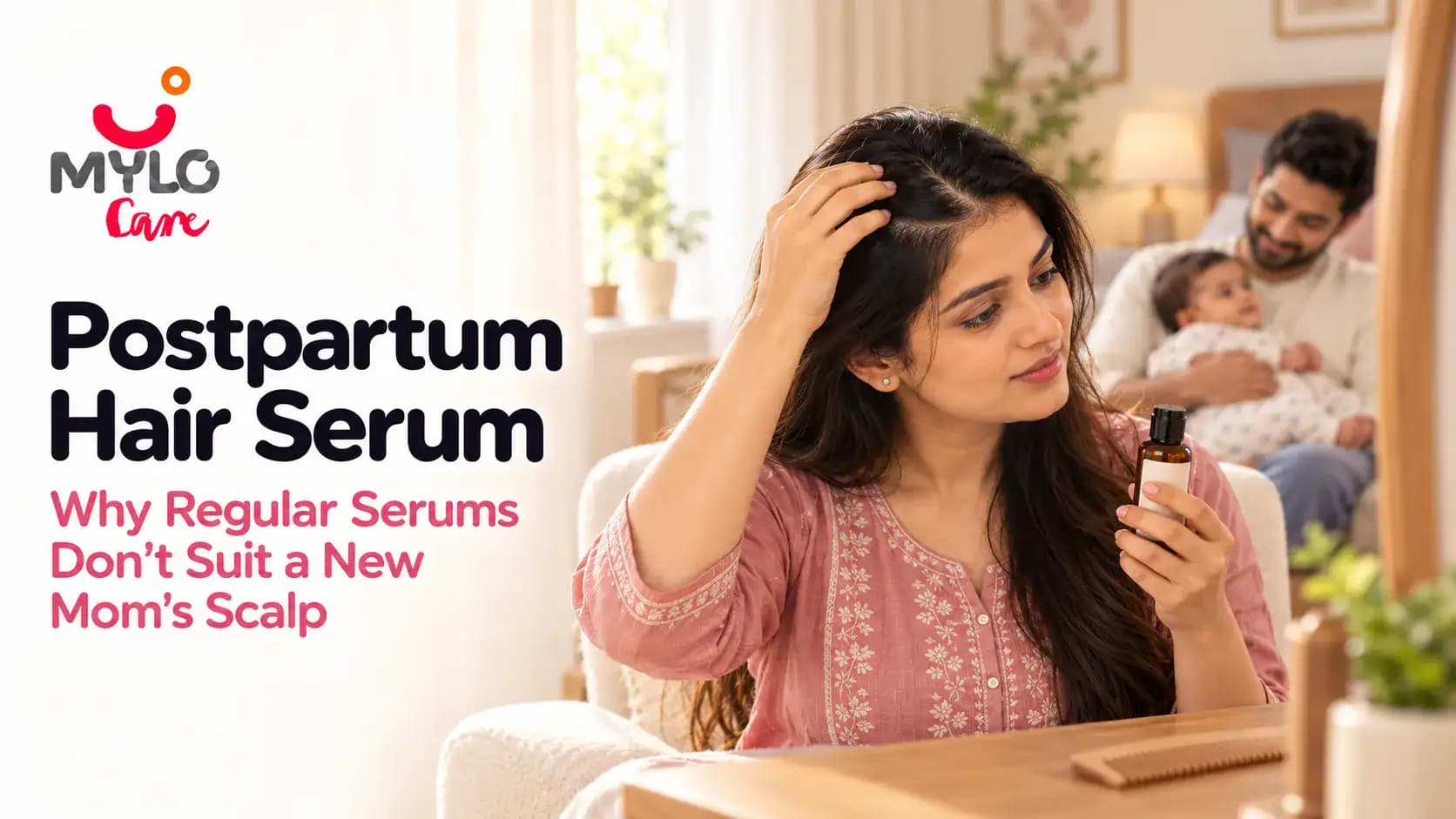
Postpartum Hair Serum: Why Regular Serums Don't Suit a New Mom's Scalp
 12 min
Quick Answer
Postpartum hair loss is mostly caused by the hormone changes after childbirth, not by poor hair care. Regular hair serums are usually made for frizz, shine, or heat protection, so they aren't designed for a scalp that is recovering after pregnancy. A good postpartum hair serum should be lightweight, gentle on the scalp, applied at the roots, clearly labelled, and suitable for breastfeeding. It should also be free of medicated actives like minoxidil unless your doctor has advised them. A serum can support your scalp and reduce breakage, but it complements, rather than replaces, nutrition, rest, and time.
Introduction
If you reached for the hair serum you loved before pregnancy and felt disappointed when the shedding didn't stop, you are far from alone. Many new mothers assume a trusted styling product will quietly fix postpartum shedding. It rarely does, and that isn't a reflection of the product's quality or of anything you did wrong.
Postpartum hair loss is a distinct phase driven mainly by hormonal shifts after delivery. Because your scalp and hair are behaving differently during this window, it is a sensible moment to ask whether your current product actually matches your needs. That is where a postpartum hair serum fits in.
Regular Hair Serum vs Postpartum Hair Serum
Regular Hair Serum | Postpartum Hair Serum |
|---|---|
Made for frizz, shine, or styling | Made with postpartum scalp care in mind |
Applied to the lengths and ends | Applied to the scalp and roots |
Often silicone-based to coat the hair | Usually lightweight, so it doesn't weigh hair down |
May not consider breastfeeding | Formulated for postpartum and breastfeeding use |
Cosmetic smoothing benefit | Supports scalp comfort and reduces breakage |
A regular serum isn't "bad." It is simply built for a different job.
Why Is Postpartum Hair Loss Different?
During pregnancy, higher hormone levels keep more of your hair in its growth phase for longer, which is why many women notice thicker hair while expecting. After childbirth, estrogen falls sharply, and a large number of hairs move into the shedding phase at the same time. The American Academy of Dermatology explains that this excess shedding usually starts a few months after birth, is temporary, and that most women regain normal fullness by their child's first birthday. The medical name is telogen effluvium.
The important point: no hair serum can "switch off" a hormonal process. Cleveland Clinic notes that you can't prevent postpartum hair loss because it is hormonal. What the right hair care can do is support your scalp and reduce breakage, so the hair you keep looks and feels better while your body rebalances. For the full explanation, read our guide on why your hair falls out 3 months after delivery.
Why Can Your Scalp Feel Different After Delivery?
Many mothers notice their scalp behaving differently in the months after birth, for example:
More sensitivity or occasional itching
Dryness, or the opposite, oiliness
More shedding than usual
Changes in hair texture
These shifts are part of why a product that felt perfect before pregnancy can suddenly feel heavy, sticky, or irritating. If itching, redness, or flaking is persistent, though, it may be a scalp condition worth showing to a doctor.
Are Regular Hair Serums Made for Postpartum Hair Loss?
Usually not, and that is by design. Most everyday serums are made to deliver:
Frizz control
Shine
Split-end smoothing
Heat protection
These are useful goals, and a good styling serum does them well. But a serum built to coat and smooth the lengths of your hair isn't necessarily built to sit comfortably on a sensitive scalp or to be applied at the roots every day. So the issue isn't that standard serums are unsafe; it is that their purpose doesn't overlap much with postpartum scalp care.
What Should a Postpartum Hair Serum Focus On?
A good postpartum serum tends to prioritise:
Gentle scalp care, since your scalp may be more sensitive
A lightweight, leave-on texture that won't weigh hair down
Root-focused application, where postpartum shedding is most noticeable
Breastfeeding-friendly ingredients, with no medicated actives unless your doctor advises them
A clear ingredient list, so you know exactly what you are using
Easy use that fits into a busy new-mother routine
Which Ingredients Deserve Extra Attention?
Medicated hair growth actives like minoxidil
Minoxidil is the most common active in hair regrowth serums. The official product information for a widely sold minoxidil foam says it should not be used while breastfeeding, and the NIH's LactMed database advises avoiding it while breastfeeding a newborn or premature baby. Many "hair growth" serums contain it, so always check the label and speak to your doctor first. For the full list, read our guide on hair products to avoid while breastfeeding.
Supportive cosmetic ingredients
Ingredients like plant-derived actives, peptides, panthenol, and moisturising agents can support healthier-looking hair and a more comfortable scalp. It is worth being clear-eyed, though: outside of specific evidence, these shouldn't be assumed to regrow hair on their own. Think "healthier-looking and better-supported," not "regrowth guaranteed."
Biotin is often added to hair products too, but a review in Dermatology and Therapy found little evidence that biotin helps hair loss unless you are actually deficient.
Fragrance and preservatives
If your scalp has become more reactive, you may prefer formulas with fewer potential irritants, such as lower-fragrance options. Patch test any new leave-on product first.
What to Look For in a Postpartum Hair Serum
A practical checklist:
Stated as suitable for postpartum and breastfeeding use
No minoxidil or other medicated actives (unless your doctor advised them)
Lightweight, non-sticky, leave-on texture
Made for the scalp and roots, not just the lengths
Full, transparent ingredient list
Suitable for sensitive scalps
Realistic claims, with no "miracle" or "guaranteed regrowth" promises
One caution: "free-from" labels like silicone-free or paraben-free reflect preferences, not quality. A free-from serum still needs to be well made and suited to your scalp, so use these labels as filters, not proof that a product works.
Can One Serum Solve Postpartum Hair Fall?
No single product can, because recovery depends on many things working together:
The hormonal reset itself
Nutrition, especially protein and iron
Sleep and stress
Your overall postpartum recovery
Low iron and low protein can make shedding worse, so read our guide on which vitamin deficiency causes postpartum hair loss if you suspect a gap. A serum is best seen as one supportive part of a wider routine.
How Mylo Approaches Postpartum Hair Care
Bringing these principles together, Mylo's Hair Growth Serum is part of the Anti HairFall Kit for Post Pregnancy. It is a lightweight, water-based leave-on serum for the scalp, built around HairVivine Pro, a plant-derived active from Styrian pumpkin seeds, and it does not contain minoxidil. The kit is formulated for postpartum and breastfeeding use. To learn what HairVivine Pro is and what the studies on it show, read our guide to HairVivine Pro.
.webp)

To be clear: a serum won't stop hormonal shedding, regrow all lost hair, or cure telogen effluvium. What it can do is support your scalp and hair while your body rebalances, alongside good nutrition and time. Mylo describes results as visible with consistent use over about 90 days.
If you are comparing Mylo's options, our guide on onion hair oil vs serum for postpartum hair fall explains how the onion range differs.
How Can Mothers Support Healthier Postpartum Hair?
Small, consistent habits add up:
Eat enough protein at each meal
Keep taking your postnatal vitamins as advised
Stay hydrated
Avoid tight hairstyles that pull at the roots
Reduce heat styling
Use a gentle, sulphate-free shampoo
Follow a consistent scalp care routine
Manage stress where you realistically can
For a month-by-month picture of recovery, see our guide on how long postpartum hair loss lasts.
When Should I See a Doctor?
Book an evaluation if you notice:
Hair loss lasting beyond 12 months
Bald patches
Scalp redness or pain
Severe itching or flaking
Signs of iron deficiency, like fatigue, pale skin, or breathlessness
Signs of thyroid problems
Hair loss that is rapidly getting worse
These can point to causes beyond typical postpartum shedding and are worth checking.
Key Takeaway
Postpartum hair loss is a normal biological process, not a sign that your hair care has failed. A regular styling serum isn't designed for a recovering scalp. If you want a serum during this phase, choose a gentle, lightweight, breastfeeding-friendly one for the roots, keep medicated actives for a conversation with your doctor, and pair it with good nutrition and patience.
Frequently Asked Questions
What is the best serum for postpartum hair loss?
There is no single best serum, because postpartum shedding is hormonal and no serum can stop it. Look for a lightweight scalp serum that is stated as suitable for breastfeeding, has a clear ingredient list, and does not contain minoxidil unless your doctor has advised it.
Can I use my regular hair serum after pregnancy?
Yes, for styling. Regular serums target frizz and shine on the lengths of your hair, so they won't address your scalp. You can keep using yours on the ends and add a scalp-focused serum if you want one.
Is a postpartum hair serum different from a normal serum?
Yes. A postpartum serum is designed for gentle scalp care, root application, and breastfeeding-friendly ingredients, while a normal serum focuses on smoothing the lengths of your hair.
Can a hair serum stop postpartum hair fall?
No. Postpartum shedding is hormone-driven and temporary. A serum can support scalp health and reduce breakage, but it can't switch off the hormonal shedding.
Is hair serum safe while breastfeeding?
Most cosmetic serums are fine, and some are specifically made for breastfeeding use. If a serum contains medicated actives like minoxidil, speak to your doctor before using it.
Which ingredients are good for postpartum hair care?
Gentle, lightweight ingredients like plant-derived actives, peptides, panthenol, and moisturisers are popular. Medicated actives like minoxidil should only be used after speaking with your doctor.
How often should I apply a postpartum hair serum?
Follow the product's directions. Mylo's Hair Growth Serum, for example, is applied as a few drops on a clean scalp once a day, preferably at night. Consistency matters more than quantity.
How long does postpartum hair loss last?
It typically starts 2 to 4 months after delivery, peaks around month 4, and improves within 6 to 12 months. If it lasts beyond a year, see a doctor.
Are silicone-free and paraben-free serums better?
Not automatically. These labels reflect preferences, not quality. A well-made serum suited to your scalp matters more than "free-from" claims alone.
Is it normal for my hair texture to change after birth?
Yes. Temporary texture changes are common during postpartum recovery and usually settle as your hormones rebalance.
When should I see a dermatologist?
See one if you have bald patches, scalp pain or redness, severe itching, rapidly worsening shedding, or hair loss continuing past 12 months.
References
Hair Fall Control Kit for Moms
Stronger, healthier hair after pregnancy
.webp&w=1900&q=75)




Article Posted Under
Related Articles



Medical Disclaimer
This content is for informational purposes only and should not replace professional medical advice. Consult with a physician or other health care professional if you have any concerns or questions about your health. If you rely on the information provided here, you do so solely at your own risk.


AWARDS AND RECOGNITION

Mylo wins Forbes D2C Disruptor award

Mylo wins The Economic Times Promising Brands 2022
AS SEEN IN












- Mylo Care: Effective and science-backed personal care and wellness solutions for a joyful you.
- Mylo Baby: Science-backed, gentle and effective personal care & hygiene range for your little one.
- Mylo Community: Trusted and empathetic community of 10mn+ parents and experts.


Product Categories
Baby Carrier | Baby Soap | Baby Wipes | Stretch Marks Cream | Baby Cream | Baby Shampoo | Baby Massage Oil | Baby Hair Oil | Stretch Marks Oil | Baby Body Wash | Baby Powder | Baby Lotion | Diaper Rash Cream | Newborn Diapers | Teether | Baby Kajal | Baby Diapers Pants | Cloth Diapers | Laundry Detergent | Lactation Granules |