


Orders
.png&w=48&q=75 "login")
Profile


Wallet

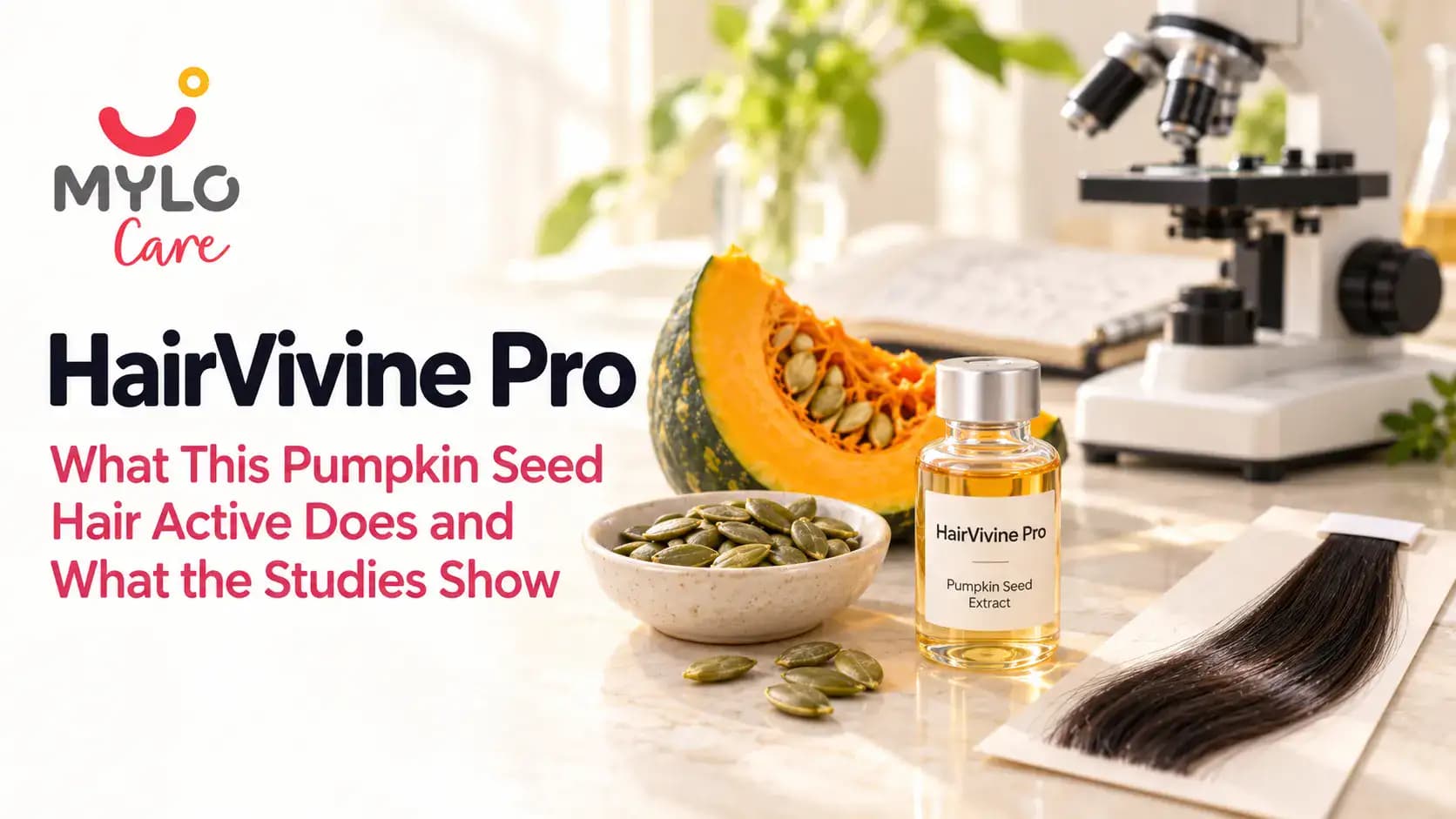
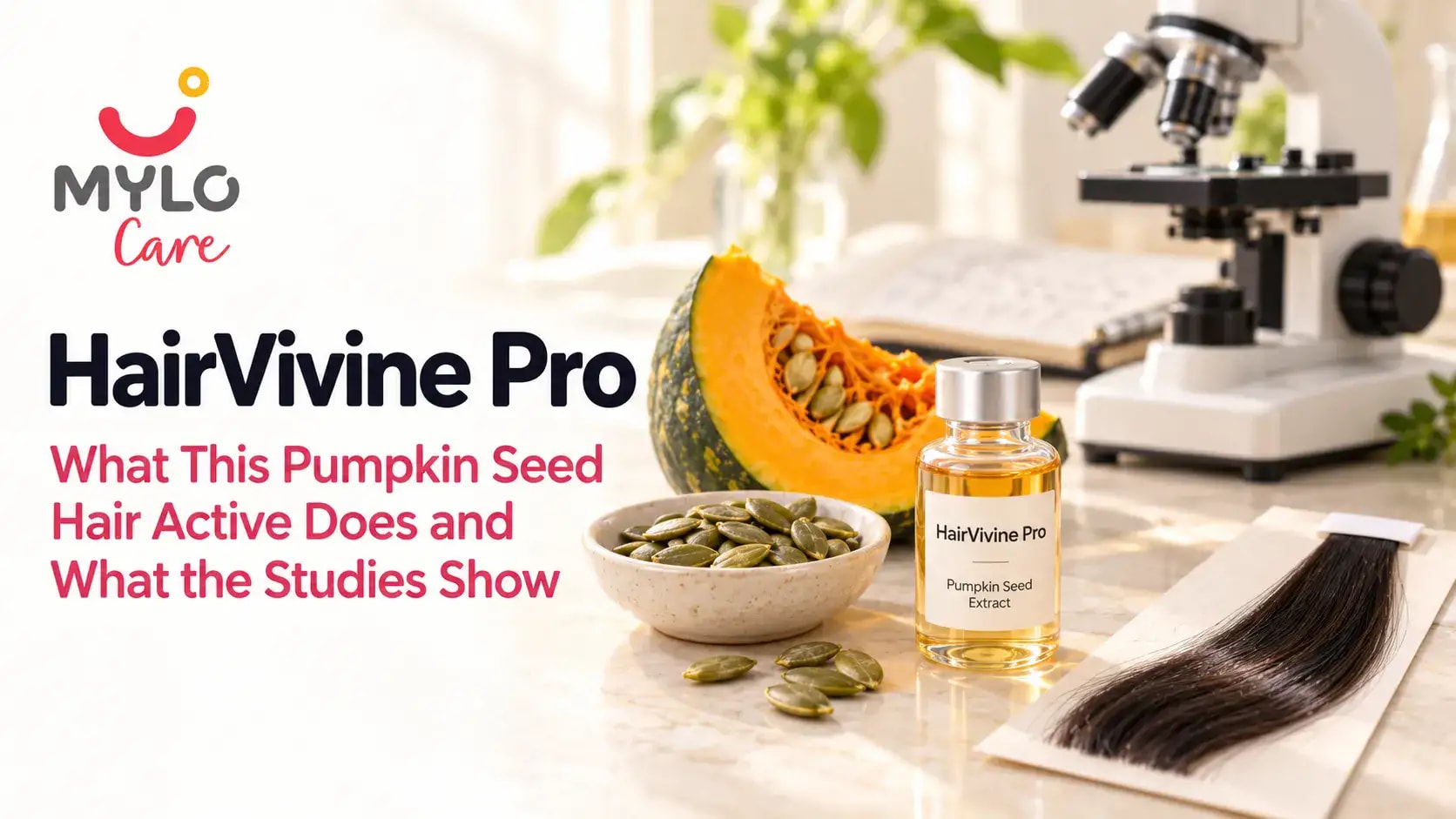
HairVivine Pro: What This Pumpkin Seed Hair Active Does and What the Studies Show
 15 min
Quick Answer
HairVivine® Pro is a branded cosmetic hair ingredient developed by the Swiss ingredient company RAHN from pumpkin seed (Cucurbita pepo) extract. According to RAHN, it is designed to support follicle activity, the hair growth cycle, and hair density. Supplier studies have reported improvements in density and reductions in shedding over several months, in both shampoos and leave-on products. It is non-hormonal and is not a medicine like minoxidil. Importantly, these studies were not done on postpartum women, so HairVivine Pro is best understood as supportive hair care during recovery, not a cure for postpartum hair loss.
Introduction
"My hair feels thinner after delivery. Can one ingredient really help restore density?"
If that thought has crossed your mind, it is a fair question. Postpartum shedding is largely driven by the hormone changes after childbirth, and no cosmetic ingredient can switch that process off. What a well-made product can do is care for your scalp, support the follicles you have, and support the look of fuller hair while your body recovers.
That is where HairVivine Pro sits. It is a standardised pumpkin seed active that has become a talking point in hair density care, and it is the key active in Mylo's Anti HairFall Kit for Post Pregnancy. Here is what it actually is, and what the evidence does and doesn't show.
HairVivine Pro at a Glance
Feature | Details |
|---|---|
Ingredient type | Branded cosmetic hair active |
Developed by | RAHN (Switzerland) |
Source | Pumpkin seed extract (Cucurbita pepo) |
Ingredient composition (INCI) | Cucurbita pepo seed extract, citric acid, propanediol, water |
Supplier-recommended use level | 1 to 5% of a formula |
Formats | Leave-on (serums) and rinse-off (shampoos) |
Hormonal? | No; it is a non-hormonal cosmetic active |
Main purpose | Hair density, shedding, and hair growth cycle support |
The composition is listed in RAHN's technical datasheet. One quick note: this is not the same as the pumpkin seed oil you might buy for cooking. More on that below.
What Exactly Is HairVivine Pro?
HairVivine Pro is a standardised cosmetic active made from pumpkin seed extract. Standardised means it is produced to a consistent, defined composition every time, so a product maker knows exactly what they are working with.
It comes as a water-based ingredient that is blended into finished products like shampoos and serums. That matters: its test results relate to finished cosmetic formulas containing the active, not to the raw extract on its own.
It should not be confused with:
Plain pumpkin seed oil
Homemade pumpkin seed hair remedies
Pumpkin seed supplements taken by mouth
These are different things with different uses and different evidence.
How Is HairVivine Pro Different From Pumpkin Seed Oil?
HairVivine Pro | Ordinary Pumpkin Seed Oil |
|---|---|
Standardised branded active | General natural oil |
Defined composition | Composition can vary |
Tested in specific cosmetic formulas | Usually used as a conditioning oil |
Supplier study data | Evidence depends on the product |
Used at measured levels | May not contain an equivalent amount of active |
None of this makes pumpkin seed oil "bad." It can be a lovely conditioning oil. It simply serves a different purpose. Interestingly, pumpkin seed has some independent research behind it too: a small randomised, placebo-controlled trial found that men with pattern hair loss who took pumpkin seed oil capsules for 24 weeks had more hair than those on placebo. That study used oral capsules in men, though, so it doesn't tell us how a topical product works for postpartum women.
How Is HairVivine Pro Thought to Support Hair Density?
Here is the proposed science, in plain language. These mechanisms come from RAHN's own research.
1. Supporting cellular energy. Active hair follicles need a lot of energy to make new hair. That energy comes from mitochondria, the tiny "power plants" inside cells. RAHN's research proposes that HairVivine Pro supports mitochondrial activity in follicle cells. This is about supporting active follicles, not "recharging dead follicles," which no cosmetic can do.
2. Supporting autophagy. Autophagy is the cell's internal clean-up and recycling process. When it works well, cells tend to function more effectively. HairVivine Pro has been studied for its effect on autophagy, but this is one part of a proposed mechanism, not proof of regrowth.
3. Supporting the hair growth cycle. Every hair moves through growth (anagen), transition (catagen), rest (telogen), and shedding (exogen). Density depends on how many hairs are actively growing and whether they are fine, wispy hairs or thicker ones. RAHN's studies reported changes consistent with a healthier balance across this cycle.
What "better density" can look like:
More hairs per square centimetre
More hairs in the active growth phase
Fewer fine, wispy hairs
Better scalp coverage
A less visible parting
Less shedding over time
One honest clarification: better density does not mean creating new follicles. It means making better use of the follicles you already have.
What Do the HairVivine Pro Studies Show?
Here are the numbers, transparently. These are results reported by the ingredient supplier, RAHN, for its own test formulas.
Format | Supplier-Reported Result | Duration |
|---|---|---|
Leave-on formula | Up to 14.5% improvement in hair density | Up to 6 months |
Leave-on formula | Up to 32% reduction in hair loss | Up to 6 months |
Shampoo with 1% active | 9.7% density improvement | 90 days |
Shampoo with 1% active | 15.7% density improvement | 180 days |
Shampoo with 1% active | Up to 4.9% reduction in shedding | 180 days |
Shampoo with 1% active | Hair growth rate increase of up to 0.06 mm per day | 180 days |
RAHN's shampoo study involved 54 men and women with hair loss who used a shampoo containing 1% HairVivine Pro every second day for six months, compared with a placebo shampoo. A summary of this research, by RAHN scientists, was published in SOFW Journal in 2026.
A few things worth stating plainly:
These are studies run by the company that makes the ingredient, not independent research.
The results apply to the specific formulas and conditions tested.
The participants were not postpartum women.
Results for any finished product, including Mylo's, should not be assumed to match these numbers.
Individual results vary.
Can a Shampoo Really Deliver an Active Ingredient?
It is a fair question: if you rinse it off, does anything stay behind? RAHN's explanation is that:
The active can settle onto the scalp during washing
Hair follicles may act as small reservoirs that hold some of it
Massaging and leaving the shampoo on for a short time may help
The key caveat: the clinical result belongs to the specific tested shampoo with 1% HairVivine Pro. It doesn't apply to every shampoo that happens to contain pumpkin extract.
Why Use HairVivine Pro in a Leave-On Serum?
Leave-on serums are popular for scalp actives because they offer:
Longer contact time with the scalp
Targeted application at the roots
No rinsing away, so less dilution
An easy daily habit
That said, longer contact doesn't automatically guarantee better results. Consistency and the overall formula matter just as much. To learn what to look for in a serum after delivery, read our guide to postpartum hair serums.
HairVivine Pro vs Minoxidil
HairVivine Pro | Minoxidil | |
|---|---|---|
What it is | Cosmetic plant-based active | Medicine |
Hormonal action | Non-hormonal | Non-hormonal, but a drug that affects blood vessels |
How it is used | In shampoos and serums | Foam, solution, or prescription tablets |
Breastfeeding | Found in products made for breastfeeding use; check the finished product | Official product information says not to use while breastfeeding without medical advice |
Evidence | Supplier studies | Extensive clinical evidence for pattern hair loss |
This is why many breastfeeding mothers look for minoxidil-free options. For a full guide, read hair products to avoid while breastfeeding.
Does HairVivine Pro Treat Postpartum Hair Loss?
This deserves a careful answer.
Postpartum hair loss is usually telogen effluvium, a temporary shift where many hairs enter the shedding phase together after the hormone changes of childbirth. For the full picture, see our guide on how long postpartum hair loss lasts.
The supplier data support HairVivine Pro as a cosmetic hair density and follicle support active, but they do not prove that it cures or reverses postpartum telogen effluvium. It is best seen as one part of a wider postpartum recovery approach that includes:
Consistent, gentle scalp care
Reducing breakage
Enough protein
Checking iron and other nutrients where needed (see our guide on which vitamin deficiency causes postpartum hair loss)
Managing stress
Seeing a doctor for prolonged or severe hair loss
How Long Does HairVivine Pro Take to Work?
Hair grows slowly, so patience genuinely matters. Based on the supplier studies:
Early changes were measured at around three months
Larger changes were reported at six months
If you want a structured way to stay consistent, our 90-day postpartum hair recovery routine offers a practical plan. Don't expect instant growth or the same result for everyone.
Why Mylo Uses HairVivine Pro
Mylo's Anti HairFall Kit for Post Pregnancy is a three-step, inside-out routine for new and breastfeeding mothers. HairVivine Pro is the key active in two of its products:
Anti Hairfall Shampoo: a sulphate-free shampoo for sensitive postpartum scalps, giving the active contact with the scalp during every wash
Hair Growth Serum: a lightweight, water-based leave-on serum applied to the scalp each night
The third step, Biotin Hair Gummies, covers the nutrition side of the routine.
.webp)

Who Should Check With a Doctor First?
Speak to a doctor before using any hair growth product if you have:
Bald patches
Severe scalp irritation
Hair loss lasting beyond 12 months after delivery
Extreme fatigue, dizziness, or breathlessness
Symptoms of a thyroid problem
A known allergy to any ingredient in the product
An ongoing skin or scalp treatment
Any concern about using a product while breastfeeding
How to Judge Any Hair Active
A handy checklist for evaluating any hair ingredient, not just this one:
Question to Ask | Why It Matters |
|---|---|
Is the ingredient standardised? | Shows the formula is consistent |
Is there a defined use level? | Shows how it is meant to be used |
Was it tested in a finished product? | Ingredient results depend on the formula |
Was there a placebo comparison? | Makes the evidence stronger |
How long was the study? | Hair density changes take months |
Who took part? | Results may not apply to everyone |
Was the study on postpartum women? | General hair loss data are not postpartum-specific |
Is it supplier or independent research? | Helps you judge how much weight to give it |
Key Takeaway
HairVivine Pro is a standardised pumpkin seed cosmetic active with supplier studies showing improvements in hair density and shedding. It is non-hormonal and minoxidil-free, which makes it appealing for breastfeeding mothers. Its role in postpartum care is supportive, not a cure for hormone-driven postpartum hair loss.
Frequently Asked Questions
What is HairVivine Pro made from?
It is a branded cosmetic active developed by RAHN from pumpkin seed extract (Cucurbita pepo), supplied as a standardised, water-based ingredient for shampoos and serums.
Is HairVivine Pro the same as pumpkin seed oil?
No. It is a standardised active with a defined composition tested in cosmetic formulas, whereas ordinary pumpkin seed oil is a general conditioning oil that varies from product to product.
Does HairVivine Pro work? What do the reviews and studies say?
RAHN's studies reported up to a 15.7% improvement in hair density after six months with a 1% shampoo, and up to a 32% reduction in hair loss with a leave-on formula. These are supplier studies, not independent research, and they were not done on postpartum women. Individual results vary.
How does HairVivine Pro support hair density?
RAHN's research proposes that it supports cellular energy (mitochondria), the cell's clean-up process (autophagy), and a healthier hair growth cycle in the follicles you already have.
Does HairVivine Pro make hair grow?
Supplier studies reported improvements in density and growth rate. It is positioned as supporting follicle activity, not as a guaranteed growth treatment, and it doesn't create new follicles.
Can HairVivine Pro reduce hair fall?
Supplier studies reported less shedding, up to 32% with a leave-on formula and up to 4.9% with a 1% shampoo over six months. Results relate to those specific formulas, and individuals vary.
How long does HairVivine Pro take to work?
Early changes were measured at around three months, with larger changes at six months. Consistent use is essential.
Is HairVivine Pro better than minoxidil?
They are different. Minoxidil is a medicine with extensive evidence for pattern hair loss, but it is not recommended while breastfeeding without medical advice. HairVivine Pro is a non-hormonal cosmetic active with supplier evidence, which makes it a gentler option for many new mothers.
Is HairVivine Pro safe while breastfeeding?
Safety should be judged on the whole finished product, not the active alone. Mylo's kit is formulated for postpartum and breastfeeding use. If you have any concerns, check with your doctor before use.
Is HairVivine Pro good for postpartum hair loss?
It can be a supportive part of a postpartum hair care routine, but the studies weren't done on postpartum women, and it isn't proven to cure or reverse postpartum telogen effluvium.
Where can I buy HairVivine Pro?
HairVivine Pro is an ingredient sold to product makers, not a standalone product. You will find it in finished shampoos and serums, such as the shampoo and serum in Mylo's Anti HairFall Kit for Post Pregnancy.
Can HairVivine Pro replace medical hair loss treatment?
No. It is a cosmetic active, not a medical treatment. For prolonged, severe, or patchy hair loss, see a doctor or dermatologist.
References
Article Posted Under
Related Articles



Medical Disclaimer
This content is for informational purposes only and should not replace professional medical advice. Consult with a physician or other health care professional if you have any concerns or questions about your health. If you rely on the information provided here, you do so solely at your own risk.


AWARDS AND RECOGNITION

Mylo wins Forbes D2C Disruptor award

Mylo wins The Economic Times Promising Brands 2022
AS SEEN IN












- Mylo Care: Effective and science-backed personal care and wellness solutions for a joyful you.
- Mylo Baby: Science-backed, gentle and effective personal care & hygiene range for your little one.
- Mylo Community: Trusted and empathetic community of 10mn+ parents and experts.


Product Categories
Baby Carrier | Baby Soap | Baby Wipes | Stretch Marks Cream | Baby Cream | Baby Shampoo | Baby Massage Oil | Baby Hair Oil | Stretch Marks Oil | Baby Body Wash | Baby Powder | Baby Lotion | Diaper Rash Cream | Newborn Diapers | Teether | Baby Kajal | Baby Diapers Pants | Cloth Diapers | Laundry Detergent | Lactation Granules |