


Orders
.png&w=48&q=75 "login")
Profile


Wallet

Festival and Seasonal Care for Toddlers: Diwali to Winter
 23 min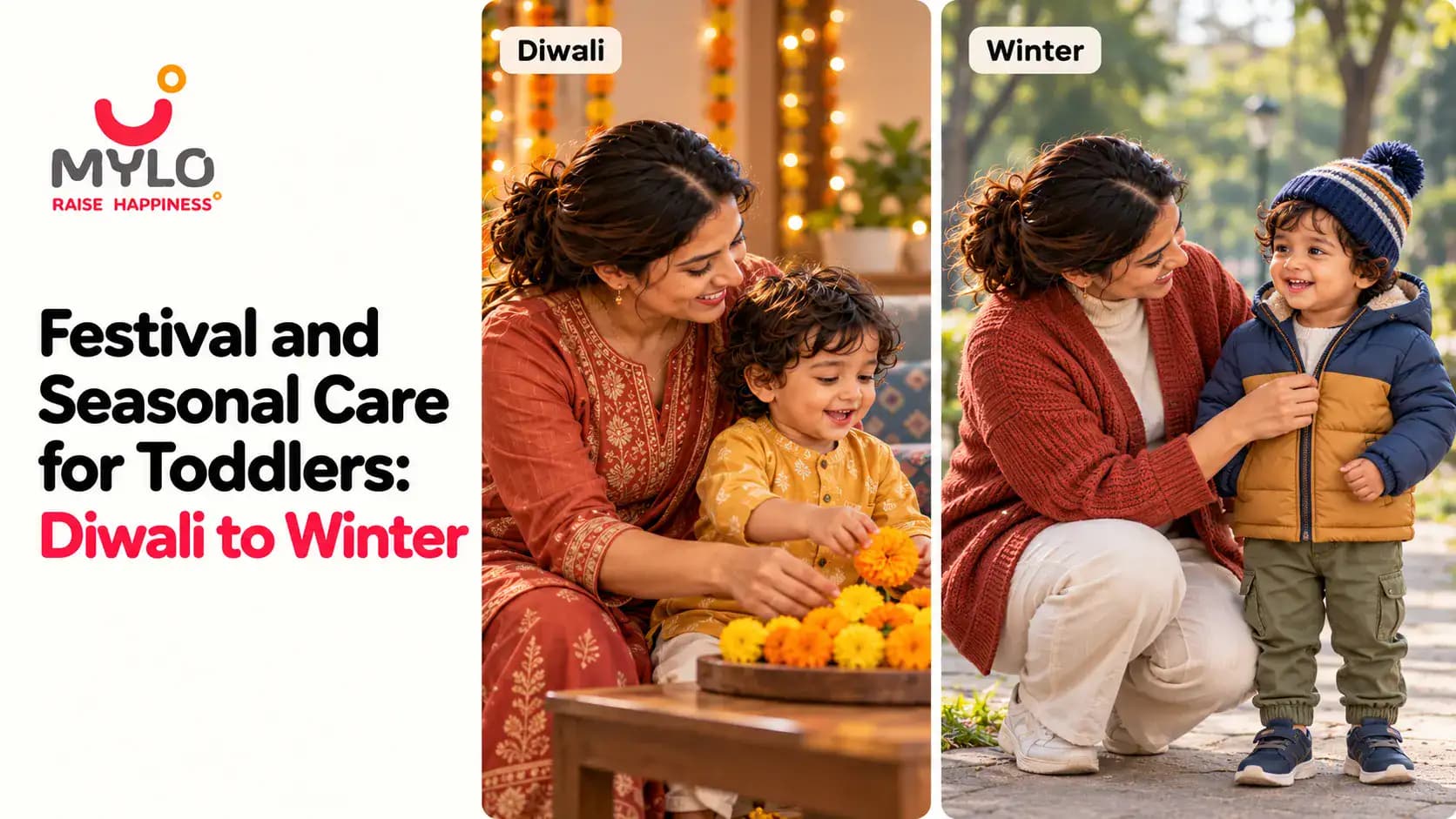
Quick Answer
Festival and seasonal care means protecting toddlers from risks that come with Indian festivals and weather, like cracker burns at Diwali, chemical colours at Holi and dehydration in summer. For example, a toddler should watch crackers from indoors, not hold sparklers. Simple precautions let your family enjoy every season safely.
At a Glance
Festival or Season | Main Risks for Toddlers | Top Tip |
|---|---|---|
Diwali | Burns, loud noise, smoke and air pollution, sweets and choking | Toddlers watch crackers from a safe distance or indoors, never hold them |
Holi | Chemical colours in eyes and skin, water balloons, bhang in sweets | Use homemade or skin-safe colours, oil skin and hair first |
Summer (March to June) | Dehydration, heat rash, heat exhaustion, food spoiling | Water often, cotton clothes, stay indoors in the hottest hours |
Monsoon (June to September) | Loose motions, typhoid, dengue, malaria, fungal rashes | Boiled water, fresh food, mosquito protection |
Winter (November to February) | Cold, cough, pneumonia, dry skin, heater accidents, smog | Layers, safe heaters with ventilation, moisturiser |
Key Facts
Sparklers can burn at temperatures above 1,000°C, hot enough to cause serious burns in seconds.
For any burn, cool the area under cool running water for 20 minutes. Do not apply ice, toothpaste or butter.
Synthetic Holi colours can contain industrial dyes and heavy metals that irritate skin and eyes.
Toddlers lose water faster than adults in heat and may not ask for water, so offer it often.
Coal angithis or sigris in a closed room can cause carbon monoxide poisoning, which can be fatal.
Diwali Safety Tips for Toddlers
Short answer: Keep toddlers away from crackers, diyas and candles, protect their ears from loud noise, keep them indoors when the air is very polluted, and watch what they eat from the sweet box.
Crackers, Diyas and Burns
Risk | What to Do |
|---|---|
Crackers | Toddlers should watch from a balcony with an adult, or from a distance of several metres. Never let them hold or light any cracker |
Sparklers (phuljhadi) | Do not give sparklers to toddlers, even "just for a photo". Used sparkler wires stay hot, so put them in a bucket of water |
Diyas and candles | Place them high, away from curtains and where toddlers can reach. Never leave them burning unattended |
Clothes | Dress toddlers in cotton, not synthetic or loose flowing clothes, around flames |
Bucket of water | Keep a bucket of water and sand nearby when crackers are being burst |
If your toddler gets a burn: hold the area under cool running water for 20 minutes, remove tight clothing or jewellery near it (unless stuck), cover loosely with a clean cloth, and see a doctor. Go to the hospital for burns on the face, hands, feet, genitals, or any burn larger than your toddler's palm. Read child first aid for burns.
Noise and Ears
Loud crackers like bombs can hurt a toddler's ears and frighten them.
Keep windows closed during peak cracker time and use child ear defenders if you are outside.
If your toddler is scared, hold them, stay calm and move to a quieter room. Read toddler fears and separation anxiety.
Smoke and Air Pollution
Air Quality (AQI) | What to Do for Toddlers |
|---|---|
Good to Satisfactory (0 to 100) | Normal outdoor play |
Moderate (101 to 200) | Shorter outdoor play, especially if your toddler has asthma or a cough |
Poor (201 to 300) | Limit outdoor play, keep windows closed during the worst hours |
Very Poor to Severe (301 and above) | Keep toddlers indoors. Use an air purifier if you have one |
Check AQI on the SAMEER app or the CPCB website. Masks are not advised for children under 2 years because of breathing and choking risks.
Sweets, Dry Fruits and Food
Risk | What to Do |
|---|---|
Whole nuts, cashews, almonds | Choking hazard under 3 to 4 years. Give only finely powdered or as a paste |
Hard sweets and candies | Choking hazard. Avoid |
Too much mithai | Offer a small piece after a meal. Too much sugar spoils appetite and teeth |
Leftover sweets with khoya | Spoil quickly. Throw away if kept out for long |
See the full list in foods to avoid for toddlers.
Diwali Cleaning and Decorations
Lock away cleaning liquids, phenyl, acid and paint. Toddlers may drink them.
Keep toddlers out of freshly painted rooms until the smell is gone.
Rangoli colours can contain chemicals. Don't let toddlers eat or rub them in their eyes.
Keep fairy lights, button batteries and small decoration items out of reach.
Holi Safety Tips for Toddlers
Short answer: Use homemade or skin-safe colours, apply coconut oil on skin and hair before playing, protect the eyes, keep toddlers away from water balloons and crowds, and make sure no sweets contain bhang.
Risk | What to Do |
|---|---|
Chemical colours | Use homemade colours or those labelled skin-safe. Avoid shiny, metallic and dark synthetic colours |
Skin | Apply coconut oil on face, arms, legs and hair before playing. Full-sleeve cotton clothes help |
Eyes | Never throw colour on a toddler's face. If colour enters the eyes, rinse gently with clean water for 10 to 15 minutes and see a doctor if redness or pain continues |
Water balloons | Can hurt eyes and ears. Keep toddlers away from balloon play |
Wet clothes | Change into dry clothes soon after playing to avoid chills |
Bhang | Bhang in thandai, pakoras or sweets is dangerous for children. Only give food you made or trust |
Crowds | Keep toddlers in a small, familiar group or at home |
Colour removal | Wash gently with a mild baby wash and lukewarm water. Never use kerosene, petrol or harsh scrubbing |
Homemade Holi Colours for Toddlers
Colour | How to Make |
|---|---|
Yellow | Besan with a pinch of haldi |
Pink or red | Dried beetroot powder or rose petals |
Green | Dried spinach or mint powder mixed with flour |
Orange | Dried marigold (genda) petals |
Even natural colours can irritate some toddlers. Test a little on the arm first, and keep everything away from the mouth and eyes.
Summer Care for Toddlers
Short answer: Offer water often, dress toddlers in loose cotton, keep them indoors during the hottest hours (about 11 am to 4 pm), give fresh home food, and know the signs of dehydration and heat exhaustion.
Hydration in Summer
Do | Avoid |
|---|---|
Offer water every 30 to 60 minutes, more when playing | Waiting for your toddler to ask |
Coconut water, buttermilk (chaas), lassi without much sugar | Cold drinks, packaged juices, energy drinks |
Water-rich fruits: watermelon, muskmelon, cucumber | Roadside ice golas and cut fruit |
Home-made nimbu pani with very little sugar and salt | Very cold water straight from the fridge after heat exposure |
Signs of dehydration: fewer wet diapers (or no urine for 6 to 8 hours), dark yellow urine, dry lips and mouth, no tears when crying, unusual sleepiness, sunken eyes. Give ORS and see a doctor.
Heat Rash and Skin
Problem | What Helps |
|---|---|
Heat rash (prickly heat, ghamoriyan) | Loose cotton clothes, cool baths, fan or AC, let skin breathe |
Heat boils | Keep skin clean and cool. See a doctor if boils are large, painful or with fever. Read heat boils in toddlers |
Diaper rash in heat | Change diapers often and allow some diaper-free time |
Powder | Avoid shaking loose powder near your toddler's face, as breathing it in can irritate the lungs |
For other rashes, read toddler rashes, eczema and mosquito bites.
Heat Safety
Keep toddlers indoors or in shade between 11 am and 4 pm.
Use a cotton cap or hat outdoors.
Set the AC at about 24 to 26°C and avoid blowing cold air directly on your toddler.
Never leave a toddler in a parked car, even for a minute. Cars heat up very fast.
Watch your toddler at all times near water: pools, buckets, tanks and ponds.
Summer Food Safety
Food spoils fast in heat. Keep cooked food in the fridge within 2 hours, reheat well, and throw away anything that smells or looks off. Pack food in an insulated box for outings. See tiffin and travel food ideas.
Monsoon Care for Toddlers
Short answer: In the rainy season, give boiled or purified water, fresh hot food, protect against mosquitoes, keep skin and clothes dry, and keep toddlers away from puddles and flood water.
Monsoon Illnesses in Toddlers
Illness | How It Spreads | Prevention |
|---|---|---|
Loose motions and vomiting | Dirty water and food | Boiled water, fresh food, handwashing |
Typhoid | Contaminated water and food | Safe water, avoid street food, typhoid vaccine |
Hepatitis A (jaundice) | Contaminated water and food | Safe water, hepatitis A vaccine |
Dengue, chikungunya | Aedes mosquito (bites in daytime) | Remove standing water, full sleeves, nets, age-safe repellents |
Malaria | Anopheles mosquito (bites at night) | Mosquito nets, window screens |
Leptospirosis | Flood water contaminated with animal urine | Keep toddlers out of puddles and flood water |
Cold, cough, flu | Germs spread more indoors | Handwashing, flu vaccine as advised |
Fungal infections | Damp skin and clothes | Dry skin folds well, change damp clothes |
Read toddler loose motion, constipation and vomiting and toddler fever and cold at playschool. Check your toddler's typhoid and hepatitis A vaccines in the toddler vaccination schedule.
Monsoon Home Care Tips
Area | Tip |
|---|---|
Water | Boil drinking water for at least 1 minute or use a good purifier |
Food | Cook fresh, eat hot. Avoid raw salads, cut fruit and street food |
Mosquitoes | Empty coolers, pots, tyres and flower vases every week. Use nets and window screens |
Clothes | Dry clothes fully. Damp clothes can cause fungal rashes |
Diapers | Change often and let the skin dry fully before a fresh diaper |
Floors | Wipe wet floors to prevent slips |
Electricity | Keep toddlers away from wet switches, wires and inverters |
Damp walls | Clean mould and keep rooms airy |
Winter Care for Toddlers
Short answer: Dress toddlers in light layers, keep the room warm but well ventilated, use heaters safely, moisturise dry skin, give morning sunlight, and watch for signs of chest infection.
How to Keep a Toddler Warm in Winter
Tip | How |
|---|---|
Layers | Dress in one more layer than you are comfortable in. Thin layers trap warmth better than one thick sweater |
Head, hands and feet | Cap, mittens and socks when outdoors |
Night | A warm sleep suit or sleeping bag works better than heavy loose blankets. Don't overheat. Check the back of the neck: it should feel warm, not sweaty |
Bath | Warm (not hot) water, quick bath in a warm room. Daily bath is not needed in very cold weather |
Sunlight | 15 to 20 minutes of morning sun on arms and legs helps with warmth and vitamin D |
Heater Safety
Do | Never |
|---|---|
Use oil-filled radiators, which stay cooler on the outside | Use a coal angithi, sigri or charcoal burner in a closed room |
Keep heaters at least 1 metre away from beds, clothes and curtains | Let toddlers touch heater surfaces or sleep next to a heater |
Keep a window slightly open for fresh air | Leave a heater on all night in a closed room |
Switch off heaters before sleeping or use a timer | Dry clothes on heaters |
Burning coal or wood indoors produces carbon monoxide, a gas you cannot see or smell. It can cause headache, vomiting, drowsiness and death. Never use it in a closed room.
Also keep toddlers away from hot water buckets, geysers, immersion rods and hot water bottles.
Winter Illnesses
Illness | Signs | What to Do |
|---|---|---|
Common cold | Runny nose, mild cough, mild fever | Rest, fluids, saline drops. Read toddler fever and cold |
Flu | High fever, body ache, tiredness | See a doctor. Ask about the yearly flu vaccine |
Pneumonia | Fast breathing (40 or more breaths a minute at 1 to 5 years), chest pulling in, high fever | See a doctor urgently |
Asthma flare-ups and wheezing | Noisy breathing, cough at night | Follow your doctor's plan |
Smog-related cough | Cough, irritated eyes in high pollution | Limit outdoor time, check AQI |
Winter Skin Care
Problem | What Helps |
|---|---|
Dry skin | Moisturise after bath while skin is still damp |
Chapped lips | Apply a thin layer of petroleum jelly or ghee |
Eczema flare-ups | Fragrance-free moisturiser, cotton under wool. Read toddler eczema |
Itchy woollens | Put a soft cotton layer under woollen clothes |
Massage | Gentle massage with a suitable oil keeps skin soft. See best massage oil for babies in winter |

Winter Festival Foods
Til ladoo, gajak, chikki and peanuts are hard and can cause choking in toddlers. Break them into very small pieces or give soft, powdered versions only, and always supervise.
Other Festivals: Quick Safety Tips
Festival | Watch Out For | Tip |
|---|---|---|
Makar Sankranti and Uttarayan | Sharp kite strings (manja), terrace falls | Keep toddlers off terraces. Glass-coated manja can cut the neck and face |
Dussehra (Ravan Dahan) | Crowds, fireworks, smoke | Watch from far away or skip big crowds |
Navratri and Durga Puja | Late nights, crowds, loud music | Short visits, carrier for crowds, ID card with your phone number |
Ganesh Chaturthi | Crowds, immersion near water | Keep toddlers away from water during visarjan |
Christmas | Small ornaments, fairy lights, button batteries | Decorate high, check batteries are secure |
Eid and other feasts | Rich food, meat cooked in large batches | Give freshly cooked, well-cooked food |
Weddings | Late nights, noise, crowds | Read travelling with a toddler for wedding tips |
Season by Season Calendar for Toddler Care
Month | Season and Festivals | Focus |
|---|---|---|
January | Winter, Makar Sankranti, Lohri | Warm layers, kite string and bonfire safety |
February | Late winter | Dry skin care |
March | Holi, start of summer | Safe colours, more water |
April to June | Peak summer | Hydration, heat safety, food safety |
July to September | Monsoon, Raksha Bandhan, Janmashtami, Ganesh Chaturthi | Safe water, mosquito protection |
October | Navratri, Durga Puja, Dussehra | Crowds, late nights |
October or November | Diwali | Burns, noise, air pollution |
December | Winter, Christmas | Heater safety, smog, decorations |
When to See a Doctor
Short answer: See a doctor quickly if your toddler has a burn, eye injury, signs of dehydration or heat stroke, fast breathing, high fever, or symptoms of dengue.
Sign | Possible Cause | What to Do |
|---|---|---|
Burn bigger than your toddler's palm, or on face, hands, feet or genitals | Crackers, diyas, hot water | Cool water for 20 minutes, then go to hospital |
Eye redness, pain or watering after colour or crackers | Eye injury or chemical irritation | Rinse with clean water, see a doctor the same day |
Hot, dry skin, very high temperature, confusion, fainting | Heat stroke | Move to a cool place, cool with wet cloths, call 112 or go to hospital |
No urine for 6 to 8 hours, very sleepy, sunken eyes | Dehydration | ORS and urgent doctor visit |
High fever with rash, body pain, bleeding gums or vomiting | Dengue | See a doctor urgently. Give only paracetamol for fever, not ibuprofen or aspirin |
Fast breathing, chest pulling in | Pneumonia | See a doctor urgently |
Headache, vomiting, drowsiness in a room with a heater or angithi | Carbon monoxide poisoning | Get everyone into fresh air immediately and call 112 |
Indian Context: What Parents Should Know
Emergency numbers: 112 for all emergencies, 108 for ambulance in most states.
Air quality: check AQI on the SAMEER app from CPCB, especially around Diwali and in North Indian winters.
Firecracker rules: many states and cities limit cracker timings or allow only "green crackers" during Diwali. Check local rules.
Vaccines: typhoid conjugate, hepatitis A and yearly flu vaccines help before monsoon and winter. Ask your paediatrician.
Dengue season: dengue cases usually rise from July to November. Remove standing water every week.
Myths vs Facts
Myth | Fact |
|---|---|
Sparklers are safe for small children | Sparklers burn hot enough to cause serious burns in seconds |
Toothpaste or ice is good for burns | Use only cool running water for 20 minutes |
Natural Holi colours can't cause any reaction | Even natural colours can irritate some toddlers. Test first |
Toddlers don't need extra water in summer if they drink milk | Toddlers need water too, especially in heat |
Toddlers must be wrapped in many heavy blankets in winter | Overheating is unsafe. Light layers work better |
Coal angithi is safe if the door is slightly open | Carbon monoxide can still build up. Avoid using it indoors |
Children catch cold from eating cold food or bathing | Colds are caused by viruses, not by bathing or cold food |
FAQs
1. Can my toddler hold a sparkler at Diwali?
No. Sparklers burn at over 1,000°C and can cause serious burns. Let your toddler watch from a safe distance with an adult.
2. How do I protect my toddler from Diwali pollution?
Keep windows closed during peak cracker hours, limit outdoor play when AQI is poor or worse, and use an air purifier if you have one. Masks are not advised under 2 years.
3. Are Holi colours safe for toddlers?
Synthetic colours can harm skin and eyes. Use homemade or skin-safe colours, apply oil first, and never throw colour on a toddler's face.
4. How much water should my toddler drink in summer?
Offer water every 30 to 60 minutes, and more after play. Wet diapers every few hours and pale yellow urine are good signs.
5. How can I protect my toddler from dengue in monsoon?
Remove standing water around your home every week, dress your toddler in full sleeves, use mosquito nets, and use age-appropriate repellents as your doctor advises.
6. Is it safe to use a room heater for my toddler?
Yes, if used carefully. Oil-filled heaters are safer, keep them at least 1 metre away, keep a window slightly open, and switch off before sleeping. Never use a coal angithi in a closed room.
7. Diwali par chhote bacche ka dhyan kaise rakhein?
Bacche ko patakhon aur diyon se door rakhiye, use phuljhadi mat dijiye, aur cotton ke kapde pehnaiye. Zyada shor aur dhuen ke time bacche ko ghar ke andar rakhiye aur khidkiyan band rakhiye. Jalne par 20 minute thande paani mein rakhiye, toothpaste mat lagaiye.
8. Sardi mein bacche ko thand se kaise bachayein?
Ek moti sweater ki jagah patle kapdon ki 2 se 3 layers pehnaiye, topi aur moze pehnaiye, aur subah ki dhoop dikhaiye. Room heater bacche se door rakhiye aur band kamre mein angithi kabhi mat jalaiye.
Related Reads
References
American Academy of Pediatrics, HealthyChildren.org. Fireworks safety; Heat illness; Winter safety tips. https://www.healthychildren.org
World Health Organization. Burns fact sheet. https://www.who.int/news-room/fact-sheets/detail/burns
Central Pollution Control Board (CPCB), India. National Air Quality Index. https://cpcb.nic.in
National Centre for Vector Borne Diseases Control (NCVBDC), India. Dengue and malaria prevention. https://ncvbdc.mohfw.gov.in
National Disaster Management Authority (NDMA), India. Heat wave guidelines. https://ndma.gov.in
Indian Academy of Pediatrics. Immunization schedule. https://iapindia.org
Centers for Disease Control and Prevention. Carbon monoxide poisoning prevention. https://www.cdc.gov/carbon-monoxide
Medical Disclaimer
This article is for general information only and does not replace advice from your paediatrician.
Comfort Care Essentials
Handy picks for tummy-upset days




Article Posted Under
Related Articles
Right Side Abdominal Pain: Common Causes, Home Care and When to See a Doctor
 14 min
 Growth Scan in Pregnancy: When It Is Done, What It Checks and What Your Report Means
 17 min
 Hair Colour During Pregnancy: Is It Safe? Trimester Guide, Mehndi and Safer Options
 14 min
 Mylo: The Made-in-India Pregnancy and Parenting App Built for Indian Parents
 7 min
7 min
Related Topics
.webp&w=32&q=75)
Medical Disclaimer
This content is for informational purposes only and should not replace professional medical advice. Consult with a physician or other health care professional if you have any concerns or questions about your health. If you rely on the information provided here, you do so solely at your own risk.


AWARDS AND RECOGNITION

Mylo wins Forbes D2C Disruptor award

Mylo wins The Economic Times Promising Brands 2022
AS SEEN IN













- Mylo Care: Effective and science-backed personal care and wellness solutions for a joyful you.
- Mylo Baby: Science-backed, gentle and effective personal care & hygiene range for your little one.
- Mylo Community: Trusted and empathetic community of 10mn+ parents and experts.


Product Categories
Baby Carrier | Baby Soap | Baby Wipes | Stretch Marks Cream | Baby Cream | Baby Shampoo | Baby Massage Oil | Baby Hair Oil | Stretch Marks Oil | Baby Body Wash | Baby Powder | Baby Lotion | Diaper Rash Cream | Newborn Diapers | Teether | Baby Kajal | Baby Diapers Pants | Cloth Diapers | Laundry Detergent | Lactation Granules |