


Orders
.png&w=48&q=75 "login")
Profile


Wallet

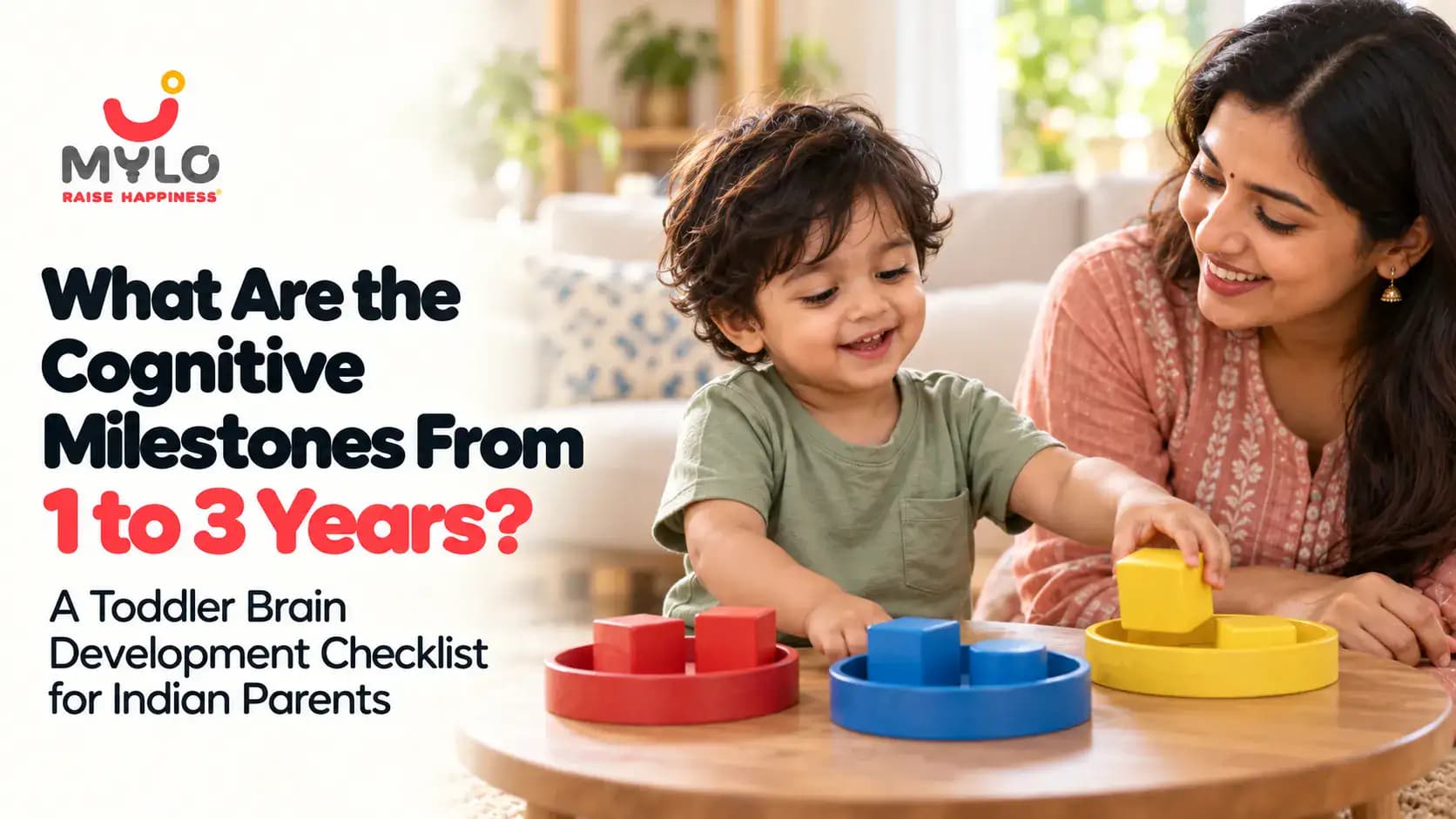
What Are the Cognitive Milestones From 1 to 3 Years? A Toddler Brain Development Checklist for Indian Parents (2026)
 22 min
Quick Answer
Cognitive skills are thinking, learning, memory and problem-solving skills. Between 1 and 3 years, most children go from finding hidden toys and putting objects in containers (12 months) to using objects the right way, like a phone or comb (15 months), copying chores (18 months), playing with 2 toys together and using buttons and knobs (2 years), pretend play, simple problem-solving, following 2-step instructions and knowing a colour (30 months), and drawing a circle when shown and understanding danger when warned (3 years). The best way to build these skills is everyday play and back-and-forth conversation (Harvard Center on the Developing Child). See your pediatrician if your child doesn't copy others, doesn't know what everyday objects are for, doesn't pretend play by 3, or loses skills.
Cognitive Milestones 1 to 3 Years at a Glance
Age | Key Cognitive Milestones | Talk to a Doctor If |
|---|---|---|
12 months | Looks for hidden objects, puts things in a container, explores by banging and dropping | Doesn't look for hidden objects |
15 months | Uses objects the right way (phone, cup, book), stacks 2 blocks | Doesn't play with toys purposefully |
18 months | Copies chores like sweeping, plays with toys in simple ways (pushing a car) | Doesn't copy others, doesn't know what familiar objects are for |
2 years | Plays with 2 toys together, uses buttons and knobs, holds with one hand while using the other | Doesn't use objects functionally or combine them in play |
30 months | Pretend play, simple problem-solving, follows 2-step instructions, knows a colour | No pretend play, doesn't follow simple instructions |
3 years | Draws a circle when shown, avoids hot things when warned, completes simple puzzles, sorts by shape or colour | Doesn't do simple puzzles, doesn't understand simple dangers |
Based on official AAP and CDC milestone checklists (CDC) and Nemours KidsHealth.
Key Facts Every Parent Should Know
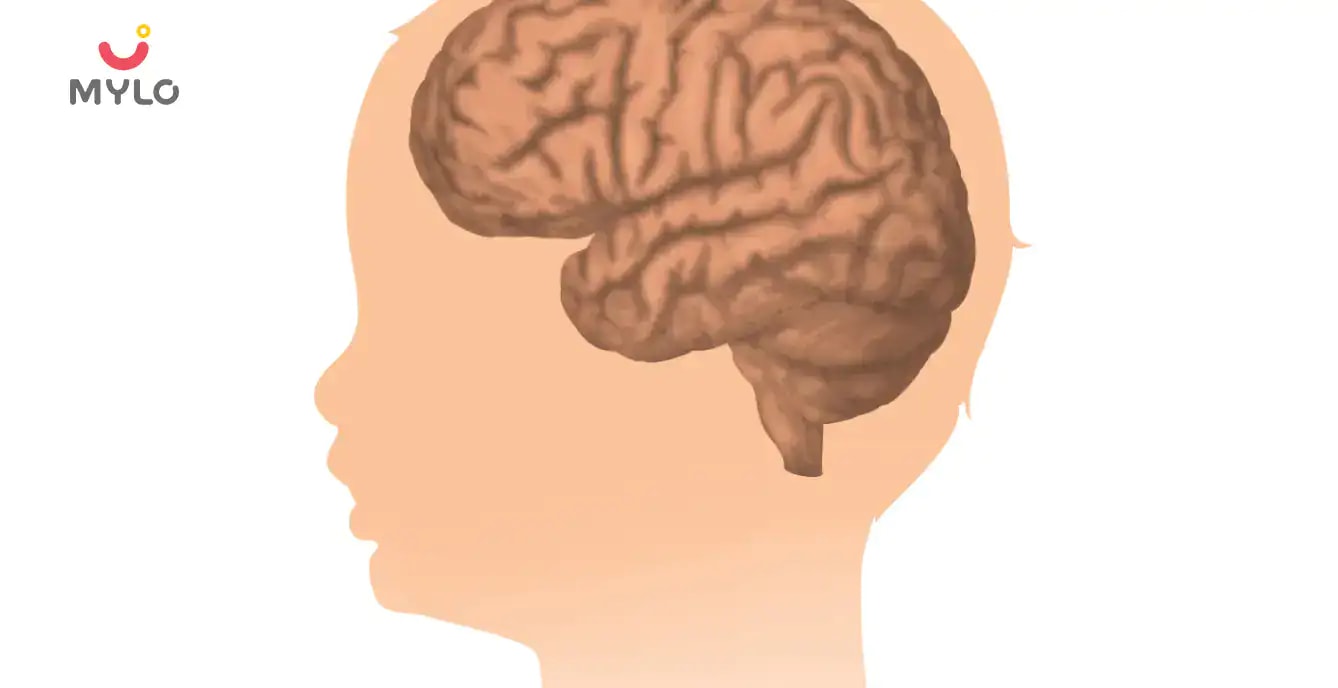
More than 1 million new neural connections a second form in the brain in the early years (Harvard Center on the Developing Child)
"Serve and return": Back-and-forth interactions, like responding when your child babbles, points or asks, build brain connections (Harvard)
Object permanence: By 12 months, most babies know a hidden toy still exists
Around 18 to 24 months: Toddlers start symbolic thinking, using one thing to stand for another in pretend play (Simply Psychology)
2 to 3 years: Children begin sorting, matching, simple counting and recognising colours
Play is learning: Toddlers build thinking skills through hands-on play, not flashcards or screens
What Are Cognitive Skills?
Short answer: Cognitive skills are the thinking skills children use to learn, remember, solve problems, pay attention and understand the world. In toddlers, they show up as exploring, copying, pretending, sorting, figuring things out and remembering routines.
Cognitive Skill | What It Looks Like in Toddlers |
|---|---|
Object permanence | Knows a toy under a cloth is still there |
Cause and effect | Presses a button to make music, drops a spoon to see it fall |
Imitation | Copies sweeping, talking on the phone, stirring a pot |
Problem-solving | Stands on a stool to reach something, tries different ways to open a box |
Memory | Remembers where toys are kept, knows the bedtime routine |
Symbolic and pretend play | Uses a block as a phone, feeds a doll |
Sorting and matching | Puts all red blocks together, matches socks |
Attention | Focuses on a book or puzzle for a few minutes |
Early number and colour sense | Understands "one" and "more", points to a red crayon |
Cognitive skills are closely linked to language (understanding words), fine motor skills (using hands to explore) and social skills (learning by copying others).
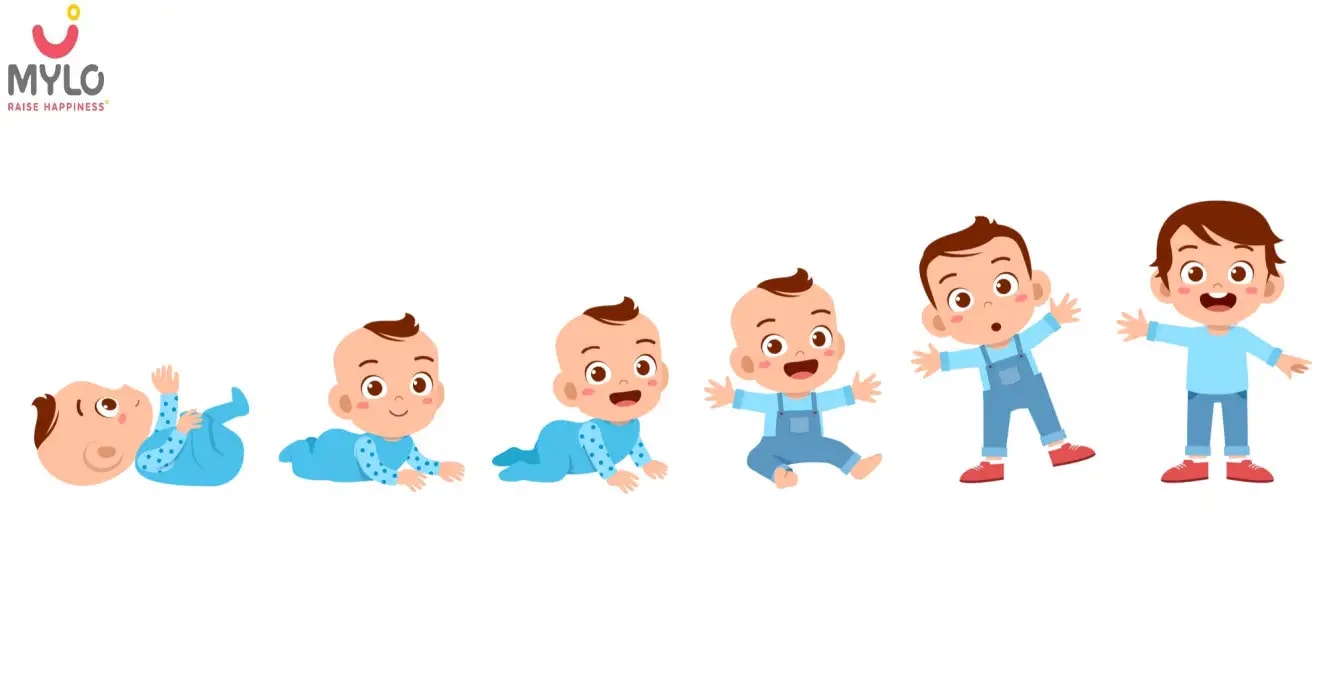
How Does a Toddler's Thinking Change From 1 to 3 Years?
Short answer: Around 12 to 18 months, toddlers are "little scientists" who learn by trying things and seeing what happens. Between 18 and 24 months, they begin thinking in their heads, pretending and remembering. By 2 to 3 years, they use pretend play, simple logic and language to understand the world (Simply Psychology).
Stage | Age | What's Happening | Example |
|---|---|---|---|
Little scientist | 12 to 18 months | Learns by trial and error, experimenting with objects | Drops food from the high chair again and again to see what happens |
Thinking before doing | 18 to 24 months | Starts solving problems in their head, remembers and copies actions later | Copies Mumma's sweeping the next day |
Pretend and symbols | 2 to 3 years | Uses objects to stand for other things; imagination grows | Uses a banana as a phone, cooks pretend dal |
This follows Piaget's well-known stages of development, moving from the sensorimotor stage (learning through senses and movement, up to about 2 years) into the preoperational stage (pretend play and symbolic thinking, from about 2 years).
What Are the Cognitive Milestones at 12 to 18 Months?
Short answer: At 12 to 18 months, toddlers find hidden objects, put things in and take them out of containers, use objects the right way (like brushing hair with a comb) and copy what adults do.
Skill | 12 Months | 15 Months | 18 Months |
|---|---|---|---|
Object permanence | Looks for toys you hide | Finds toys hidden in 2 places | Remembers where things are kept |
Containers | Puts a block in a cup | Takes objects in and out | Fills and dumps containers |
Using objects | Explores by banging and dropping | Uses objects the right way (phone, cup, book) | Plays with toys in simple ways, like pushing a car |
Copying | Copies simple gestures | Copies other children | Copies chores like sweeping |
Stacking | Bangs blocks together | Stacks 2 blocks | Stacks 3 to 4 blocks |
What Are the Cognitive Milestones at 18 Months to 2 Years?
Short answer: Between 18 months and 2 years, toddlers start simple pretend play, use both hands together (holding a box while opening the lid), try buttons, switches and knobs, play with 2 toys together and point to pictures when named.
Skill | By 2 Years |
|---|---|
Combining toys | Plays with more than one toy at a time, like toy food on a toy plate |
Two hands | Holds a container in one hand and takes the lid off with the other |
Cause and effect | Tries switches, knobs and buttons on toys |
Pretend play | Simple pretend, like feeding a doll or talking on a toy phone |
Recognition | Points to pictures in books and body parts when asked |
Sorting | May start sorting by shape or colour |
What Are the Cognitive Milestones at 2 to 3 Years?
Short answer: Between 2 and 3 years, children show richer pretend play, simple problem-solving, follow 2-step instructions, know at least one colour, complete simple puzzles and start to understand simple dangers and routines.
Skill | 30 Months | 3 Years |
|---|---|---|
Pretend play | Uses things to pretend, like feeding a block to a doll | Make-believe with dolls, animals and people |
Problem-solving | Stands on a stool to reach something | Tries different ways to solve simple problems |
Instructions | Follows 2-step instructions | Follows 2 to 3 step instructions |
Colours | Knows at least 1 colour | Knows some colours |
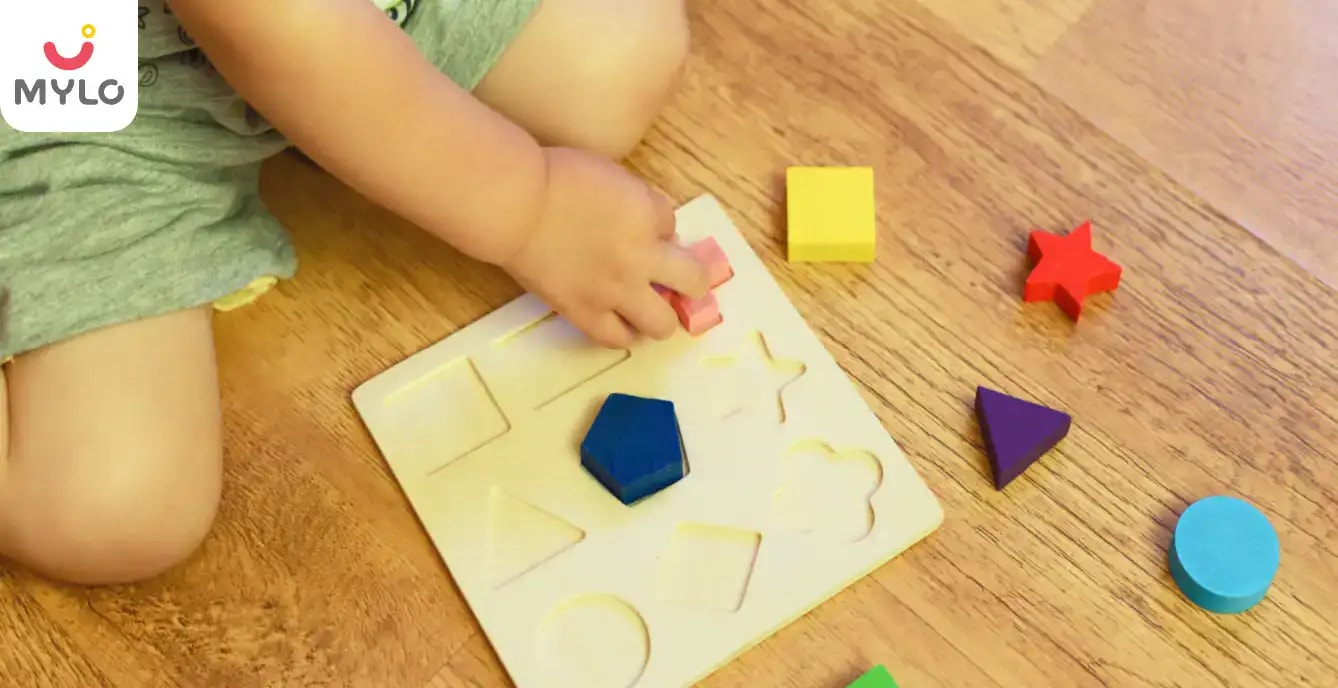
Puzzles | 3 to 4 piece puzzles | Puzzles with 3 or more pieces, shape sorters |
Numbers | Understands "one" and "more" | Counts 2 or 3 objects |
Concepts | Understands "big" and "small" | Understands "same" and "different", "in", "on" and "under" |
Drawing | Copies a line | Draws a circle when shown |
Safety | Starts to understand "no" | Avoids hot objects when warned |
How Long Can a Toddler Pay Attention?
Short answer: Toddlers naturally have short attention spans, often just a few minutes on one activity, and this grows with age. Short attention at 1 to 3 years is normal. What matters is that your child can engage with you and toys for short periods and gradually for longer.
Age | What's Typical |
|---|---|
1 to 2 years | Moves quickly between toys; focuses for a few minutes on something interesting |
2 to 3 years | Can focus longer on a favourite book, puzzle or pretend game |
3 years | Sits for a short story or activity, especially with an adult |
Tips: Choose a quiet space, offer fewer toys at a time, follow your child's interest and turn off background TV.
What Activities Build Cognitive Skills at Each Age?
Short answer: Everyday play, reading and conversation build thinking skills best. Hide-and-seek with toys, stacking, sorting, pretend play, simple puzzles and "helping" with chores all support toddler brain development. You don't need expensive toys.
Age | Best Activities | Household Items to Use |
|---|---|---|
12 to 18 months | Hide-and-seek with toys, peekaboo, filling and dumping, stacking, pressing buttons | Cloth, steel katoris, dabbas with lids, a toy phone |
18 to 24 months | Copying chores, simple shape sorters, naming pictures, pretend feeding a doll | Small broom, cloth, board books, soft toys |
2 to 2.5 years | Sorting by colour, matching socks, simple puzzles, pretend kitchen | Coloured cups, socks, spoons, steel utensils |
2.5 to 3 years | 3 to 4 piece puzzles, counting objects, "What's missing?" games, story sequencing | Puzzles, fruits for counting, picture books |
Fun Indian Everyday Learning Games
Sabzi sorting: Sort potatoes, onions and tomatoes by type, colour or size
Katori hide-and-seek: Hide a small toy under one of 3 steel katoris and let your child find it
Rangoli colours: Name colours while making simple rangoli patterns
Rhyme and count: Count fingers while singing "Ek, Do, Teen"
Kitchen helper: Put spoons in one box and katoris in another
Story time: Tell simple stories from the Panchatantra and ask "What happened next?"
Pretend shop: Buy and sell vegetables with toy money
Serve and Return: The Most Powerful Brain Builder
The Harvard Center on the Developing Child explains that when a child "serves" (babbles, points or asks) and an adult "returns" (responds with words, a smile or a hug), brain connections grow stronger.
Your Child Serves | You Return |
|---|---|
Points at a bird | "Yes, a bird! It's flying high!" |
Hands you a block | "Thank you! Let's build a tower." |
Asks "What's that?" | "That's a mango. It's yellow and sweet." |
Drops a spoon | "Oops, the spoon fell down!" |
What Helps and What Hurts Toddler Brain Development?
Short answer: Responsive, loving interactions, play, reading, good nutrition and sleep help brain development. Too much screen time, chronic stress, poor nutrition (especially low iron) and lack of play can hold it back.
Helps Brain Development | Can Hold It Back |
|---|---|
Talking, reading and singing every day | Long hours of screen time |
Hands-on play and exploring | Few chances to play and explore |
Responding to your child's "serves" | Being ignored or on the phone during interactions |
Enough sleep (11 to 14 hours from 1 to 2 years) | Poor or irregular sleep |
Iron, protein and a varied diet | Iron deficiency and poor nutrition |
Warm, safe, predictable routines | Chronic stress, harsh punishment or conflict at home |
Iron matters: Iron deficiency is common in Indian toddlers and can affect attention and learning. Include dal, ragi, eggs, spinach and rajma, and limit milk to about 300 to 500 ml a day. Read our guide on picky eating and food refusal.
Screens: The WHO advises no screen time for 1-year-olds and no more than 1 hour a day for 2 to 4 year olds, and less is better.
Do Educational Apps and Flashcards Make Toddlers Smarter?
Short answer: Not really. Toddlers learn best through real-life play, conversation and hands-on exploring, not flashcards, drilling or apps. Early academic pressure isn't needed at 1 to 3 years.
Instead of This | Try This |
|---|---|
Alphabet flashcards at 18 months | Reading picture books together |
Counting apps | Counting real things: fruits, steps or spoons |
Colour learning videos | Naming colours during play and daily life |
Writing practice at 2 years | Scribbling, drawing and play dough |
"Brain development" tonics | A balanced diet with iron, protein and healthy fats |
When Should I Worry About My Toddler's Cognitive Development?
Short answer: Talk to your doctor if your toddler doesn't copy others, doesn't know what everyday objects are for (like a spoon or phone), doesn't play with toys purposefully, doesn't pretend play by 3, doesn't follow simple instructions, or loses skills they had. Early support makes a big difference.
Age | Red Flag |
|---|---|
Any age | Loses skills they once had (see a doctor right away) |
12 months | Doesn't look for hidden objects, doesn't explore toys |
15 to 18 months | Doesn't know what familiar objects are for, doesn't copy others |
2 years | Doesn't use objects functionally, doesn't combine toys in play, doesn't follow simple instructions |
30 months | No pretend play, doesn't follow 2-step instructions |
3 years | Can't do simple puzzles or shape sorters, doesn't understand simple dangers, very little imaginative play |
Cognitive delays often come with speech, social or motor delays, so doctors look at the whole picture. Check our other milestone guides for speech, fine motor and gross motor skills.
Who Can Help?
Professional | How They Help |
|---|---|
Pediatrician | First check-up, developmental screening and referrals |
Developmental pediatrician | Full assessment of development |
Child psychologist | Assesses thinking, learning and behaviour |
Special educator or early intervention therapist | Play-based learning support |
Occupational and speech therapists | Support related skills |
Free Government Support in India
Service | What It Offers |
|---|---|
Rashtriya Bal Swasthya Karyakram (RBSK) | Free screening for developmental delays |
District Early Intervention Centres (DEIC) | Free assessment, therapy and early intervention |
Anganwadi centres | Early childhood education, nutrition and referrals |
Read our guide on identifying developmental disorders in toddlers.
What Should Indian Parents Keep in Mind?
Short answer: Play, talk and read with your child every day, use everyday household items as learning tools, avoid early academic pressure and screens, and make sure your child gets enough iron, sleep and love.
Common Practice | Better Approach |
|---|---|
Rote learning of ABC and 123 at 2 years | Play, stories and real-life counting |
Buying expensive "brain development" toys | Katoris, dabbas, spoons and cloth work just as well |
Screens to teach rhymes and colours | Sing and name colours together |
"Brain tonics" and supplements | A balanced diet; supplements only if a doctor advises |
Comparing with cousins | Every child learns at their own pace |
Scolding for "messy" exploring | Let them explore safely; it's how they learn |
For more on connection, read 15-minute connection rituals for working parents and positive parenting.
Myths vs Facts About Toddler Cognitive Development
Myth | Fact |
|---|---|
"Flashcards and apps make toddlers smarter" | Toddlers learn best through play and conversation |
"Expensive toys are needed for brain development" | Simple household items and your attention matter most |
"A short attention span means a problem" | Short attention is normal for toddlers |
"Brain tonics boost intelligence" | A balanced diet, sleep and play support brain growth |
"Toddlers who throw food are being naughty" | Dropping things is often an experiment in cause and effect |
"Early reading shows high intelligence" | Reading readiness varies; play-based learning is best at this age |
Frequently Asked Questions About Cognitive Milestones
What are cognitive skills in toddlers?
Thinking, learning, memory and problem-solving skills, like finding hidden toys, copying chores, pretend play, sorting and following instructions.
Cognitive development kya hota hai? (Hinglish)
Cognitive development ka matlab hai bachche ki sochne, samajhne, yaad rakhne aur samasya suljhane ki kshamta ka vikas. Jaise chhupi hui cheez dhoondhna, bado ki nakal karna, khel-khel mein pretend karna, rang pehchanna aur 2 kaam wali baat samajhna.
What should a 1-year-old understand?
Most can find hidden objects, put things in a container and understand "no".
When do toddlers start pretend play?
Simple pretend play often starts between 18 months and 2 years. By 30 months, most toddlers use objects to pretend.
When do toddlers learn colours?
Most children know at least 1 colour by 30 months and several by 3 years.
When can a toddler do puzzles?
Many can do simple 3 to 4 piece puzzles between 2.5 and 3 years.
How can I boost my toddler's brain development?
Talk, read, sing and play every day, respond to your child's sounds and questions, offer hands-on play, limit screens and give a nutritious diet with enough iron.
Bachche ka dimaag tez kaise karein? (Hinglish)
Roz bachche se baat karein, kahani padhein, gaana gaayein aur saath khelein. Ghar ki cheezon se khel sikhayein, jaise katori ke neeche khilona chhupana ya sabziyon ko rang ke hisaab se alag karna. Mobile kam dein, poori neend aur iron wala khana dein. Mehenge toys ya tonic ki zaroorat nahi hai.
Do educational apps help toddlers learn?
Not much. Toddlers learn far better from real play and conversation than from screens.
Is a short attention span normal for a 2-year-old?
Yes. Toddlers naturally move between activities quickly. Attention grows with age.
When should I worry about my toddler's cognitive development?
If your toddler doesn't copy others, doesn't know what everyday objects are for, doesn't pretend play by 3, doesn't follow simple instructions or loses skills, speak to your pediatrician.
Related Reads on Mylo
References
Center on the Developing Child, Harvard University. "Serve and Return." https://developingchild.harvard.edu/key-concept/serve-and-return/
Center on the Developing Child, Harvard University. "Brain Architecture." https://developingchild.harvard.edu/key-concept/brain-architecture/
Simply Psychology. "Sensorimotor Stage of Cognitive Development." https://www.simplypsychology.org/sensorimotor.html
LibreTexts. "Cognitive Development for Toddlers." https://socialsci.libretexts.org/Bookshelves/Early_Childhood_Education/The_Whole_Child%3A_Development_in_the_Early_Years(Budzyna_and_Buckley)/07%3A_Toddlers(15_Months_to_3_Years)/7.02%3A_Cognitive_Development_for_Toddlers
World Health Organization (WHO). "Guidelines on Physical Activity, Sedentary Behaviour and Sleep for Children Under 5 Years of Age." https://www.ncbi.nlm.nih.gov/books/NBK541173/
Nemours KidsHealth. "3-Year Well-Child Checkup." https://kidshealth.org/en/parents/checkup-3yrs.html
Centers for Disease Control and Prevention (CDC). "CDC's Developmental Milestones." https://www.cdc.gov/act-early/milestones/index.html
Medical Disclaimer
This article is for information only and does not replace professional medical advice. Every child develops at their own pace. If you have concerns about your child's thinking, learning, play or behaviour, please consult your pediatrician.


Shop Now
Baby Essentials





Article Posted Under
Related Articles

Related Topics
.webp&w=32&q=75)
Medical Disclaimer
This content is for informational purposes only and should not replace professional medical advice. Consult with a physician or other health care professional if you have any concerns or questions about your health. If you rely on the information provided here, you do so solely at your own risk.


AWARDS AND RECOGNITION

Mylo wins Forbes D2C Disruptor award

Mylo wins The Economic Times Promising Brands 2022
AS SEEN IN













- Mylo Care: Effective and science-backed personal care and wellness solutions for a joyful you.
- Mylo Baby: Science-backed, gentle and effective personal care & hygiene range for your little one.
- Mylo Community: Trusted and empathetic community of 10mn+ parents and experts.


Product Categories
Baby Carrier | Baby Soap | Baby Wipes | Stretch Marks Cream | Baby Cream | Baby Shampoo | Baby Massage Oil | Baby Hair Oil | Stretch Marks Oil | Baby Body Wash | Baby Powder | Baby Lotion | Diaper Rash Cream | Newborn Diapers | Teether | Baby Kajal | Baby Diapers Pants | Cloth Diapers | Laundry Detergent | Lactation Granules |