


Orders
.png&w=48&q=75 "login")
Profile


Wallet

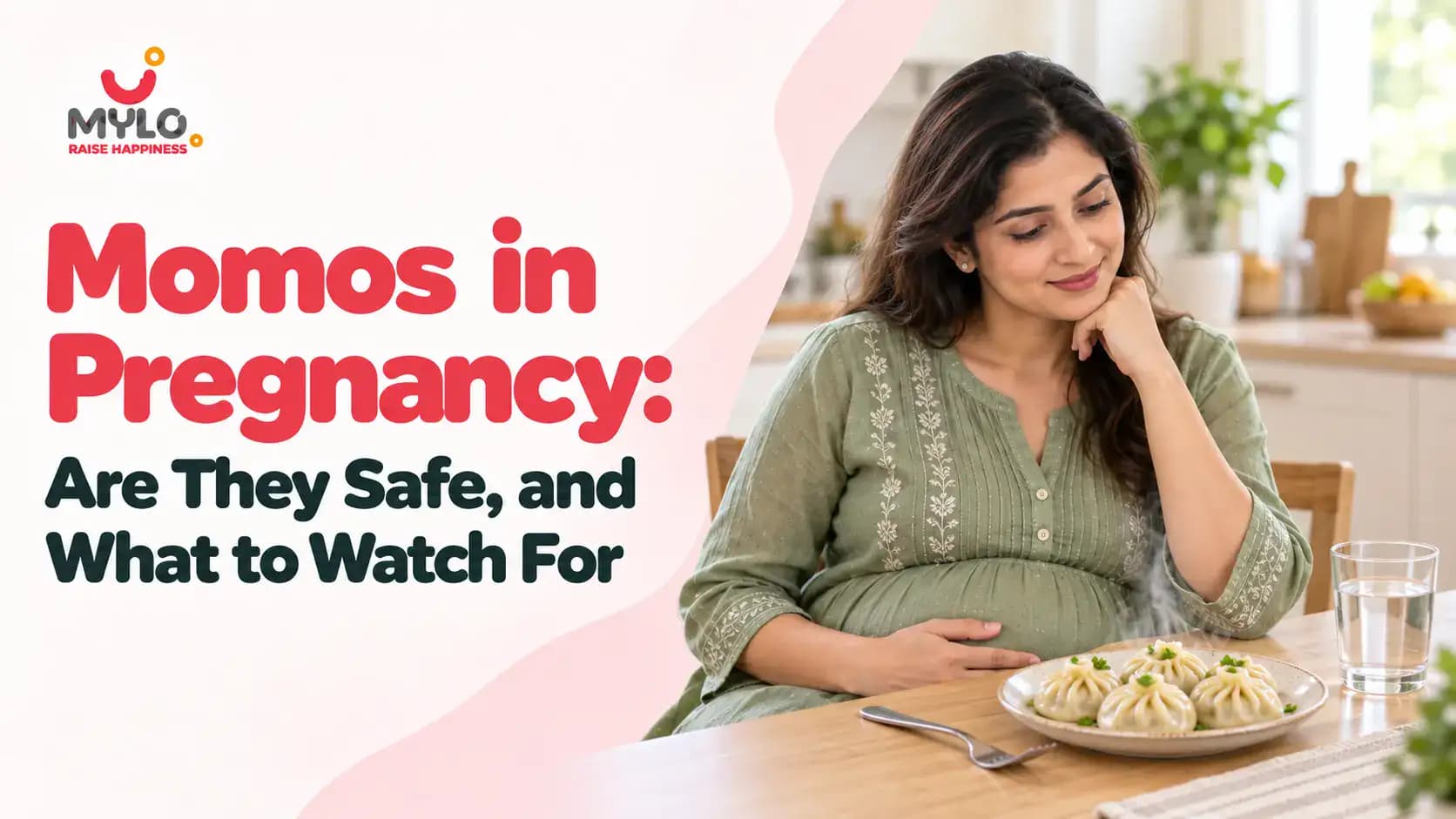
Momos in Pregnancy: Are They Safe, and What to Watch For
 7 Likes|
 13 min
Key Takeaways
Quick overview in 30 seconds.webp&w=32&q=75)
- Momos during pregnancy can be risky due to hygiene concerns at street stalls, where contamination may lead to foodborne illnesses like salmonella or listeriosis.
- Store-bought momos often contain excess sodium, lack essential nutrients, and may include unregulated ingredients or potential allergens that can harm both mother and baby.
- If craving momos, choose reliable establishments, ensure thorough cooking, avoid raw fillings, practice good hygiene, and consume only in moderation during pregnancy.
- Looking for nutritious pregnancy snacks and meal support? Explore our MamaGro™ Protein Diskettes - High Protein & No Added Sugar - 250gm (50 Diskettes).
 4.6
4.6 4.7
4.7 4.2
4.2Quick answer
Yes, you can eat momos during pregnancy. Steamed momos that are thoroughly cooked and hygienically prepared are safe. The real risks are not the momos themselves but the accompanying chutney, the water used, and undercooked meat fillings. Choose a clean establishment, eat them hot and freshly steamed, and skip the chutney if you are unsure about it.
Key takeaways
The chutney is usually the riskiest item on the plate. It is uncooked, often made with untreated water, and frequently left standing at room temperature.
Water quality matters more than most people realise. Hepatitis E and typhoid both spread through contaminated food and water in India, and hepatitis E is significantly more dangerous in pregnancy, particularly in the third trimester.
Salt restriction does not prevent pre-eclampsia. You do not need to avoid momos for that reason, though a very high salt diet is not ideal generally.
Meat fillings need to be thoroughly cooked. This is the one genuine ingredient risk.
You do not need to avoid momos. Over-restriction is more common than under-restriction in Indian pregnancy advice, and it leaves women eating a narrower diet than they should.
Can you eat momos during pregnancy?
Yes. Momos are steamed dumplings with a flour wrapper and a vegetable or meat filling. There is nothing about them that is inherently unsafe in pregnancy.
The question that actually matters is not what, but where and how. A freshly steamed vegetable momo from a clean kitchen is as safe as any other cooked food. The same momo from a cart where the filling has been sitting out and the chutney was made with tap water is a different proposition.
This distinction matters because Indian pregnancy advice tends toward blanket avoidance, and women end up cutting out food after food until they are eating very little variety. The useful approach is to understand what the actual risk is and manage that.
Where the real risks are
Risk | How likely | What to do |
|---|---|---|
The chutney | The highest risk item. Uncooked, often made with untreated water, frequently left at room temperature, sometimes for hours | Skip it at street stalls. Make it at home if you want it |
Contaminated water | Used for steaming, for washing ingredients, and in the chutney | Choose places that use filtered water. Ask if you are unsure |
Undercooked meat filling | Chicken and pork fillings need to be cooked through. Momos are small, so this is usually fine, but not always | Cut one open. It should be steaming hot and cooked through, with no pink meat |
Poor hand hygiene by the handler | Common at high-volume stalls | Watch how it is handled. Look for tongs rather than bare hands |
Food left standing and re-steamed | Reheated or part-cooked momos held for hours | Order from a place with high turnover, so they are freshly made |
Cross-contamination | Raw meat prepared near cooked food | Hard to assess. Favour cleaner kitchens |
Refined flour and portion size | Relevant if you have gestational diabetes | See below |
Why food hygiene matters more in pregnancy
Pregnancy alters immune function, which means food-borne infections can be more severe and can affect your baby as well as you.
The infections worth knowing about in the Indian context:
Hepatitis E. Spread through contaminated water and food. This is the most important one on the list, because hepatitis E is considerably more severe in pregnant women than in anyone else, particularly in the third trimester. It is a genuine reason to be careful about water quality and street food, and it is almost never mentioned in pregnancy food articles.
Typhoid. Also spread through contaminated food and water, and treatable but unpleasant in pregnancy.
Salmonella and E. coli. Cause food poisoning, and severe vomiting and diarrhoea in pregnancy lead to dehydration quickly.
Hepatitis A. Spread the same way. Ask your doctor about vaccination if you are planning a pregnancy.
Listeria. Frequently mentioned in Western pregnancy content. In India the main sources are unpasteurised milk and loose paneer or khoya of uncertain origin, rather than steamed food. Steamed momos are not a typical listeria risk.
How to eat momos safely
At a restaurant or a clean outlet:
Choose a place with high turnover, so food is freshly made rather than held
Eat them hot, straight from the steamer. Steam kills the organisms that matter
Cut one open before eating. It should be piping hot throughout, with meat cooked through and no pink
Skip the chutney if you are unsure about the kitchen, or ask for a packaged sauce instead
Avoid fried and pan-fried momos, which are usually reheated from pre-cooked stock and are less likely to be freshly made
Look at the general hygiene: clean surfaces, covered food, tongs rather than bare hands, clean water containers
Skip entirely if:
The momos are sitting out at room temperature
The stall looks unclean or the water source is doubtful
They come lukewarm rather than hot
You are eating during a period of heavy rain or flooding, when water contamination rises
On the chutney specifically: the red chilli chutney served with momos is typically made from raw ingredients, blended with water, and kept in an open bowl. It is not cooked, so nothing kills anything in it. At a street stall it is the single item most worth skipping.
What about ajinomoto and MSG?
This is the question most people actually have, and it rarely gets answered properly.
Monosodium glutamate is generally recognised as safe by food safety authorities, and there is no good evidence that MSG in normal dietary amounts harms a pregnancy.
Two honest caveats:
Some people report sensitivity, with headaches or flushing after eating food containing large amounts. If that happens to you, avoid it, in pregnancy or otherwise
MSG is a sodium compound, so heavily seasoned food contributes to your overall salt intake
There is no reason to avoid momos specifically because of MSG, and equally no reason to seek it out.
On salt and pre-eclampsia
The live version of this advice often states that the salt in momos may contribute to pre-eclampsia. That is not accurate, and it is worth correcting.
Salt restriction is not recommended for preventing pre-eclampsia. Major guidelines do not advise reducing salt intake in pregnancy for that purpose.
What is actually recommended for pre-eclampsia risk:
Calcium supplementation in populations with low dietary calcium intake, which includes much of India
Low-dose aspirin from around 12 weeks for women assessed as high risk, prescribed by a doctor
Blood pressure and urine checks at every antenatal visit from 20 weeks
A very high salt diet is not ideal for general health, particularly if you have high blood pressure, and that is a reasonable reason to keep fried and heavily seasoned food occasional. It is not a pre-eclampsia argument.
If you have gestational diabetes
The concern here is genuine, and it is about the wrapper rather than the hygiene.
Momo wrappers are made from refined flour, which raises blood sugar relatively quickly
Portion size matters. Six to eight momos is a substantial carbohydrate load
Pair them with protein and vegetables, and eat those first
A short walk after eating lowers post-meal glucose noticeably
Check your reading afterwards if you are monitoring, to see how they affect you specifically
They are not forbidden, but they are a better occasional food than a regular one if your blood sugar is being managed. Our guide to diabetes and blood sugar in pregnancy covers screening and management.
Making them at home
The safest option, and it lets you fix the nutritional weaknesses at the same time.
Use whole wheat or millet flour for part of the wrapper, which adds fibre and slows the blood sugar rise
Pack the filling with vegetables: cabbage, carrot, beans, spring onion, mushroom, paneer, tofu
Add protein. Paneer, soya granules, minced chicken cooked thoroughly, or sprouted moong
Steam rather than fry
Make the chutney fresh, with filtered water, and refrigerate it
Wash all vegetables thoroughly under running water
Cook meat fillings through completely before or during steaming
This turns an occasional treat into a reasonable meal, which is a better outcome than avoiding it.
If you get food poisoning
Contact your doctor rather than managing it alone. Dehydration develops faster in pregnancy and matters more.
Start ORS immediately, in small frequent sips
Do not take anti-diarrhoeal or anti-vomiting medicine without your doctor
Do not take antibiotics on your own
Seek medical care the same day if you have:
Vomiting or diarrhoea you cannot keep on top of, or that lasts more than 24 hours
Inability to keep fluids down
Passing very little or dark urine
Fever
Severe abdominal pain
Blood in your stool
Dizziness or fainting
Yellowing of your eyes or skin, or dark urine, which needs prompt assessment
Reduced baby movements, at any stage after around 24 weeks
Our full guide to pregnancy symptoms sorted by urgency covers what needs attention.
The foods that genuinely need avoiding
Since momos are not on the list, here is what is.
Unpasteurised milk and products made from it, including loose paneer and khoya of uncertain origin
Raw or undercooked eggs and meat
Raw or undercooked fish and shellfish
High-mercury fish such as shark, swordfish and king mackerel
Animal liver, which is very high in vitamin A
Cut fruit and salads left standing, particularly from roadside vendors
Raw sprouts and unwashed produce
Unpasteurised juices, including roadside sugarcane juice
Alcohol, entirely
Caffeine above about 200 mg a day
Concentrated herbal and unregulated Ayurvedic preparations
Most traditionally forbidden foods are safe. Pineapple, ripe papaya, drumstick and sesame do not cause miscarriage, as our guide on foods and miscarriage explains.
Frequently asked questions
Can I eat momos during pregnancy?
Yes, when they are freshly steamed, thoroughly cooked and from a hygienic kitchen. The risk is in the preparation, not the food.
Are street momos safe in pregnancy?
Riskier than restaurant or home-made ones, mainly because of water quality, the chutney and food standing out. If you do eat them, choose a busy clean stall, eat them hot, and skip the chutney.
Is the momo chutney safe?
It is usually the riskiest item, because it is uncooked, often made with untreated water and frequently left at room temperature. Skip it at street stalls.
Is ajinomoto safe during pregnancy?
MSG is generally recognised as safe by food safety authorities, and there is no good evidence of harm at normal dietary amounts. Some people report sensitivity and should avoid it.
Can I eat chicken momos?
Yes, provided the filling is cooked through. Cut one open and check it is piping hot with no pink meat.
Do momos cause pre-eclampsia because of the salt?
No. Salt restriction is not recommended for preventing pre-eclampsia. Keep very salty food occasional for general health rather than for that reason.
Can I eat fried momos?
Steamed are the better choice. Fried momos are usually reheated from pre-cooked stock, so they are less likely to be freshly made, and they add a lot of oil.
Are momos okay with gestational diabetes?
Occasionally, in a controlled portion, eaten alongside protein and vegetables, with a walk afterwards. The refined flour wrapper is the issue, not the momo itself.
What should I do if I get food poisoning in pregnancy?
Start ORS, contact your doctor, and do not take any medicine without advice. Seek care the same day if you cannot keep fluids down, have a fever, or are passing very little urine.
The bottom line
Momos are not a food to avoid in pregnancy. Steamed, freshly made and thoroughly cooked, they are as safe as anything else on a plate. What deserves your caution is the chutney, the water used to make and steam them, and any meat filling that is not cooked through, and those are the things to check rather than the momos themselves. Make them at home when you can, eat them hot when you do not, and do not add them to the long list of things Indian mothers are told to give up for no good reason.
Sources
World Health Organization, recommendations on antenatal care for a positive pregnancy experience
National Institute for Health and Care Excellence, hypertension in pregnancy
Centers for Disease Control and Prevention, food safety for pregnant women
Food Safety and Standards Authority of India, guidance on street food safety
Indian Council of Medical Research and National Institute of Nutrition, dietary guidelines for Indians
Federation of Obstetric and Gynaecological Societies of India, antenatal care recommendations
This article is for general information and is not a substitute for professional medical advice. Contact your doctor if you develop vomiting or diarrhoea you cannot keep on top of, fever, yellowing of the eyes or skin, or reduced baby movements.

Trusted by Mamas Nourishing Their Pregnancy Journey
Wholesome nutrition support to help you eat mindfully and meet your baby's growing needs every day.
MamaGro™ Protein Diskettes - 250gm - Vanilla
Supports Healthy Placenta | Supports Fetal Development



Pregnancy Massage Oil + Coconut Oil - 200 ml each


Baby Wellness Kit | Skincare Gift Set for Newborns



Article Posted Under
Related Articles



Related Topics
.webp&w=32&q=75)
Medical Disclaimer
This content is for informational purposes only and should not replace professional medical advice. Consult with a physician or other health care professional if you have any concerns or questions about your health. If you rely on the information provided here, you do so solely at your own risk.


AWARDS AND RECOGNITION

Mylo wins Forbes D2C Disruptor award

Mylo wins The Economic Times Promising Brands 2022
AS SEEN IN













- Mylo Care: Effective and science-backed personal care and wellness solutions for a joyful you.
- Mylo Baby: Science-backed, gentle and effective personal care & hygiene range for your little one.
- Mylo Community: Trusted and empathetic community of 10mn+ parents and experts.


Product Categories
Baby Carrier | Baby Soap | Baby Wipes | Stretch Marks Cream | Baby Cream | Baby Shampoo | Baby Massage Oil | Baby Hair Oil | Stretch Marks Oil | Baby Body Wash | Baby Powder | Baby Lotion | Diaper Rash Cream | Newborn Diapers | Teether | Baby Kajal | Baby Diapers Pants | Cloth Diapers | Laundry Detergent | Lactation Granules |