


Orders

Profile


Wallet

Baby Vomiting After Feeding: Causes, What Is Normal and When to Worry
 5 Likes|
 11 min


BDS (Gold Medalist), Certified Lactation Consultant – BPNI Delhi, Maternal & Infant Nutrition Expert · 15 years experience

Key Takeaways
Quick overview in 30 seconds
- Most babies spit up or vomit small amounts of milk after feeds due to reflux, which usually starts before 8 weeks and gets better by their first birthday.
- Common causes include reflux, swallowing air during feeds, overfeeding, cows milk allergy, stomach bugs, or rarely pyloric stenosis causing forceful projectile vomiting.
- To reduce vomiting, hold baby upright during and after feeds, burp regularly, ensure a good latch, offer smaller feeds, and always sleep baby flat on back.
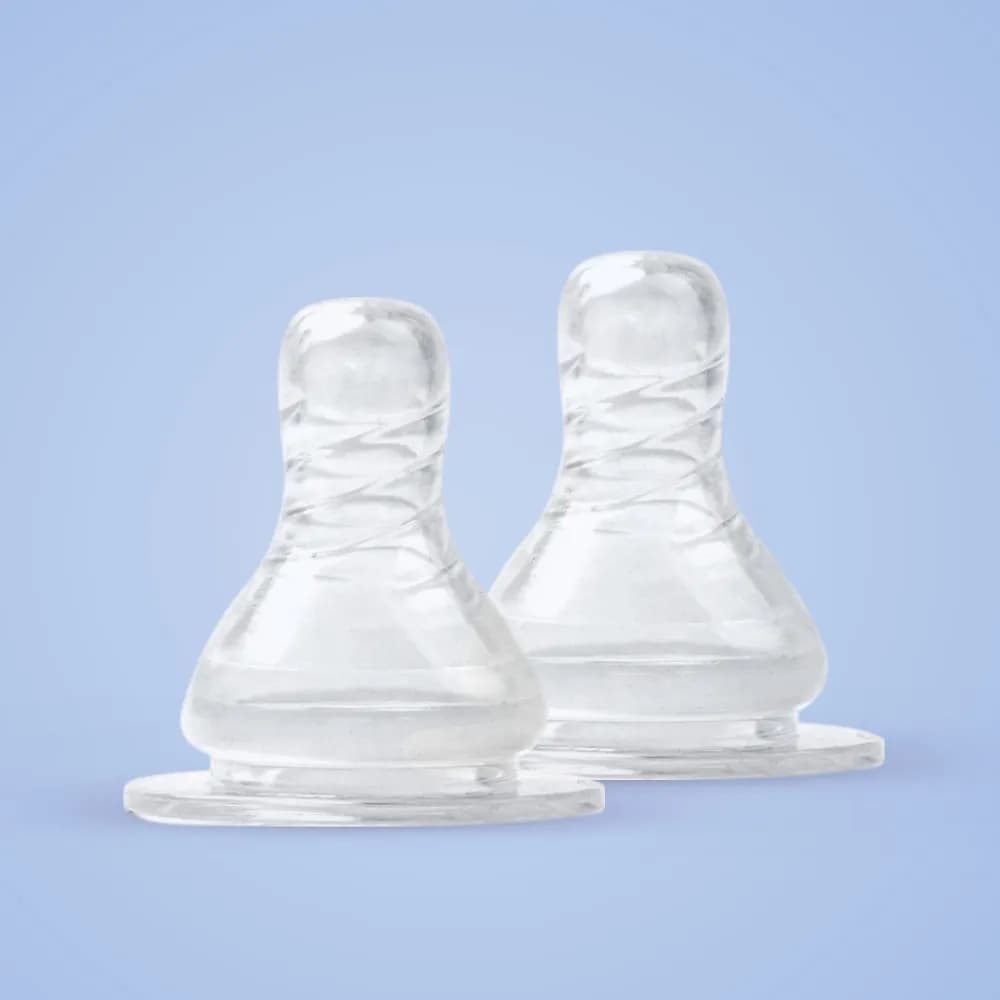
- What can help make feeding gentler for your baby? Explore our Anti Colic Slow (S) Flow Grooved Baby Nipple - Pack of 2.
 4.8
Quick Answer
Babies often bring up milk during or after feeds, and it is usually normal. This is called reflux. It usually starts before 8 weeks and gets better by the first birthday. If your baby is happy and gaining weight, it is rarely a worry. Get help urgently for green, yellow or bloody vomit, forceful vomiting or signs of dehydration.
You have just finished feeding, and suddenly the milk is all over your shoulder, the bed or your baby's clothes. It is frightening, especially the first few times. The good news is that most babies who bring up milk are perfectly healthy. Here is how to tell normal spit-up from vomiting, why it happens, what you can do, and which signs mean you should see a doctor quickly.
Spit-up or vomiting: what is the difference?
Most babies bring up small amounts of milk from time to time, often when they burp. This is called spit-up or possetting, and it is usually nothing to worry about, according to NHS Healthier Together. Vomiting is when a lot more milk comes out.
Vomiting is also very common, affecting up to half of all babies, and in most cases it improves with time. Even when it looks like a lot, most babies keep growing normally and do not seem distressed by it.
Spit-up (possetting) | Vomiting | |
|---|---|---|
Amount | A small amount | A larger amount |
How it comes out | Dribbles out, often with a burp | Comes out with more force |
Baby's mood | Usually happy and comfortable | May be upset, or unwell if there is an illness |
Is it normal? | Yes | Often, but watch for warning signs |
Our guide to baby spit-up has more on everyday possetting.
Why do babies vomit after feeding?
1. Reflux
Reflux is the most common reason. The NHS explains that the ring of muscle at the bottom of a baby's food pipe (oesophagus) is still weak, so milk can come back up easily. This muscle gets stronger as your baby grows. Reflux usually starts before 8 weeks of age and gets better by the time a baby is 1.
Other signs of reflux include coughing or hiccupping during feeds, being unsettled while feeding, swallowing or gulping after a burp, and crying that does not settle. Some babies have these signs without bringing up milk, which is called silent reflux. Read more in our guide to reflux in babies.
2. Swallowing air during feeds
If your baby is not latched well at the breast, or is feeding from a bottle at an angle that lets air in, they can swallow air. Trapped air can push milk back up. The NHS suggests getting advice on your breastfeeding position or how you bottle feed. See our guides on getting a good latch and breastfeeding positions.
3. Feeding too much or too fast
A baby's tummy is small. A very large feed, or milk that flows too fast from a bottle, can be more than the stomach can hold, and some of it comes back up.
4. Cow's milk allergy
The NHS notes that a cow's milk allergy can look very similar to reflux, so a doctor may check for it. According to NHS Healthier Together, if your baby is breastfed, your doctor may suggest removing dairy from your own diet for 2 weeks, and if your baby is formula-fed, a special hypoallergenic formula may help. Please talk to your doctor before making either change.
5. A stomach bug or other infection
Vomiting that starts suddenly, especially with diarrhoea or a fever, may be a tummy infection. The NHS says vomiting from a stomach bug usually stops within 1 or 2 days. Babies lose fluids quickly, so watch closely for dehydration.
6. Pyloric stenosis (rare)
This is a rare condition in which the muscle at the exit of the stomach thickens, so milk cannot pass through. NHS Healthier Together says it causes forceful vomiting within half an hour of a feed. It most often begins at about 6 weeks of age, but can appear any time before 4 months, and boys are about four times more likely to have it than girls. It needs a doctor's assessment straight away.
Is it normal for a baby to vomit curdled milk?
Usually, yes. When milk sits in the stomach for a while, it mixes with stomach acid and turns thick and curd-like. So if your baby brings up milk some time after a feed, it may look curdled. This on its own is not a sign of a problem. What matters is how your baby is overall: feeding well, having wet nappies and gaining weight.
What should you do right after your baby vomits?
Stay calm and hold your baby upright, or on their side, so the milk can drain from the mouth.
Gently wipe their face and mouth, and check they are breathing comfortably.
Keep feeding. The NHS advises carrying on with breast or bottle feeds. If your baby is being sick, try smaller feeds more often than usual.
Do not make formula weaker, and do not give medicines to stop vomiting or diarrhoea unless your doctor prescribes them, as the NHS advises.
Watch for warning signs over the next few hours, especially signs of dehydration.
How can you reduce vomiting after feeds?
The NHS suggests these steps if reflux seems to bother your baby:
Get feeding advice. Ask your doctor, nurse or a lactation consultant to check your breastfeeding position or how you bottle feed.
Hold your baby upright during feeds and for as long as possible afterwards.
Burp your baby regularly during feeds, not only at the end. Our guide on how to burp a baby shows the best positions.
Always put your baby to sleep flat on their back, never on their side or front.
Do not raise the head of the cot or crib, even though it may seem helpful.
It can also help to offer smaller feeds more often, follow your baby's hunger and fullness cues, and avoid bouncing or tummy time straight after a feed.
When should you see a doctor?
Your baby usually does not need to see a doctor for reflux as long as they are happy, healthy and gaining weight. The NHS advises seeing a doctor if your baby:
is not improving after trying the steps above
gets reflux for the first time after 6 months of age
still has reflux after their first birthday
is not gaining weight, or is losing weight
Get an urgent appointment the same day if your baby:
has green or yellow vomit, or blood in the vomit
is projectile vomiting, being sick with much more force than usual
has blood in their poo
has a swollen or tender tummy
has a very high temperature, or feels hot, cold or shivery
keeps being sick and cannot keep any feeds down
has diarrhoea for more than a week, or signs of dehydration
will not stop crying and is very distressed
is refusing to feed
Source: NHS
Go to the nearest emergency department, or call 112 or 108, if your baby:
has green vomit, like the colour of spinach or peas
becomes pale, mottled or unusually cold to touch
becomes floppy, very drowsy or hard to wake
is going blue around the lips or has difficulty breathing
has a fit (seizure), or a rash that does not fade when you press a glass against it
has had no wet nappies in the last 8 hours
has a dry mouth or a sunken soft spot on the head
Source: NHS Healthier Together
Signs of dehydration in babies
Babies can become dehydrated quickly when they vomit a lot. The NHS lists these signs:
a sunken soft spot (fontanelle) on top of the head
sunken eyes
few or no tears when crying
fewer wet nappies than usual
being drowsy or irritable
If you notice any of these, contact your doctor straight away.
Frequently Asked Questions
1. Is it normal for a baby to vomit after every feed? Many babies bring up some milk after most feeds, especially in the first months, and it is usually reflux. If your baby is happy, feeding well and gaining weight, it is usually not a concern. If your baby seems uncomfortable, refuses feeds or is not gaining weight, see your doctor.
2. Should I feed my baby again after they vomit? Yes. The NHS advises carrying on with breast or bottle feeds. If your baby keeps being sick, offer smaller feeds more often. If your baby cannot keep any feeds down, contact your doctor the same day.
3. Why does my baby vomit curdled milk? Milk that has been in the stomach for a while mixes with stomach acid and turns curd-like. It is usually normal, as long as your baby is otherwise well and gaining weight.
4. Is projectile vomiting in babies serious? It can be. Forceful vomiting that shoots out, especially within half an hour of feeds in a baby around 6 weeks old, can be a sign of pyloric stenosis. See a doctor the same day.
5. Can my diet cause my breastfed baby to vomit? Sometimes, if your baby has a cow's milk allergy. The symptoms can look like reflux. Your doctor may suggest removing dairy from your diet for 2 weeks to see if it helps, but do not change your diet without their advice.
6. When does baby reflux stop? According to the NHS, reflux usually starts before 8 weeks and gets better by the time a baby is 1, as the muscle at the bottom of the food pipe grows stronger.
7. Should I raise the head of my baby's cot to stop vomiting? No. The NHS advises against raising the head of the cot or Moses basket. Always put your baby to sleep flat on their back.
Related Articles
Baby Spit Up: The Ultimate Guide to Causes, Prevention and Management
Vomiting in Babies: Top 5 Reasons Why It Happens and How You Can Prevent It
The Ultimate Guide to Getting a Perfect Latch in Breastfeeding
References
NHS. Reflux in babies. https://www.nhs.uk/conditions/reflux-in-babies/
NHS South West London Healthier Together. My baby is vomiting. https://www.swlondon-healthiertogether.nhs.uk/new-baby/concerned-your-baby-unwell-under-3-months/my-baby-vomiting
NHS. Diarrhoea and vomiting. https://www.nhs.uk/conditions/diarrhoea-and-vomiting/
NHS. Dehydration. https://www.nhs.uk/conditions/dehydration/
Medical disclaimer: This article is for general information only and is not a substitute for advice from your paediatrician. If you are worried about your baby, please contact your doctor straight away.
Trusted by Mamas Soothing Little Tummies After Feeds
Gentle feeding essentials and burping aids that help reduce spit-up and keep your little one comfortable after every feed.



Article Posted Under
Related Articles
10 Ways to Protect Your Child from Air Pollution: A Practical Guide for Indian Parents
 14 min
Right Side Abdominal Pain: Common Causes, Home Care and When to See a Doctor
 14 min
Growth Scan in Pregnancy: When It Is Done, What It Checks and What Your Report Means
 17 min
Hair Colour During Pregnancy: Is It Safe? Trimester Guide, Mehndi and Safer Options
 14 min
Related Topics

Medical Disclaimer
This content is for informational purposes only and should not replace professional medical advice. Consult with a physician or other health care professional if you have any concerns or questions about your health. If you rely on the information provided here, you do so solely at your own risk.


AWARDS AND RECOGNITION

Mylo wins Forbes D2C Disruptor award

Mylo wins The Economic Times Promising Brands 2022
AS SEEN IN













- Mylo Care: Effective and science-backed personal care and wellness solutions for a joyful you.
- Mylo Baby: Science-backed, gentle and effective personal care & hygiene range for your little one.
- Mylo Community: Trusted and empathetic community of 10mn+ parents and experts.


Product Categories
Baby Carrier | Baby Soap | Stretch Marks Cream | Baby Cream | Baby Shampoo | Baby Massage Oil | Baby Hair Oil | Stretch Marks Oil | Baby Body Wash | Baby Powder | Baby Lotion | Diaper Rash Cream | Teether | Baby Kajal |