


Orders
.png&w=48&q=75 "login")
Profile


Wallet

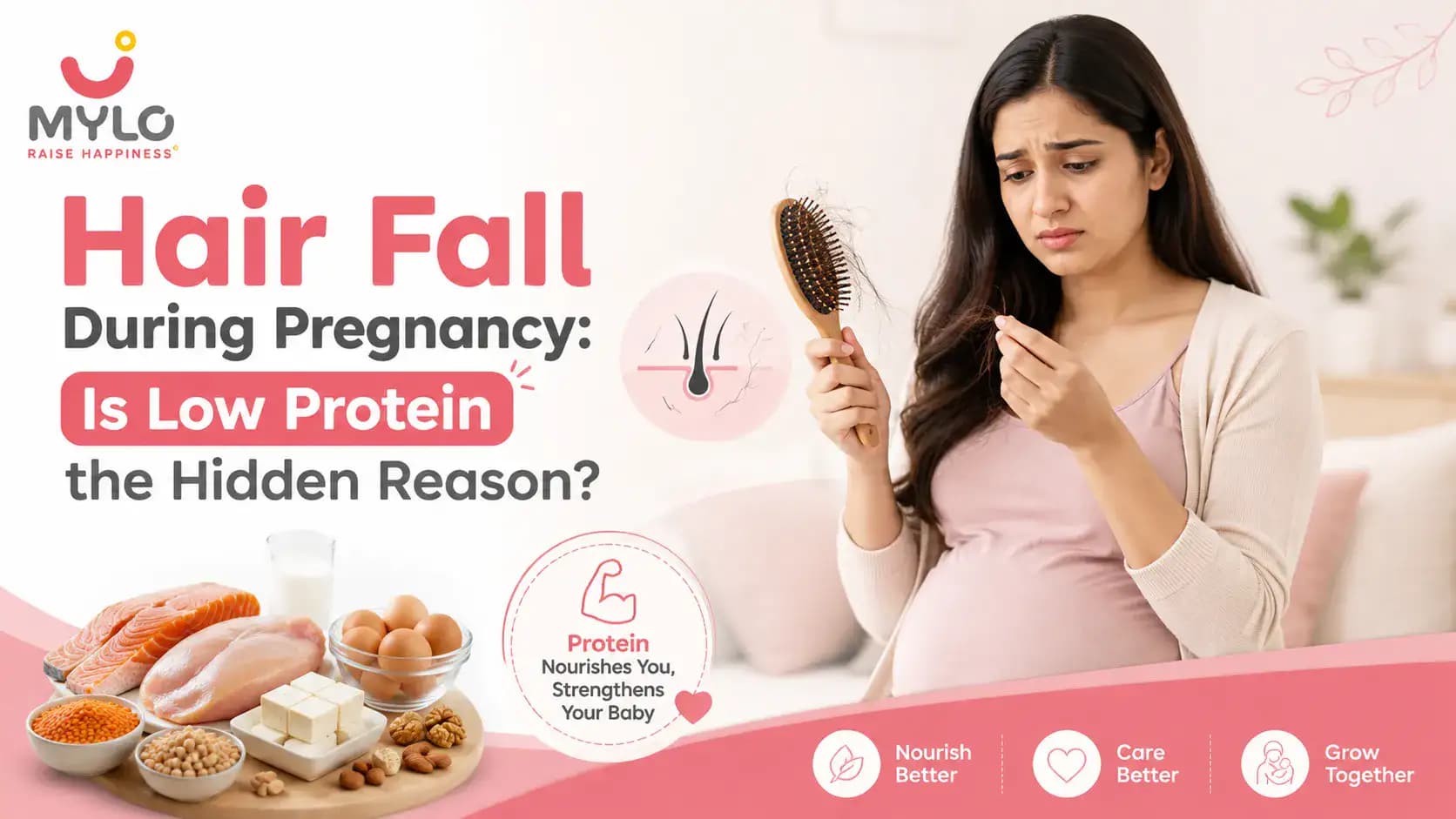
Hair Fall During Pregnancy: Is Low Protein the Hidden Reason? Causes, Diet and Solutions (2026 Guide)
 12 min
TL;DR
Most women get thicker hair during pregnancy, so noticeable hair fall while pregnant is often a signal that something needs attention, and low protein is one of the most overlooked reasons. Pregnancy raises your protein needs, and many Indian diets (especially vegetarian ones) fall short, which can weaken hair since hair is made of a protein called keratin (AAD) (ICMR)。 But protein is not the only cause: iron deficiency (anaemia), thyroid problems, and vitamin D or B12 deficiency are also common and important. So if you are losing hair during pregnancy, the smart step is to eat enough protein and iron-rich food and get checked by your doctor for anaemia, thyroid and deficiencies, rather than ignoring it or blaming hormones alone. Separately, heavy shedding after delivery (postpartum) is a normal, temporary phase.
Quick Answer
Most women get fuller hair during pregnancy, so hair fall while pregnant often points to an underlying issue, and low protein is a commonly missed one. Pregnancy increases your protein needs, and hair is made of the protein keratin, so a low-protein diet can contribute to thinning. But iron deficiency (anaemia), thyroid problems, and vitamin D or B12 deficiency are also common causes. The right response is to eat enough protein and iron-rich foods and get tested by your doctor, not to ignore it. Heavy shedding after delivery is separate and usually temporary.
Author: Mylo Parenting Desk (Nutrition & Maternal Health) Medically reviewed against: NHS, American Academy of Dermatology (AAD) and ICMR Dietary Guidelines
Medical Disclaimer: This article is for informational purposes only and is not a substitute for professional medical advice. Hair fall in pregnancy can have several causes, including deficiencies that need testing. See your doctor to check for anaemia, thyroid issues and nutritional deficiencies before assuming the cause or taking any supplement.
Key Takeaways
Most women get thicker hair in pregnancy, so hair fall often signals an underlying issue (AAD)
Low protein is a real, often-overlooked cause (hair is made of keratin, a protein)
Pregnancy raises your protein needs, and many Indian diets fall short (ICMR)
Iron deficiency (anaemia) is a very common cause in Indian women
Thyroid problems and vitamin D or B12 deficiency also cause hair fall
The right step is diet plus a doctor's check (anaemia, thyroid, deficiencies)
Do not self-prescribe supplements; get tested first
Heavy shedding after delivery is a separate, usually temporary phase
Is Hair Fall Normal During Pregnancy?
Here is the surprising part: during pregnancy, most women have fuller, thicker hair, not more hair fall (AAD)。 This is because high estrogen keeps more hairs in the growing phase, so you shed less than usual.
That is why noticeable hair fall during pregnancy is often a signal worth investigating, it may point to a nutritional deficiency or a health issue rather than being "just normal." The good news: most causes are treatable.
Note: Big hair shedding usually happens 2 to 4 months after delivery (postpartum), which is a separate, temporary phase (see below).
Is Low Protein the Hidden Reason for Hair Fall?
Yes, low protein is one of the most overlooked causes. Here is why it matters (ICMR) (Harvard Nutrition Source):
Hair is made of keratin, a protein
Pregnancy increases your protein needs (to build the baby's tissues and your own)
When protein is low, the body prioritises vital organs over hair, so hair growth slows and shedding can increase
Many Indian diets are carbohydrate-heavy and low in protein, especially vegetarian diets that do not combine protein sources well
So if your diet is mostly rice, roti and potatoes with little dal, dairy, eggs, or other protein, low protein could genuinely be contributing to hair fall, and it is easy to miss.
But Protein Is Not the Only Cause: Other Common Reasons
To be accurate, hair fall in pregnancy usually has more than one possible cause (NHS) (Cleveland Clinic):
Cause | Why It Matters |
|---|---|
Low protein | Hair is keratin; low intake weakens growth |
Iron deficiency (anaemia) | Very common in Indian women; a major hair-fall cause |
Thyroid problems | Hypo or hyperthyroidism (common in pregnancy) causes shedding |
Vitamin D or B12 deficiency | Both linked to hair loss |
Stress or illness | Can trigger temporary shedding (telogen effluvium) |
Stopping birth control before pregnancy |
|
This is why the best approach is not to guess, but to improve your diet and get tested, so the real cause is found and treated.
How Much Protein Do You Need in Pregnancy?
Your protein needs rise in pregnancy, especially in the second and third trimesters (ICMR) (Harvard Nutrition Source):
Pregnancy adds an extra daily protein requirement on top of your normal needs
Aim to include a protein source in every meal
Vegetarian mothers need to combine sources (dal + rice, dairy, soya) to get complete protein
For your exact target, ask your doctor or dietitian, it depends on your weight, trimester and diet.
Best Protein-Rich Foods in Pregnancy (Diet First)
A food-first approach is the safest and most effective way to support your hair and pregnancy (ICMR):
Food | Protein Source |
|---|---|
Dal, rajma, chana, lentils | Everyday plant protein |
Milk, curd (dahi), paneer | Dairy protein and calcium |
Eggs | Complete, high-quality protein |
Chicken or fish (if non-veg) | Complete protein (cooked well) |
Soya, tofu | Strong plant protein |
Nuts and seeds | Protein plus healthy fats |
Sprouts and besan | Easy Indian protein additions |
Tip: Combine dal with rice or roti, and add dairy and nuts, to build complete protein through the day. If your doctor or dietitian advises a protein supplement, choose one appropriate for pregnancy under their guidance.
Foods and Nutrients That Also Support Hair
Beyond protein, these nutrients help hair health in pregnancy (Harvard Nutrition Source):
Nutrient | Food Sources |
|---|---|
Iron | Spinach, methi, dates, jaggery, chicken, dals (with vitamin C for absorption) |
Vitamin C | Amla, citrus, guava (boosts iron absorption) |
Biotin and B vitamins | Eggs, nuts, whole grains |
Zinc | Nuts, seeds, dairy, legumes |
Omega-3 | Walnuts, flaxseed, fish |
When Should You See a Doctor?
See your doctor if you have hair fall along with (NHS):
Tiredness, weakness, or pale skin (possible anaemia)
Weight changes, feeling too cold or too hot, mood changes (possible thyroid issue)
Sudden or heavy hair loss
Patchy hair loss
A generally poor or restricted diet
Your doctor may test your haemoglobin (iron), thyroid, vitamin D and B12 to find and treat the real cause, this matters for both your hair and your pregnancy.
What About Hair Fall AFTER Delivery (Postpartum)?
This is a separate and very common experience (AAD):
After delivery, estrogen drops, and the extra hairs you kept during pregnancy shift into the shedding phase
This causes noticeable shedding, usually 2 to 4 months after birth (called telogen effluvium)
It is temporary and normal, and hair usually returns to normal by about 6 to 12 months
Good nutrition (including protein and iron) supports recovery
So postpartum shedding is not a sign of permanent hair loss, it is your hair cycle resetting.
Indian Context: What Indian Mothers Should Know
Protein gap is real: Many Indian diets are low in protein; make sure every meal has a protein source (ICMR)
Anaemia is very common: Get your haemoglobin checked; iron deficiency is a leading cause of hair fall in Indian women
Check your thyroid: Thyroid problems are common in Indian pregnancies and cause hair fall
Diet before supplements: Focus on dal, dairy, eggs, soya, nuts; take supplements only if your doctor advises
Avoid harsh "totke": Skip unproven oils or treatments; nutrition and medical checks help most
Be gentle with hair: Avoid tight hairstyles, excessive heat and harsh chemical treatments
Try Mylo Protein Biscuits for protein needs during pregnancy https://mylofamily.com/product/mylo-protein-biscuits-for-pregnancy-750gm-4158
Myths vs Facts About Hair Fall in Pregnancy
Myth | Fact | Source |
|---|---|---|
"Hair fall in pregnancy is always normal" | Often it signals a deficiency worth checking | |
"It is only hormones, nothing to do with diet" | Low protein and iron are real, common causes | |
"Oils and shampoos will fix it" | They do not fix a nutritional or thyroid cause | |
"Postpartum hair fall is permanent" | False. It is temporary and usually recovers | |
"Just take any supplement for hair" | Get tested first; treat the actual cause |
FAQs: Hair Fall During Pregnancy
Is low protein really a cause of hair fall in pregnancy?
Yes, it is a common and overlooked cause. Hair is made of the protein keratin, and pregnancy raises your protein needs (ICMR)。 If your diet is low in protein (common in carbohydrate-heavy or unbalanced vegetarian diets), it can contribute to hair fall. But get checked for iron and thyroid issues too.
Pregnancy mein baal jhadne ka kaaran low protein ho sakta hai kya? (Hinglish)
Haan, low protein ek common aur aksar ignore kiya jaane wala kaaran hai. Baal keratin (ek protein) se bante hain, aur pregnancy mein protein ki zarurat badh jaati hai. Agar diet mein dal, dahi, paneer, ande, soya kam hain, toh baal jhad sakte hain. Lekin sirf protein hi nahi, iron ki kami (anaemia) aur thyroid bhi kaaran ho sakte hain, isliye doctor se test zaroor karwayein.
Is hair fall normal during pregnancy?
Usually, most women get thicker hair in pregnancy, so noticeable hair fall may signal a deficiency or health issue (AAD)。 It is worth improving your diet and getting checked for anaemia, thyroid, and vitamin deficiencies rather than assuming it is normal.
Baal jhadne ke liye kya khayein? (Hinglish)
Protein aur iron rich foods khayein: dal, rajma, chana, dahi, paneer, doodh, ande, soya, nuts aur seeds. Iron ke liye palak, methi, khajoor, gud lein, aur vitamin C (amla, nimbu) ke saath khayein taaki iron achhe se absorb ho. Har meal mein ek protein source zaroor rakhein. Supplement sirf doctor ki salah par lein.
What deficiencies cause hair fall in pregnancy?
Common ones are low protein, iron deficiency (anaemia), thyroid problems, and vitamin D or B12 deficiency (Cleveland Clinic)。 A doctor can test for these. Treating the underlying deficiency is the most effective way to reduce hair fall.
Should I take a protein or hair supplement in pregnancy?
Only if your doctor or dietitian advises it. Focus on a protein-rich, balanced diet first (ICMR)。 Do not self-prescribe hair or biotin supplements; get tested so any real deficiency (like iron or thyroid) is treated correctly.
Will my hair fall after delivery too?
Possibly, and that is normal and temporary. Many women shed hair 2 to 4 months after delivery as hormones reset, and it usually recovers by 6 to 12 months (AAD). Good nutrition supports the recovery.
Can hair fall in pregnancy be a sign of a serious problem?
Not usually serious, but it can be a sign of anaemia or a thyroid issue that matters for your pregnancy (NHS)。 That is why it is worth getting checked, so any underlying condition is found and treated.
References
American Academy of Dermatology (AAD). "Hair Loss in New Moms." https://www.aad.org/public/diseases/hair-loss/insider/pregnancy
NHS UK. "Hair Loss." https://www.nhs.uk/conditions/hair-loss/
Cleveland Clinic. "Telogen Effluvium." https://my.clevelandclinic.org/health/diseases/telogen-effluvium
NHS UK. "Iron Deficiency Anaemia." https://www.nhs.uk/conditions/iron-deficiency-anaemia/
Harvard T.H. Chan School of Public Health. "Protein." https://www.hsph.harvard.edu/nutritionsource/what-should-you-eat/protein/
ICMR / NIN. "Dietary Guidelines for Indians." https://www.nin.res.in/dietaryguidelines/pdfjs/locale/DGI07052024P.pdf
Article Posted Under
Related Articles

Medical Disclaimer
This content is for informational purposes only and should not replace professional medical advice. Consult with a physician or other health care professional if you have any concerns or questions about your health. If you rely on the information provided here, you do so solely at your own risk.


AWARDS AND RECOGNITION

Mylo wins Forbes D2C Disruptor award

Mylo wins The Economic Times Promising Brands 2022
AS SEEN IN












- Mylo Care: Effective and science-backed personal care and wellness solutions for a joyful you.
- Mylo Baby: Science-backed, gentle and effective personal care & hygiene range for your little one.
- Mylo Community: Trusted and empathetic community of 10mn+ parents and experts.


Product Categories
Baby Carrier | Baby Soap | Baby Wipes | Stretch Marks Cream | Baby Cream | Baby Shampoo | Baby Massage Oil | Baby Hair Oil | Stretch Marks Oil | Baby Body Wash | Baby Powder | Baby Lotion | Diaper Rash Cream | Newborn Diapers | Teether | Baby Kajal | Baby Diapers Pants | Cloth Diapers | Laundry Detergent | Lactation Granules |