


Orders
.png&w=48&q=75 "login")
Profile


Wallet

Diapers for Babies With Eczema and Sensitive Skin: What Actually Helps
 20 min
AI-Generated Summary
Quick overview in 30 seconds.webp&w=32&q=75)
- Newborn skin is 20-30% thinner than adult skin, absorbs chemicals faster, and lacks a fully developed protective barrier, making it highly prone to rashes and irritation.
- Organic disposable diapers made from bamboo, cornstarch, or plant-based fibers are hypoallergenic, chlorine-free, fragrance-free, and breathable, ideal for sensitive newborn skin in humid Indian climates.
- Avoid diapers containing chlorine, phthalates, parabens, latex, and heavy metals, and look for features like wetness indicators, high-waist fits, elasticated wings, and cloth-like softness.
- Looking for gentle organic diapers for your newborn? Explore our Adjustable & Reusable Cloth Diaper - Red & Blue - Pack of 2.
Quick Answer
Choose a fragrance free, dye free diaper in the correct size, and change it promptly. Here is the part that surprises most parents: eczema usually spares the diaper area, because the moist, occluded environment inside a diaper protects the skin and stops your baby scratching. So a rash in the diaper area of a baby with eczema is usually something else, and worth showing a doctor.
Key Takeaways
Atopic dermatitis, or eczema, characteristically spares the diaper region. If your baby has eczema on the cheeks and limbs but the nappy area looks fine, that is the expected pattern, not luck.
A rash inside the diaper area is more likely irritant diaper dermatitis, thrush, or an allergic reaction to something in the diaper or wipes, rather than eczema itself.
Diapers can genuinely cause allergic contact dermatitis, most often from rubber in the elastic side panels or from dyes, and it shows up in recognisable patterns.
Wipes and creams cause more contact reactions than diapers do, usually through fragrance and preservatives.
"Organic", "natural" and "chemical free" are unregulated marketing terms on a disposable diaper. No certification makes a disposable diaper organic.
The two things with real evidence behind them are changing promptly and keeping the skin dry. Every material choice is secondary to those.
Does Eczema Actually Affect the Diaper Area?
Usually not, and this is the single most useful thing to understand if your baby has eczema.
In infants, atopic dermatitis typically appears on the cheeks and face, the scalp, the trunk and the outer surfaces of the arms and legs. The diaper region, along with the armpits, is characteristically spared. Dermatology references describe this sparing as a recognised feature of the condition rather than an exception.
Research reviewing why this happens points to three mechanisms working together inside a diaper:
Higher local humidity. The occluded environment reduces water loss from the skin and supports the barrier, which is exactly what eczema-prone skin lacks elsewhere on the body.
Urea from urine and sweat. Urea is a natural humectant, meaning it holds water in the skin, and its presence may improve hydration in the area.
The diaper physically blocks scratching. Eczema is driven by an itch and scratch cycle, and a diaper interrupts it in a way no cream can.
What this means practically. If your baby has eczema and the diaper area is clear, you do not need to go hunting for a special diaper for that region. And if the diaper area is the one place that is inflamed, eczema is probably not the explanation, which changes what you should do about it.
So What Is the Rash in My Baby's Diaper Area?
Most often irritant diaper dermatitis, which is caused by contact time rather than by any allergy. Four things account for the large majority of diaper area rashes, and they look different from each other.
What it looks like | Likely cause | What it needs |
|---|---|---|
Red, sore, shiny skin on the buttocks and thighs, worst on the surfaces the diaper touches, with the deep skin folds relatively spared | Irritant diaper dermatitis, from prolonged contact with urine and stool | More frequent changes, drying properly, a thin barrier cream |
Bright red with a clearly defined border, small spots or pustules spreading beyond the main patch, and the skin folds involved rather than spared | Candida, a yeast infection, which often follows a period of irritant rash or antibiotics | Needs a doctor. Usually requires a prescribed antifungal, and barrier cream alone will not clear it |
Greasy, yellowish scaling, often also in the scalp, behind the ears and in the neck folds | Seborrhoeic dermatitis | Doctor review. Usually treated differently from irritant rash |
Itchy, scaly patches or small blisters following the exact line of the diaper elastic or the waistband, or the shape of a tab | Allergic contact dermatitis to something in the diaper | Change what is touching the skin, and see a doctor. See the next section |
The pattern of a rash tells a doctor a great deal, so it is worth photographing it before an appointment. Do not try to distinguish these yourself and start a treatment. A candida rash treated only with barrier cream will keep coming back, and a steroid used on an undiagnosed fungal rash can make it worse.
Can a Diaper Itself Cause an Allergic Reaction?
Yes, genuinely, though it is much less common than irritant rash. What makes it identifiable is that allergic contact dermatitis follows the shape of whatever is touching the skin.
Where the rash sits | What is usually responsible |
|---|---|
Across the outer buttocks and hips, in a band on each side, described in the literature as a cowboy holster pattern | Rubber components in the elastic side panels. This distribution is well documented and is sometimes called "Lucky Luke" dermatitis |
In the exact outline of a coloured print, band or figure on the diaper | Disperse dyes, which can leach onto skin in the presence of moisture and friction. Specific dyes have been reported as culprits in case literature |
Under the fastening tabs or waistband | Adhesives, or again the elastic components |
Across the whole area the wipe touched, sometimes extending beyond the diaper | Fragrance or preservatives in wipes, not the diaper |
Wherever a cream or oil was applied | Fragrance or a specific ingredient in the cream |
If you suspect this, the useful step is to change one thing at a time rather than everything at once. Switch to a dye free diaper, or to plain water and cotton instead of wipes, and give it a week. Changing four variables together tells you nothing about which one mattered.
Persistent or severe cases can be confirmed by patch testing, which a dermatologist arranges. That is worth asking about if a rash keeps returning in the same distinctive pattern despite everything else being right.
What Do "Organic", "Natural" and "Chemical Free" Actually Mean on a Diaper Pack?
Less than most parents assume, and it is worth being blunt about this because these terms drive a lot of premium pricing.
The claim | What it actually tells you |
|---|---|
"Organic" disposable diaper | Very little. There is no certification that makes a disposable diaper organic. A diaper needs a waterproof back sheet and an absorbent core, and those are manufactured materials. A brand may use some plant derived fibre, but that does not make the product organic in any regulated sense |
"Natural" or "plant based" | That some component derives from a plant source, often bamboo viscose or a corn based polymer. It says nothing about how it was processed, or about the rest of the diaper |
"Chemical free" | Nothing meaningful. Every material is a chemical, including water and cotton. The useful question is which specific substances are absent, not whether "chemicals" are |
"Hypoallergenic" | Not a regulated term. It usually means fragrance and common irritants have been left out, which is genuinely worth having, but it is not a guarantee your baby will not react |
"Dermatologically tested" | That a test was conducted, not what the result was or how many people were tested. Any diaper can still irritate a particular baby's skin |
"Chlorine free", TCF or ECF | This one is specific and checkable. It describes how the wood pulp was bleached. TCF means totally chlorine free, ECF means elemental chlorine free |
Named material certifications | The most meaningful of the lot, because each tests something defined. But check what a given certification actually covers. A textile safety certification says nothing about absorbency, fit or fragrance |
The practical translation: ignore the umbrella words and look for specific absences. Fragrance free and dye free are worth paying attention to. "Organic" and "chemical free" are not, on their own.
What Actually Protects Sensitive Skin?
In order of how much evidence sits behind each, strongest first.
Changing promptly. This is the one with real support. Irritant diaper rash develops when skin stays damp and over hydrated, rubs against a wet surface, and sits in urine and stool that raise its pH and activate enzymes which break down the skin barrier. Prompt changing interrupts all three. Guidance from the NHS, the American Academy of Pediatrics and the Indian Academy of Pediatrics all reduces to this.
Drying the skin properly before the fresh diaper goes on. A clean diaper on damp skin undoes the point of changing.
A thin barrier cream at each change if the skin is pink or your baby is prone to rash. It sits between the skin and the moisture. Leave broken skin alone unless a doctor has advised something specific.
The correct size, not too tight. Friction is one of the three factors. A diaper leaving deep marks is contributing to the problem.
Fragrance free everything, diaper, wipes and cream. This is where material choice genuinely earns its place.
Some nappy free air time where the room and the weather allow it.
A breathable outer layer, which matters more in Indian heat and humidity than temperate-climate advice reflects.
Notice what is not on the list: high absorbency. A more absorbent diaper reduces leaks. It does not reduce the time your baby's skin spends in contact with urine, because that is decided by when you change it.
And to say it plainly: no diaper prevents diaper rash. Any product claiming otherwise is overreaching.
Wipes and Creams Matter More Than the Diaper
If you are going to change one thing for a baby with sensitive or eczema-prone skin, change the wipes before you change the diaper.
Wipes stay in contact with the skin as a liquid, they contain preservatives to keep them sterile, and fragranced versions add a well known contact allergen. Fragrance and preservatives in wipes are among the more common causes of contact reactions in the diaper area, more so than the diaper material itself.
What to do:
Plain water and cotton wool is the gentlest option, and it costs almost nothing. For a baby with a current rash or known sensitivity, this is the safest default.
If you use wipes, choose fragrance free and alcohol free. Fragranced wipes are the ones genuinely worth avoiding.
Pat, do not rub. Friction on already inflamed skin makes it worse.
Keep the cream simple. A plain barrier preparation with a short ingredient list gives fewer things to react to. Avoid perfumed lotions in the diaper area.
Do not use talcum powder. The American Academy of Pediatrics advises against baby and talcum powders, because inhaled talc can cause serious lung problems in babies, and powder also clumps in skin folds.
What to Look For When Buying for Sensitive Skin
Fragrance free. The single most useful specification.
Dye free, or minimal printing in the area that touches skin, given that dyes are a documented cause of contact reactions.
A soft top sheet and gentle leg elastic that does not leave a deep mark.
Breathability in the outer layer.
The size that matches your baby's current weight, because friction from a tight diaper is a direct contributor to rash.
Named certifications rather than umbrella words, and check what each one covers.
A pack size small enough to trial. Never buy a jumbo pack of anything new for a baby with sensitive skin until you have used it for a few days.
A Two Week Plan If the Rash Keeps Coming Back
Changing five things at once is why parents often cannot work out what helped. This isolates the variables.
Days 1 to 3, fix the routine first. Change every 2 to 3 hours and immediately after every poop, dry the skin properly, and apply a thin barrier cream at every change. Change nothing you buy. A large share of rashes settle here, which tells you it was contact time all along.
Days 4 to 7, change the wipes only. Switch to plain water and cotton. Keep everything else identical.
Days 8 to 11, change the cream only. Move to a plain, fragrance free barrier preparation.
Days 12 to 14, change the diaper only. Try a fragrance free, dye free option in the correct size.
Photograph the area each morning in the same light, so you can see change rather than trying to remember it.
Stop this plan and see a doctor immediately if the rash blisters, weeps, bleeds, develops pus or yellow crusting, spreads with small spots beyond a clear border, or comes with fever. Those need assessment, not a systematic elimination exercise. And do not run the two week plan at all if your baby currently has broken skin.
Where Mylo Products Fit
Applied honestly to the criteria above.
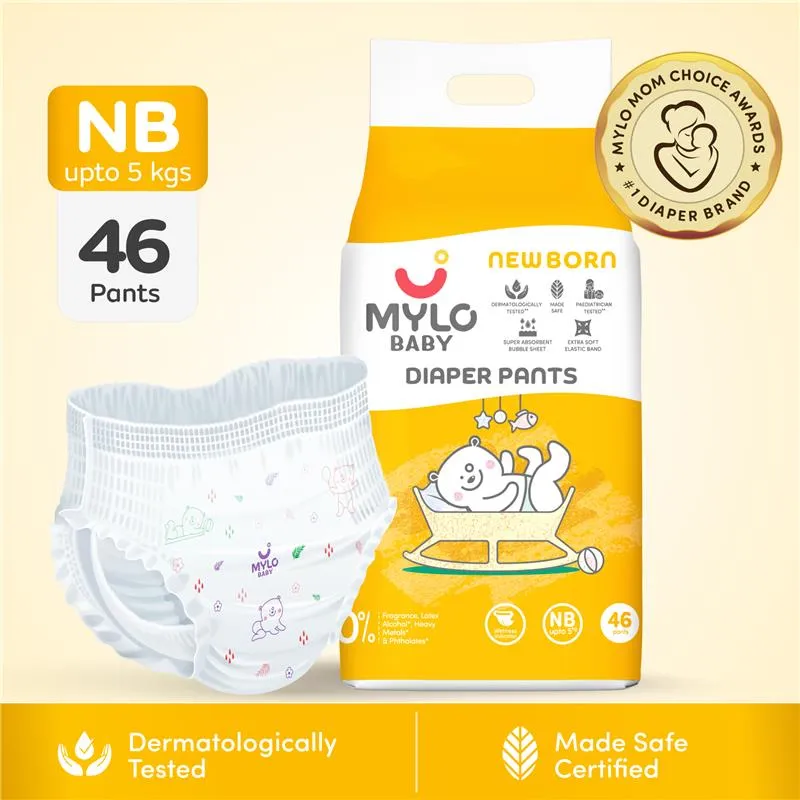
For the newborn weeks: Mylo Baby Diaper Pants in New Born size for up to 5 kg, in 46 count and 92 count. While the umbilical stump heals, a New Born tape style diaper is easier to fold below the navel. Start with the smaller pack, which is also the sensible approach for trialling anything on sensitive skin.
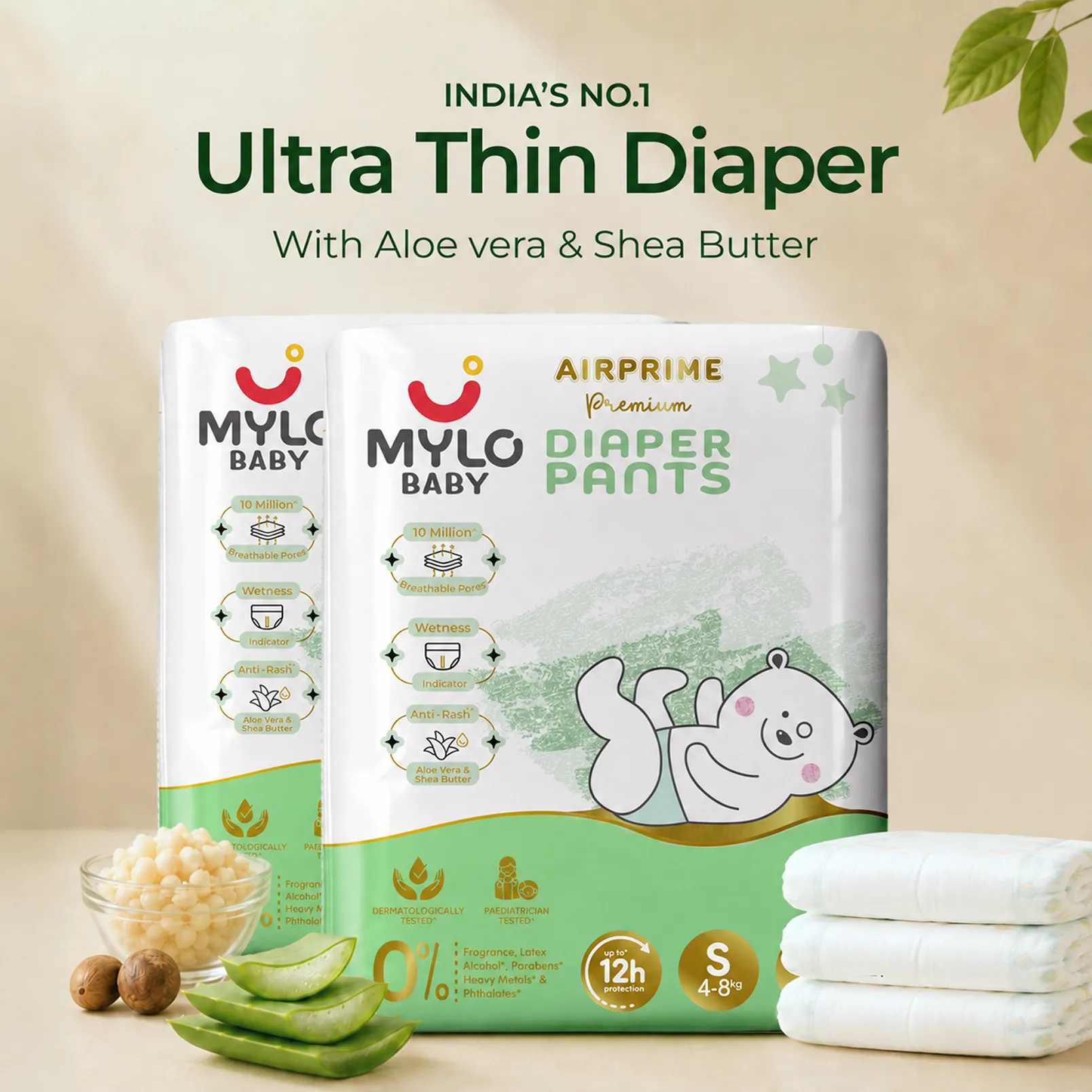
For a wetness indicator, which helps you change promptly rather than guessing, the Airprime Premium range uses a colour changing strip. Changing promptly is the intervention that matters most for rash-prone skin, so a visible signal is genuinely useful here rather than a luxury.
For part of the day in reusables, from about 3 months, the adjustable reusable cloth diaper with insert pads. Note that cloth needs changing after roughly every pee, because fibres hold moisture against the skin rather than gelling it, so it is only gentler if you can keep to that. See whether a cloth diaper needs changing after every pee.
Compare across the full diaper range.
What we will not claim. No diaper in our range prevents diaper rash, and we do not describe any of our disposable diapers as organic, because no certification supports that description for a disposable product. Any diaper, including ours, can irritate a particular baby's skin, which is why a small trial pack is the right way to introduce one.
[For the Mylo team: insert here the specific, currently valid certifications for the relevant SKUs, named individually, with what each one tests. Do not use umbrella terms.]
Mylo Parents Asked
Which diapers are suitable for a baby with eczema?
Fragrance free and dye free, in the correct size, changed promptly. But the more important point is that eczema usually spares the diaper area, because the moist environment inside a diaper supports the skin barrier and prevents scratching. If your baby has eczema elsewhere and the diaper area is clear, that is expected. If the diaper area is the inflamed part, it is probably not eczema and is worth showing your doctor.
Are organic disposable diapers better for sensitive skin?
Not reliably, because "organic" has no regulated meaning on a disposable diaper and no certification supports it. What is worth looking for is specific: fragrance free, dye free, a soft top sheet and a breathable outer layer. Those are checkable. "Organic" is not.
Can my baby be allergic to their diaper?
Yes, though it is far less common than ordinary irritant rash. Allergic contact dermatitis from diapers is usually caused by rubber in the elastic side panels or by dyes, and it follows the shape of whatever touched the skin. A rash in two bands across the outer buttocks and hips is a recognised pattern pointing to the elastics. Change one thing at a time, and see a dermatologist if it recurs in the same shape.
Should I use water and cotton instead of wipes?
For a baby with a current rash or known sensitivity, yes, it is the gentlest option and it costs very little. Otherwise fragrance free, alcohol free wipes are fine for most babies. Fragranced wipes are the ones genuinely worth avoiding.
How often should I change a diaper if my baby has sensitive skin?
Every 2 to 3 hours for a newborn and every 3 to 4 hours from about 3 months, and immediately after every poop. During an active rash, change more often than that. Prompt changing does more for the skin than any material choice.
Do organic or premium diapers leak less?
Leaking is a function of fit and size rather than of materials or price. If a diaper leaks, check that the weight matches the size range and that the leg elastic sits in the thigh crease before you consider anything else.
Are cloth diapers better for eczema-prone skin?
Only if you change them after every pee. Cloth holds urine as liquid in its fibres rather than converting it to gel, so the wet layer sits against the skin. Cloth changed promptly is very gentle. Cloth left on for hours is the worst option of the two.
My baby has eczema on the face. Do I need a special diaper?
Probably not for the eczema itself, since the diaper area is usually spared. Focus your effort on the areas that are affected, and follow your doctor's plan for those. Keep the diaper area to the basics: fragrance free, right size, changed promptly.
When Should You Speak to a Doctor?
Contact your paediatrician or a dermatologist if you notice:
A rash that has not improved within 2 to 3 days of frequent changing and barrier cream
A bright red rash with a clear border and small spots or pustules spreading beyond it, which suggests a fungal infection needing prescribed treatment
Blisters, weeping, bleeding, pus or yellow crusting
Fever alongside a rash in the diaper area
A rash that keeps returning in the same distinctive shape, such as bands along the elastics, which may warrant patch testing
Eczema that is not controlled by your current plan, or that is affecting your baby's sleep
Any swelling of the lips or face, hives, or breathing difficulty, which needs emergency care
Skin that looks infected, or a baby who seems unwell as well as sore
Do not use a steroid cream in the diaper area unless a doctor has prescribed it for your baby. Applied to an undiagnosed fungal rash it can make things worse, and skin in the diaper area absorbs more than skin elsewhere.
This article is general information and does not replace an examination. Any diagnosis or treatment for your baby's skin should come from your own doctor.
Bottom Line
If your baby has eczema, the diaper area is usually the one place it does not appear, so a rash there needs a different explanation and often a doctor. For sensitive skin generally, the things that work are changing promptly, drying properly, a thin barrier cream, the right size, and fragrance free wipes and diapers. Ignore "organic" and "chemical free", which mean nothing specific on a disposable diaper, and look for named absences instead.
References
Potential Mechanisms of the Sparing of Atopic Dermatitis in the Diaper Region: A Scoping Review. PMC.
DermNet NZ. Atopic dermatitis.
Di Altobrando A and colleagues. Allergic contact dermatitis caused by the elastic borders of diapers. Contact Dermatitis, 2020.
Diaper dye dermatitis. PubMed.
Stamatas GN, Tierney NK. Diaper dermatitis. Pediatric Dermatology. 2014;31(1):1-7.
StatPearls. Diaper Dermatitis.
AAP, HealthyChildren.org. Common Diaper Rashes and Treatments.
NHS, UK. Nappy rash.
Indian Academy of Pediatrics. IAP Guidelines for Pediatric Skin Care. Indian Pediatrics. 2021.

Article Posted Under
Related Articles


Related Topics
.webp&w=32&q=75)
Medical Disclaimer
This content is for informational purposes only and should not replace professional medical advice. Consult with a physician or other health care professional if you have any concerns or questions about your health. If you rely on the information provided here, you do so solely at your own risk.


AWARDS AND RECOGNITION

Mylo wins Forbes D2C Disruptor award

Mylo wins The Economic Times Promising Brands 2022
AS SEEN IN












- Mylo Care: Effective and science-backed personal care and wellness solutions for a joyful you.
- Mylo Baby: Science-backed, gentle and effective personal care & hygiene range for your little one.
- Mylo Community: Trusted and empathetic community of 10mn+ parents and experts.


Product Categories
Baby Carrier | Baby Soap | Baby Wipes | Stretch Marks Cream | Baby Cream | Baby Shampoo | Baby Massage Oil | Baby Hair Oil | Stretch Marks Oil | Baby Body Wash | Baby Powder | Baby Lotion | Diaper Rash Cream | Newborn Diapers | Teether | Baby Kajal | Baby Diapers Pants | Cloth Diapers | Laundry Detergent | Lactation Granules |