


Orders
.png&w=48&q=75 "login")
Profile


Wallet

Is It Safe to Post Your Child's Photos on Social Media?
 14 min
Quick Answer
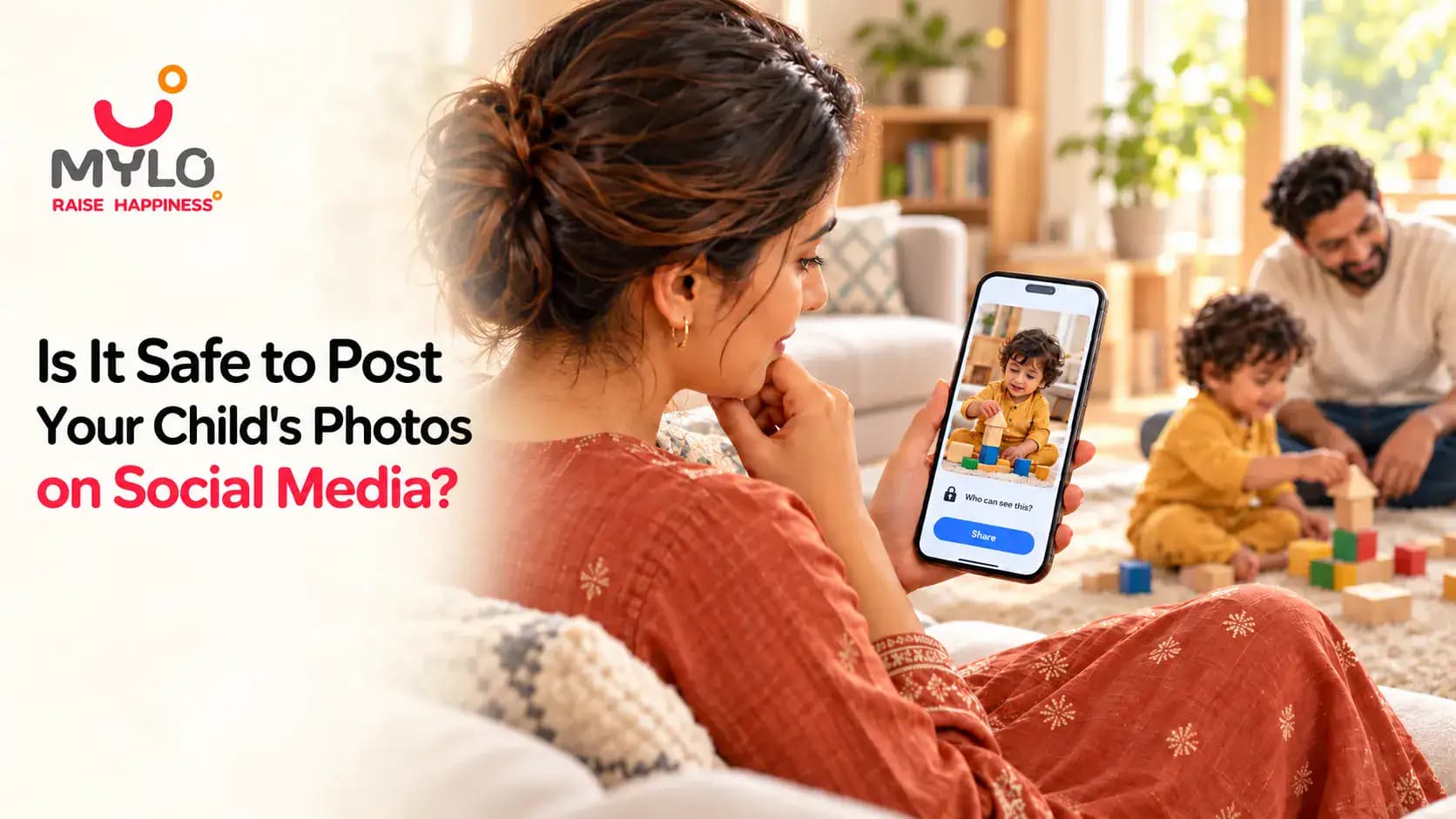
Sharenting means parents sharing photos, videos and details of their children online. For example, posting your toddler's birthday photo with their school name, full name and location can reveal more than you intended. Sharing is not wrong, but private accounts, careful choices and no personal details keep your child safer.
At a Glance
Topic | Key Point |
|---|---|
Is it safe? | It can be, if you share carefully and privately |
Biggest risks | Photo misuse, location tracking, identity theft, AI morphing, a permanent digital footprint |
Never post | Bath, nappy or nude photos, school name or uniform, home address, full name with date of birth |
Safer ways | Private accounts, close friends lists, family-only albums, location off |
If a photo is misused | Report on the platform, report at cybercrime.gov.in or call 1930 |
As children grow | Ask their permission before posting |
Key Facts
Once a photo is online, it can be saved, screenshotted and shared without your knowledge, even from private accounts.
Photos taken on phones can store the location where they were taken. Many apps remove this, but not all do.
AI tools can now alter or morph ordinary photos, including photos of children.
India's Digital Personal Data Protection Act, 2023 requires platforms to get verifiable parental consent before processing the personal data of children under 18.
India's National Cyber Crime Helpline number is 1930.
What Is Sharenting?
Short answer: Sharenting is a mix of "sharing" and "parenting". It means posting your child's photos, videos, milestones and stories on social media, WhatsApp or blogs.
Most parents share out of love and pride. Grandparents abroad, cousins and friends enjoy seeing children grow. The concern is not sharing itself, but what is shared, with whom, and how much.
Is It Safe to Post Baby Photos on Social Media?
Short answer: It can be reasonably safe if your account is private, you share with people you know, and you never include personal details or sensitive photos. Public posts carry the highest risk.
Lower Risk | Higher Risk |
|---|---|
Private family WhatsApp group or shared album | Public Instagram, Facebook or YouTube |
Close friends list on Instagram | Hashtags like #babyname or #cutebaby on public posts |
Photos without faces, or from behind | Clear face photos with full name and location |
Posting after the event | Posting live, showing where you are right now |
Fully clothed, everyday moments | Bath, nappy, swimwear or nude photos |
What Are the Risks of Posting Children's Photos Online?
Short answer: The main risks are photos being misused on harmful sites, strangers finding your child's location, identity theft, AI morphing, and your child's permanent digital footprint without their consent.
Risk | What It Means |
|---|---|
Photo misuse | Innocent photos, especially bath or swimwear photos, can be stolen and shared on harmful websites |
Location tracking | Geotags, school uniforms, house numbers and landmarks can show where your child lives or studies |
Identity theft | Full name, date of birth, birthplace and parents' names can be used for fraud later |
AI morphing and deepfakes | AI tools can alter children's photos into fake or harmful images |
Digital kidnapping | Strangers repost a child's photos pretending the child is theirs |
Embarrassment later | Tantrum videos or potty photos may upset your child when they are older |
Digital footprint | Everything online can last forever. Your child didn't choose it |
What Should You Never Post About Your Child?
Short answer: Never post nude, bath or nappy photos, your child's full name with date of birth, school name or uniform, your home address or live location, or embarrassing moments.
Never Post | Why |
|---|---|
Bath, nappy, potty or nude photos | Most likely to be misused |
School name, uniform, ID card or school gate | Shows where your child is every day |
Full name with date of birth or birth time | Used in identity theft |
Home address, building name, car number plate | Shows where you live |
Live location ("At the park now!") | Shows where your child is in real time |
Medical details or reports | Private health information |
Tantrums, crying or punishment videos | Your child's dignity matters |
Photos of other children without their parents' permission | Their parents may not want them online |
Birth announcements often include the baby's full name, weight, hospital and exact time. Consider sharing only a first name and a photo.
How to Share Your Child's Photos Safely
Short answer: Keep your accounts private, share with a small trusted group, turn off location, check the background of every photo, and think before posting.
Tip | How |
|---|---|
Make accounts private | Review followers. Remove people you don't know well |
Use close friends lists | Instagram Close Friends, Facebook custom friend lists |
Use private albums | Google Photos or iCloud shared albums with family only |
Turn off location | Switch off location tags for the camera and don't add place tags |
Check the background | Hide house numbers, school logos, street signs |
Avoid face close-ups publicly | Share photos from behind, from far, or with face partly hidden |
Post later, not live | Share holiday photos after you get home |
Use a nickname | Avoid full names in captions and hashtags |
Think about the future | Would your child be happy to see this at 13? |
Review old posts | Delete or archive old public posts of your child |


WhatsApp Groups and Family Sharing
Short answer: Family WhatsApp groups feel private, but photos can be forwarded anywhere. Ask relatives not to forward or post your child's photos publicly.
Many Indian families share baby photos in large family or society WhatsApp groups. It feels safe, but anyone can save or forward the photo.
Share in small groups of close family only.
Politely ask grandparents, aunts and uncles not to post your child's photos on their public profiles.
Use "view once" for photos you don't want saved.
If relatives post without asking, kindly explain your rules. Read handling grandparent and parenting conflict.
Simple message to family: "We love that you love her photos! Please don't post them on Facebook or forward them outside the family. We're keeping her pictures private for her safety."
Should You Ask Your Child Before Posting?
Short answer: Yes, as soon as your child is old enough to understand, usually from around 3 to 4 years. Asking teaches them that their body and image belong to them.
From about 3 years, ask: "Can I send this photo to Nani?"
Respect a "no", even for cute photos.
This builds early lessons about consent and body safety. Read body safety: good touch bad touch.
Kid Influencer Accounts and Brand Deals
Short answer: Running a public account for your toddler means more exposure and more risk. If you choose to do it, never share personal details and think carefully about long-term effects.
Think About | Why |
|---|---|
Who sees it | Public accounts reach strangers, including people with bad intentions |
Comments and messages | Check and filter comments. Block suspicious accounts |
Your child's time | Filming should never take over play, sleep or family time |
Your child's future | They may not want this public history when older |
Earnings | Keep a fair record of earnings made from your child's image |
What to Do If Your Child's Photo Is Misused
Short answer: Take screenshots as proof, report the post to the platform, report it at cybercrime.gov.in or call 1930, and contact the police for serious cases.
Step | What to Do |
|---|---|
1. Save proof | Screenshot the post, link, account name, date and time |
2. Report on the platform | Use "Report" on Instagram, Facebook, YouTube or WhatsApp. Choose "child safety" options |
3. Remove from search | Google allows requests to remove images of people under 18 from search results |
4. Report to cyber crime | File a complaint at cybercrime.gov.in or call 1930 (National Cyber Crime Helpline) |
5. Police | For sexual or morphed images, report to the police. Indian law, including the POCSO Act and the IT Act, treats this very seriously |
6. Secure accounts | Change passwords, review followers, make accounts private |
Indian Context: What Parents Should Know
National Cyber Crime Helpline: 1930, and the online portal cybercrime.gov.in.
DPDP Act, 2023: platforms need verifiable parental consent to process children's personal data and must not track or target ads at children.
POCSO Act and IT Act: creating, sharing or storing sexual images of children is a serious crime in India.
Family culture: sharing in big family groups is common. Set your own family rules early.
Schools and daycares: ask how they use children's photos on their social media pages, and give or refuse consent in writing.
Myths vs Facts
Myth | Fact |
|---|---|
Private accounts are 100% safe | Followers can screenshot and share. Private is safer, not fully safe |
Only bad parents post photos | Most parents share out of love. Careful sharing is the goal |
Bath photos are innocent so they're fine | Innocent photos can still be misused. Keep them offline |
WhatsApp is private | Photos can be forwarded anywhere |
Babies don't have privacy | Children have a right to privacy and dignity, even when small |
Deleting a post removes it forever | Copies may already exist. Think before posting |
FAQs
1. Is it okay to post my baby's photos on Instagram?
It can be, if your account is private, you know your followers, and you avoid personal details and sensitive photos.
2. Should I hide my child's face on social media?
It is the safest choice for public posts. For private family sharing, many parents show faces but avoid other details.
3. Can someone find my location from a photo?
Yes. Photos may store location data, and backgrounds like school logos or house numbers can reveal where you are. Turn off location tags and check the background.
4. What should I do if someone posts my child's photo without permission?
Ask them politely to remove it. If it's a stranger or misuse, report it to the platform and at cybercrime.gov.in or 1930.
5. Is it safe to share photos in school or daycare WhatsApp groups?
Share only your own child, never others' children, and ask the school about their photo policy.
6. When should I start asking my child's permission?
From around 3 to 4 years, when they can understand. It teaches respect and consent.
7. Kya bacchon ki photo social media par daalna safe hai?
Private account aur sirf jaane pehchaane logon ke saath share karna kaafi had tak safe hai. Lekin nahane ki ya bina kapdon ki photo, school ka naam, ghar ka address ya live location kabhi mat daaliye.
8. Bacche ki photo ka galat istemaal ho to kya karein?
Turant screenshot lijiye, us post ko platform par report kijiye, aur cybercrime.gov.in par shikayat kijiye ya 1930 par call kijiye. Gambhir maamle mein police se sampark kijiye.
Related Reads
References
Ministry of Electronics and Information Technology, Government of India. Digital Personal Data Protection Act, 2023. https://www.meity.gov.in
Ministry of Home Affairs, Government of India. National Cyber Crime Reporting Portal. https://cybercrime.gov.in
American Academy of Pediatrics, HealthyChildren.org. Sharing photos of your child online. https://www.healthychildren.org
UNICEF. Children's online privacy and freedom of expression. https://www.unicef.org
Google. Request removal of images of minors from Google search results. https://support.google.com
Ministry of Women and Child Development, Government of India. Protection of Children from Sexual Offences (POCSO) Act, 2012.
Disclaimer
This article is for general information only and is not legal advice. Laws and platform rules can change. If your child's photo has been misused, contact the cyber crime helpline 1930, report at cybercrime.gov.in, or speak to the police.
Baby Essentials
Everything for the wellness of the baby





Article Posted Under
Related Articles




Related Topics
.webp&w=32&q=75)
Medical Disclaimer
This content is for informational purposes only and should not replace professional medical advice. Consult with a physician or other health care professional if you have any concerns or questions about your health. If you rely on the information provided here, you do so solely at your own risk.


AWARDS AND RECOGNITION

Mylo wins Forbes D2C Disruptor award

Mylo wins The Economic Times Promising Brands 2022
AS SEEN IN













- Mylo Care: Effective and science-backed personal care and wellness solutions for a joyful you.
- Mylo Baby: Science-backed, gentle and effective personal care & hygiene range for your little one.
- Mylo Community: Trusted and empathetic community of 10mn+ parents and experts.


Product Categories
Baby Carrier | Baby Soap | Baby Wipes | Stretch Marks Cream | Baby Cream | Baby Shampoo | Baby Massage Oil | Baby Hair Oil | Stretch Marks Oil | Baby Body Wash | Baby Powder | Baby Lotion | Diaper Rash Cream | Newborn Diapers | Teether | Baby Kajal | Baby Diapers Pants | Cloth Diapers | Laundry Detergent | Lactation Granules |