


Orders

Profile


Wallet

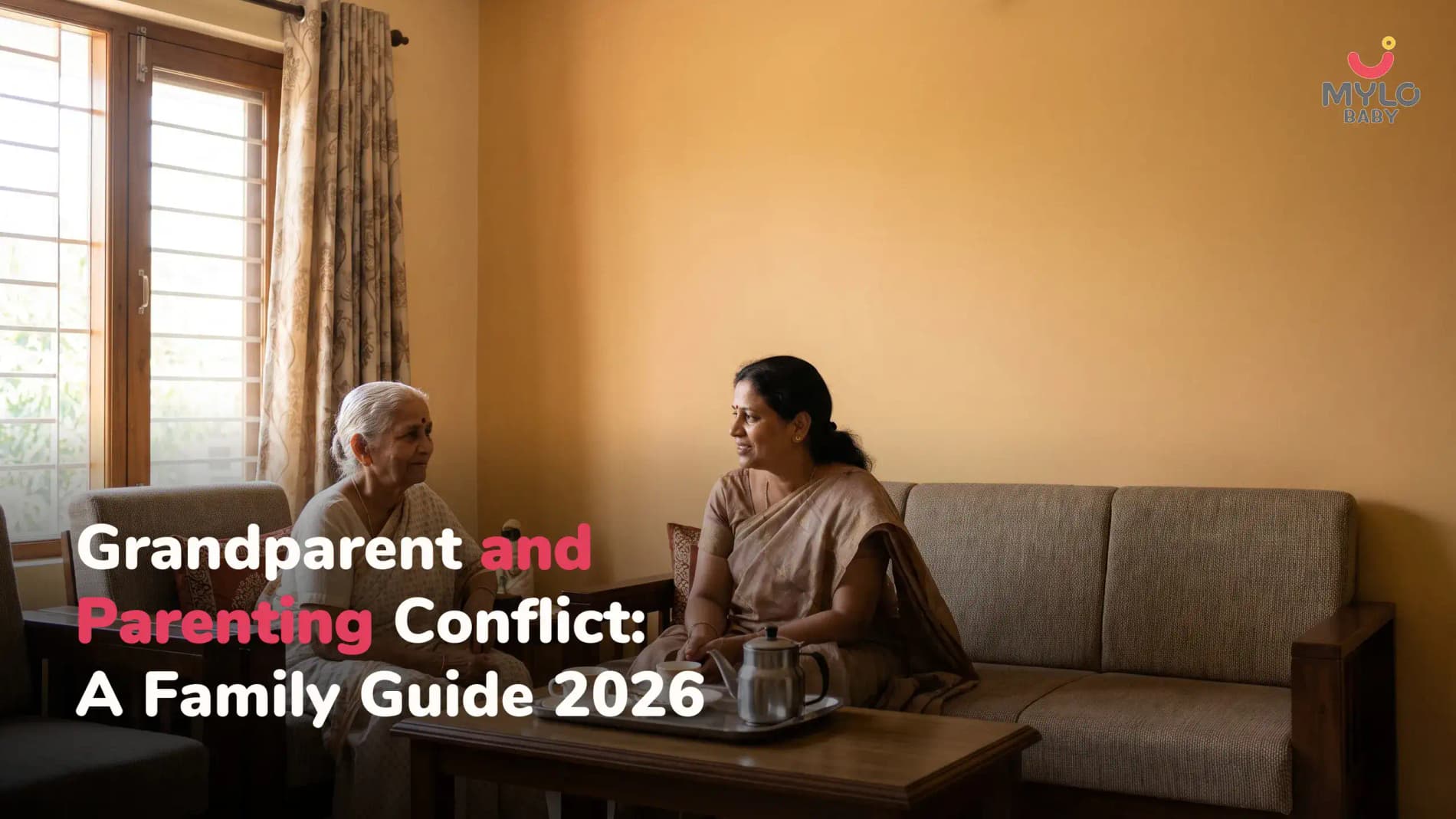
Grandparent and Intergenerational Parenting Conflict: A Complete Guide for Indian Families (2026 Complete Guide)
 13 min


BDS (Gold Medalist), Certified Lactation Consultant – BPNI Delhi, Maternal & Infant Nutrition Expert · 15 years experience
TL;DR
Disagreements between parents and grandparents over how to raise a child are very common, especially in Indian joint families, and they usually come from love on both sides (AAP, APA). Conflicts often arise around feeding, sleep, discipline, screen time and old versus new health practices, because parenting advice has changed a lot across generations. The key is to communicate calmly, present a united front as partners, set kind but clear boundaries, pick your battles, and explain the "why" behind your choices without dismissing elders' experience. Hold firm on a few non-negotiables that affect health and safety, such as vaccines, safe sleep and no honey before age one, while letting smaller things go. Grandparent involvement also brings huge benefits, so the goal is balance, not conflict.
Quick Answer
Conflict between parents and grandparents over raising a child is common and usually comes from love on both sides. It often involves feeding, sleep, discipline and old versus new health advice. Handle it by communicating calmly, agreeing as partners, setting kind boundaries, picking your battles, and holding firm only on health and safety.
Author: Mylo Editorial Team, Mylo Parenting Desk Medically reviewed by: Mylo Editorial Board, aligned with AAP, APA, WHO and IAP guidance Last updated: 22 June 2026
Medical Disclaimer: This article is for informational and general guidance purposes only and is not a substitute for professional medical, psychological or family-counselling advice. For health-related disagreements, your pediatrician's guidance should be the deciding factor. If family conflict is seriously affecting wellbeing, consider professional support.
Key Takeaways
Conflict between parents and grandparents over parenting is very common, especially in joint families (APA)
It usually comes from love and good intentions on both sides
Common areas are feeding, sleep, discipline, screen time and old versus new health practices
Parenting advice has changed a lot, so generations often differ honestly
Communicate calmly, agree as partners first, and set kind but clear boundaries
Pick your battles: hold firm on health and safety, let smaller things go
Use your pediatrician's advice as a neutral authority for health disputes
Grandparent involvement brings real benefits, so aim for balance, not conflict
Why Does Grandparent and Parenting Conflict Happen?
Most of the time, both parents and grandparents want exactly the same thing: a happy, healthy child (AAP, APA). The friction comes from how to get there. Medical and parenting guidance has changed significantly over the decades, so what grandparents did lovingly with their own children may differ from today's advice. Add the natural wish of grandparents to feel useful, the new parents' need for autonomy, and the tiredness of raising a child, and disagreements are almost inevitable. Seeing it as a clash of love, not a battle, changes everything.
Featured answer: Conflict between parents and grandparents over raising a child is common and usually comes from love and good intentions on both sides. It often involves feeding, sleep, discipline and old versus new health advice, because guidance has changed across generations. Handle it by communicating calmly, agreeing as partners, setting kind boundaries, picking your battles, and holding firm only on issues of health and safety.
What Do Parents and Grandparents Usually Disagree About?
Certain topics come up again and again across families (AAP, IAP).
Area | Common disagreement |
|---|---|
Feeding | Force-feeding, sweets, starting solids early, honey or ghutti, junk food |
Sleep | Co-sleeping, swaddling, sleep routines |
Discipline | Strictness, spanking versus gentle limits, giving in or spoiling |
Health practices | Home remedies, kajal, oil massage, vaccines, modern versus traditional care |
Screen time | How much TV or mobile is okay |
Boundaries | Unsolicited advice or overruling parents' decisions |
What Are the Benefits of Grandparent Involvement?
Before focusing on conflict, it helps to remember how much grandparents add to a child's life (APA, Zero to Three).
Benefit | Why it matters |
|---|---|
Emotional bonding | A loving, secure extra relationship for the child |
Practical support | Childcare and help, especially for working parents |
Cultural roots | Passing on language, values, stories and traditions |
Wisdom and calm | Experience that can reassure anxious new parents |
Less isolation | Shared parenting eases the load and loneliness |
How Can You Handle Conflict Respectfully?
The goal is to protect your child's care while keeping family relationships warm. Calm, respectful communication is the foundation (APA, Mayo Clinic).
Strategy | How it helps |
|---|---|
Agree as partners first | A united front prevents being divided |
Communicate calmly | Respectful talks land better than arguments |
Acknowledge their love | Showing appreciation lowers defensiveness |
Explain the "why" | Sharing new guidance helps them understand |
Set kind, clear boundaries | Everyone knows what is and is not okay |
Give a meaningful role | Helps grandparents feel valued, not sidelined |
🤝 How to Talk to Grandparents Without Conflict
A few phrases and habits keep conversations warm and productive:
Lead with appreciation: "We are so grateful for all your help with the baby"
Use "we", not "you": "We have decided to..." keeps it about your choice, not their fault
Blame the guidance, not the person: "The doctor now advises..." takes the personal sting out
Acknowledge their experience: "You raised us so well, and some advice has changed since then"
Offer a role: "We would love your help with storytime and feeding"
Talk privately: Sort out disagreements away from the child, never in front of them
Pick your battles: Save firm stands for health and safety; let small things go
The aim is to protect your child's care while keeping the relationship loving. Respect and warmth open more doors than confrontation.
Which Issues Should You Stand Firm On?
Most parenting choices are flexible, but a few are about health and safety and should not be compromised. On these, hold firm kindly, ideally backed by your pediatrician (AAP, WHO):
Vaccinations on schedule
No honey before age one
Safe sleep practices for babies
No physical punishment
Following the doctor's medical advice over home remedies for real illness
Basic safety, such as supervision and a safe home environment
For these, a calm "the doctor has advised this, and we need to follow it" is both respectful and firm.
How Do You Protect Your Child from the Conflict?
Children should never feel caught in the middle or asked to take sides (Zero to Three, APA). Keep disagreements private and away from your child, stay consistent so your child is not confused by very different rules, and never criticise grandparents in front of the child or let the child be used to settle scores. What children need most is to feel surrounded by calm, loving adults who, even when they differ, treat each other with respect.
When Should You Seek Outside Support?
Most family disagreements settle with patience and communication. But consider professional help if (APA, Mayo Clinic):
Conflict is constant and seriously straining your marriage or family
It is affecting your mental health, with ongoing stress, anxiety or low mood
Your child seems distressed by the tension at home
Boundaries are repeatedly crossed despite calm conversations
A health or safety non-negotiable is being ignored, putting your child at risk
A family counsellor or your pediatrician can act as a neutral, calming voice.
What Does Family Support Cost in India?
Most of what helps, calm conversation and clear boundaries, is free. If you need professional support, options range from low cost to private.
Option | Typical cost (₹) | Note |
|---|---|---|
Calm family conversations | Free | The most effective first step |
Pediatrician guidance (health disputes) | ₹500 to ₹1,500 | A neutral authority for health issues |
Family or relationship counselling | ₹800 to ₹3,000 a session | In-person or online |
Online counselling or helplines | Free to low cost | Some NGOs and services offer support |
Indian Context: What Indian Families Should Know
Respect elders while setting boundaries: In Indian families, respect for elders runs deep, so frame boundaries gently and gratefully rather than as rejection (APA)
Grandparents are often primary caregivers: With many parents working, grandparents may do most of the childcare, so partnership and clear, shared routines matter more than ever
Let the son or daughter lead with their own parent: It often lands better when each partner talks to their own parents, easing saas-bahu and in-law tension
Use the doctor as a neutral authority: "Doctor ne mana kiya hai" can resolve health disputes without anyone losing face
Honour traditions that are safe: Many rituals, massage and cultural practices are lovely; reserve firm stands for things that affect health or safety
Do not let "log kya kahenge" override your child's wellbeing: Calm, private resolution matters more than outside opinions
Emergency number: Dial 108 for ambulance services across most states
Myths vs Facts About Intergenerational Parenting
Myth | Fact | Source |
|---|---|---|
"Grandparents always know best" | Their love is real, but some guidance has changed with new research | AAP |
"Disagreeing means disrespecting elders" | You can respectfully differ while honouring elders | APA |
"Old remedies are always safe because they are traditional" | Some are fine, but a few are unsafe; check with your doctor | WHO |
"Parents must accept all advice to keep peace" | Healthy boundaries protect both the child and the relationship | Mayo Clinic |
"Conflict means grandparents should not be involved" | Their involvement brings real benefits; aim for balance | Zero to Three |
FAQs: Grandparent and Intergenerational Conflict
Why do parents and grandparents disagree about raising children? Mostly because parenting and medical guidance have changed across generations, while both sides love the child and want the best (AAP). Seeing it as a clash of love, not a battle, makes it easier to resolve calmly.
Parenting ko lekar dada-dadi aur parents mein takraar kyun hoti hai? (Hinglish) Aksar isliye kyunki parenting aur medical advice samay ke saath badal gayi hai, jabki dono taraf pyaar hota hai. Dada-dadi ne apne tareeke se bachche paale, aur ab kuch salah badal gayi hai. Ise ladai ki tarah nahi, pyaar ke do tareekon ki tarah dekhein, aur shaanti se baat karein.
How do I set boundaries with grandparents without being disrespectful? Lead with appreciation, use "we" language, and blame the changed guidance rather than the person, for example "the doctor now advises this" (APA). Offer them a meaningful role so they feel valued, and keep the tone warm.
Saas-sasur ya apne parents se boundary kaise set karein? (Hinglish) Pehle unka shukriya kahein aur unke pyaar ko maanein. "Hum" wali baasha istemal karein, jaise "humne decide kiya hai". Vyakti ko nahi, badli hui salah ko wajah banayein, jaise "doctor ne ab yeh salah di hai". Apne maa-baap se aap khud baat karein, isse tension kam hoti hai.
Which parenting issues should I never compromise on? Hold firm on health and safety: vaccines, no honey before age one, safe sleep, no physical punishment, and following the doctor for real illness (WHO). For these, a calm "the doctor advised this" is respectful and firm.
How do I protect my child from family tension? Keep disagreements private and away from your child, stay consistent, and never criticise grandparents in front of the child or ask the child to take sides (Zero to Three). Children thrive when adults stay calm and respectful.
Should grandparents be involved despite the conflict? Yes, in most cases. Grandparent involvement offers bonding, support and cultural roots, all of which benefit the child (APA). The aim is balance and boundaries, not cutting them out.
When should we get professional help? Consider family counselling if conflict is constant and straining your family, affecting your mental health, distressing your child, or if safety non-negotiables are being ignored (Mayo Clinic). A counsellor or pediatrician can be a calming, neutral voice.
References
American Academy of Pediatrics (AAP). "Healthy Children: Grandparents and Parenting." https://www.healthychildren.org
American Psychological Association (APA). "Family Relationships and Communication." https://www.apa.org
Zero to Three. "Family Relationships and Early Childhood." https://www.zerotothree.org
Mayo Clinic. "Family Conflict and Stress Management." https://www.mayoclinic.org
World Health Organization (WHO). "Nurturing Care for Early Childhood Development." https://www.who.int
NHS UK. "Support for Parents and Families." https://www.nhs.uk
Indian Academy of Pediatrics (IAP). "Child Health and Family Guidance." https://www.iapindia.org
Article Posted Under



Medical Disclaimer
This content is for informational purposes only and should not replace professional medical advice. Consult with a physician or other health care professional if you have any concerns or questions about your health. If you rely on the information provided here, you do so solely at your own risk.


AWARDS AND RECOGNITION

Mylo wins Forbes D2C Disruptor award

Mylo wins The Economic Times Promising Brands 2022
AS SEEN IN













- Mylo Care: Effective and science-backed personal care and wellness solutions for a joyful you.
- Mylo Baby: Science-backed, gentle and effective personal care & hygiene range for your little one.
- Mylo Community: Trusted and empathetic community of 10mn+ parents and experts.


Product Categories
Baby Carrier | Baby Soap | Baby Wipes | Stretch Marks Cream | Baby Cream | Baby Shampoo | Baby Massage Oil | Baby Hair Oil | Stretch Marks Oil | Baby Body Wash | Baby Powder | Baby Lotion | Diaper Rash Cream | Newborn Diapers | Teether | Baby Kajal | Baby Diapers Pants | Cloth Diapers | Laundry Detergent | Lactation Granules |