


Orders
.png&w=48&q=75 "login")
Profile


Wallet

Body Safety and Good Touch, Bad Touch: A Complete Guide for Indian Parents (2026 Complete Guide)
 14 min

BDS (Gold Medalist), Certified Lactation Consultant – BPNI Delhi, Maternal & Infant Nutrition Expert · 15 years experience
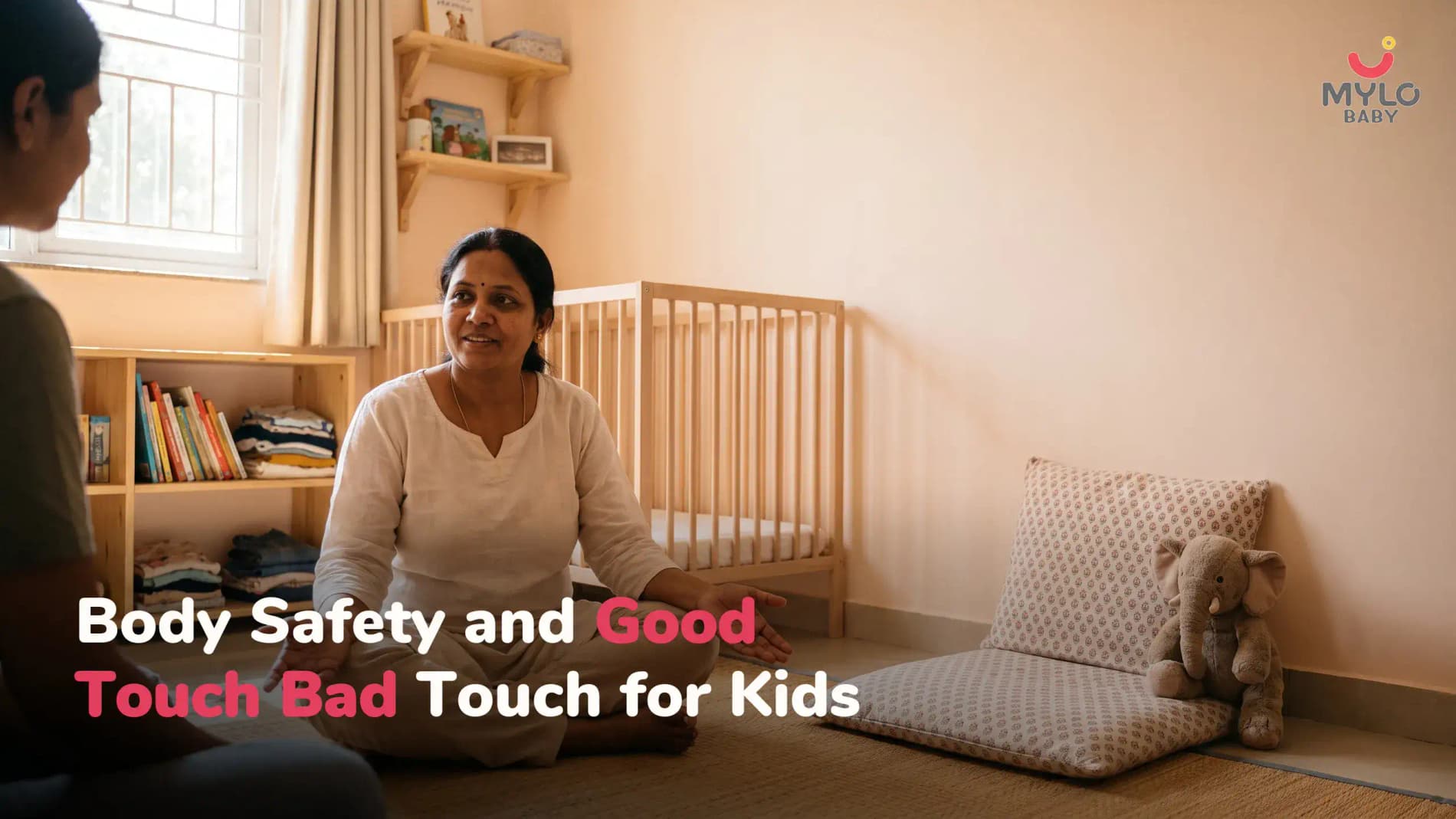
TL;DR
Body safety means teaching children about their bodies, personal boundaries and safe versus unsafe touch, so they feel confident and are better protected from abuse (UNICEF, NSPCC). Start early and keep it calm and age-appropriate, not scary. Teach the correct names for body parts, that private parts (those under underwear) are private, that their body belongs to them, and that they can always say no and tell a trusted adult. Most abuse is by someone the child knows, so "stranger danger" alone is not enough. There should be no secrets about touch. In India, know about the POCSO Act and Childline 1098. If your child ever tells you something, stay calm, believe them, reassure them it is not their fault, and seek help.
Quick Answer
Body safety teaches children about their bodies, boundaries and safe versus unsafe touch. Teach correct body part names, that private parts are private, that their body belongs to them, and that they can say no and tell a trusted adult. Keep no secrets about touch. In India, remember Childline 1098 and POCSO.
Author: Mylo Editorial Team, Mylo Parenting Desk Medically reviewed by: Mylo Editorial Board, aligned with UNICEF, WHO, NCPCR and AAP guidance Last updated: 22 June 2026
Medical Disclaimer: This article is for informational and general guidance purposes only and is not a substitute for professional medical, psychological or legal advice. If you suspect a child has been harmed, seek help immediately from a doctor, the police, or Childline 1098.
Key Takeaways
Body safety teaches children about their bodies, boundaries and safe versus unsafe touch (UNICEF)
Start early, keep it calm and age-appropriate, and make it an ongoing conversation
Teach the correct names for body parts, including private parts
Private parts are those covered by underwear; no one should touch them, except for health or hygiene
Teach that their body belongs to them and they can always say no
There should be no secrets about touch; abusers often use secrets
Most abuse is by someone the child knows, so "stranger danger" alone is not enough
In India, remember the POCSO Act and Childline 1098, and always believe a child who tells you
What Is Body Safety, and Why Does It Matter?
Body safety is simply teaching children about their bodies, personal space and the difference between safe and unsafe touch (UNICEF, NSPCC). The goal is not to frighten children, but to empower them with knowledge and confidence, just like teaching road safety. Children who understand body safety are more likely to recognise unsafe situations, say no, and tell a trusted adult. These conversations are one of the most important protective gifts you can give your child.
Featured answer: Body safety teaches children about their bodies, boundaries and safe versus unsafe touch, in a calm and age-appropriate way. Teach the correct names for body parts, that private parts are private, that their body belongs to them, and that they can always say no and tell a trusted adult. Keep no secrets about touch. This empowers children and helps protect them from abuse.
What Key Concepts Should You Teach?
A few clear, simple ideas form the foundation of body safety (NSPCC, AAP).
Concept | What to teach |
|---|---|
Correct body part names | Use proper names, including for private parts |
Private parts are private | Parts under underwear are private; no one should touch them |
Your body belongs to you | Your child can say no to unwanted touch, even from family |
Safe and unsafe touch | Some touch feels safe and caring; some feels wrong |
No secrets about touch | We never keep secrets that make us feel scared or bad |
Trusted adults | Name a few safe adults your child can always tell |
What Is the Difference Between Safe and Unsafe Touch?
Children learn best with clear, simple examples. It also helps to talk about the "uh-oh feeling", that inner sense when something is not right (NSPCC, UNICEF).
Safe touch | Unsafe touch |
|---|---|
A hug or cuddle you want | Anyone touching your private parts |
A high-five or holding hands | Touch that hurts you |
A doctor's checkup with a parent present | Touch that feels scary or confusing |
Help with hygiene from a parent | Touch that someone asks you to keep secret |
Teach your child that if a touch gives them the "uh-oh feeling", they can say no, get away, and tell a trusted adult, even if the person is someone they know.
How Do You Teach Body Safety by Age?
Body safety is an ongoing conversation that grows with your child, not a one-time talk (AAP, NSPCC).
Age | How to teach |
|---|---|
Toddlers (1 to 3 years) | Name body parts during bath and dressing, allow them to say no to tickles or hugs |
Preschool (3 to 5 years) | Teach private parts, safe and unsafe touch, no secrets, and trusted adults |
Early school (5 to 8 years) | Reinforce rules, discuss tricky situations, online safety basics |
Older children | Deeper talks on consent, boundaries and online safety |
🛡️ The Body-Safety Rules to Teach Your Child
Keep these simple, repeat them often, and stay calm and warm:
Your body belongs to you: No one has the right to touch it without permission
Private parts are private: The parts under your underwear are yours alone
No means no: You can say no to any touch you do not want, even a hug
No secrets about touch: We never keep secrets that make us feel scared or bad
Trust your "uh-oh feeling": If something feels wrong, it probably is
No, Go, Tell: Say no, move away, and tell a trusted adult
Keep telling: If one adult does not help, tell another, and keep telling
You will never be in trouble for telling: Telling is always the right thing
Make these part of normal life, like road safety. Calm, repeated conversations help your child feel confident, not scared.
Who Should Children Be Careful About?
It is a hard truth, but most child abuse is carried out by someone the child knows and trusts, not a stranger (WHO, NCPCR). This means "stranger danger" alone is not enough. Without scaring your child, teach that the body-safety rules apply to everyone, including relatives, family friends, neighbours, older children and tutors. The focus is on the behaviour, not on labelling people as good or bad, so your child knows the rules hold true with anyone.
What Warning Signs Should Parents Watch For?
No single sign proves abuse, but a cluster of changes is worth noticing (WHO, NCPCR). Watch for:
Sudden fear of a particular person or place
Withdrawal, anxiety, or unusual sadness
Going back to younger behaviours, such as bedwetting
Nightmares or changes in sleep
Knowledge or talk about sexual things beyond their age
Unexplained physical signs, pain or discomfort
Reluctance to be alone with a certain person
If you notice these, stay calm, gently talk to your child, and seek guidance from a doctor or Childline 1098.
What Should You Do If Your Child Tells You Something?
How you respond matters enormously. Children are far more likely to disclose, and to heal, when met with calm and belief (UNICEF, NCPCR).
Do | Avoid |
|---|---|
Stay calm and listen | Reacting with panic or anger |
Believe your child | Doubting or blaming them |
Reassure them it is not their fault | Making them feel guilty |
Praise them for telling | Punishing or silencing them |
Seek help (doctor, police, Childline 1098) | Ignoring it to protect family reputation |
When and Where Should You Seek Help?
If you suspect or learn that a child has been harmed, act promptly (NCPCR). You can:
Call Childline 1098, India's free, 24-hour child helpline
Contact the police; child sexual abuse is a crime under the POCSO Act
See a doctor for medical care and guidance
Reach out to a child counsellor for emotional support
Keep supporting and reassuring your child throughout
You do not have to handle it alone, and seeking help quickly protects your child.
What Do Body-Safety Resources Cost in India?
The most important tool, your calm and regular conversation, is free. Helplines and many resources are also free.
Resource | Typical cost (₹) | Note |
|---|---|---|
Talking with your child | Free | The most powerful protection |
Childline 1098 | Free | India's 24-hour child helpline |
NCPCR body-safety resources and films | Free | Government child-safety materials |
Body-safety picture books | ₹100 to ₹500 | In English and regional languages |
Child counsellor (if needed) | ₹800 to ₹3,000 a session | For support after any concern |
Indian Context: What Indian Parents Should Know
Overcome the discomfort: Talking about bodies and private parts can feel awkward in Indian families, but these conversations protect your child, so have them calmly and early (NCPCR)
Know the law: The POCSO Act (2012) protects children from sexual offences and makes reporting a duty
Save Childline 1098: This free, 24-hour national helpline is for any child in need of care and protection
Most abuse is by known persons: Family silence and "log kya kahenge" must never come before a child's safety; always believe and protect your child
Do not force affection: Never make your child hug, kiss or sit on the lap of a relative if they do not want to; this respects body autonomy
Teach in your mother tongue: Use the words your child understands best, and use free resources like the NCPCR "Komal" film
Emergency numbers: Dial 1098 for Childline and 112 or 100 for police; 108 for ambulance
Myths vs Facts About Body Safety
Myth | Fact | Source |
|---|---|---|
"Only strangers harm children" | Most abuse is by someone the child knows | WHO |
"Talking about it will scare or spoil my child" | Calm, age-appropriate talks empower, not frighten | UNICEF |
"Children make up stories about abuse" | Children rarely lie about abuse; always believe them | NCPCR |
"Using proper body part names is wrong" | Correct names help children communicate and stay safe | NSPCC |
"Forcing a child to hug relatives is just politeness" | Respecting their no teaches vital body autonomy | AAP |
FAQs: Body Safety and Good Touch, Bad Touch
At what age should I start teaching body safety? You can start as early as the toddler years by naming body parts and allowing your child to say no to unwanted touch (AAP). It is an ongoing conversation that grows with your child, kept calm and age-appropriate.
Body safety kis umar se sikhani chahiye? (Hinglish) Aap toddler ki umar se hi shuru kar sakti hain, jaise bath ke samay body parts ke naam batana aur bachche ko anchahe touch ko "na" kehne dena. Yeh ek lagataar baat-cheet hai jo umar ke saath badhti hai. Ise shaant aur saral tareeke se sikhayein, darake nahi.
What is the difference between good touch and bad touch? Safe (good) touch feels caring and wanted, like a hug you want or a doctor's checkup with a parent present. Unsafe (bad) touch involves private parts, hurts, feels scary or confusing, or is meant to be kept secret (NSPCC). Teach your child to trust their "uh-oh feeling".
Good touch aur bad touch mein kya farak hai? (Hinglish) Good (safe) touch achha aur pyaar bhara lagta hai, jaise aapki marzi se gale lagna ya parent ke saamne doctor ka checkup. Bad (unsafe) touch private parts ko chhoona, dard dena, dar ya confusion paida karna, ya secret rakhne wala touch hota hai. Bachche ko sikhayein ki agar touch galat lage, to "na" kahein, door jayein aur trusted adult ko batayein.
Should I teach my child the correct names for private parts? Yes. Using correct names helps children describe clearly if something happens and is part of keeping them safe (NSPCC). It also removes shame and confusion around their bodies.
Most abuse is by strangers, right? No. Sadly, most child abuse is by someone the child knows and trusts (WHO). This is why body-safety rules apply to everyone, and why "stranger danger" alone is not enough.
What should I do if my child tells me about unsafe touch? Stay calm, believe them, reassure them it is not their fault, and praise them for telling (NCPCR). Do not panic or interrogate. Then seek help from a doctor, the police, or Childline 1098.
What is the POCSO Act and Childline number in India? The POCSO Act, 2012 protects children from sexual offences and makes reporting mandatory (NCPCR). Childline 1098 is India's free, 24-hour helpline for any child needing care and protection.
References
UNICEF. "Protecting Children from Violence and Abuse." https://www.unicef.org
World Health Organization (WHO). "Child Maltreatment Prevention." https://www.who.int
National Commission for Protection of Child Rights (NCPCR), India. "Child Safety and POCSO." https://ncpcr.gov.in
NSPCC (UK). "Talk PANTS and Keeping Children Safe." https://www.nspcc.org.uk
American Academy of Pediatrics (AAP). "Healthy Children: Body Safety and Sexual Abuse Prevention." https://www.healthychildren.org
Childline India Foundation. "Childline 1098." https://www.childlineindia.org
NHS UK. "Keeping Children Safe." https://www.nhs.uk
Article Posted Under
Related Articles
Related Topics
.webp&w=32&q=75)
Medical Disclaimer
This content is for informational purposes only and should not replace professional medical advice. Consult with a physician or other health care professional if you have any concerns or questions about your health. If you rely on the information provided here, you do so solely at your own risk.


AWARDS AND RECOGNITION

Mylo wins Forbes D2C Disruptor award

Mylo wins The Economic Times Promising Brands 2022
AS SEEN IN












- Mylo Care: Effective and science-backed personal care and wellness solutions for a joyful you.
- Mylo Baby: Science-backed, gentle and effective personal care & hygiene range for your little one.
- Mylo Community: Trusted and empathetic community of 10mn+ parents and experts.


Product Categories
Baby Carrier | Baby Soap | Baby Wipes | Stretch Marks Cream | Baby Cream | Baby Shampoo | Baby Massage Oil | Baby Hair Oil | Stretch Marks Oil | Baby Body Wash | Baby Powder | Baby Lotion | Diaper Rash Cream | Newborn Diapers | Teether | Baby Kajal | Baby Diapers Pants | Cloth Diapers | Laundry Detergent | Lactation Granules |