


Orders
.png&w=48&q=75 "login")
Profile


Wallet

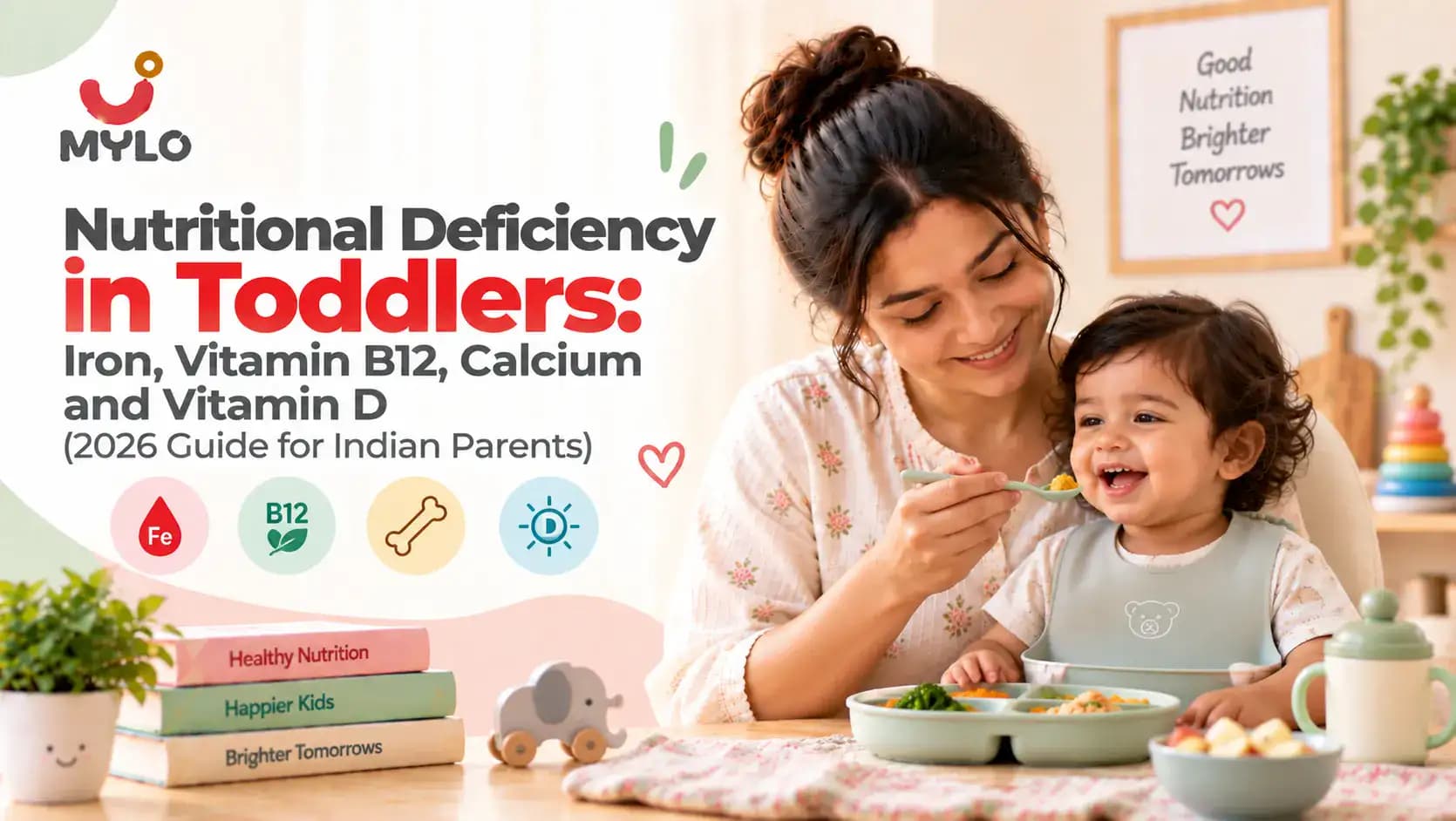
Nutritional Deficiency in Toddlers: Iron, Vitamin B12, Calcium and Vitamin D (2026 Guide for Indian Parents)


MBBS, DCH, DNB (Pediatrics), FICM (Fellowship in Intensive Care Medicine), FIDM (Fellowship in Diabetes Mellitus), MNAMS · 18 years experience
 19 min
TL;DR
Many Indian toddlers don't get enough of certain key nutrients, even when they look healthy. The most common gaps are iron, vitamin B12, calcium and vitamin D. NFHS-5 found that about 2 in 3 Indian children aged 6 to 59 months are anaemic, often because of low iron. Warning signs include paleness, tiredness, poor appetite, frequent infections, slow growth, delayed walking or bowed legs. Common causes are picky eating, too much milk, a diet low in variety, worms and little sunlight. Most deficiencies can be prevented with a balanced Indian diet, about 300 to 500 ml of milk a day, regular deworming and some outdoor time. Never start supplements without a doctor's advice. A simple blood test can confirm a deficiency.
Key Takeaways
Iron deficiency is the most common nutritional deficiency in Indian toddlers
About 1 in 7 Indian children aged 1 to 4 has low vitamin B12, which is more common in vegetarian families
Calcium and vitamin D work together to build strong bones and teeth
Many deficiencies have no clear signs at first, so regular growth checks matter
Too much cow's milk (over about 500 ml a day) is a common cause of iron deficiency
Worm infections can cause iron loss and anaemia
A varied diet with dal, ragi, greens, eggs, curd and fruit prevents most deficiencies
Blood tests like a CBC, ferritin, vitamin D and B12 levels confirm a deficiency
Only give supplements on a doctor's advice, in the right dose
What Is a Nutritional Deficiency?
A nutritional deficiency happens when a child's body doesn't get or absorb enough of a vitamin or mineral it needs to grow and stay healthy. Toddlers are especially at risk because:
They grow and develop quickly
They often go through a picky eating phase
Many drink too much milk and eat too little solid food
They are prone to infections and worms
India's Comprehensive National Nutrition Survey (CNNS 2016 to 18) found that more than half of Indian children aged 1 to 4 years had at least one micronutrient deficiency.
Common Deficiencies in Indian Toddlers at a Glance
Nutrient | Why It Matters | Common Signs of Deficiency | Top Indian Food Sources |
|---|---|---|---|
Iron | Makes haemoglobin to carry oxygen; brain development | Paleness, tiredness, poor appetite, irritability, eating mud or chalk | Ragi, bajra, dal, rajma, chana, spinach, eggs, chicken, dates |
Vitamin B12 | Nerves, brain, red blood cells | Tiredness, paleness, dark knuckles, mouth ulcers, slow development | Milk, curd, paneer, eggs, fish, chicken |
Calcium | Strong bones and teeth | Weak bones, delayed teeth, muscle cramps (rare) | Milk, curd, paneer, ragi, til, green leafy vegetables |
Vitamin D | Absorbs calcium; bones, immunity | Bowed legs, delayed walking, bone pain, frequent infections | Sunlight, egg yolk, fish, fortified milk or oil |
1. Iron Deficiency and Anaemia
Iron deficiency is the most common nutritional deficiency in Indian children. It can lead to iron deficiency anaemia, where the blood doesn't have enough healthy red blood cells. According to NFHS-5, anaemia in children aged 6 to 59 months rose from 58.6% to 67.1% between NFHS-4 and NFHS-5.
Signs of Iron Deficiency in Toddlers
Pale skin, lips, nails, palms or inner eyelids
Tiredness, low energy or less interest in play
Irritability and crankiness
Poor appetite
Slow weight gain or growth
Frequent colds and infections
Eating non-food items like mud, chalk, ice or paint (called pica)
Breathlessness or a fast heartbeat while playing (in severe cases)
Delays in development or attention
Common Causes
Too much cow's milk: Milk is low in iron and fills them up, leaving little room for iron-rich food
Diet low in iron: Mostly rice, roti, biscuits and milk
Worm infections: Hookworms feed on blood in the gut (see worms in toddlers)
Tea or coffee: These block iron absorption
Premature birth or low birth weight
Picky eating or a very limited diet
How Much Iron Does a Toddler Need?
According to ICMR-NIN guidelines, children aged 1 to 3 years need about 8 mg of iron a day.
Iron-Rich Indian Foods for Toddlers
Vegetarian Sources | Non-Vegetarian Sources |
|---|---|
Ragi, bajra, jowar | Eggs |
Moong, masoor, chana and rajma dal | Chicken |
Spinach, methi, amaranth (chaulai) | Fish |
Poha (fortified), dates, raisins, dried figs | Mutton and liver (small amounts, well cooked) |
Til (sesame), garden cress seeds (halim) | |
Jaggery-based ladoos (in small amounts) |
Tips to Boost Iron Absorption
Add vitamin C: Pair iron-rich foods with lemon, amla, orange, guava or tomato
Separate milk from iron-rich meals: Calcium in milk can reduce iron absorption
Avoid tea and coffee for toddlers
Cook in an iron kadai sometimes, which can add a little iron to food
Deworm every 6 months from age 1
Government Support: Anemia Mukt Bharat
Under the Anemia Mukt Bharat programme, children aged 6 to 59 months receive free iron and folic acid (IFA) syrup twice a week through ASHA workers, along with deworming every 6 months from age 1. Ask your ASHA or Anganwadi worker about it.
2. Vitamin B12 Deficiency
Vitamin B12 is essential for the brain, nerves and red blood cells. It's found mainly in animal foods, so children in vegetarian families are at higher risk. A study using CNNS data found vitamin B12 deficiency in about 13.8% of Indian children aged 1 to 4 years.
Signs of Vitamin B12 Deficiency in Toddlers
Tiredness, weakness and paleness
Dark patches on the knuckles, fingers or toes (a common sign in Indian children)
Mouth ulcers or a smooth, red tongue
Poor appetite and slow weight gain
Irritability
Delay in milestones, or losing skills they had (in severe cases)
Tremors or unusual movements (in severe cases)
Common Causes
A strict vegetarian or vegan diet with little dairy
A breastfeeding mother with low B12 (for toddlers still breastfed)
Very low milk and curd intake
Stomach or gut problems that affect absorption
How Much B12 Does a Toddler Need?
According to ICMR-NIN 2020, children aged 1 to 3 years need about 1.2 micrograms of vitamin B12 a day.
B12-Rich Foods
Vegetarian Sources | Non-Vegetarian Sources |
|---|---|
Milk, curd, buttermilk, paneer, cheese | Eggs |
Fortified cereals (check the label) | Fish |
Chicken and mutton |
Tip for vegetarian families: Include 2 to 3 servings of dairy daily, like curd, paneer and milk. Ask your doctor whether your child needs a B12 test or supplement, especially if the family is vegan.
3. Calcium Deficiency
Calcium builds strong bones and teeth and helps muscles and nerves work. Toddlers who drink little milk, have a dairy allergy or don't eat calcium-rich foods may not get enough.
Signs of Low Calcium in Toddlers
Delayed teething or weak teeth
Weak bones or frequent fractures
Muscle cramps or twitching (rare)
Poor growth
Signs of rickets when combined with low vitamin D (see below)
Low calcium often has no clear signs in the early stages, which is why a balanced diet matters.
How Much Calcium Does a Toddler Need?
According to ICMR-NIN guidelines, children aged 1 to 3 years need about 500 mg of calcium a day. About 300 to 500 ml of milk and dairy a day usually covers most of this.
Calcium-Rich Indian Foods
Milk, curd, buttermilk and paneer
Ragi (finger millet), one of the richest plant sources of calcium
Til (sesame seeds) in chikki or ladoo form, ground for young toddlers
Green leafy vegetables like methi, amaranth and drumstick leaves
Rajma, chana and soybean
Tofu
Remember: More milk is not always better. Over 500 to 700 ml a day can cause iron deficiency and constipation.
4. Vitamin D Deficiency
Vitamin D helps the body absorb calcium and keeps bones strong. It also supports immunity. Even in sunny India, vitamin D deficiency is common because children spend more time indoors, wear full clothing and live in polluted cities where less sunlight reaches the skin. The CNNS also measured vitamin D deficiency among Indian preschool children.
Signs of Vitamin D Deficiency in Toddlers
Bowed legs or knock knees
Delayed walking (see walking milestones of your toddler)
Delayed teething
Thickened wrists or ankles
Bone pain or leg pain
Muscle weakness and tiredness
Frequent infections
A soft spot on the head that closes late
Slow growth
Severe vitamin D deficiency in children causes rickets, a condition where bones become soft and weak.
How Much Vitamin D Does a Toddler Need?
According to ICMR-NIN guidelines, children need about 600 IU (15 micrograms) of vitamin D a day. It is hard to get this from food alone.
Sources of Vitamin D
Sunlight: Short, regular periods of sunlight on the arms and legs help the skin make vitamin D. Ask your doctor what is right for your child, and avoid sunburn.
Food: Egg yolks, fatty fish, and fortified milk or cooking oil (check labels for "fortified with vitamin D")
Supplements: Only if your doctor advises, after checking levels. Too much vitamin D can be harmful.
Other Deficiencies to Know About
Nutrient | Signs of Deficiency | Good Sources |
|---|---|---|
Zinc | Poor appetite, slow growth, frequent diarrhoea, slow wound healing | Dal, whole grains, nuts (ground), seeds, eggs, meat |
Vitamin A | Night blindness, dry eyes, frequent infections | Carrot, pumpkin, papaya, mango, green leafy vegetables, eggs |
Folate | Tiredness, paleness, mouth sores | Green leafy vegetables, dal, chana |
Iodine | Slow growth and development | Iodised salt (in small amounts) |
India also provides free vitamin A supplements to children up to 5 years at government health centres. Ask your ASHA or Anganwadi worker.
Who Is Most at Risk?
Picky eaters with a limited diet
Toddlers who drink more than 500 ml of milk a day
Children from vegetarian or vegan families (B12 risk)
Children born premature or with low birth weight
Children with frequent infections, diarrhoea or worms
Children who spend little time outdoors
Children who are underweight or not growing well
Children with food allergies (like cow's milk allergy) or gut conditions
How Doctors Test for Deficiencies
Your pediatrician will check your child's growth chart, diet and symptoms, and may suggest:
Test | What It Checks | Typical Cost (₹) |
|---|---|---|
Complete blood count (CBC) | Haemoglobin and anaemia | ₹200 to ₹500 |
Serum ferritin | Iron stores in the body | ₹400 to ₹900 |
Vitamin B12 level | B12 deficiency | ₹600 to ₹1,500 |
Vitamin D (25-OH) level | Vitamin D deficiency | ₹800 to ₹2,000 |
Calcium, phosphorus and ALP | Bone health and rickets | ₹300 to ₹900 |
Stool test | Worms | ₹150 to ₹500 |
Costs are approximate and vary by city and lab. Many tests are free or low-cost at government hospitals.
Treatment: What to Expect
Diet changes: Most mild deficiencies improve with a more varied diet
Supplements: Your doctor may prescribe iron drops, B12, calcium or vitamin D in the correct dose for your child's age and weight
Deworming: If worms are a cause
Follow-up tests: To check that levels are improving
Important:
Never give adult supplements or a sibling's medicine to your toddler
Keep iron tablets and syrups out of reach. An iron overdose is dangerous for young children.
Iron drops can cause dark stools or mild constipation. This is common. Tell your doctor if it bothers your child.
Complete the full course. Iron stores take a few months to build back up.
Sample Day: A Nutrient-Rich Indian Toddler Plate
Meal | What to Offer | Key Nutrients |
|---|---|---|
Breakfast | Ragi porridge with milk, or a vegetable moong dal cheela | Iron, calcium, protein |
Mid-morning | Orange or guava slices | Vitamin C (helps iron absorption) |
Lunch | Rice or roti with palak dal and a spoon of ghee | Iron, folate, vitamin A |
Evening snack | Curd with mashed fruit, or a boiled egg | Calcium, B12, vitamin D |
Dinner | Vegetable khichdi with paneer cubes | Protein, calcium, B12 |
Milk | A small cup after dinner (not with iron-rich meals) | Calcium, B12 |
Keep total milk and dairy to about 300 to 500 ml a day. Serve food in small, soft pieces to prevent choking.
When to See a Doctor
Talk to your pediatrician if your child:
Looks pale or seems tired most of the time
Has a poor appetite for weeks, or isn't gaining weight
Eats mud, chalk or other non-food items
Has bowed legs, delayed walking or bone pain
Has dark patches on the knuckles or frequent mouth ulcers
Gets sick very often
Is a very picky eater with a limited diet
Shows delays in milestones, or loses skills they had
Follows a vegan diet or drinks very little milk
Seek urgent care if your child is breathless, very weak, unusually sleepy or has swallowed iron tablets. Emergency number: Dial 108 or 112.
Indian Context: What Indian Parents Should Know
Anaemia is very common: Even healthy-looking children can be anaemic. Ask your doctor for a haemoglobin check.
Free help is available: IFA syrup, vitamin A and deworming are free at Anganwadis and government health centres under Anemia Mukt Bharat and National Deworming Day.
Vegetarian families: Include plenty of dairy and ask your doctor about B12.
Don't rely on milk alone: Many Indian toddlers drink lots of milk and eat little else. Limit milk and offer family meals.
Skip tea for toddlers: Tea with biscuits is common but blocks iron absorption.
Use traditional foods: Ragi, bajra, til, dal, green leafy vegetables and jaggery-based snacks are rich in iron and calcium.
Avoid "health drinks" and tonics without a doctor's advice. Many are high in sugar and not a substitute for real food.
Myths vs Facts
Myth | Fact |
|---|---|
"A chubby child can't be deficient" | Children of any weight can have low iron, B12 or vitamin D |
"More milk means stronger bones" | Too much milk can cause iron deficiency; 300 to 500 ml a day is enough |
"Living in India means no vitamin D deficiency" | Vitamin D deficiency is common in India due to indoor lifestyles, clothing and pollution |
"Vegetarian children can't get enough B12" | Dairy provides B12, but vegetarian families should check levels with their doctor |
"Supplements are safe to give without a prescription" | Too much iron or vitamin D can be harmful; always ask your doctor |
"Tonics increase appetite and fix deficiencies" | A balanced diet and treating the real cause work better |
FAQs: Nutritional Deficiency in Toddlers
What are the most common nutritional deficiencies in Indian toddlers?
Iron, vitamin B12, vitamin D and calcium are the most common, along with zinc, vitamin A and folate.
How do I know if my toddler is iron deficient?
Look for paleness, tiredness, irritability, poor appetite, frequent infections and eating non-food items like mud or chalk. A blood test (CBC and ferritin) confirms it.
Bachche mein khoon ki kami ke lakshan kya hain? (Hinglish)
Chehra, hoth, nakhun ya aankh ke andar ka hissa peela dikhna, thakaan, chidchidapan, bhookh kam lagna, baar-baar beemar padna aur mitti ya chalk khana iske sanket hain. Doctor se CBC test karwayein.
What are the signs of vitamin B12 deficiency in toddlers?
Tiredness, paleness, dark patches on the knuckles, mouth ulcers, poor appetite and, in severe cases, developmental delays.
Does my vegetarian toddler need B12 supplements?
Not always. Plenty of milk, curd and paneer can provide enough B12. But vegetarian and especially vegan families should ask their doctor about testing.
What are the signs of vitamin D deficiency in toddlers?
Bowed legs, delayed walking or teething, thick wrists, bone pain, weak muscles and frequent infections.
Bachche mein vitamin D ki kami kaise pehchanein? (Hinglish)
Pair tede hona, der se chalna, der se daant aana, haddiyon mein dard, kalaai moti dikhna aur baar-baar beemar padna iske lakshan ho sakte hain. Doctor ki salah se vitamin D test karwayein.
Can too much milk cause deficiency?
Yes. Drinking more than about 500 ml of milk a day can crowd out iron-rich foods and lead to iron deficiency anaemia.
Which Indian foods are best for iron and calcium?
Ragi is rich in both. Dal, rajma, chana, spinach, eggs and dates provide iron. Milk, curd, paneer, til and green leafy vegetables provide calcium.
Should I give my toddler multivitamins?
Only if your doctor recommends them. Most toddlers eating a varied diet don't need multivitamins.
Are iron supplements safe for toddlers?
Yes, in the dose prescribed by your doctor. Keep them out of reach, as an overdose can be dangerous.
Can worms cause nutritional deficiency?
Yes. Worms, especially hookworms, can cause iron loss and anaemia. Deworming every 6 months from age 1 helps.
Related Reads on Mylo
References
Ministry of Health and Family Welfare, UNICEF, Population Council. "Comprehensive National Nutrition Survey (CNNS) 2016 to 18." https://nhm.gov.in/WriteReadData/l892s/1405796031571201348.pdf
"Prevalence of Vitamin B12 and Folate Deficiencies in Indian Children and Adolescents." PMC. https://www.ncbi.nlm.nih.gov/pmc/articles/PMC10346745/
"Prevalence and Determinants of Anemia Due to Micronutrient Deficiencies Among Children Aged 12 to 59 Months in India: Evidence From CNNS 2016 to 18." PLOS Global Public Health. https://journals.plos.org/globalpublichealth/article?id=10.1371%2Fjournal.pgph.0002095
"Key Drivers of Reversal of Trend in Childhood Anaemia in India: Evidence From NFHS 2016 to 21." PMC. https://pmc.ncbi.nlm.nih.gov/articles/PMC10436448/
Down To Earth. "NFHS-5 Paints an Anaemic Picture of Child Health and Nutrition." https://www.downtoearth.org.in/health/nfhs-5-paints-an-anaemic-picture-of-child-health-and-nutrition-80512
National Health Mission. "Anaemia Mukt Bharat." https://nhm.gov.in/index1.php?lang=1&level=3&sublinkid=1448&lid=797
National Health Mission. "Anemia Mukt Bharat: Operational Guidelines." https://nhm.gov.in/images/pdf/Nutrition/AMB-guidelines/Anemia-Mukt-Bharat-Operational-Guidelines-FINAL.pdf
ICMR-National Institute of Nutrition. "Nutrient Requirements for Indians: RDA Report." https://www.nin.res.in/RDA_Full_Report_2024.html
ICMR-NIN. "A Brief Note on Nutrient Requirements for Indians." https://www.nin.res.in/rdabook/brief_note.pdf
Metabolic Health Digest. "Nutrient Requirements for Indians: ICMR-NIN 2020." https://metabolichealthdigest.com/nutrient-requirements-for-indians-icmr-nin-2020/
Press Information Bureau. "India's Fight Against Anemia." https://pib.gov.in/PressReleseDetailm.aspx?PRID=2122623
Medical Disclaimer
This article is for information only and does not replace professional medical advice. Never start vitamins, iron or other supplements for your child without consulting a pediatrician. Keep all supplements out of children's reach.

Shop Now
Baby Essentials




Article Posted Under
Related Articles
Diwali During Pregnancy: Safety Tips for Pregnant Women on Crackers, Sweets and Diet
 17 min
 Best Pregnancy and Parenting App in India: 5 Must-Have Features to Look For (2026)
 20 min
 Best Hairstyles for Postpartum Hair Loss and Regrowth
 10 min
 HairVivine Pro: What This Pumpkin Seed Hair Active Does and What the Studies Show
 15 min
Related Topics
.webp&w=32&q=75)
Medical Disclaimer
This content is for informational purposes only and should not replace professional medical advice. Consult with a physician or other health care professional if you have any concerns or questions about your health. If you rely on the information provided here, you do so solely at your own risk.


AWARDS AND RECOGNITION

Mylo wins Forbes D2C Disruptor award

Mylo wins The Economic Times Promising Brands 2022
AS SEEN IN












- Mylo Care: Effective and science-backed personal care and wellness solutions for a joyful you.
- Mylo Baby: Science-backed, gentle and effective personal care & hygiene range for your little one.
- Mylo Community: Trusted and empathetic community of 10mn+ parents and experts.


Product Categories
Baby Carrier | Baby Soap | Baby Wipes | Stretch Marks Cream | Baby Cream | Baby Shampoo | Baby Massage Oil | Baby Hair Oil | Stretch Marks Oil | Baby Body Wash | Baby Powder | Baby Lotion | Diaper Rash Cream | Newborn Diapers | Teether | Baby Kajal | Baby Diapers Pants | Cloth Diapers | Laundry Detergent | Lactation Granules |