


Orders
.png&w=48&q=75 "login")
Profile


Wallet

Best Hairstyles for Postpartum Hair Loss and Regrowth
 10 min
Quick Answer
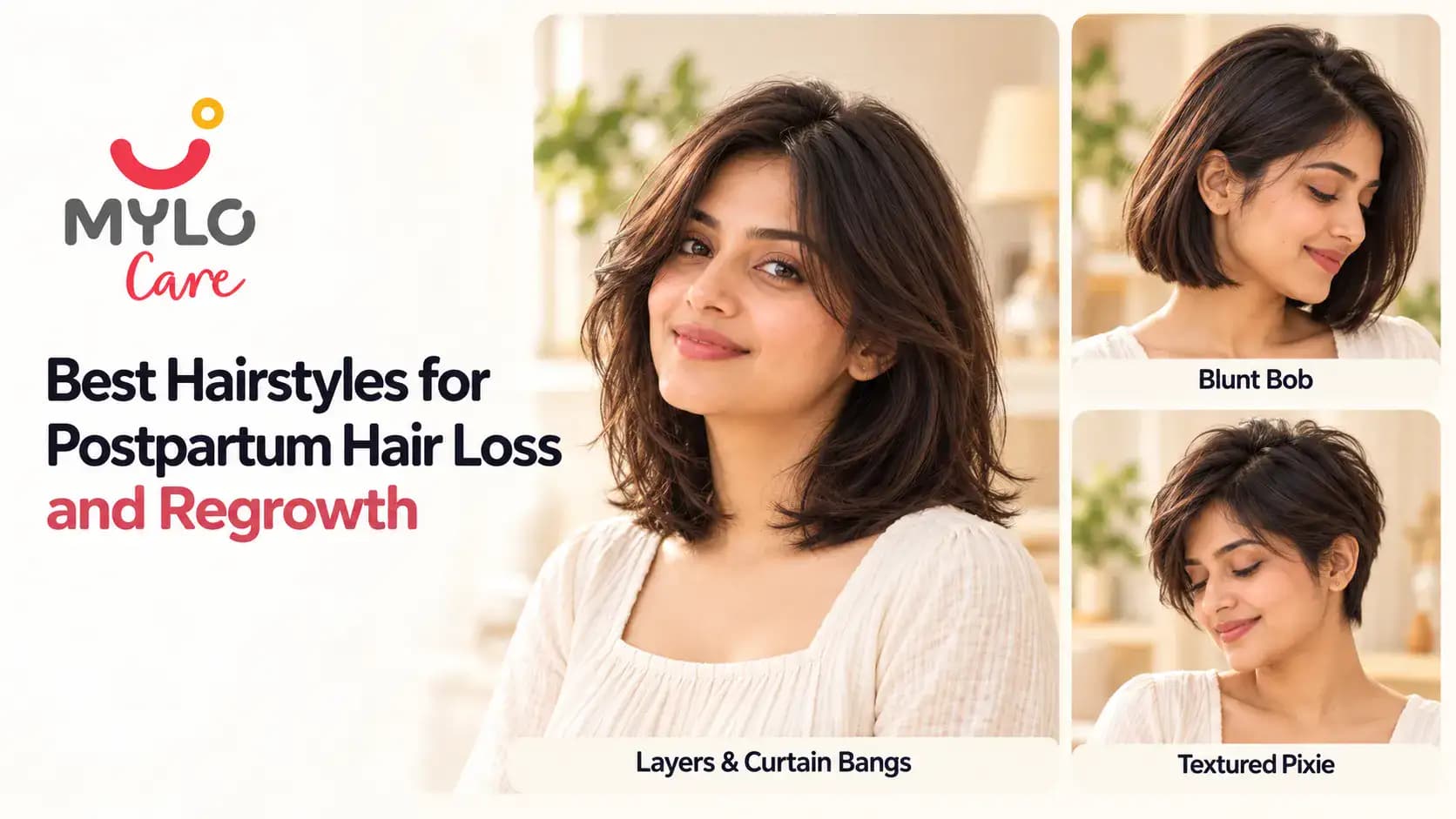
The best hairstyles for postpartum hair loss add volume and hide thinning without pulling on fragile hair. A layered cut, blunt bob, or textured pixie can make thinner hair look fuller. Curtain bangs or a side-swept fringe cleverly hide spiky regrowth along the hairline. Day to day, a deep side part, wearing your hair down, and soft accessories like headbands and scarves help. Whatever you choose, keep tied styles loose and low, because tight ponytails, braids, and buns can pull on hair and cause more breakage.
The awkward in-between is real (and temporary)
There is a particular stage of postpartum regrowth that nobody photographs: the one where short, spiky new hairs sprout straight out along your hairline like a fuzzy little halo, refusing to lie flat, too short to tuck away, too obvious to ignore. If you have stood at the mirror wondering what on earth to do with these little strands, you are in good company.
Here is the reassuring truth underneath it: those wiry regrowth hairs are a good sign. They mean your hair cycle is bouncing back. The American Academy of Dermatology notes that most women see their hair return to normal fullness by their child's first birthday, often sooner. If you are still early in the shed, our guide on why your hair falls out 3 months after delivery explains what is happening and why.
The styling tricks below are here to help you feel put-together in the meantime, on the mornings when "showered" already counts as a win.
Haircuts for Postpartum Hair Loss That Make Thin Hair Look Fuller
The right haircut does a surprising amount of heavy lifting. In fact, the AAD suggests trying a new hairstyle, since some cuts make hair look fuller. If you are due a trim anyway, these are the styles stylists reach for when the goal is volume and easy upkeep:
Haircut | Why It Works | Best For |
|---|---|---|
Layered cut | Layers around the crown and ends build body where thin hair falls flat | Medium to long hair |
Blunt bob | Shorter, blunt ends look denser; long lengths weigh hair down | Anyone ready for a shorter cut |
Textured pixie | Short layers add easy volume and need almost no styling | A bold change with zero effort |
Shag | Choppy, varied layers make limp hair look intentionally full | Wavy or textured hair |
Long layers with face-framing pieces | Keeps length while adding movement around the face | If you don't want to go short |
Tip: take a photo of your regrowth to your stylist and ask what suits your face shape, your thinning pattern, and how much styling time you realistically have (which, let's be honest, is close to none right now).
Bangs and Fringe: The Best Way to Hide Postpartum Regrowth
This is the clever one. Postpartum regrowth often comes in looking like accidental bangs anyway, so leaning into an intentional fringe can hide the awkward growth and put the attention on your thickest, healthiest hair instead.
Curtain bangs are parted in the middle and blend softly into your length. They cover thinning around the forehead without cutting off much length, and they are easy to grow out later.
Thick or blunt bangs add instant volume and fully mask unruly regrowth. They can be surprisingly chic and face-flattering.
Long, side-swept pieces frame the face and camouflage a fuzzy hairline while staying long enough to clip back when you want them out of the way.
Easy Everyday Hairstyles That Fake Fullness
No haircut required for these, just small tweaks that make a real difference:
Change your parting. Switching from a middle part to a deep side part adds instant lift at the roots and helps cover thinning patches.
Wear it down when baby hairs are shortest. When regrowth is at its spikiest, wearing your hair down, with a little air-dry cream, hides the halo far better than a topknot, which makes it stand to attention.
Try a loose, low plait. A soft, loose braid or choti at the nape keeps hair tidy without pulling on the hairline.
Go half-up with a soft clip. Gather the top section loosely with a claw clip or soft clutcher instead of a tight elastic.
Use accessories generously. Headbands, scarves, dupattas, and hats aren't just pretty; they cover thinning areas and buy you a no-styling day whenever you need one. Silk or satin scarves are gentlest on hair.
Use volumising products. The AAD recommends a volumising shampoo, skipping heavy "conditioning shampoos," and using a light conditioner made for fine hair, mainly on the ends. A root-lift spray gives quick volume on tired mornings.
Go gentle with heat. New regrowth is finer and more fragile, so use heat sparingly. A cool-setting blow-dry, holding baby hairs flat with your fingers as they dry, tames them without damage.
.webp)

The One Rule: Keep It Loose
While all of this is about looking fuller, there is a hair-health reason to favour these styles too. The AAD warns that hairstyles that pull, like tight ponytails, braids, and buns, can damage hair and, over time, cause a type of hair loss called traction alopecia. Postpartum hair is already fragile, so extra tension is the last thing it needs.
When you tie your hair up:
Keep it loose and low, not high and tight
Use soft scrunchies or claw clips instead of thin elastics
Change your style regularly so the pull isn't always in the same spot
If a style hurts or gives you a headache, it is too tight; loosen it
A rolled "donut" bun, for example, looks thick and full while keeping tension low.
Hairstyles to Avoid During Postpartum Hair Loss
Tight, high ponytails
Tight braids, especially along the hairline
Tight buns and topknots
Heavy hair extensions or weaves
Daily high-heat styling with straighteners or curling irons
Be Patient With the Timeline
Styling is the short game; time is the long one. Postpartum shedding and regrowth follow a fairly predictable arc, and knowing where you are on it makes the awkward stage far less stressful. If you are not sure whether yours is on track, read our guide on how much postpartum hair fall is normal or see the month-by-month guide on how long postpartum hair loss lasts.
No product can magically speed up regrowth, so be a little suspicious of anything promising overnight miracles. What genuinely helps is gentle care, good nutrition, and a haircut that works with your regrowth instead of against it. For more hair care tips, see our guide on how to control hair fall after delivery. And honestly? Some of the styles you try this season, that side part, those curtain bangs, might just become your new favourites.
A Gentle Closing Note
The mirror moments in this phase can chip at your confidence, especially when you are already running on empty. If it is weighing on you, our guide on postpartum hair loss and confidence is a kind place to start. This stage is temporary, your hair is growing back as you read this, and a few smart styling choices can help you feel like yourself again while it does. Be kind to your hair, and just as kind to yourself.
Frequently Asked Questions
What is the best haircut for postpartum hair loss?
A layered cut, blunt bob, or textured pixie all make thinner hair look fuller. Ask your stylist to suit the cut to your face shape and thinning pattern, and keep it low-maintenance.
How do I hide postpartum hair regrowth?
Curtain bangs or a side-swept fringe blend spiky regrowth into a deliberate style. Wearing your hair down, switching to a deep side part, and using headbands or scarves also help.
Should I cut my hair short after having a baby?
You don't have to, but a shorter cut can make thinning hair look fuller and is easier to manage with a newborn. Long layers are a good option if you want to keep length.
Are ponytails bad for postpartum hair loss?
Tight ponytails can pull on fragile hair and cause breakage. If you tie your hair up, keep it loose and low, use a soft scrunchie or claw clip, and change the position regularly.
Will bangs help with postpartum hair loss?
Yes. Bangs don't stop shedding, but they are one of the best ways to hide thinning and regrowth around the hairline while your hair recovers.
How can I make thin postpartum hair look thicker?
Use a volumising shampoo, a light conditioner on the ends, a root-lift spray, a deep side part, and a layered or blunt haircut. Avoid heavy conditioning products that weigh hair down.
Is it okay to cut my hair after delivery?
Yes. There is no medical reason to avoid a haircut after giving birth, whatever traditional beliefs may say. In fact, a fresh cut with layers or a shorter length can make postpartum thinning look fuller and is easier to manage with a newborn.
How do I style postpartum baby hairs?
Smooth them down with a little air-dry cream or gel while they are damp, and blow-dry on a cool setting while holding them flat with your fingers. Or lean into them: curtain bangs, a side part, or a soft headband turn baby hairs into part of the style.
When will my postpartum hair look normal again?
Most women regain their usual fullness by their baby's first birthday, often sooner. Short new hairs around the hairline are the first sign of recovery.
References
Hair Fall Control Kit for Moms
Stronger, healthier hair after pregnancy
.webp&w=1900&q=75)



Article Posted Under
Related Articles


Medical Disclaimer
This content is for informational purposes only and should not replace professional medical advice. Consult with a physician or other health care professional if you have any concerns or questions about your health. If you rely on the information provided here, you do so solely at your own risk.


AWARDS AND RECOGNITION

Mylo wins Forbes D2C Disruptor award

Mylo wins The Economic Times Promising Brands 2022
AS SEEN IN













- Mylo Care: Effective and science-backed personal care and wellness solutions for a joyful you.
- Mylo Baby: Science-backed, gentle and effective personal care & hygiene range for your little one.
- Mylo Community: Trusted and empathetic community of 10mn+ parents and experts.


Product Categories
Baby Carrier | Baby Soap | Baby Wipes | Stretch Marks Cream | Baby Cream | Baby Shampoo | Baby Massage Oil | Baby Hair Oil | Stretch Marks Oil | Baby Body Wash | Baby Powder | Baby Lotion | Diaper Rash Cream | Newborn Diapers | Teether | Baby Kajal | Baby Diapers Pants | Cloth Diapers | Laundry Detergent | Lactation Granules |