


Orders
.png&w=48&q=75 "login")
Profile


Wallet

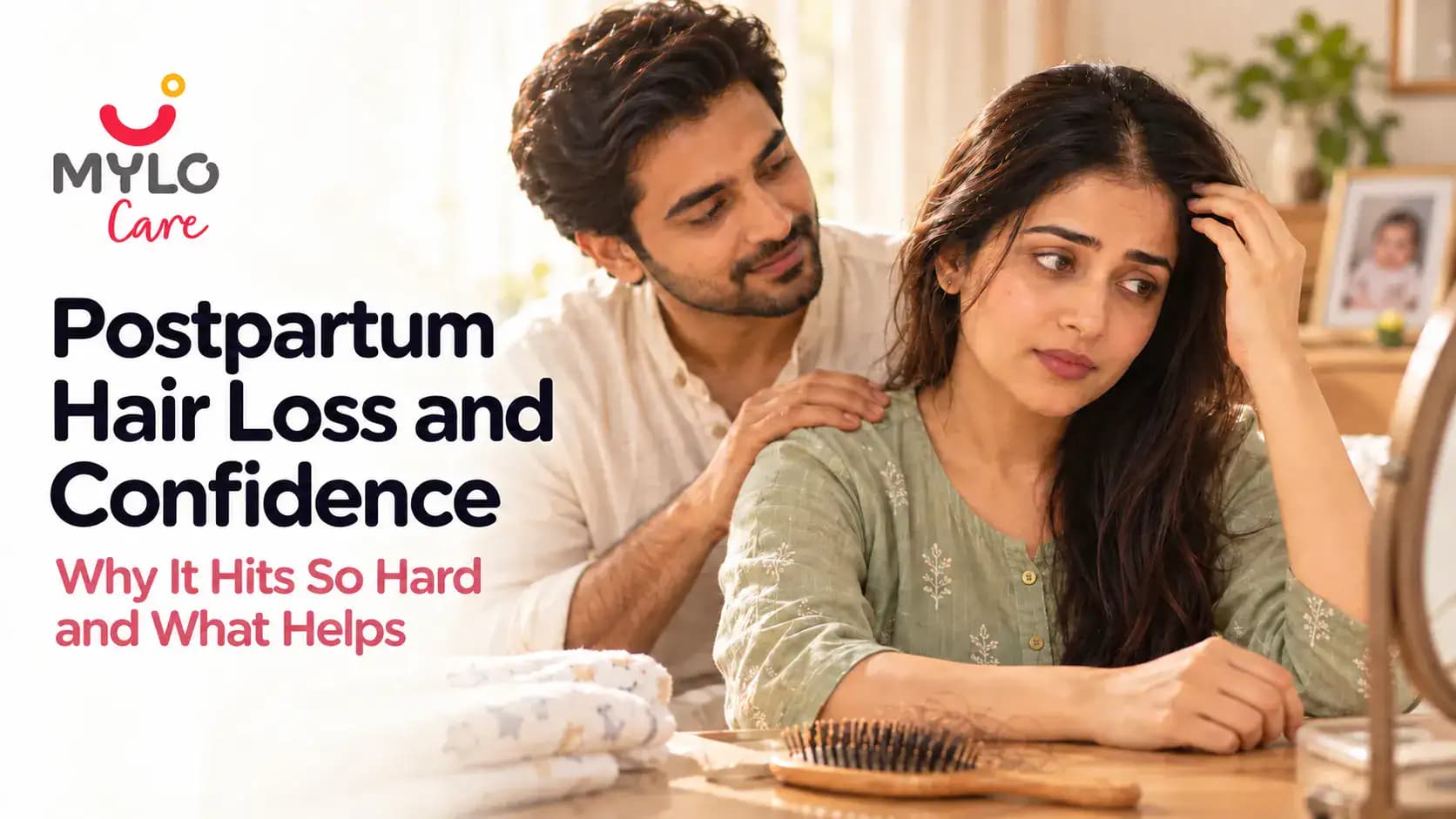
Postpartum Hair Loss and Confidence: Why It Hits So Hard and What Helps
 9 min
9 minThe morning you notice
Maybe it is in the shower, when a knot of hair wraps around your fingers and won't rinse away. Maybe it is on the pillow, or caught in your baby's tiny fist, or gathering in the corners of the bathroom floor no matter how often you sweep. However it starts, there is usually a single morning when it stops being "a few extra strands" and becomes something you can't unsee.
And it lands harder than you expect. You knew about the sleepless nights and the sore body. Nobody quite warned you that watching your hair fall out would feel like this: like a small grief you are not sure you are allowed to have. Because you are supposed to be glowing, right? You have a beautiful baby. What's a little hair?
If that is where you are, this is for you. What you are feeling is real, it is common, and it makes complete sense.
First, the reassurance: this is temporary and normal
Let's ground the fear before we sit with the feeling. What you are experiencing has a name: postpartum hair loss, or telogen effluvium. During pregnancy, high estrogen kept more of your hair in its growth phase, which is why it may have felt thick and full. After birth, those hormone levels drop, and all that "held-on" hair shifts into shedding at once. It usually becomes noticeable around three months after delivery. For the full explanation, read our guide on why your hair falls out 3 months after delivery.
You are not losing your hair forever. Short new hairs often start appearing around six months, and the American Academy of Dermatology notes that most women regain their normal fullness by their child's first birthday, many even sooner. This is your body recalibrating after doing something extraordinary, not a sign that anything is wrong with you.
And you are far from alone. In one questionnaire study of new mothers, more than nine in ten of the women who took part said they had experienced hair loss after giving birth. If you are wondering whether the amount you are seeing is within the usual range, our guide on how much postpartum hair fall is normal can take a surprising amount of weight off your mind.
Why it hits your confidence so hard
Here is the part that often goes unspoken: the hardest thing about postpartum shedding usually isn't the hair itself. It is what the hair represents, and when it arrives.
Hair is tangled up with identity. For many women, hair is closely tied to self-image, femininity, and confidence, so when it starts falling rapidly, the emotional response runs much deeper than vanity. A review in the International Journal of Women's Dermatology found that even a small amount of hair loss can seriously affect a woman's self-esteem, self-image, and quality of life. On top of that comes guilt: feeling upset about your hair, then feeling bad for feeling upset when you are "supposed to be happy."
It arrives when you are already stretched thin. Postpartum hair loss doesn't happen in isolation. It lands in the middle of sleep deprivation, a changed and healing body, and the enormous identity shift of becoming someone's mother. Against that backdrop, hair loss can feel like one more thing slipping out of your control when you have so little control left.
It is visible. Unlike so many postpartum changes you can keep private, this one shows up in the mirror, in photos, in the thinning at your temples that you notice before anyone else does. And the emotional side is often underestimated, by the people around you and sometimes even in the doctor's office. The same dermatology review recommends that doctors address the psychological side of hair loss, not just the physical one.
When it is more than "just hair"
It is worth naming this gently, because it matters. Body image after birth isn't a superficial concern; it is closely linked to emotional wellbeing. A study of 450 mothers found that women who were more dissatisfied with their bodies after birth also had more symptoms of postpartum depression.
That is not written to frighten you. It is written to give you permission to take your feelings seriously, and to reach out if the heaviness grows. Feeling low about your hair is not you being shallow.
Please reach out for support if you notice:
Low mood, sadness, or emptiness that lasts more than two weeks
Constant worry or anxiety
Losing interest in things you used to enjoy
Feeling disconnected from your baby or from yourself
Struggling to get through everyday tasks
Any thoughts of harming yourself or your baby; if so, seek help the same day
Talk to a partner, a friend who has been there, your doctor, or a therapist who understands the postpartum period. In India, you can also call the free Tele-MANAS mental health helpline on 14416. Our guide on how long postpartum depression lasts explains the signs and the support available.
Being kind to yourself while you wait
You can't switch off hormonal shedding, and part of getting through it is letting yourself feel it rather than pushing it down. But there are small, real things that help, both practically and emotionally:
Talk about it. Say it out loud to someone: "My hair is falling out and it is making me sad." Naming it takes away some of its power, and you will almost always find you are not the only one.
Step back from the comparison trap. "Bounce-back" images online are relentless and rarely honest. Recognising that they are unrealistic is the first step toward being gentler with yourself.
Let small confidence boosts count. A new haircut that suits thinner sections, a scarf you love, a style that makes getting ready easier; none of it is frivolous. Our guide to hairstyles for postpartum hair loss has ideas that hide regrowth and add volume.
Handle your hair, and yourself, gently. Skip tight ponytails and harsh heat while your hair is fragile. For calm, practical routines, see our guide on how to control hair fall after delivery.
Look after the rest of you too. Rest when you can, eat regular meals, and accept help. Our guide to new-mom self-care explains why looking after yourself is not selfish.
Watch for the shift back. One day you will notice short, wispy hairs standing up along your hairline. Those are new growth, the first physical proof that the tide is turning.
The bigger truth
The hair comes back. That much is almost certain, and worth holding onto on the hard mornings. But maybe the more important thing to carry is this: the version of you looking in the mirror right now, tired, shedding, and changed, is not a diminished version. She grew and delivered a whole human being, and her body is still doing the quiet work of recovering from that.
The hair is temporary. The strength it is recovering from is permanent. Be as tender with yourself as you are with your baby. You deserve exactly that much care.
Frequently Asked Questions
Is it normal to feel upset about postpartum hair loss?
Yes. Hair is closely tied to self-image and confidence, and losing it at a time when you are already exhausted and adjusting to a new identity can feel genuinely distressing. Your feelings are valid.
Can postpartum hair loss cause depression?
Hair loss itself doesn't cause depression, but research links poor body image after birth with more symptoms of postpartum depression. If low mood lasts more than two weeks, talk to your doctor.
How long until my hair looks normal again?
Most women regain their usual fullness by their baby's first birthday, often sooner. Short new hairs around the hairline, usually from around six months, are the first sign of recovery.
How can I feel more confident while my hair grows back?
Talk about how you feel, avoid comparing yourself to "bounce-back" images, and try a haircut or style that works with thinner hair and regrowth. Gentle hair care and rest help too.
When should I see a doctor about postpartum hair loss?
See a doctor if shedding lasts beyond a year, you notice bald patches, or it comes with fatigue, weight changes, or persistent low mood.
References
.webp)

Hair Fall Control Kit for Moms
Stronger, healthier hair after pregnancy
.webp&w=1900&q=75)



Article Posted Under
Related Articles


Medical Disclaimer
This content is for informational purposes only and should not replace professional medical advice. Consult with a physician or other health care professional if you have any concerns or questions about your health. If you rely on the information provided here, you do so solely at your own risk.


AWARDS AND RECOGNITION

Mylo wins Forbes D2C Disruptor award

Mylo wins The Economic Times Promising Brands 2022
AS SEEN IN













- Mylo Care: Effective and science-backed personal care and wellness solutions for a joyful you.
- Mylo Baby: Science-backed, gentle and effective personal care & hygiene range for your little one.
- Mylo Community: Trusted and empathetic community of 10mn+ parents and experts.


Product Categories
Baby Carrier | Baby Soap | Baby Wipes | Stretch Marks Cream | Baby Cream | Baby Shampoo | Baby Massage Oil | Baby Hair Oil | Stretch Marks Oil | Baby Body Wash | Baby Powder | Baby Lotion | Diaper Rash Cream | Newborn Diapers | Teether | Baby Kajal | Baby Diapers Pants | Cloth Diapers | Laundry Detergent | Lactation Granules |