


Orders
.png&w=48&q=75 "login")
Profile


Wallet

Diaper Ingredients to Avoid for Babies With Sensitive Skin
 19 min
AI-Generated Summary
Quick overview in 30 seconds.webp&w=32&q=75)
- Baby skin is around 30% thinner than adult skin, so harsh diaper ingredients like fragrances, chlorine residues, latex, and strong dyes can quickly cause irritation and rashes.
- Choosing chemical free diapers, soft diapers, eco friendly diapers, biodegradable diapers, or organic disposable diapers helps reduce discomfort while keeping babies dry and protected day and night.
- Look for dermatologically tested materials, breathable layers, cottony soft top sheets, snug leg cuffs, wetness indicators, and the right size to prevent leaks, heat build-up, and rashes.
- Looking for gentle diapers for sensitive baby skin? Explore our Airprime Premium Diaper Pants S (5–9 kg, 26 Count) + 100% Plant-Based Baby Wipes (Pack of 2).
Quick Answer
Three things are worth avoiding: added fragrance, dyes in the area touching the skin, and rubber based elastics if your baby has reacted before. The absorbent gel, the pulp and the plastic layers are not the problem, despite most of the worry going there. Fragrance and preservatives in wipes cause more reactions than anything in the diaper itself.
Key Takeaways
Fragrance is the single most worthwhile thing to avoid. It is a well recognised contact allergen and it serves no function for your baby.
Dyes and rubber elastics are the two components with documented allergic reactions in the medical literature, and each produces a recognisable pattern on the skin.
Sodium polyacrylate, the absorbent gel, is not the villain it is usually assumed to be. It stays sealed in the core and is not known to be absorbed through intact skin.
"Organic", "natural" and "chemical free" have no regulated meaning on a disposable diaper. Look for named absences instead.
Change your wipes before you change your diaper brand. Wipes stay wet on the skin and carry both fragrance and preservatives.
No ingredient choice outperforms changing promptly. That is the factor with real evidence behind it.
What Is Actually Inside a Disposable Diaper?
Worth knowing before deciding what to avoid, because most parental worry attaches to the components that cause the fewest problems.
Component | What it is | What it does |
|---|---|---|
Top sheet | Non woven polypropylene | The soft layer against the skin. Lets urine pass inward |
Acquisition or distribution layer | Non woven synthetic fibres | Spreads urine across the core instead of letting it pool |
Absorbent core | Sodium polyacrylate, the super absorbent polymer, plus fluff pulp | Converts urine to gel and holds it below the surface |
Fluff pulp | Processed wood cellulose | Bulks the core and distributes liquid |
Back sheet | Polyethylene film, sometimes with a cloth like laminate | Stops moisture reaching clothes. Breathability depends on this layer |
Leg cuffs and waistband | Elastic strands, either synthetic or rubber based | Create the seal that prevents leaks |
Adhesives | Hot melt glues | Bond the layers and, on taped diapers, form the fastening tabs |
Inks and dyes | Printing pigments | Patterns, size markings and the wetness indicator strip |
Lotions, on some products | Petrolatum, aloe, sometimes zinc | Applied to the top sheet as a light barrier |
Which Ingredients Actually Cause Reactions?
This is the useful question, and the answer is narrower than the worry suggests. Only a few components have documented reactions in the dermatology literature.
Component | Does it cause reactions? | Verdict |
|---|---|---|
Fragrance | Yes. A well recognised contact allergen, and inflamed skin reacts more readily than healthy skin | Avoid. It serves no purpose for your baby. This is the highest value single choice |
Dyes | Yes, documented. Disperse dyes can leach onto skin in the presence of moisture and friction, and case reports name specific ones | Worth avoiding in the area touching skin. A rash in the outline of a printed design points here |
Rubber in elastics | Yes, documented. Produces a distinctive band across each outer buttock and hip, described in the literature as a cowboy holster pattern | Avoid if your baby has reacted before. Otherwise uncommon |
Adhesives | Occasionally, usually showing up under the fastening tabs | Low priority unless you see a rash in that exact shape |
Lotions on the top sheet | Occasionally, depending on what is in them | Prefer plain if your baby is reactive, since it is one fewer variable |
Sodium polyacrylate, the gel | Not a recognised cause of contact dermatitis. It stays sealed in the core | Not the problem. See the section below |
Fluff pulp | No | Not the problem |
Polypropylene and polyethylene | Very rarely. These are the same inert plastics used in food packaging | Not the problem. Breathability matters more than the material itself |
Chlorine residue | Modern pulp is bleached without elemental chlorine, so residue is not the issue it once was | Low priority, though chlorine free processing is a specific, checkable claim |
The pattern to notice: the components that cause documented reactions are the ones added for appearance or fastening, not the ones doing the absorbing. If your baby has a rash following the exact shape of something, that shape tells you which one.
Is the Absorbent Gel in Diapers Safe?
Yes, on current understanding, and this deserves a direct answer because it is the ingredient parents worry about most.
The gel is sodium polyacrylate. It absorbs many times its own weight in liquid and turns into a gel, which is what keeps the surface of the diaper drier than wet cloth. It sits inside the core, sealed between the top sheet and the back sheet.
Three specific worries, answered:
"I saw gel beads on my baby's skin." This happens when a diaper has been over saturated or the core has split. The beads are not known to irritate skin or to be absorbed through it. Wipe them off with a damp cloth and change the diaper. If it keeps happening, the diaper is being left on too long or the size is too small.
"Is it toxic if swallowed?" It is not considered acutely toxic, but do not let a child chew or swallow a diaper, and dispose of used ones where they cannot be reached. Contact your doctor if a child swallows any quantity.
"Does it cause rashes?" It is not a recognised cause of contact dermatitis. Rash in the diaper area is overwhelmingly irritant dermatitis from prolonged contact with urine and stool, or yeast, rather than a reaction to the core.
What Do "Organic", "Natural" and "Chemical Free" Actually Mean on a Diaper Pack?
Much less than they appear to, and it is worth being blunt because these words carry a price premium.
The claim | What it actually tells you |
|---|---|
"Organic" disposable diaper | Very little. No certification makes a disposable diaper organic. It needs a waterproof back sheet and an absorbent core, and those are manufactured materials. A brand may use some plant derived fibre, but that does not make the product organic in any regulated sense |
"Natural" or "plant based" | That some component derives from a plant source, often bamboo viscose or a corn based polymer. It says nothing about processing, or about the rest of the diaper |
"Chemical free" | Nothing meaningful. Every material is a chemical, water and cotton included. The useful question is which specific substances are absent |
"Hypoallergenic" | Not a regulated term. It usually means fragrance and common irritants have been left out, which is worth having, but it is not a guarantee your baby will not react |
"Dermatologically tested" | That a test was conducted. Not what the result was, how many people were tested, or for how long |
"Chlorine free", TCF or ECF | Specific and checkable. TCF means totally chlorine free, ECF means elemental chlorine free. This describes how the pulp was bleached |
Named material certifications | The most meaningful, because each tests something defined. But check what a given certification covers. A textile safety certification says nothing about absorbency, fit or fragrance |
The practical translation: ignore the umbrella words and look for specific absences. "Fragrance free" and "dye free" are worth paying attention to. "Organic" and "chemical free" are not, on their own.
What Should You Look For Instead?
Specific, checkable things rather than reassuring adjectives.
Fragrance free. The single most useful specification on the pack.
Dye free, or minimal printing in the area touching the skin.
A breathable back sheet. Matters more in Indian heat, because trapped humidity keeps skin damp for longer.
Soft leg elastic that does not leave a deep mark. Friction is one of the three drivers of rash.
Named certifications, with an understanding of what each one tests.
Chlorine free pulp, if you want a specific processing claim rather than a vague one.
A small pack to trial. Never buy a jumbo pack of anything new for a baby with sensitive skin.
Wipes Ingredients Matter More Than Diaper Ingredients
If you change one thing for a baby with sensitive skin, change the wipes first. There are three reasons wipes outrank diapers here.
They are wet. A liquid carries ingredients into contact with the skin far more effectively than a dry non woven layer does.
They need preservatives. Any wet product in a pack requires preservation to stay sterile, and preservatives are among the more common contact allergens.
Fragranced versions add a known allergen directly onto skin that may already be inflamed.
What to do:
Plain water and cotton wool is the gentlest option and costs almost nothing. For a baby with a current rash, this is the safest default.
If you use wipes, choose fragrance free and alcohol free. Fragranced wipes are the ones genuinely worth avoiding.
Pat rather than rub. Friction on inflamed skin makes things worse regardless of what is on the wipe.
Keep creams simple. A plain zinc oxide or petrolatum barrier with a short ingredient list gives fewer things to react to.
No talcum or baby powder. The American Academy of Pediatrics advises against baby and talcum powders, because inhaled talc can cause serious lung problems in babies.
How Do You Work Out Which Ingredient Is the Problem?
Change one thing at a time. Changing four things at once tells you nothing about which one mattered, which is why so many parents end up cycling through brands without an answer.
Allergic contact dermatitis follows the shape of whatever touched the skin, so the pattern is your best clue:
Where the rash sits | What it points to |
|---|---|
A band across each outer buttock and hip | Rubber in the elastic side panels |
The exact outline of a printed design or band | Dyes |
Under the fastening tabs or waistband | Adhesives, or the elastics again |
Across the whole area the wipe touched, sometimes extending past the diaper | Fragrance or preservatives in the wipe, not the diaper |
Wherever a cream was applied | Something in the cream |
On the surfaces the diaper presses against, with skin folds spared | Not an allergy at all. This is ordinary irritant dermatitis from contact time |
A dermatologist can confirm a suspected allergy with patch testing, which is worth asking about if a rash keeps returning in the same distinctive shape despite everything else being right.
What Actually Prevents Rash
Worth stating plainly, because ingredient choice is a smaller lever than it feels like.
Irritant diaper rash develops when three things line up: skin stays damp and over hydrated, it rubs against a wet surface, and it sits in urine and stool that raise the skin's pH and activate enzymes which break down the barrier. Changing promptly interrupts all three, which is why the NHS, the American Academy of Pediatrics and the Indian Academy of Pediatrics all give the same instruction: change as soon as the diaper is wet or soiled.
In order of what the evidence supports: change promptly, dry the skin properly, apply a thin barrier cream if the skin looks pink, get the size right, then choose fragrance free materials. Ingredient selection is genuinely worthwhile, and it is still fifth on that list.
And no diaper prevents rash on its own, whatever it is made of. If your baby has a rash now, see how to treat diaper rash. For the eczema picture and a structured elimination plan, see diapers for babies with eczema and sensitive skin.
Where Mylo Fits
Applied to the criteria above rather than to adjectives.
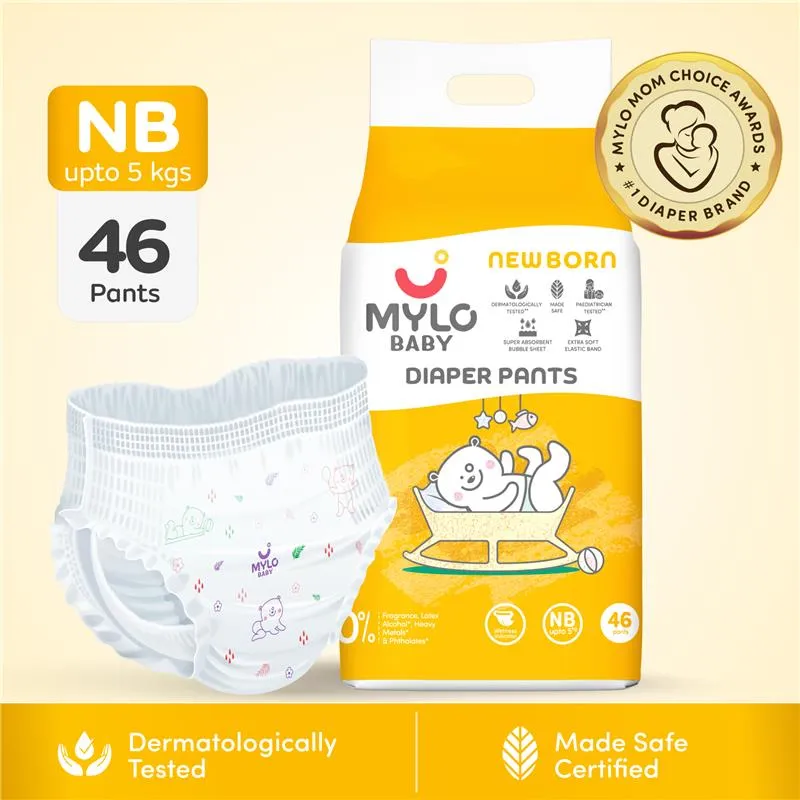
For the newborn weeks, New Born size for up to 5 kg in 46 count and 92 count, or a tape style diaper while the umbilical stump heals. Start with the smaller pack, which is also the right way to trial anything new on sensitive skin.
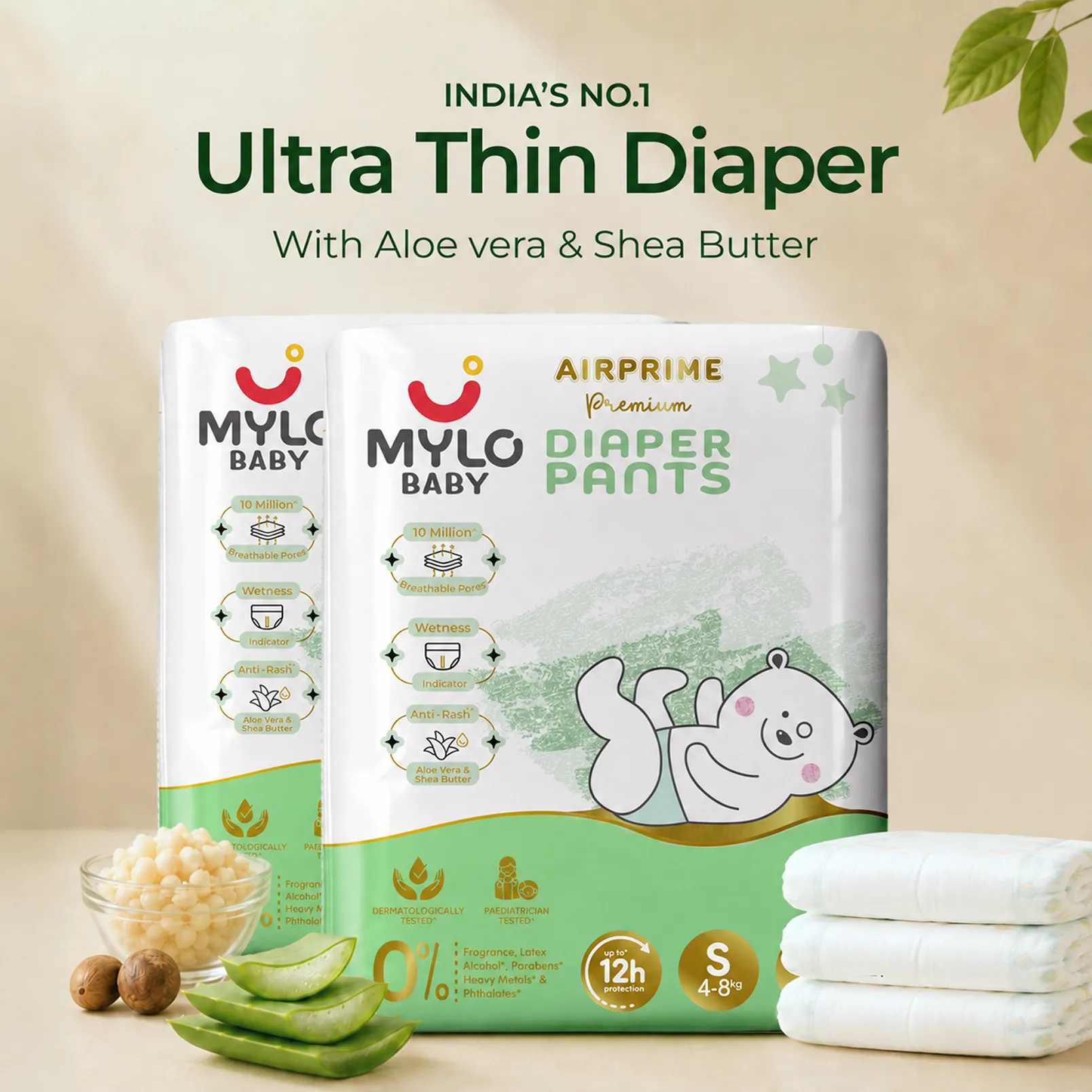
For a visible change signal, the Airprime Premium range uses a colour changing wetness indicator. Since changing promptly is the intervention that matters most, a visible prompt is genuinely useful here.
For reusables from about 3 months, the adjustable cloth diaper with insert pads. Note that cloth holds urine as liquid against the skin, so it is only gentler if you change after every pee.
Compare across the full diaper range.
What we will not claim. We do not describe our disposable diapers as organic, because no certification supports that for a disposable product. No diaper in our range prevents diaper rash. And any diaper, ours included, can irritate a particular baby's skin, which is why a small trial pack is the right way to start.
[For the Mylo team: insert here the specific, currently valid certifications for the relevant SKUs, named individually, with what each one tests. Do not use umbrella terms, and do not use the word organic for a disposable product.]
Mylo Parents Asked
Which diaper ingredients should I avoid for a baby with sensitive skin?
Added fragrance first, because it is a known contact allergen and serves no purpose. Then dyes in the area touching the skin. Then rubber based elastics, but only if your baby has reacted before, since that is uncommon. The absorbent gel, the pulp and the plastic layers are not the problem.
Is the absorbent gel in diapers safe?
Yes, on current understanding. It is sodium polyacrylate, it stays sealed inside the core, and it is not a recognised cause of contact dermatitis or known to be absorbed through intact skin. If you see gel beads on the skin, the diaper has been over saturated or has split, so wipe them off and change it more often or move up a size.
Do fragrance free diapers prevent rashes completely?
No. They remove one irritant, which is worth doing, but most diaper rash is caused by prolonged contact with urine and stool plus friction rather than by any ingredient. Fragrance free helps. Changing promptly helps far more.
Are organic diapers better for sensitive skin?
Not reliably, because "organic" has no regulated meaning on a disposable diaper and no certification supports it. Look for specific absences instead: fragrance free, dye free, a soft top sheet, a breathable back sheet. Those are checkable claims.
Can a diaper cause an allergic reaction?
Yes, though far less often than ordinary irritant rash. The documented causes are dyes and rubber in the elastics, and each produces a recognisable shape. A band across each outer buttock and hip points to the elastics. A rash in the outline of a printed design points to dyes.
Should I worry about chlorine in diapers?
Not much, in modern products. Pulp is generally bleached without elemental chlorine now, so residue is not the concern it once was. If you want a specific claim to look for, TCF means totally chlorine free and ECF means elemental chlorine free, and both are checkable in a way that "chemical free" is not.
Are wipes worse than diapers for sensitive skin?
Often yes. Wipes are wet, they need preservatives, and fragranced versions add a known allergen directly to the skin. For a baby with a current rash, plain water and cotton wool is the safest option. Otherwise choose fragrance free and alcohol free.
Do cloth diapers suit sensitive skin better?
Only if you change them after every pee. Cloth holds urine as liquid in its fibres, so the wet layer is the layer touching your baby. Cloth changed promptly is very gentle. Cloth left on for hours is the worst option of the two.
When Should You Speak to a Doctor?
Contact your paediatrician or a dermatologist if you notice:
A rash that has not improved within 2 to 3 days of frequent changing and a thick barrier cream
A bright red rash with a clear border and small spots or pustules spreading beyond it, which suggests a fungal infection needing prescribed treatment
Blisters, weeping, bleeding, pus or yellow crusting
Fever alongside a rash in the diaper area
A rash that keeps returning in the same distinctive shape, such as bands along the elastics, which may warrant patch testing
Any swelling of the lips or face, hives, or breathing difficulty, which needs emergency care
Do not use a steroid cream in the diaper area unless a doctor has prescribed it for your baby. Skin there absorbs more than skin elsewhere, and a steroid on an undiagnosed fungal rash can make it worse.
This article is general information and does not replace an examination.
Bottom Line
Avoid fragrance, avoid dyes in the layer touching your baby, and avoid rubber elastics only if your baby has reacted to them before. Stop worrying about the absorbent gel, which stays sealed in the core and is not a recognised cause of skin reactions. Ignore "organic" and "chemical free", which mean nothing specific on a disposable diaper, and look for named absences instead. Then change the wipes before you change the diaper brand, and remember that changing promptly beats every ingredient decision on this page.
References
Di Altobrando A and colleagues. Allergic contact dermatitis caused by the elastic borders of diapers. Contact Dermatitis, 2020.
Diaper dye dermatitis. PubMed.
Stamatas GN, Tierney NK. Diaper dermatitis. Pediatric Dermatology. 2014;31(1):1-7.
StatPearls. Diaper Dermatitis.
AAP, HealthyChildren.org. Common Diaper Rashes and Treatments.
NHS, UK. Nappy rash.
Indian Academy of Pediatrics. IAP Guidelines for Pediatric Skin Care. Indian Pediatrics. 2021.
Source required for sodium polyacrylate safety. Cite a current toxicology or paediatric dermatology reference before publishing.

Article Posted Under
Related Articles

Related Topics
.webp&w=32&q=75)
Medical Disclaimer
This content is for informational purposes only and should not replace professional medical advice. Consult with a physician or other health care professional if you have any concerns or questions about your health. If you rely on the information provided here, you do so solely at your own risk.


AWARDS AND RECOGNITION

Mylo wins Forbes D2C Disruptor award

Mylo wins The Economic Times Promising Brands 2022
AS SEEN IN












- Mylo Care: Effective and science-backed personal care and wellness solutions for a joyful you.
- Mylo Baby: Science-backed, gentle and effective personal care & hygiene range for your little one.
- Mylo Community: Trusted and empathetic community of 10mn+ parents and experts.


Product Categories
Baby Carrier | Baby Soap | Baby Wipes | Stretch Marks Cream | Baby Cream | Baby Shampoo | Baby Massage Oil | Baby Hair Oil | Stretch Marks Oil | Baby Body Wash | Baby Powder | Baby Lotion | Diaper Rash Cream | Newborn Diapers | Teether | Baby Kajal | Baby Diapers Pants | Cloth Diapers | Laundry Detergent | Lactation Granules |