


Orders
.png&w=48&q=75 "login")
Profile


Wallet

Daycare vs Nanny: Choosing Childcare for Your Toddler
 23 min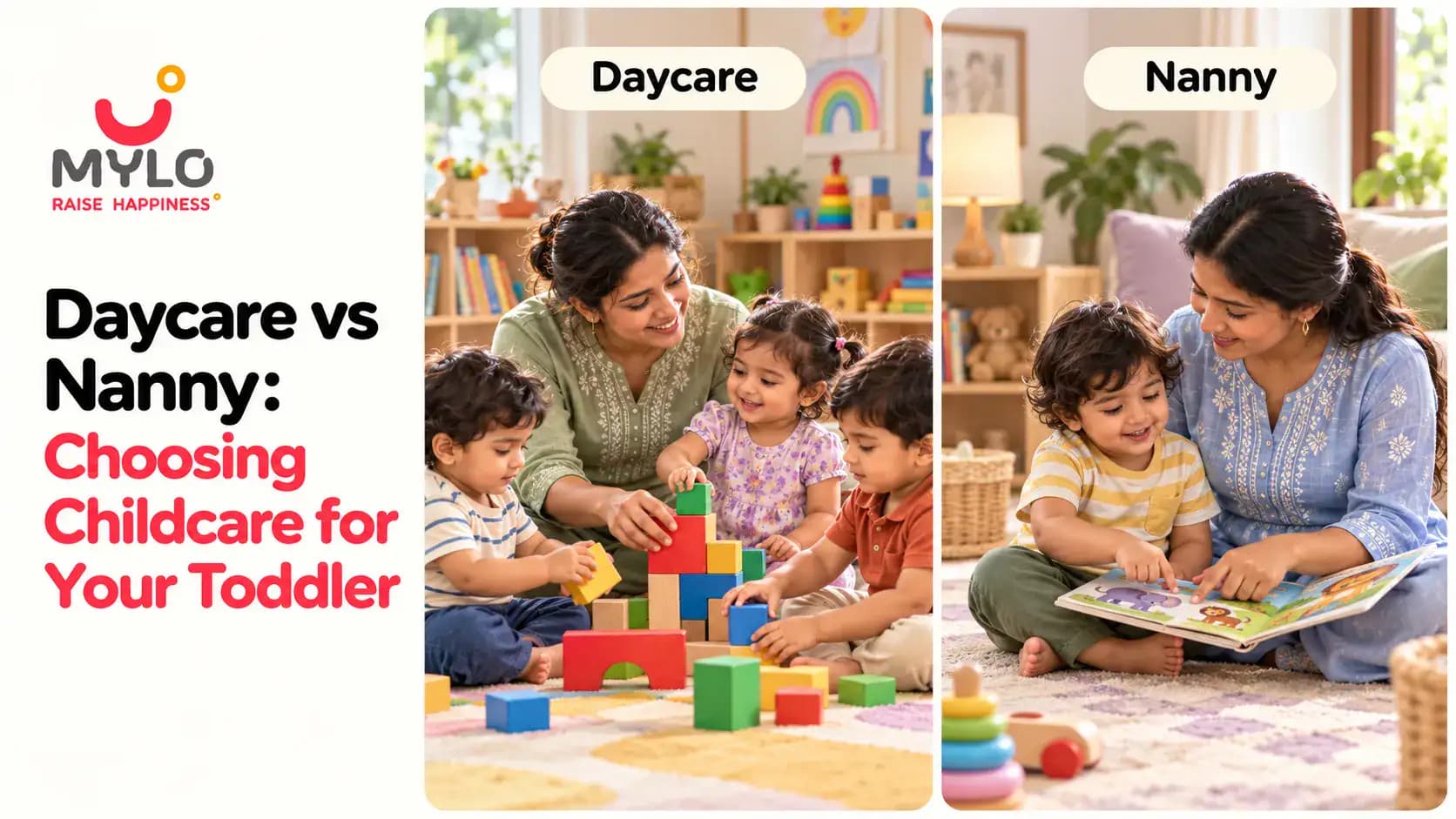
Quick Answer
Daycare is group care for children at a centre, while a nanny is a caregiver who looks after your child at home. For example, a 2 year old may enjoy a daycare's playmates, while a 1 year old may settle better with a nanny. Neither is better for every family: safety, quality and fit matter most.
At a Glance
Point | Daycare | Nanny |
|---|---|---|
Where | Childcare centre or office creche | Your home |
Attention | Shared among several children | One to one |
Social time | Daily play with other children | Needs planned outings and playdates |
Illness | More colds and tummy bugs, especially in the first year | Fewer infections |
When child is sick | Usually must stay home | Can still be cared for at home |
Backup | Centre has other staff | You need a backup if the nanny is on leave |
Supervision | Many adults, rules, often CCTV | Depends on trust, checks and your routine |
Cost (metro cities) | Often lower for one child | Often higher, but can cost less for two children |
Key Facts
Research shows the quality of care (warm, responsive, safe caregivers) matters more for development than the type of care.
Toddlers in group care catch more infections at first, but this usually settles after the first year.
A lower child to caregiver ratio means more attention. Ask every daycare about it.
Police verification of a nanny or domestic helper is available through most state police services in India.
Under the Maternity Benefit Act, establishments with 50 or more employees must provide a creche facility.
What Is the Difference Between Daycare and a Nanny?
Short answer: Daycare cares for a group of children at a centre with trained staff and a fixed schedule. A nanny cares for your child at your home, following your routine and rules.
Daycare / Creche | Nanny / Full-time Maid for Childcare | |
|---|---|---|
Setting | Centre with play areas, nap room, kitchen | Your home |
Schedule | Fixed timings, fixed meal and nap times | Flexible, set by you |
Who cares | Teachers and helpers (called didis or aunties in many centres) | One person |
Learning | Structured activities, songs, art, group play | Depends on the nanny and your guidance |
Food | Centre's menu or your tiffin | Home-cooked food you choose |
Your control | Lower | Higher |
Commute | Daily drop and pickup | None |
Daycare Pros and Cons
Short answer: Daycare offers social play, routine, many supervising adults and backup staff, but it has fixed hours, more illness, and less one to one attention.
Pros | Cons |
|---|---|
Daily play with other children helps social skills and language | More colds, coughs and loose motions in the first months |
Structured routine and activities | Sick children usually cannot attend |
Several trained adults, not one person alone | Less individual attention, especially with a high ratio |
No need to find backup when one staff member is on leave | Fixed drop and pickup times, late fees |
Often has CCTV and set safety rules | Daily commute in traffic or weather |
Good preparation for playschool | Some toddlers take weeks to settle |
Nanny Pros and Cons
Short answer: A nanny gives one to one care at home with your food, routine and flexibility, but you depend on one person, supervision is harder, and costs and backup can be challenging.
Pros | Cons |
|---|---|
One to one attention and a close bond | Everything depends on one person's skills and honesty |
Your routine, food, nap time and rules | Harder to supervise when you are at work |
Child can be cared for when sick | No backup during leave, festivals or if she quits |
No commute, child stays in a familiar place | Less play with other children unless planned |
Can help with child-related chores (feeding, bathing, washing bottles) | You manage pay, leave, rules and verification |
Flexible timings for late office hours | Can cost more in metro cities for full-time trained help |
Daycare vs Nanny Cost in India
Short answer: Costs vary widely by city and quality. In metro cities, full-day daycare often costs less than a full-time trained nanny for one child, but for two children a nanny can work out cheaper.
Option | Approximate Monthly Cost (Metro Cities) | Notes |
|---|---|---|
Full-day daycare | ₹6,000 to ₹25,000 | Premium centres can charge more. Check meals, admission and annual fees |
Half-day daycare | ₹4,000 to ₹12,000 | Often combined with grandparent or parent care |
Office creche | Free to subsidised | Check your HR policy |
Full-time local nanny or maid for childcare | ₹10,000 to ₹20,000 | Plus food, leave and festival bonus |
Trained nanny through an agency | ₹15,000 to ₹30,000 or more | Plus agency fee, often one month's salary |
Live-in nanny | ₹15,000 to ₹30,000 or more | Plus food, stay and travel home |
These are rough ranges based on common market rates in large cities and change a lot by location. Smaller cities usually cost less. Always compare the total cost, including extras.
Hidden costs to add up:
Daycare | Nanny |
|---|---|
Admission and annual fees | Agency fee |
Meals or tiffin, diapers, wipes | Her meals, tea, uniform (if any) |
Late pickup fees | Overtime for late office days |
Leave you take when your child is sick | Backup care when she is on leave |
Transport | Annual raise and festival bonus |
Daycare or Nanny: Which Is Better for a 1 Year Old?
Short answer: Both can work at 1 year if the care is safe and loving. Many families choose a nanny or family care for 1 year olds, who still need lots of one to one comfort, and move to daycare around 2 years.
Child's Age | What They Need Most | Often a Good Fit |
|---|---|---|
12 to 18 months | One to one comfort, flexible naps, close watching (walking, mouthing everything) | Nanny, grandparents, or a small daycare with a low ratio |
18 to 24 months | Routine, language, safe space to explore | Either. A good daycare or a nanny plus planned outings |
2 to 3 years | Play with other children, language, independence | Daycare or playschool, often with a nanny or family for the rest of the day |
What Is the Best Age for Daycare?
Short answer: There is no single best age. Many children settle more easily after 18 months to 2 years, when they talk a little, eat family food and nap once a day, but a high-quality daycare can be fine earlier.
Signs your toddler may be ready for daycare:
Eats family food and drinks from a cup or sipper
Takes one nap a day (or two at fixed times)
Can stay with a familiar adult other than you for a few hours
Shows interest in other children
Can communicate basic needs with words, signs or pointing
Is Daycare Bad for Toddlers?
Short answer: No. Good-quality daycare is not harmful and can help language and social skills. The quality of the centre, the hours, and how warm the caregivers are matter far more than daycare itself.
Worry | What Research and Experience Show |
|---|---|
"My child will love the teacher more than me" | Parents remain the main attachment figure. A warm caregiver is an extra source of security |
"My child will fall sick all the time" | Infections are common in the first year of group care, then usually drop |
"Daycare causes behaviour problems" | Long hours in poor-quality care are linked with small increases in behaviour problems. Good-quality care is not |
"My child will learn bad habits" | Toddlers copy everything everywhere. Calm, consistent rules at home matter most |
Other Childcare Options in India
Short answer: Many Indian families mix options: grandparents, office creches, nanny share, or half-day daycare plus a nanny or family member.
Option | Good For | Watch Out For |
|---|---|---|
Grandparents | Love, trust, home food, no cost | Their health and energy, different rules. Read handling grandparent and parenting conflict |
Office creche | Short commute, you can visit at lunch | Quality varies, check the same points as any daycare |
Nanny share | Two families share one nanny, lower cost, a playmate | Clear rules on pay, location and sick days |
Half-day daycare plus nanny or family | Social play plus home care | Two handovers a day |
Playschool plus family care | 2 to 3 year olds, early learning | Playschool hours are short, usually 2 to 4 hours |
How to Choose a Daycare for Your Toddler
Short answer: Visit at least two or three daycares in person, check safety, cleanliness, staff ratio, food and nap areas, and watch how caregivers talk to the children.
Daycare Checklist
Area | What to Check |
|---|---|
Safety | Gated entry, visitor register, covered sockets, no sharp edges, safe railings, no open water |
Child to staff ratio | Fewer children per adult is better. For toddlers, around 1 adult for 4 to 6 children is a common benchmark |
Staff | Background checks, police verification, first aid training, low staff turnover |
Hygiene | Clean toilets and diaper area, handwashing before meals, clean kitchen, safe drinking water |
Food | Fresh meals, written weekly menu, how they handle allergies |
Nap | Separate clean mats or cots, ventilated room, supervised naps |
Sick policy | When children must stay home (fever, loose motions, rashes, conjunctivitis) |
Emergency plan | Nearby hospital, first aid kit, fire safety, how they contact parents |
Pickup rules | Only authorised adults with ID, photo list at the gate |
Transparency | Open visits, CCTV access (if offered), daily updates on food, naps and diapers |
Feel | Are children calm and busy? Do caregivers sit at child level and speak kindly? |
Questions to Ask the Daycare
How many children and caregivers are in the toddler room?
How long have your staff worked here?
Are all staff police verified and trained in first aid?
What is a typical day for a 1 to 3 year old?
How do you handle tantrums, biting and hitting?
How do you settle new children? Can I stay for the first few days?
What happens if my child falls sick during the day?
Can I visit without notice?
How to Hire a Nanny in India
Short answer: Hire through references or a trusted agency, check ID and get police verification, do a paid trial week while you are at home, and agree on duties, pay and leave in writing.
Step | What to Do |
|---|---|
1. Find candidates | References from friends and neighbours, trusted agencies |
2. Interview | Ask about past childcare jobs, how she handles crying, feeding, tantrums |
3. Check references | Call at least two past employers |
4. Verify | Collect Aadhaar or other ID, apply for police verification through your state police service |
5. Health check | Ask for a basic health check (including TB screening if your doctor advises) |
6. Trial week | Paid trial while you or a family member are at home |
7. Agree in writing | Timings, duties, pay, weekly off, leave, notice period |
8. Train | Your toddler's routine, food rules, safety rules, emergency numbers |
Nanny Rules Sheet (Stick It on the Fridge)
Rule | Example |
|---|---|
Food | No sugar, no honey-coated sweets, no whole nuts or grapes, follow the menu |
Screens | No mobile phone or TV for the child unless you allow it |
Safety | Never leave the child alone near water, balcony, stove or stairs |
Discipline | No hitting, shouting or scaring ("bhoot aa jayega") |
Outings | Tell you before leaving home, where and for how long |
Visitors | No guests while caring for the child |
Emergency | Your numbers, a neighbour's number, paediatrician, 112 |
Updates | Send photos or a message at meal and nap times |
Warning Signs in Any Childcare
Short answer: Act quickly if your child shows sudden fear of the caregiver, unexplained injuries, or big changes in behaviour, or if the caregiver avoids your questions.
Warning Sign | What to Do |
|---|---|
Unexplained bruises, burns or injuries | Ask immediately, see your paediatrician, keep photos |
Child suddenly terrified of the caregiver or place | Visit unannounced, talk to the centre head |
Child very hungry, dirty or in a soaked diaper at pickup often | Raise it the same day |
Caregiver discourages visits or calls | Treat as a serious concern |
Signs of rough handling, slapping or shaking | Remove your child from that care, see a doctor, report to the police |
Child talks about touch that worried them | Stay calm, believe your child, see body safety: good touch bad touch |
In an emergency, call 112. For child protection concerns, you can call CHILDLINE 1098.
How to Prepare Your Toddler for Daycare or a New Nanny
Short answer: Start slowly, with short visits or short hours in the first week, keep goodbyes short and loving, and keep the rest of your toddler's day predictable.
Week | Daycare Plan | Nanny Plan |
|---|---|---|
Before starting | Visit together, talk about it, read picture books about school | Nanny spends time with you and your child at home |
Days 1 to 3 | 1 to 2 hours, parent nearby | Nanny cares while you are in the next room |
Days 4 to 7 | Half day, include one meal | You step out for a few hours |
Week 2 | Full timing if settled | Full day |
Keep goodbyes short. Say "Mummy will come after your nap," and always come back on time.
Do not sneak away. It builds more fear.
Send a comfort object, like a small cloth or soft toy.
Crying at drop-off is normal for the first few weeks. Ask the caregiver how long it lasts after you leave.
For more on clingy phases, read toddler fears and separation anxiety.
Daycare Bag Checklist for Toddlers
Short answer: Pack spare clothes, diapers or diaper pants, wipes, a sipper, a labelled tiffin if required, a small towel and a comfort object.
Item | How Many |
|---|---|
Diapers or diaper pants | 4 to 5 for a full day (ask the centre) |
Baby wipes | 1 pack |
Spare clothes | 2 sets, plus spare underwear if potty training |
Sipper or water bottle | 1, labelled |
Tiffin and snack box | If the centre does not provide meals. See playschool tiffin ideas |
Small towel or napkin | 1 to 2 |
Comfort object | Small soft toy or cloth |
Medicines | Only with a doctor's note and written instructions |
Label everything with your child's name.



Indian Context: What Parents Should Know
Office creche: the Maternity Benefit (Amendment) Act, 2017 requires establishments with 50 or more employees to provide a creche facility, and mothers are allowed four visits a day, including rest breaks. Ask your HR team.
Palna Scheme: the Government of India's creche scheme under Mission Shakti supports creches, including Anganwadi-cum-creches, for children of working mothers.
Police verification: most state police services let you apply online for tenant and domestic help verification.
Vaccines: daycares often ask for vaccination records. Keep your toddler vaccination schedule up to date.
Frequent illness: colds and fevers are common in the first months of group care. Read toddler fever and cold at playschool.
Myths vs Facts
Myth | Fact |
|---|---|
Only a mother's care is good for a toddler | Warm, consistent care from any trusted adult supports healthy development |
Daycare children always fall sick | They catch more infections at first, which usually settles after the first year |
A nanny is always safer than daycare | Safety depends on checks, supervision and the person, not the type of care |
Expensive daycare means better care | Ratio, staff warmth and hygiene matter more than fancy toys or fees |
If my child cries at drop-off, daycare is not right | Crying for a few weeks is normal. Watch how they are after you leave and over a month |
Grandparents can always manage full-time | Toddlers are physically demanding. Grandparents may need help or breaks |
FAQs
1. Is daycare or a nanny better for a toddler?
Neither is better for every child. A nanny gives one to one attention at home, while daycare gives social play and routine. Choose based on safety, quality, your budget and your child's temperament.
2. Is daycare safe for a 1 year old?
Yes, if the centre has a low child to staff ratio, verified and trained staff, clean nap and diaper areas, and a clear sick policy. Visit before deciding.
3. How do I check if a nanny is trustworthy?
Call past employers, collect ID, get police verification, do a paid trial week while you are home, and keep checking in during the first months.
4. Should I install a camera at home if I hire a nanny?
Many families do. Tell the nanny about the camera, use it only in common areas, and never in bathrooms or her private space.
5. How long does it take a toddler to settle in daycare?
Most toddlers settle within 2 to 6 weeks. A slow start, short goodbyes and a predictable routine help.
6. Will my toddler get sick more often in daycare?
Usually yes in the first months, mostly colds and tummy bugs. Keep vaccines up to date, teach handwashing, and keep your child home when sick.
7. Daycare achha hai ya maid rakhna behtar hai?
Dono sahi ho sakte hain. Maid ya nanny se baccha ghar par one to one care paata hai, aur daycare mein doosre bacchon ke saath khelta aur seekhta hai. Safety, verification, kharcha aur aapke bacche ka nature dekhkar faisla kijiye.
8. Baccha daycare jaate waqt bahut rota hai, kya karein?
Shuru ke kuch hafton tak rona normal hai. Pehle chhote time ke liye bhejiye, goodbye chhota aur pyaar se kijiye, chupke se mat jaiye, aur hamesha time par wapas aaiye. Teacher se poochiye ki aapke jaane ke baad baccha kitni der mein shaant hota hai.
Related Reads
References
NICHD Early Child Care Research Network. The NICHD Study of Early Child Care and Youth Development. National Institute of Child Health and Human Development. https://www.nichd.nih.gov
American Academy of Pediatrics, HealthyChildren.org. Choosing Child Care. https://www.healthychildren.org
National Association for the Education of Young Children (NAEYC). Staff to child ratio and group size guidance. https://www.naeyc.org
Ministry of Women and Child Development, Government of India. Palna Scheme under Mission Shakti. https://wcd.gov.in
Ministry of Labour and Employment, Government of India. Maternity Benefit (Amendment) Act, 2017.
World Health Organization. Nurturing care for early childhood development. https://www.who.int
CHILDLINE India. 1098 helpline. https://www.childlineindia.org
Medical Disclaimer
This article is for general information only and does not replace advice from your paediatrician. Costs, rules and schemes change over time and vary by state, so please check current details locally. If you suspect your child has been harmed in any care setting, contact your doctor, call 112 in an emergency, or call CHILDLINE 1098.
Baby Essentials
Everything you need for the baby





Article Posted Under
Related Articles



Related Topics
.webp&w=32&q=75)
Medical Disclaimer
This content is for informational purposes only and should not replace professional medical advice. Consult with a physician or other health care professional if you have any concerns or questions about your health. If you rely on the information provided here, you do so solely at your own risk.


AWARDS AND RECOGNITION

Mylo wins Forbes D2C Disruptor award

Mylo wins The Economic Times Promising Brands 2022
AS SEEN IN












- Mylo Care: Effective and science-backed personal care and wellness solutions for a joyful you.
- Mylo Baby: Science-backed, gentle and effective personal care & hygiene range for your little one.
- Mylo Community: Trusted and empathetic community of 10mn+ parents and experts.


Product Categories
Baby Carrier | Baby Soap | Baby Wipes | Stretch Marks Cream | Baby Cream | Baby Shampoo | Baby Massage Oil | Baby Hair Oil | Stretch Marks Oil | Baby Body Wash | Baby Powder | Baby Lotion | Diaper Rash Cream | Newborn Diapers | Teether | Baby Kajal | Baby Diapers Pants | Cloth Diapers | Laundry Detergent | Lactation Granules |