


Orders
.png&w=48&q=75 "login")
Profile


Wallet

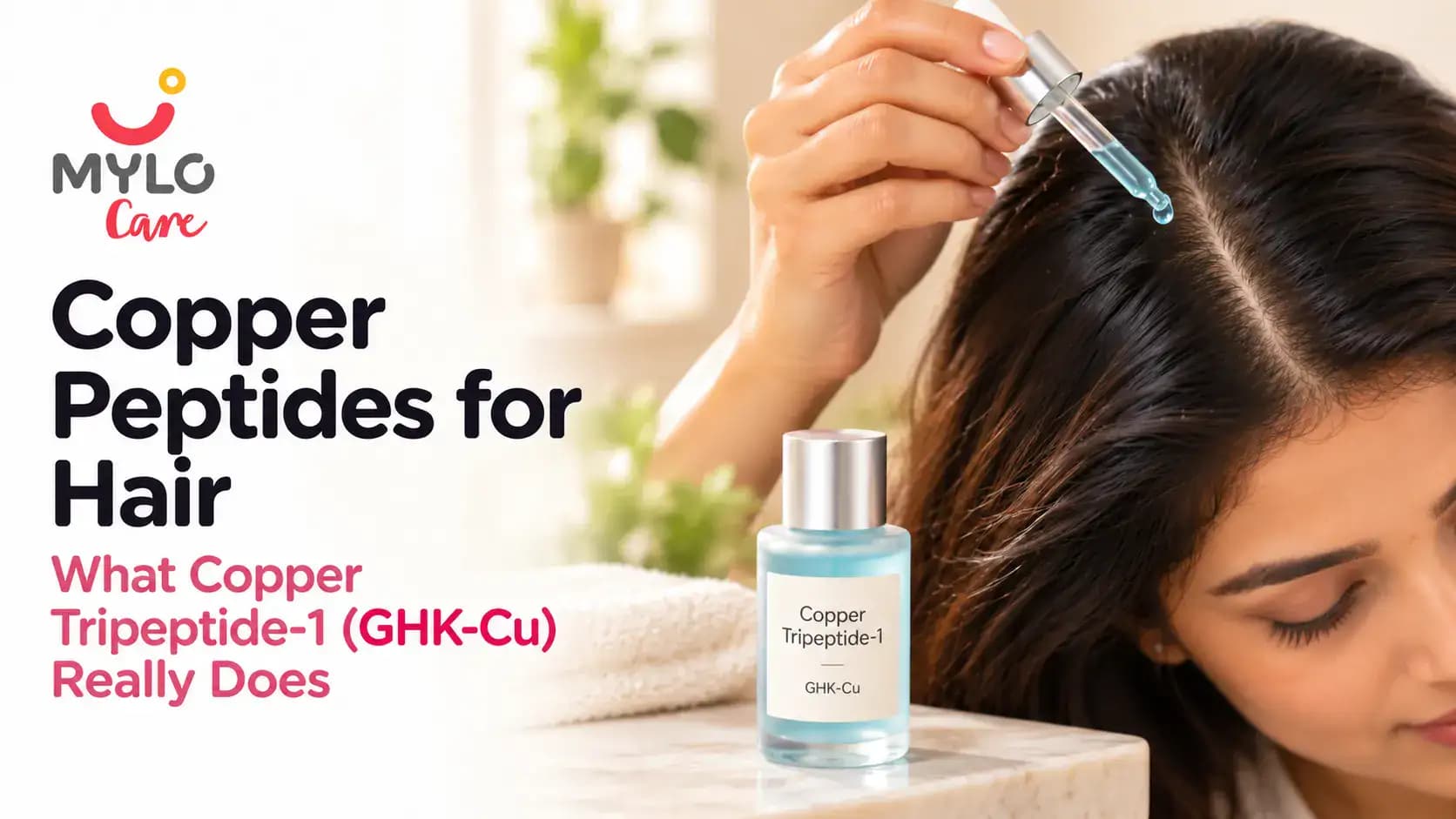
Copper Peptides for Hair: What Copper Tripeptide-1 (GHK-Cu) Really Does
 11 min
Quick Answer
Copper Tripeptide-1, also called GHK-Cu, is a small peptide bound to copper that occurs naturally in the body and is used in skin and hair care. Research suggests copper peptides may support hair by improving the scalp's supporting tissue and blood supply, helping hair follicles grow larger, and possibly keeping hairs in their growth phase for longer. The catch: most of the hair evidence comes from lab and animal studies, not large human trials. Copper peptides are a promising, science-based ingredient, but not a proven hair loss treatment.
Introduction
Walk down any hair care aisle and you will find dozens of serums promising thicker, fuller hair, most leaning on the word "natural" and little else. Copper peptides are different, because they come with a real biological explanation for how they might work. That is why they have become one of the most talked-about ingredients in hair and scalp care.
This guide explains, in plain language, what Copper Tripeptide-1 is, how it may work on the scalp, what the research actually supports, and where the honest limitations are, so you can tell a science-based ingredient from a buzzword.
What Is Copper Tripeptide-1 (GHK-Cu)?
Copper Tripeptide-1 is a chain of three amino acids (a tripeptide) bound to a copper ion. The three amino acids are glycine, histidine, and lysine, which is why scientists call it GHK. When it is bound to copper (chemical symbol Cu), the full complex is called GHK-Cu.
On product labels you will see it written as "Copper Tripeptide-1" or "GHK-Cu." Both mean the same molecule.
GHK is not a lab invention: it is naturally present in human blood, saliva, and urine, and its levels fall with age. According to a review in the International Journal of Molecular Sciences, GHK-Cu has been studied for its roles in wound healing, collagen production, and tissue repair, as well as hair growth.
How Do Copper Peptides Work on the Scalp?
Your hair follicles sit in the deeper layers of the scalp, surrounded by connective tissue and tiny blood vessels that feed them. Copper peptides are thought to support this environment in a few ways:
Supporting connective tissue. GHK-Cu is linked to increased collagen and elastin production, which supports the tissue around follicles.
Supporting blood vessel growth. The same review describes GHK-Cu as stimulating the growth of new blood vessels, which may help deliver oxygen and nutrients to follicles.
Calming the scalp environment. GHK-Cu has been studied for anti-inflammatory and antioxidant effects.
In short, copper peptides are designed to work on the "foundation" your hair grows from, not just on the strands you can see.
What Do Copper Peptides Do for Hair?
May help follicles grow larger and hair grow thicker
The International Journal of Molecular Sciences review of GHK-Cu lists increased hair growth, thicker hair, and larger hair follicles among its reported effects. Larger follicles tend to produce thicker strands. Much of this evidence comes from animal studies, though, so it needs confirming in people.
May extend the hair growth phase
When hair thins, the growth phase is often shortened, so hairs fall sooner than they should. A lab study on human hair follicles found that a closely related copper peptide (AHK-Cu, also called Copper Tripeptide-3) helped the follicles grow longer and supported the cells that drive hair growth. This is a promising sign that copper peptides may help hair stay in its growth phase longer, but it was done in a lab dish, not on people's scalps, and with a sister molecule rather than GHK-Cu itself.
May support blood flow to follicles
Because GHK-Cu is linked to new blood vessel growth, it may improve the "supply line" of oxygen and nutrients to follicles. This is a reasonable biological explanation, but it hasn't been directly measured in human scalp trials.
May reduce breakage
By supporting the connective tissue around follicles, copper peptides are thought to contribute to stronger hair. This is based on what GHK-Cu does in skin, and direct hair data are limited.
A small role in hair colour
Copper is needed by the body to make melanin, the pigment that colours your hair, skin, and eyes, according to the NIH Office of Dietary Supplements. That gives copper a supporting role in pigmentation, but there is no good evidence that a copper peptide serum reverses grey hair.
Copper Peptides at a Glance
Possible Benefit | What the Research Suggests | Evidence Strength |
|---|---|---|
Larger follicles, thicker hair | Reported in reviews, mainly from animal studies | Early |
Longer growth phase | Lab study on human follicles, using a related peptide (AHK-Cu) | Early (lab only) |
Better scalp blood supply | Linked to blood vessel growth in tissue studies | Theoretical |
Less breakage | Based on connective tissue effects in skin | Limited |
Hair colour support | Copper is needed to make melanin | Indirect |
Why Copper Peptides Stand Out
Most hair serums lean on the halo of the word "natural," which tells you nothing about whether an ingredient works. Copper Tripeptide-1 is different: it has a defined molecular structure, a plausible biological mechanism, and published research behind its effects on skin and tissue.
That doesn't make "natural" ingredients bad; many are lovely for conditioning and scalp comfort. But copper peptides offer something most can't: a science-based explanation for how they might support the hair growth cycle.
How to Use a Copper Peptide Serum
Copper peptides work best in leave-on products like scalp serums, because shampoos rinse the active away before it can work.
Apply a few drops directly to a clean scalp, section by section
Gently massage in with your fingertips; don't rinse
Use consistently; results, if any, build over months, not days
Some formulators advise not applying copper peptides at the same time as strong acids (AHAs), vitamin C, or retinol, as these may reduce how well the peptide works. If you use them, apply at different times of day.
Are Copper Peptides Safe? Side Effects to Know
For most people, cosmetic copper peptide products are well tolerated. Possible side effects include:
Scalp redness, itching, or irritation
Rarely, an allergic reaction
Do a patch test first: apply a small amount to the inside of your elbow and wait 24 hours. Stop if you notice redness, hives, or itching. Copper toxicity is very unlikely from cosmetic products, since they contain only small amounts.
Pregnant or breastfeeding? Copper peptides have not been studied in pregnancy or breastfeeding. Check with your doctor before adding any new leave-on active. For a full guide, read our articles on whether hair growth products are safe during pregnancy and hair products to avoid while breastfeeding.
Copper Peptides vs Minoxidil
Copper Peptides (GHK-Cu) | Minoxidil | |
|---|---|---|
What it is | Cosmetic peptide ingredient | Medicine |
Evidence for hair | Mainly lab and animal studies | Extensive human clinical trials |
How it is sold | Serums and scalp treatments | Foam, solution, or prescription tablets |
Pregnancy and breastfeeding | Not studied; ask your doctor | Official product information says not to use |
Minoxidil has far stronger evidence for hair regrowth, but it is a medicine with more restrictions. Copper peptides are a gentler cosmetic option with promising but early evidence.
An Honest Word on the Evidence
Being science-led means being honest about limits:
The evidence for copper peptides is stronger for skin than for hair.
Many hair findings come from lab and animal studies, not large human trials.
Some widely quoted hair studies actually tested a related peptide (AHK-Cu), not GHK-Cu itself.
More human trials are needed before anyone can promise results.
None of this means copper peptides don't work. The mechanism is genuinely promising. But a trustworthy brand sets realistic expectations rather than promising miracles.
What This Means for New Mothers
If you are dealing with hair fall after having a baby, it is worth knowing that postpartum shedding is mainly hormonal and temporary, and no serum ingredient can switch it off. For the full picture, read our guide on why your hair falls out 3 months after delivery. If you are choosing a scalp serum during this time, our guide to postpartum hair serums explains what to look for while breastfeeding.
Key Takeaway
Copper Tripeptide-1 (GHK-Cu) is one of the few hair care ingredients with a real biological rationale. It supports the scalp's connective tissue and blood supply and may help follicles grow, but most hair evidence is still early. Treat it as a promising, science-based ingredient, not a guaranteed fix.
Frequently Asked Questions
What do copper peptides do for hair?
They are studied for supporting the scalp's connective tissue and blood supply, helping follicles grow larger, and possibly extending the hair growth phase. Most of the evidence comes from lab and animal studies.
What is GHK-Cu?
GHK-Cu is another name for Copper Tripeptide-1. GHK stands for the three amino acids glycine, histidine, and lysine, and Cu is the chemical symbol for copper, which the peptide binds to.
Do copper peptides help hair growth?
They may. Reviews report thicker hair and larger follicles, mainly in animal studies, and a lab study on human follicles found a related copper peptide helped them grow. More human trials are needed to confirm results.
Do copper peptides work? What about before and after results?
Before-and-after photos online are usually from brands or individual users, not controlled studies. The research is promising but early, so results vary and can't be guaranteed.
Is Copper Tripeptide-1 the same as Copper Tripeptide-3?
No. Copper Tripeptide-1 is GHK-Cu, while Copper Tripeptide-3 is AHK-Cu. They are closely related, and some hair studies quoted for GHK-Cu actually tested AHK-Cu.
What are the side effects of copper peptides for hair?
Most people tolerate them well. Possible side effects include scalp redness, itching, or irritation, and rarely an allergic reaction. Patch test before regular use.
Do copper peptides help grey hair?
Copper is needed to make melanin, the pigment in hair, but there is no good evidence that a copper peptide serum reverses grey hair.
Are copper peptides better than minoxidil?
Minoxidil has much stronger evidence for hair regrowth, but it is a medicine with more restrictions, including during pregnancy and breastfeeding. Copper peptides are a gentler cosmetic option with early evidence.
How do I use a copper peptide serum for hair?
Apply a few drops to a clean scalp, massage in gently, and don't rinse. Use it consistently, and avoid applying it at the same time as strong acids, vitamin C, or retinol.
Can I use copper peptides while pregnant or breastfeeding?
They haven't been studied in pregnancy or breastfeeding, so check with your doctor before using any new leave-on active during this time.
How long do copper peptides take to work on hair?
Hair grows slowly, so any effect builds over several months of consistent use, not days or weeks.
Is the science behind copper peptides proven?
The mechanism is well studied, with stronger evidence for skin than hair. Many hair findings come from lab and animal research, so more human trials are needed.
References
Hair Fall Control Kit for Moms
Stronger, healthier hair after pregnancy
.webp&w=1900&q=75)




Article Posted Under
Related Articles




Medical Disclaimer
This content is for informational purposes only and should not replace professional medical advice. Consult with a physician or other health care professional if you have any concerns or questions about your health. If you rely on the information provided here, you do so solely at your own risk.


AWARDS AND RECOGNITION

Mylo wins Forbes D2C Disruptor award

Mylo wins The Economic Times Promising Brands 2022
AS SEEN IN













- Mylo Care: Effective and science-backed personal care and wellness solutions for a joyful you.
- Mylo Baby: Science-backed, gentle and effective personal care & hygiene range for your little one.
- Mylo Community: Trusted and empathetic community of 10mn+ parents and experts.


Product Categories
Baby Carrier | Baby Soap | Baby Wipes | Stretch Marks Cream | Baby Cream | Baby Shampoo | Baby Massage Oil | Baby Hair Oil | Stretch Marks Oil | Baby Body Wash | Baby Powder | Baby Lotion | Diaper Rash Cream | Newborn Diapers | Teether | Baby Kajal | Baby Diapers Pants | Cloth Diapers | Laundry Detergent | Lactation Granules |