


Orders
.png&w=48&q=75 "login")
Profile


Wallet

When Do Toddlers Climb Stairs? Stair Climbing Milestones and Safety Tips (2026)
 13 min
Quick Answer
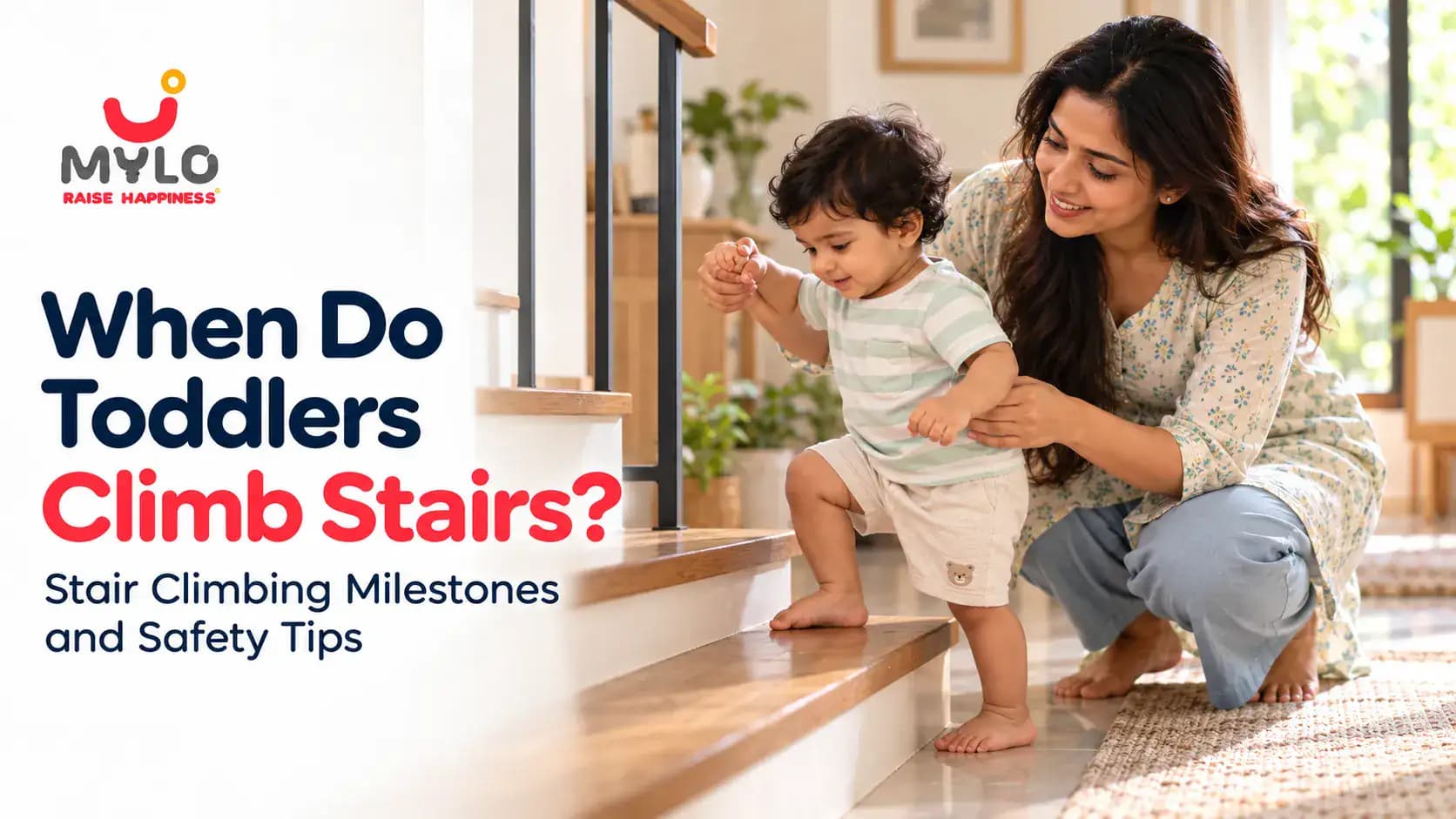
Most toddlers crawl up stairs around 12 to 15 months, walk up stairs holding a hand or rail by 2 years, and walk up with one foot on each step by about 3 years. Going down stairs usually comes later than going up. Always use stair gates and supervise until your child climbs safely.
Stair Climbing Milestones at a Glance
Age | Going Up | Going Down |
|---|---|---|
12 to 15 months | Crawls up on hands and knees | Can't go down safely yet |
15 to 18 months | Crawls up well, climbs onto low furniture | Slides down on tummy, feet first (with help) |
18 months to 2 years | Walks up holding a hand, two feet on each step | Bottom-bumps or crawls down backwards |
2 years | Walks up a few stairs, with or without help | Walks down holding a hand, two feet on each step |
2.5 to 3 years | Walks up holding the rail, starting to alternate feet | Walks down holding the rail, two feet on each step |
3 years | Walks up with one foot on each step | Walks down holding the rail |
4 years | Walks up and down confidently | Walks down with one foot on each step |
Sources: Official AAP and CDC milestone checklists (CDC), Nemours KidsHealth.
Key Facts Every Parent Should Know
By 18 months: Most toddlers climb on and off a sofa or chair without help
By 2 years: Most walk (not climb) up a few stairs, with or without help
Around 3 years: Most walk up stairs with alternating feet
Around 4 years: Most walk down stairs with alternating feet
Going down is harder than going up: It needs more balance and control
Falls are a common cause of injury in young children: Stair gates at the top and bottom are a must (Nemours KidsHealth)
When Do Toddlers Start Climbing Stairs?
Short answer: Many babies start crawling up stairs between 12 and 15 months, sometimes even before they walk. Once walking, toddlers usually walk up stairs holding a hand, placing both feet on each step, between 18 months and 2 years. By 3 years, most can walk up with one foot on each step.
Stage | Typical Age | What It Looks Like |
|---|---|---|
Crawling up | 12 to 15 months | On hands and knees, like climbing a hill |
Climbing onto furniture | 15 to 18 months | Climbs on and off the sofa or bed |
Walking up with help | 18 months to 2 years | Holds your hand, both feet on each step ("marking time") |
Walking up a few stairs | By 2 years | With or without help |
Using the rail | 2 to 3 years | Holds the railing instead of your hand |
Alternating feet going up | Around 3 years | One foot per step, like adults |
When Can Toddlers Go Down Stairs?
Short answer: Going down is harder and riskier than going up. Most toddlers first go down by sliding on their tummy feet first or bumping down on their bottom, then walk down holding a hand by about 2 years, and walk down with alternating feet around 4 years.
Stage | Typical Age |
|---|---|
Slides down on tummy, feet first (taught by a parent) | 15 to 18 months |
Bottom-bumps down, one step at a time | 18 months to 2 years |
Walks down holding a hand, both feet on each step | Around 2 years |
Walks down holding the rail | 2.5 to 3 years |
Walks down with alternating feet | Around 4 years |
Teach the "feet first" method: Show your toddler how to turn around, lie on their tummy and slide down feet first. It's the safest way for new climbers.
How Can I Help My Toddler Learn to Climb Stairs Safely?
Short answer: Let your toddler practise on a few stairs with you right behind them, teach them to go down feet first, encourage holding the rail, and practise on low, safe steps like a playground or a single step at home.
Tip | Why It Helps |
|---|---|
Stay 1 step below when going up | You can catch them if they slip |
Stay 1 step in front when going down | Same reason |
Teach "feet first" for going down | Safest method for new climbers |
Practise on 2 to 3 bottom steps | Low height, less risk |
Encourage holding the rail | Builds safe habits early |
Barefoot or non-slip socks | Better grip than slippery socks |
Climb cushions and low steps at home | Builds strength and balance |
Praise each step | "You climbed 3 stairs!" |
How Do I Keep My Toddler Safe on Stairs?
Short answer: Install safety gates at the top and bottom of stairs, actively supervise, keep stairs clear and well-lit, and anchor furniture that toddlers might climb. Toddlers climb before they understand danger.
Safety Step | Details |
|---|---|
Stair gates at the top and bottom | Use hardware-mounted gates at the top (pressure gates can give way) (Safe Kids Worldwide) |
Actively supervise | Hold hands on stairs until your child is confident |
Keep stairs clear | No toys, shoes or clutter on steps |
Good lighting | Keep stairways well-lit |
Check railings | Gaps between railing bars should be too narrow for a child to slip through |
Anchor furniture and TVs | Toddlers climb furniture, which can tip over (AAP) |
Windows and balconies | Use grills and guards; keep chairs and beds away from windows |
No baby walkers | Walkers can roll down stairs and cause serious injuries |
Stair Safety in Indian Homes
Open staircases and terraces are common, so gates and grills are essential
Steps without railings, as in many older homes, need extra supervision
Marble and tile stairs are slippery, so avoid socks without grip
Joint family homes: Make sure everyone closes the stair gate every time
Rooftop and balcony access: Keep the doors locked
Why Does My Toddler Climb Everything?
Short answer: Climbing is a normal and important part of toddler development. It builds strength, balance, coordination and confidence. Instead of stopping it completely, give your toddler safe places to climb.
Unsafe Climbing | Safe Alternatives |
|---|---|
Bookshelves and cupboards | Sofa cushions on the floor |
Kitchen counters | A low step stool (with supervision) |
Windowsills and balconies | Playground climbing frames for toddlers |
Tables and chairs | Soft play areas |
Cot rails (climbing out) | Move to a low bed or floor bed if your toddler climbs out of the cot |
When Should I Worry About My Toddler's Stair Climbing?
Short answer: Talk to your doctor if your child can't climb onto low furniture by 18 months to 2 years, can't walk up stairs even with help by 2.5 years, uses one leg much more than the other, seems very weak or floppy, falls much more than other children, or loses skills they had.
Age | Red Flag |
|---|---|
Any age | Loses climbing or walking skills (see a doctor right away) |
Any age | Always leads with the same leg and can't use the other, or seems to have pain |
Any age | Very weak, floppy or stiff legs |
18 months to 2 years | Can't climb onto a sofa or low furniture |
2.5 years | Can't walk up stairs even with help |
3.5 to 4 years | Can't walk up stairs holding the rail, or falls very often |
Who can help? Your pediatrician first, who may refer you to a pediatric physiotherapist. Free assessment is available at District Early Intervention Centres (DEIC) under RBSK.
Myths vs Facts
Myth | Fact |
|---|---|
"Toddlers should avoid stairs completely" | Supervised practice helps them learn safely |
"Going down is as easy as going up" | Going down is harder and usually comes later |
"Pressure gates are fine at the top of stairs" | Hardware-mounted gates are safer at the top |
"Climbing on everything means my child is naughty" | Climbing is a normal, healthy part of development |
"My child must alternate feet by 2" | Alternating feet usually comes around 3 years (up) and 4 years (down) |
FAQs: When Do Toddlers Climb Stairs?
When do toddlers start climbing stairs?
Many crawl up stairs between 12 and 15 months and walk up holding a hand between 18 months and 2 years.
Bachcha seedhiyan kab chadhna shuru karta hai? (Hinglish)
Zyada tar bachche 12 se 15 mahine mein ghutnon ke bal seedhiyan chadhne lagte hain, 2 saal tak haath pakadkar chalte hue chadhte hain, aur lagbhag 3 saal tak ek-ek pair ek-ek seedhi par rakhkar chadhna seekh jaate hain. Hamesha seedhiyon par gate lagayein aur paas rahein.
When do toddlers walk up stairs with alternating feet?
Usually around 3 years going up, and around 4 years going down.
How should a toddler go down stairs?
Teach them to slide down on their tummy, feet first, or bump down on their bottom. Walking down holding a hand usually comes around 2 years.
Are stair gates necessary?
Yes. Use gates at the top and bottom of stairs until your child can climb safely. Use hardware-mounted gates at the top.
My toddler climbs everything. Is this normal?
Yes. Climbing is a normal part of development. Give them safe places to climb and anchor furniture.
When should I worry about my toddler's stair climbing?
If your child can't climb onto low furniture by 2 years, can't walk up stairs with help by 2.5 years, uses one leg much more, falls very often or loses skills, see a doctor.
Mera bachcha cot se bahar chadh jaata hai, kya karein? (Hinglish)
Agar bachcha cot se bahar chadhne lagta hai, toh girne ka khatra hai. Cot ka gadda sabse neeche ki setting par rakhein, ya bachche ko neeche wale bed ya floor bed par sulana shuru karein. Aas-paas koi furniture na rakhein jispar woh chadh sake.
Related Reads on Mylo
Gross Motor Milestones From 1 to 3 Years (link once live)
References
Nemours KidsHealth. "Preventing Injuries From Falling, Climbing, and Grabbing." https://kidshealth.org/en/parents/safety-falls.html
Nemours KidsHealth. "2-Year Well-Child Checkup." https://kidshealth.org/en/parents/checkup-2yrs.html
American Academy of Pediatrics (AAP). "Preventing Furniture and TV Tip-Overs." HealthyChildren.org. https://www.healthychildren.org/English/safety-prevention/at-home/Pages/Preventing-Furniture-and-TV-Tip-Overs.aspx
American Academy of Pediatrics (AAP). "Safety for Your Child: 1 to 2 Years." HealthyChildren.org. https://www.healthychildren.org/English/ages-stages/toddler/Pages/safety-for-your-child-1-to-2-years.aspx
Safe Kids Worldwide. "Falls Prevention Tips." https://www.safekids.org/tip/falls-prevention-tips
Centers for Disease Control and Prevention (CDC). "Milestones by 2 Years." https://www.cdc.gov/act-early/milestones/2-years.html
Medical Disclaimer
This article is for information only and does not replace professional medical advice. Every child develops at their own pace. If you have concerns about your child's climbing, walking or balance, please consult your pediatrician.


Shop Now
Baby Essentials





Article Posted Under
Related Articles
Importance of Physical Development for Toddlers
 1·
1· 5 min
5 min When Do Toddlers Start Running? Running and Jumping Milestones Explained (2026)
 25·13 min
 When Do Babies and Toddlers Start Talking? Age, First Words and Signs to Watch (2026)
 3·15 min
 When Do Babies and Toddlers Start Walking? Age, Stages, Signs and Tips (2026)
 16·16 min
Related Topics
.webp&w=32&q=75)
Medical Disclaimer
This content is for informational purposes only and should not replace professional medical advice. Consult with a physician or other health care professional if you have any concerns or questions about your health. If you rely on the information provided here, you do so solely at your own risk.


AWARDS AND RECOGNITION

Mylo wins Forbes D2C Disruptor award

Mylo wins The Economic Times Promising Brands 2022
AS SEEN IN













- Mylo Care: Effective and science-backed personal care and wellness solutions for a joyful you.
- Mylo Baby: Science-backed, gentle and effective personal care & hygiene range for your little one.
- Mylo Community: Trusted and empathetic community of 10mn+ parents and experts.


Product Categories
Baby Carrier | Baby Soap | Baby Wipes | Stretch Marks Cream | Baby Cream | Baby Shampoo | Baby Massage Oil | Baby Hair Oil | Stretch Marks Oil | Baby Body Wash | Baby Powder | Baby Lotion | Diaper Rash Cream | Newborn Diapers | Teether | Baby Kajal | Baby Diapers Pants | Cloth Diapers | Laundry Detergent | Lactation Granules |