


Orders
.png&w=48&q=75 "login")
Profile


Wallet

Toddler Safety Guide: Water, Balcony and Road Safety
 14 min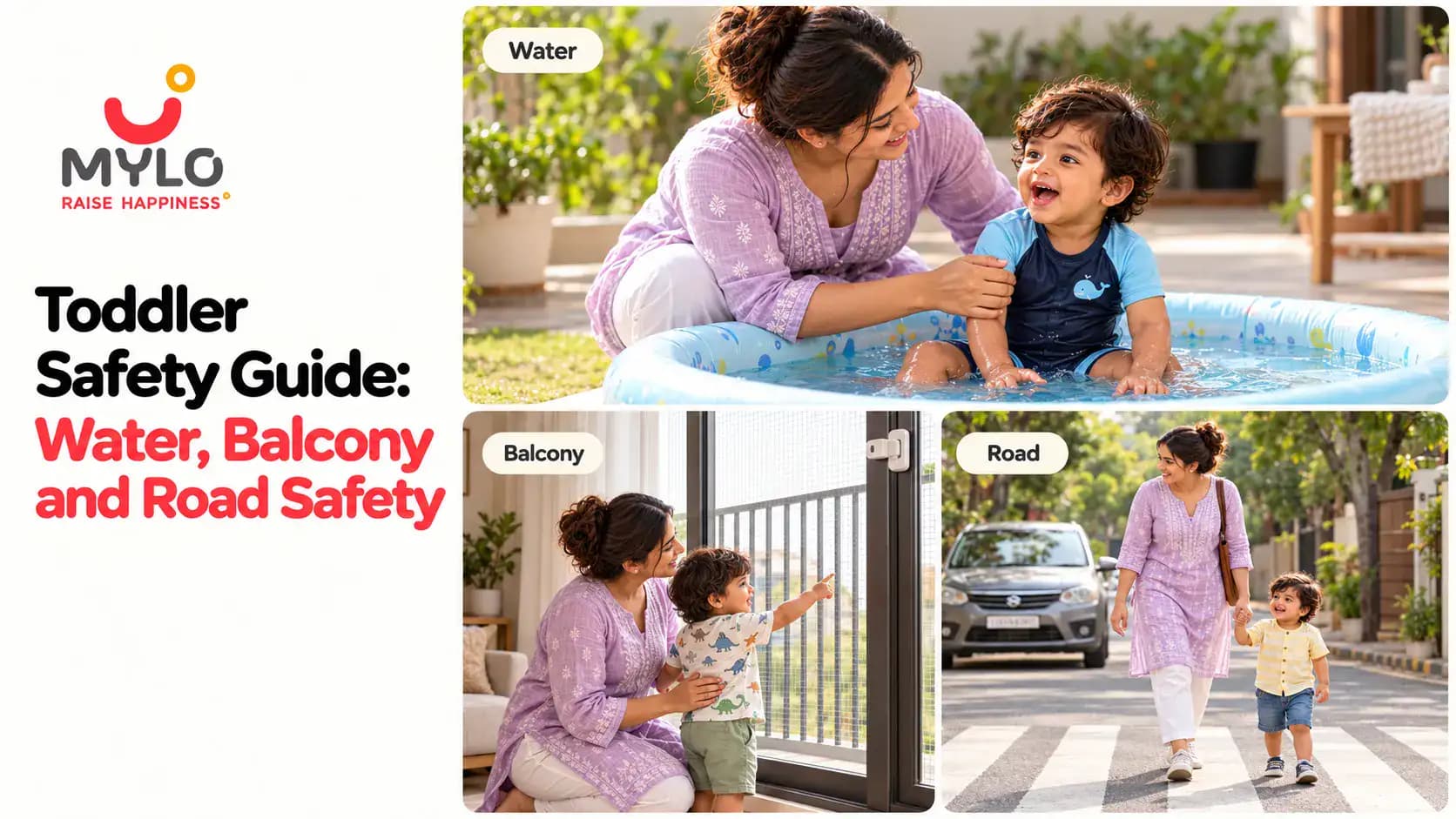
Quick Answer
Toddler safety means protecting children aged 1 to 3 from the most common serious accidents, like drowning, falls from balconies and windows, and road injuries. Toddlers move fast and can't sense danger. Close supervision, empty buckets, covered tanks, window guards and holding hands near roads prevent most accidents.
Toddler Safety at a Glance
Risk | Biggest Dangers at Home | Most Important Step |
|---|---|---|
Drowning | Buckets, tubs, sumps, tanks, toilets, ponds | Empty all buckets and tubs, cover tanks, never leave your toddler alone near water |
Falls | Balconies, windows, terraces, stairs | Window guards, nothing to climb near railings, lock balcony doors |
Road injuries | Streets, parking areas, driveways, two-wheelers | Hold hands, check behind vehicles, use a car seat and a helmet |
Emergency | Any serious accident | Call 108 or 112 |
Key Facts Every Parent Should Know
Drowning is silent and fast: A toddler can drown in a few centimetres of water, without splashing or crying
Drowning is a leading cause of injury death in young children: The WHO lists it among the top killers of children aged 1 to 4
Toddlers climb everything: A chair or cooler near a railing can lead to a fall
Toddlers can't judge traffic: Children don't understand speed and distance until about 10 years
Most accidents happen at home: Often when parents look away for just a moment
Prevention works: Simple changes, like covering a tank or moving a chair, save lives
Water Safety for Toddlers
Short answer: Toddlers can drown in just a few centimetres of water in a bucket, tub, tank or toilet. Empty all containers after use, cover water storage, and always stay within arm's reach when your toddler is near water.
Water dangers in Indian homes
Danger | How to Make It Safe |
|---|---|
Buckets and tubs | Empty them right after use and store them upside down |
Underground sumps and water tanks | Keep them covered with a heavy or locked lid |
Overhead tanks and terraces | Lock access to the terrace and tank |
Toilets and bathrooms | Keep the bathroom door closed. Use a toilet lid lock |
Bathtubs and baby baths | Never leave your toddler alone, even for a second |
Washing machines and coolers | Keep lids closed. Coolers hold water too |
Wells, ponds, lakes, drains | Fence or cover wells. Stay close near open water |
Monsoon puddles and flooded streets | Keep toddlers away from flowing or deep water |
Swimming pools | Four-sided fencing with a self-closing gate |
Safe bath time
Get everything ready before you start: towel, soap, clothes.
Use only a few centimetres of water.
Keep one hand on your toddler at all times.
If you must leave, wrap your toddler in a towel and take them with you.
Empty the bucket or tub right after the bath.
Touch supervision
Near any water, stay close enough to touch your toddler at all times. Don't rely on older siblings to watch them, and put your phone away.
What to do if a toddler is found in water
Lift them out immediately.
Call 108 or 112.
Check breathing. If they're not breathing, start CPR if you know how.
Go to hospital, even if your toddler seems fine afterwards.
Learn emergency steps in our guide on child first aid.
Swimming lessons
Swimming lessons can start from around 1 year, but they don't make a toddler drown-proof. Close supervision is still essential.
Balcony and Window Safety
Short answer: Falls from balconies, windows and terraces are common and can be very serious. Fit window guards, keep furniture away from railings, and keep balcony and terrace doors locked.
How to prevent balcony falls
Step | Why |
|---|---|
Keep chairs, stools, coolers and plant pots away from railings | Toddlers climb anything they can reach |
Check railing gaps | Gaps should be small enough that a toddler's head and body can't pass through (less than about 10 cm) |
Cover wide gaps with safety netting or panels | Prevents slipping through |
Make sure the railing is high enough | Toddlers shouldn't be able to climb over |
Lock the balcony door | Use a lock high up, out of reach |
Never leave your toddler alone on the balcony | Falls happen in seconds |
Don't hang clothes or toys near railings | Toddlers may reach or climb for them |
How to prevent window falls
Step | Why |
|---|---|
Fit window grills or guards | Mosquito screens won't stop a fall |
Use window stops | Limit opening to about 10 cm |
Keep beds, sofas and cots away from windows | Stops climbing to reach the window |
Tie up window cords | Prevents strangling |
Open windows from the top if possible | Out of your toddler's reach |
Terrace and stair safety
Lock terrace doors, especially during kite flying season and festivals
Make sure terrace walls are high, with no gaps
Use safety gates at the top and bottom of stairs
Keep stairs clear of toys and clutter
Road and Street Safety for Toddlers
Short answer: Toddlers can't understand traffic. Always hold their hand near roads, check behind vehicles before reversing, use a car seat in the car, and use a helmet and harness on two-wheelers.
Walking near roads
Rule | Why |
|---|---|
Always hold hands near roads and in parking areas | Toddlers can dart into traffic in a second |
Use a wrist link or harness in crowds | Prevents running off |
Walk on the side away from traffic | Keeps your toddler further from vehicles |
Teach "stop" at the kerb | Builds a habit for later |
Dress in bright colours, especially at dusk | Helps drivers see small children |
Keep the gate closed at home | Stops toddlers wandering onto the road |
Driveways and parking
Walk around the car before reversing: Small children can't be seen behind or in front of vehicles
Know where your toddler is before anyone moves a car or bike
Never let toddlers play in parking areas or driveways
In cars and on two-wheelers
Car: Use a car seat suitable for your toddler's age and size, every trip. Read our full guide on car seat usage for children in India
Two-wheelers: Indian road rules require children under 4 to wear a helmet and safety harness, with a speed limit of 40 km/h
Never hold a toddler on your lap in a car or while riding a scooter
Never leave a toddler alone in a parked car: Cars heat up very fast and can cause heatstroke
Use child locks on car doors and windows
Quick Home Safety Checklist
Short answer: Along with water, balcony and road safety, check these common home dangers.
Check | Done? |
|---|---|
Medicines, chemicals and cleaning products locked away | |
Heavy furniture and TVs fixed to the wall | |
Plug points covered and wires out of reach | |
Hot pans, irons and kettles out of reach | |
Button batteries and small objects out of reach |
For a full room-by-room checklist, read the ultimate guide to childproofing your home.
When Should I Get Emergency Help?
Call 108 or 112 immediately if your toddler:
Was found in water, even if they seem fine
Fell from a height, like a balcony, window or stairs
Was hit by a vehicle
Is unconscious, very sleepy or confused after an accident
Has trouble breathing
Is bleeding heavily
Don't move a toddler who fell from a height unless they're in danger, as they may have a neck or back injury.
Who Can Help?
Who | How They Help |
|---|---|
Pediatrician | Safety advice at routine visits |
First aid and CPR trainers | Teach life-saving skills to parents |
Housing society or building manager | Fix railings, cover sumps and tanks, add gates |
Local municipality | Report open drains, manholes and unsafe water bodies |
Emergency numbers in India
108: Ambulance
112: National emergency number
1098: Childline, if a child is in danger
What Should Indian Parents Keep in Mind?
Short answer: Many common Indian home features, like water buckets, underground sumps, open balconies and terraces, can be dangerous for toddlers. Small changes make homes much safer.
Water storage: Many homes store water in buckets and drums. Cover or empty them, and keep them out of reach
Underground sumps: Often left open during cleaning or filling. Always cover them
Kite flying season: Toddlers on terraces during festivals are at high risk of falls
Older siblings and cousins: They can't replace an adult's supervision near water or balconies
Scooters with children in front: Common, but unsafe without a harness and helmet
Weddings and functions: Crowded venues often have pools, stairs and open terraces. Keep your toddler close
Village visits: Ponds, wells and open tanks need extra care
Myths vs Facts
Myth | Fact |
|---|---|
A drowning child will shout and splash | Drowning is usually silent |
A little water in a bucket isn't dangerous | Toddlers can drown in a few centimetres of water |
Mosquito screens keep children from falling | Screens can't hold a child's weight. Use grills or guards |
Toddlers know to stay away from roads | Toddlers can't judge traffic until about 10 years |
Holding a child on your lap in a car is safe | In a crash, a lap can't hold a child. Use a car seat |
Swimming lessons make toddlers water-safe | Lessons help, but toddlers still need constant supervision |
Frequently Asked Questions
1. How much water can a toddler drown in?
Just a few centimetres. Always empty buckets and tubs, and never leave your toddler alone near water.
2. How do I make my balcony safe for a toddler?
Move furniture away from the railing, cover wide gaps with netting, lock the balcony door, and never leave your toddler alone there.
3. Are mosquito screens enough to stop window falls?
No. Use window grills, guards or window stops.
4. At what age can a toddler cross the road alone?
Not as a toddler. Children usually aren't ready to cross roads alone until about 10 years.
5. Can my toddler sit on the front of my scooter?
Indian road rules require children under 4 to wear a helmet and safety harness, with a speed limit of 40 km/h. A child sitting in front without a harness is unsafe.
6. What should I do if my toddler falls from a height?
Don't move them unless they're in danger, and call 108 or 112 right away.
7. Do swimming lessons protect toddlers from drowning?
They help, but they don't make toddlers drown-proof. Always stay within arm's reach.
8. Bacche ko paani se kaise surakshit rakhein?
Baalti aur tub istemal ke baad turant khaali kijiye, tanki aur sump ko dhakkan se band rakhiye, aur nahate samay bacche ko ek pal ke liye bhi akela mat chhodiye.
9. Balcony mein bacche ki suraksha kaise karein?
Railing ke paas kursi, cooler ya gamle mat rakhiye, chaude gaps ko net se dhakiye, balcony ka darwaza upar se lock kijiye, aur bacche ko balcony mein kabhi akela mat chhodiye.
Related Reads on Mylo
References
World Health Organization (WHO). "Drowning." Fact sheet. https://www.who.int/news-room/fact-sheets/detail/drowning
World Health Organization (WHO) and UNICEF. "World Report on Child Injury Prevention." 2008.
American Academy of Pediatrics (AAP). "Prevention of Drowning." Policy Statement, Pediatrics, 2019.
American Academy of Pediatrics (AAP). "Window Falls" and "Pedestrian Safety." HealthyChildren.org. https://www.healthychildren.org
Ministry of Road Transport and Highways, Government of India. Central Motor Vehicles (Second Amendment) Rules, 2022 (safety of children on two-wheelers).
Bureau of Indian Standards. "National Building Code of India." 2016.
Medical Disclaimer
This article is for information only and does not replace professional medical advice.


Baby Essentials
Everything you need for the baby




Article Posted Under
Related Articles
Right Side Abdominal Pain: Common Causes, Home Care and When to See a Doctor
 14 min
 Growth Scan in Pregnancy: When It Is Done, What It Checks and What Your Report Means
 17 min
 Hair Colour During Pregnancy: Is It Safe? Trimester Guide, Mehndi and Safer Options
 14 min
 Mylo: The Made-in-India Pregnancy and Parenting App Built for Indian Parents
 7 min
7 min
Related Topics
.webp&w=32&q=75)
Medical Disclaimer
This content is for informational purposes only and should not replace professional medical advice. Consult with a physician or other health care professional if you have any concerns or questions about your health. If you rely on the information provided here, you do so solely at your own risk.


AWARDS AND RECOGNITION

Mylo wins Forbes D2C Disruptor award

Mylo wins The Economic Times Promising Brands 2022
AS SEEN IN













- Mylo Care: Effective and science-backed personal care and wellness solutions for a joyful you.
- Mylo Baby: Science-backed, gentle and effective personal care & hygiene range for your little one.
- Mylo Community: Trusted and empathetic community of 10mn+ parents and experts.


Product Categories
Baby Carrier | Baby Soap | Baby Wipes | Stretch Marks Cream | Baby Cream | Baby Shampoo | Baby Massage Oil | Baby Hair Oil | Stretch Marks Oil | Baby Body Wash | Baby Powder | Baby Lotion | Diaper Rash Cream | Newborn Diapers | Teether | Baby Kajal | Baby Diapers Pants | Cloth Diapers | Laundry Detergent | Lactation Granules |