


Orders
.png&w=48&q=75 "login")
Profile


Wallet

Toddler Waking Up at Night: Causes and How to Help
 22 min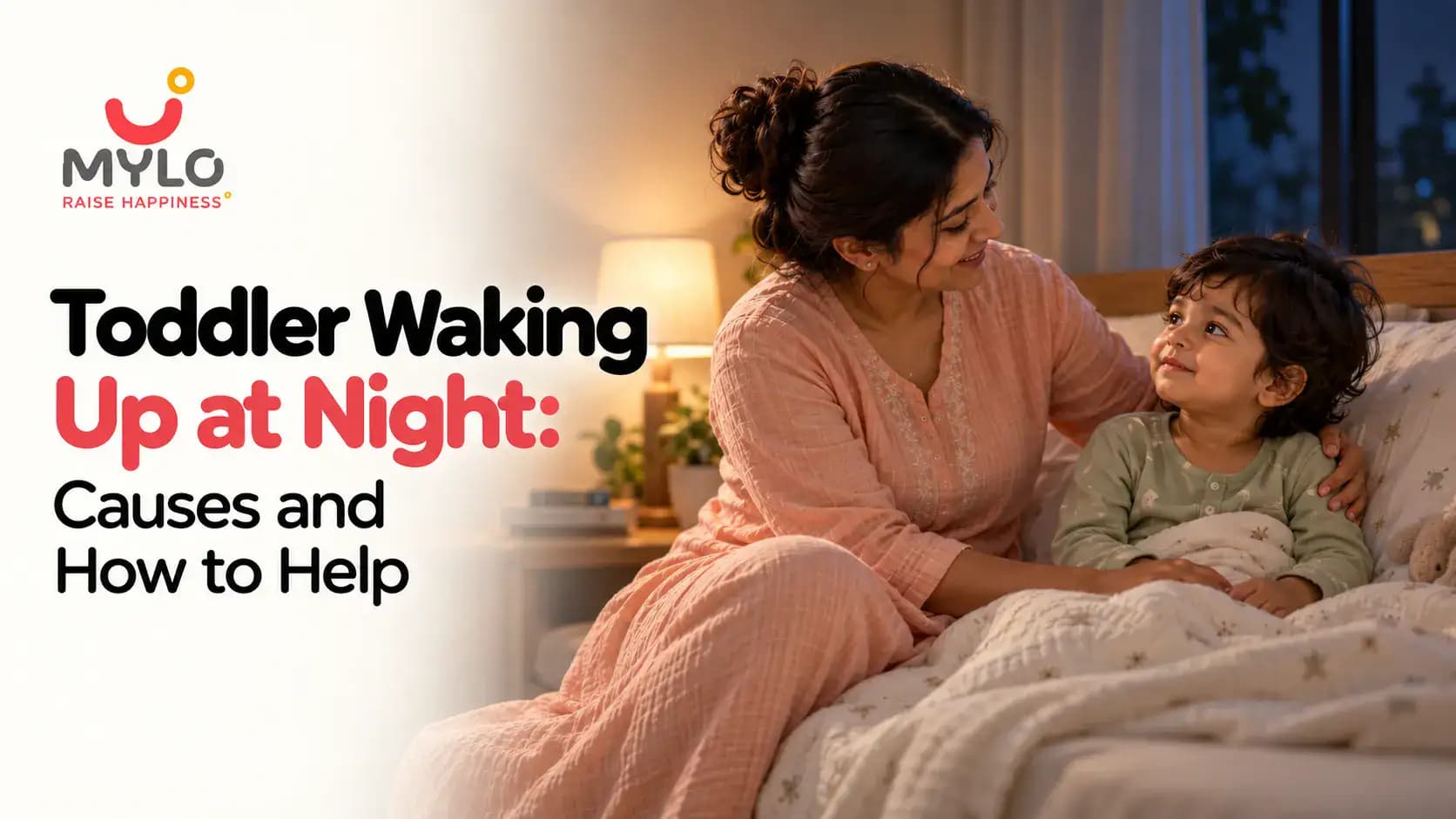
Quick Answer
Toddler sleep problems mean trouble falling asleep, fighting bedtime or waking up at night. They are very common between 1 and 3 years. Common causes are separation anxiety, teething, late naps, screens and needing help to fall asleep. A calm, same-time bedtime routine helps most. See a doctor if your toddler snores loudly.
Toddler Sleep at a Glance
Question | Short Answer |
|---|---|
Is it normal for toddlers to wake at night? | Yes. Many toddlers wake at night sometimes |
How much sleep does a toddler need? | 11 to 14 hours a day at 1 to 2 years, and 10 to 13 hours at 3 years, including naps |
Common causes | Separation anxiety, teething, illness, late naps, screens, needing to be fed or rocked to sleep |
What helps most | Same bedtime every night, a short calm routine, no screens before bed |
What to do at night | Check calmly, keep it short and boring, use the same words each time |
Night milk bottle? | Most healthy toddlers don't need night feeds. Milk in bed can cause tooth decay |
After travel or illness | Go back to the usual routine within a few days. Most toddlers settle in 1 to 2 weeks |
When to worry | Loud snoring with pauses in breathing, very frequent night terrors, or sleep problems affecting the day |
Key Facts Every Parent Should Know
Night waking is common: Many toddlers still wake at night, especially during big changes
Everyone wakes at night: Adults wake briefly too. Toddlers just haven't learned to fall back asleep on their own yet
How they fall asleep matters: If a toddler falls asleep being fed or rocked, they may need the same help each time they wake
Routine is powerful: A short, predictable bedtime routine helps toddlers feel safe and sleepy
Screens delay sleep: The light and excitement from phones and TV can make it harder to fall asleep
Snoring isn't always harmless: Loud snoring with pauses in breathing should be checked by a doctor
How Much Sleep Does a Toddler Need?
Short answer: Toddlers aged 1 to 2 need 11 to 14 hours of sleep in 24 hours, including naps. At 3 years, they need 10 to 13 hours.
Age | Total Sleep in 24 Hours | Naps |
|---|---|---|
12 to 18 months | 11 to 14 hours | Usually 2 naps, moving to 1 nap around 15 to 18 months |
18 months to 2 years | 11 to 14 hours | 1 nap of 1 to 3 hours |
2 to 3 years | 11 to 14 hours (10 to 13 at 3 years) | 1 nap, getting shorter |
3 years and older | 10 to 13 hours | Many drop the nap between 3 and 5 years |
See the full toddler sleep chart by age for night sleep, nap times and sample schedules.
Before 1, babies wake more often for feeds. Read our guide on why babies wake up at night.
Why Is My Toddler Not Sleeping at Night?
Short answer: Toddlers may fight sleep or wake at night because of separation anxiety, teething, illness, late or long naps, screens, too much excitement, or needing help to fall back asleep.
Cause | Signs |
|---|---|
Needs help to fall asleep | Only sleeps when fed, rocked or held, and needs the same help at every waking |
Separation anxiety | Cries for you, clings at bedtime, wakes calling for Mumma or Papa |
Teething | Drooling, chewing, sore gums. Back molars often come between 13 and 33 months |
Illness | Cold, cough, blocked nose, fever, or pulling at ears |
Nap timing | A late or very long afternoon nap makes it hard to sleep at night |
Overtired | Very late bedtime, cranky, "second wind" of energy |
Screens before bed | Phone or TV close to bedtime |
Big changes | New sibling, starting daycare, moving house, travel |
Hunger or thirst | Small dinner, or used to milk at night |
Hot or uncomfortable room | Summer heat, mosquitoes, wet diaper |
Bad dreams | Wakes scared and wants comfort |
What is a sleep regression?
Many parents notice sleep gets worse for a few weeks around 18 months and 2 years. This is often called a "sleep regression". It's not a medical problem. It usually happens alongside new skills, separation anxiety or teething, and settles in a few weeks with a steady routine. Read more in our guide on toddler night terrors, nightmares and sleep regression.
When Toddler Sleep Goes Off Track: Teething, Illness, Travel and Screens
Short answer: Teething, illness, travel and screens can upset a toddler's sleep for a few days or weeks. Comfort your toddler through it, then go back to the usual routine as soon as they're well or home again.
Teething and sleep
New molars often come between 13 and 33 months and can cause night waking for a few nights.
Give a cold (not frozen) teether or a clean, cold washcloth to chew before bed
Rub your toddler's gums gently with a clean finger
Ask your pediatrician about pain relief if your toddler seems in a lot of pain
Avoid teething gels with benzocaine, and amber or rudraksha teething necklaces, which can be a choking or strangling risk
Keep the routine the same. Teething usually disturbs sleep for only a few nights per tooth
Is it really teething? Teething can cause mild crankiness, but not high fever, diarrhoea or days of poor sleep. If you see these, check for illness. Read more on toddler teething.
Illness and sleep
Colds, coughs, ear infections and fever often wake toddlers at night.
Comfort your toddler as much as they need while they're unwell
Keep their nose clear with saline drops if your doctor advises
Offer fluids, and keep the room comfortable, not too hot
See a doctor if your toddler has a high fever, pulls at their ears, has trouble breathing, or seems very unwell
Once your toddler is better, go back to the usual routine within a few days
Travel and sleep
Holidays, family visits and weddings often upset toddler sleep. This is sometimes called a "sleep regression after travel".
During Travel | After You Get Home |
|---|---|
Keep the bedtime routine steps the same, even if the time changes | Go back to the usual bedtime and wake-up time from the first day |
Bring your toddler's comfort toy, blanket or pillow cover | Get morning daylight and outdoor play to reset the body clock |
Let them nap in the car or pram if needed | Expect 3 to 7 days of unsettled sleep |
Use a familiar bedtime story or song | Avoid new habits, like screens to fall asleep, that you don't want to keep |
Screens and sleep
Screens close to bedtime can make it harder for toddlers to fall asleep. The light and excitement keep their brain alert.
Turn off phones, TV and tablets at least 1 hour before bed
Don't use a phone to put your toddler to sleep
Keep screens out of the bedroom
The WHO recommends no screen time for children under 2, except video calls with family, and no more than 1 hour a day for 2 to 4 year olds
Replace screen time with a story, a song or quiet play
How to get toddler sleep back on track
Go back to the same wake-up time: This resets the body clock fastest.
Restart the full bedtime routine: Same steps, same order, same words.
Watch the naps: Make sure naps aren't too long or too late.
Use an earlier bedtime for a few days: Overtired toddlers wake more.
Stay calm and consistent at night: Short, boring check-ins.
Give it a week: Most toddlers settle within 1 to 2 weeks.
How to Make a Good Bedtime Routine
Short answer: Do the same 3 or 4 calm steps in the same order every night, starting 20 to 30 minutes before bedtime.
Step | Example |
|---|---|
1. Wind down | Turn off the TV and phones, dim the lights |
2. Bath or wash | A warm bath or a quick wash and change into night clothes |
3. Brush teeth | Brush with a rice-grain smear of fluoride toothpaste |
4. Story or song | One or two short books, or a lullaby |
5. Cuddle and lights off | Say the same goodnight words every night |
Tips that help:
Same bedtime every night: Choose a time you can keep, even on weekends
Use a picture chart: Pictures of each step help toddlers know what comes next
Offer small choices: "Blue pyjamas or green?" "This book or that one?"
Keep dinner early: A big, late dinner can make it hard to settle
Put your toddler to bed drowsy but awake: This helps them learn to fall asleep on their own
How to Handle Bedtime Battles
Short answer: Keep bedtime calm, firm and predictable. Set clear limits on stalling, like one book and one glass of water, and stay calm when your toddler tests them.
Bedtime Problem | What Helps |
|---|---|
"One more story!" | Agree on the number before you start: "Two books, then lights off" |
Asks for water again and again | Offer water during the routine, then keep a small cup nearby |
Keeps getting out of bed | Calmly walk them back with few words: "It's sleep time" |
Cries when you leave | Say a short, loving goodnight. Check back after a few minutes if needed |
Not tired at bedtime | Check if the afternoon nap is too late or too long |
Wants to play | Keep the room boring. Put away exciting toys |
What Should I Do When My Toddler Wakes Up at Night?
Short answer: Go to your toddler calmly, check they're okay, comfort briefly and help them settle back in bed. Keep the room dark and quiet, and use the same words each time.
Check for a reason: Is your toddler sick, in pain, too hot, or wet?
Keep it short and boring: Low voice, dim light, no screens or play.
Use the same words: "It's night time. Time to sleep. I love you."
Comfort, then step back: A pat or a hug, then let them settle.
Slowly reduce your help: If your toddler only sleeps with you holding them, try sitting next to the bed, then slowly move further away over a week or two.
Be consistent: Whatever you choose, do the same thing every night. Changes take 1 to 2 weeks to work.
For step-by-step methods, like the chair method, read our guide on toddler sleep training and moving from cot to bed.
What about night milk feeds?
Most healthy toddlers over 1 year don't need milk at night for nutrition. Falling asleep with a bottle of milk can cause tooth decay. Talk to your pediatrician about slowly cutting down night feeds, for example by giving a little less each night.
What about co-sleeping?
Many Indian families sleep together, and that's a family choice. If your toddler sleeps in your bed and wakes often, the same tips still help: a steady routine, a calm response and slowly reducing help to fall back asleep.
Nightmares vs Night Terrors: What's the Difference?
Short answer: In a nightmare, your toddler wakes up scared and wants comfort. In a night terror, your toddler screams but doesn't really wake up and won't remember it.
Nightmare | Night Terror | |
|---|---|---|
When | Later in the night, early morning | Usually 1 to 3 hours after falling asleep |
Is your child awake? | Yes, and wants comfort | No. Eyes may be open, but they're not fully awake |
What it looks like | Crying, scared, can tell you about it (if older) | Screaming, thrashing, sweating, doesn't recognise you |
Remembers it? | Often yes | No |
What to do | Comfort and reassure | Stay close, keep them safe, don't try to wake them |
Night terrors are more common from about 3 years. Avoiding overtiredness helps. Read our full guide on toddler night terrors and nightmares.
For fear of the dark and bedtime fears, read our guide on toddler fears and anxiety.
What Not to Do
Short answer: Don't use screens to make your toddler sleep, don't make night wakings fun, and don't change the routine every night.
Avoid | Why | Try Instead |
|---|---|---|
Giving a phone to make them sleep | Screens delay sleep | Story, song or cuddle |
Taking them to watch TV at night | Teaches that waking up is fun | Keep night wakings dark and boring |
Scaring them to sleep ("bhoot aa jayega") | Creates fear of the dark | Calm, loving words |
Very late bedtimes | Overtired toddlers wake more | Earlier, regular bedtime |
Changing the plan every night | Confuses your toddler | Pick one approach and stick to it for 2 weeks |
Milk bottle in bed | Can cause tooth decay | Milk before brushing, then water only |
Teething necklaces or benzocaine gels | Choking and safety risks | Cold teether, gentle gum rub |
When Should I Worry?
Short answer: Most toddler sleep problems improve with a routine. See your pediatrician if your toddler snores loudly with breathing pauses, has frequent night terrors, or if poor sleep is affecting their day.
Sign | Why It Matters |
|---|---|
Loud snoring most nights, gasping or pauses in breathing | May be sleep apnea, often from large tonsils or adenoids |
Breathes through the mouth while sleeping | May be a blocked nose or large adenoids |
Very sleepy, cranky or hyperactive during the day | Poor sleep may be affecting behaviour |
Night terrors several times a week | Needs a check |
Wakes with pain, fever or ear pulling | May be an ear infection or illness |
High fever, diarrhoea or many days of poor sleep blamed on teething | Probably not teething. Check for illness |
Itchy bottom at night | May be threadworms. Easy to treat |
Head banging that causes injury, or sleepwalking into danger | Needs a check |
Sleep problems with loss of skills or other development worries | Talk to your doctor |
Teeth grinding at night: Many toddlers grind their teeth (dant kitkitana) in sleep. It's usually harmless and fades. Mention it to your doctor or dentist if it's loud every night or your toddler has jaw pain.
Who Can Help?
Short answer: Start with your pediatrician. They can check for causes like enlarged tonsils, ear infections or worms, and guide you on sleep habits.
Who | When to See Them |
|---|---|
Pediatrician | First stop for any sleep worry |
ENT specialist | Loud snoring, mouth breathing, large tonsils or adenoids |
Pediatric sleep specialist | Ongoing sleep problems that don't improve |
Child psychologist | Sleep problems linked to anxiety or behaviour |
Pediatric dentist | Teeth grinding with pain, or tooth decay from night feeds |
Free government support in India
RBSK (Rashtriya Bal Swasthya Karyakram): Free health and development checks for children from birth to 18 years
Anganwadi centres: Growth checks and advice for young children
National Deworming Day: Free deworming for children from 1 to 19 years
Tele-MANAS (14416): Free mental health helpline for parents who feel exhausted or stressed
What Should Indian Parents Keep in Mind?
Short answer: In many Indian homes, dinners and bedtimes are late, and the TV is on in the evening. Small changes, like an earlier dinner and a quiet hour before bed, can make a big difference.
Late family dinners: Give your toddler an early dinner, even if the family eats later
TV in the evening: Turn it off or keep it in another room during your toddler's wind-down time
Joint families: Noise and visitors can keep toddlers awake. Ask family to keep things quiet at bedtime
Summer heat and mosquitoes: Use a fan or cooler safely, light cotton clothes, and a mosquito net
Long afternoon naps: A nap after 4 pm can delay bedtime. Wake your toddler gently if needed
Festivals, weddings and family trips: Late nights, travel and crackers can upset sleep for a few days. Get back to the routine quickly
Teething necklaces and threads: Amber, rudraksha or black-thread necklaces worn at night can be a choking or strangling risk. Remove them at bedtime
Grandparents: Share the bedtime routine with them so everyone does the same thing
Myths vs Facts
Myth | Fact |
|---|---|
Toddlers should sleep through the night without waking | Many toddlers wake sometimes. The goal is settling back easily |
A late bedtime makes toddlers sleep longer | Overtired toddlers often wake more and earlier |
Skipping the nap helps them sleep at night | Most toddlers under 3 still need a nap |
Milk at night helps toddlers sleep | Most toddlers don't need night milk, and it can cause tooth decay |
Teething causes high fever and weeks of bad sleep | Teething causes mild symptoms for a few nights. High fever means something else |
Snoring is a sign of deep sleep | Loud snoring with breathing pauses needs a doctor's check |
Watching cartoons helps them relax before bed | Screens usually make it harder to fall asleep |
Frequently Asked Questions
1. Why does my toddler wake up at night crying?
Common reasons are separation anxiety, teething, illness, bad dreams or needing help to fall back asleep. Check them, comfort briefly, and help them settle.
2. How do I get my toddler to sleep through the night?
Keep the same bedtime, use a short calm routine, avoid screens before bed, and help your toddler learn to fall asleep without being fed or rocked.
3. What time should a toddler go to bed?
Many toddlers do well with a bedtime between 7:30 and 9 pm. What matters most is keeping the same time every night.
4. Why does my toddler wake up at night wanting to play?
They may not be tired enough, often from a late or long nap. Keep night wakings dark and boring, and check the nap timing.
5. Does my toddler need milk at night?
Most healthy toddlers over 1 year don't. Milk in bed can cause tooth decay. Ask your pediatrician about slowly stopping night feeds.
6. Is it normal for my 2-year-old to suddenly stop sleeping well?
Yes. Sleep often gets worse for a few weeks during teething, separation anxiety or big changes. A steady routine helps.
7. Why is my toddler not sleeping well after a holiday?
Travel changes routines, rooms and bedtimes. Go back to your usual times from the first day home, and most toddlers settle within a week.
8. Does teething cause night waking in toddlers?
Yes, molars can cause a few nights of waking. If your toddler has a high fever or poor sleep for many days, it's probably not teething.
9. Is screen time before bed bad for toddlers?
Yes. Screens can make it harder to fall asleep. Turn them off at least an hour before bed.
10. When should I worry about my toddler's snoring?
If your toddler snores loudly most nights, gasps or has pauses in breathing, see your pediatrician.
11. Bacha raat ko sota nahi, kya karein?
Roz ek hi samay par sulaiye, sone se pehle phone aur TV band kijiye, aur ek chhota sa routine rakhiye: nahana, kahani, lori. Dopahar ki neend bahut der tak mat hone dijiye.
12. Bacha raat ko dant kyon pisata hai?
Neend mein dant pisana (dant kitkitana) chhote bacchon mein aam hai aur aksar apne aap theek ho jata hai. Agar roz bahut zor se ho ya jabde mein dard ho, to doctor ya dentist ko dikhaiye.
Related Reads on Mylo
References
Paruthi S, et al. "Recommended Amount of Sleep for Pediatric Populations: A Consensus Statement of the American Academy of Sleep Medicine." Journal of Clinical Sleep Medicine, 2016.
World Health Organization (WHO). "Guidelines on physical activity, sedentary behaviour and sleep for children under 5 years of age." 2019.
American Academy of Pediatrics (AAP). "Healthy Sleep Habits: How Many Hours Does Your Child Need?" HealthyChildren.org. https://www.healthychildren.org
American Academy of Pediatrics (AAP). "Clinical Practice Guideline: Diagnosis and Management of Childhood Obstructive Sleep Apnea Syndrome." Pediatrics, 2012.
American Academy of Pediatric Dentistry (AAPD). "Policy on Early Childhood Caries." https://www.aapd.org
US Food and Drug Administration (FDA). "Safely Soothing Teething Pain and Sensory Needs in Babies and Older Children." https://www.fda.gov
Ministry of Health and Family Welfare, Government of India. "National Deworming Day." https://nhm.gov.in
Ministry of Health and Family Welfare, Government of India. "Tele-MANAS" (14416). https://telemanas.mohfw.gov.in/
Medical Disclaimer
This article is for information only and does not replace professional medical advice. Every toddler is different. If you're worried about your toddler's sleep, breathing or health, please consult your pediatrician.
Shop Now
Baby Essentials
Article Posted Under
Related Articles




Related Topics
.webp&w=32&q=75)
Medical Disclaimer
This content is for informational purposes only and should not replace professional medical advice. Consult with a physician or other health care professional if you have any concerns or questions about your health. If you rely on the information provided here, you do so solely at your own risk.


AWARDS AND RECOGNITION

Mylo wins Forbes D2C Disruptor award

Mylo wins The Economic Times Promising Brands 2022
AS SEEN IN













- Mylo Care: Effective and science-backed personal care and wellness solutions for a joyful you.
- Mylo Baby: Science-backed, gentle and effective personal care & hygiene range for your little one.
- Mylo Community: Trusted and empathetic community of 10mn+ parents and experts.


Product Categories
Baby Carrier | Baby Soap | Baby Wipes | Stretch Marks Cream | Baby Cream | Baby Shampoo | Baby Massage Oil | Baby Hair Oil | Stretch Marks Oil | Baby Body Wash | Baby Powder | Baby Lotion | Diaper Rash Cream | Newborn Diapers | Teether | Baby Kajal | Baby Diapers Pants | Cloth Diapers | Laundry Detergent | Lactation Granules |