


Orders
.png&w=48&q=75 "login")
Profile


Wallet

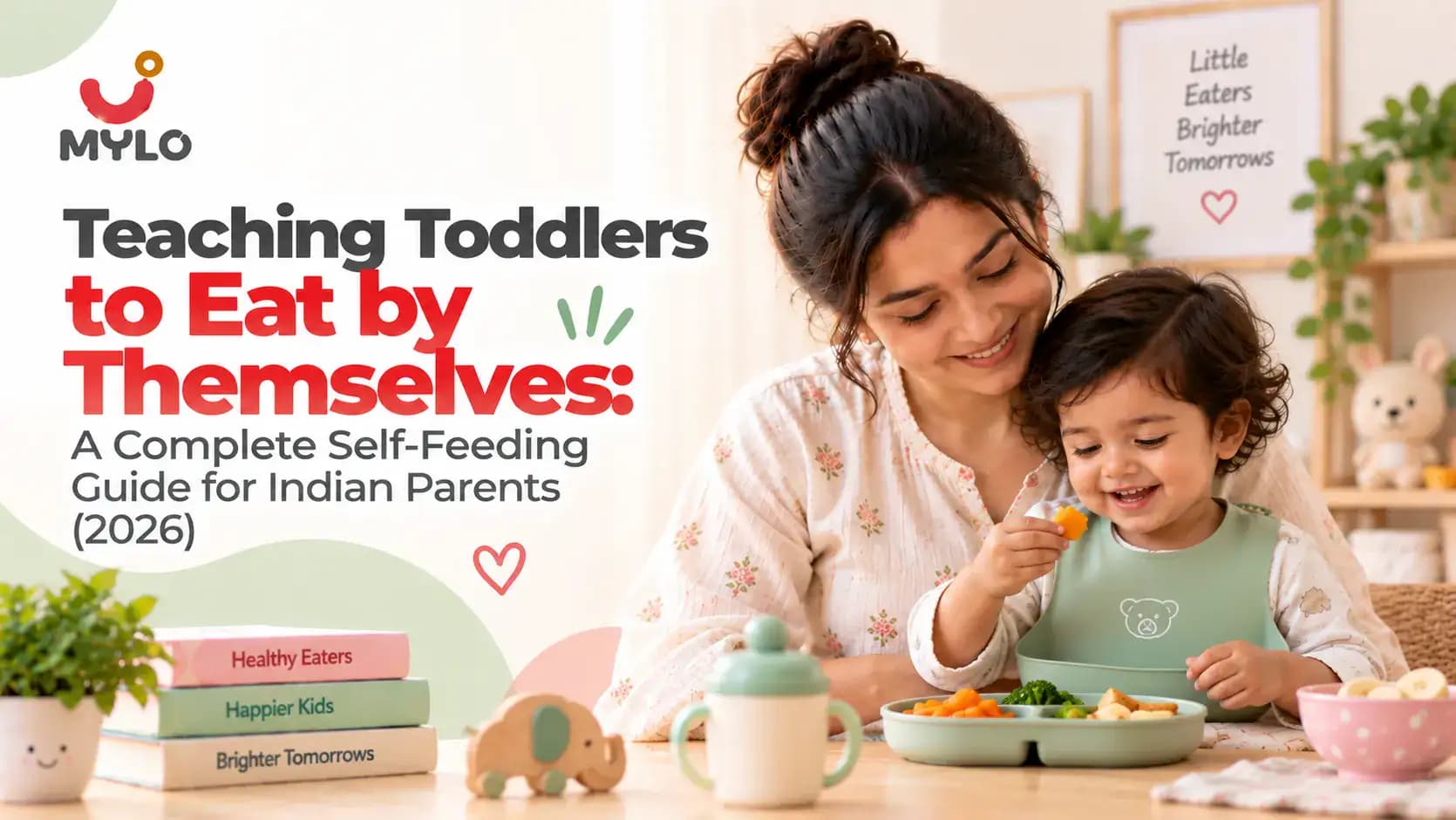
Teaching Toddlers to Eat by Themselves: A Complete Self-Feeding Guide for Indian Parents (2026)


MBBS, DCH, DNB (Pediatrics), FICM (Fellowship in Intensive Care Medicine), FIDM (Fellowship in Diabetes Mellitus), MNAMS · 18 years experience
 16 min
TL;DR
Most babies start picking up finger foods at 8 to 10 months. By 18 months most toddlers try to use a spoon, and by 2 years most can eat with one, with spills. The easiest way to start is a preloaded spoon with thick Indian foods like khichdi, curd rice or upma. Eat together, keep portions small, and let your child practise at every meal. Mess is part of learning. Manage it with a mat, a bib and a suction bowl, and clean up after the meal, not during it. Always supervise meals, keep your child sitting upright, and learn the difference between gagging and choking.
Key Takeaways
Self-feeding builds hand skills, confidence and healthy hunger and fullness cues
Finger foods from about 8 to 10 months, spoon attempts by 18 months, and a spoon by about 2 years (CDC)
Start spoon practice with a preloaded spoon and thick, sticky foods
The two-spoon method keeps meals calm: one spoon for your child, one for you
Mess is normal. Plan for it instead of fighting it.
Throwing food usually means your child is full or bored
Gagging is normal while learning; choking is an emergency
Avoid mobile-feeding and chasing with the katori
Why Self-Feeding Matters
Letting your toddler feed themselves:
Builds fine motor skills: hand-eye coordination and the finger strength needed later for writing
Teaches hunger and fullness cues: children who feed themselves learn when to stop
Reduces fussy eating: touching and exploring food makes new foods less scary
Builds independence: "I did it!" is a big confidence boost
Prepares them for playschool, where they'll need to eat their tiffin on their own
As Raising Children Network puts it, learning to eat takes a lot of time and practice, and it's messy.
Self-Feeding Skills by Age
Age | What Most Children Can Do | What to Offer |
|---|---|---|
6 to 8 months | Grabs food with the whole hand, brings it to the mouth, holds and bangs a spoon | Soft finger-length strips: steamed carrot, ripe banana, soft paneer, idli pieces |
8 to 10 months | Starts picking up small pieces with thumb and finger (pincer grasp) | Pea-sized soft pieces: cooked peas, dal-rice balls, soaked chapati pieces |
10 to 12 months | Finger feeds well, grabs the spoon, may bring a preloaded spoon to the mouth | Preloaded spoons of thick foods; small open cup with water |
12 to 18 months | Feeds self with fingers; by 18 months tries a spoon and drinks from an open cup with spills | Thick foods on a spoon; move from bottle to cup |
18 to 24 months | Scoops with a spoon (still spills), starts stabbing with a fork | Toddler fork, suction bowl, thicker dals and curries |
2 to 3 years | Uses spoon and fork with fewer spills | Family food cut small, child-sized steel plate and tumbler |
3 to 4 years | Uses a fork well, pours from a small jug, eats neatly with hands | Small water jug, serving spoon to help serve themselves |
4 to 5 years | Serves own food, spreads with a blunt knife | Blunt knife for butter or chutney |
Every child learns at their own pace. A few months earlier or later is normal.
How to Teach Spoon Practice: 6 Simple Steps
1. Start With a Preloaded Spoon
Fill the spoon with food and hold it out, or rest it on the plate, and let your child pick it up and bring it to their mouth. Solid Starts calls this the easiest bridge from parent-feeding to self-feeding.
2. Choose Thick, Sticky Foods
Foods that cling to the spoon make practice much easier:
Easy Spoon Foods | Harder (Try Later) |
|---|---|
Soft khichdi, dal-rice mash | Thin dal or rasam |
Thick curd, curd rice | Loose rice grains |
Upma, dalia, suji halwa | Watery soups |
Mashed potato or sweet potato | Peas and small round pieces |
Thick ragi porridge | Milk with cereal |
3. Pick the Right Spoon
A short, thick-handled spoon with a wide, shallow bowl works best. Soft silicone or small steel spoons are ideal. Avoid long, thin adult spoons.
4. Try the Two-Spoon Method
Give your child their own spoon while you hold another. They practise, and you can offer extra bites so they don't get too hungry or frustrated.
5. Show, Help, Then Step Back
Show: Eat with a spoon next to them, slowly, so they can copy you
Help: Gently guide their hand from bowl to mouth a few times
Step back: Let them try alone, even if most of it falls
6. Practise Outside Meals Too
Scooping water in the bath, or scooping play dough or sand, builds the wrist movement needed for a spoon. Keep small dry grains away from children who still put everything in their mouth.
Keep meals short: 15 to 20 minutes is enough. If your child gets frustrated, help a little and try again next meal.
Eating With Hands: A Healthy Indian Habit
Eating roti-sabzi, dal-rice and dosa with clean hands is normal, healthy and great for finger skills. Let your toddler practise both: eating with hands and with a spoon. Just make sure hands are washed with soap first. Learn more in our guide on toddler self-care and hygiene.
Handling the Mess
Mess isn't bad manners. It's how toddlers learn about textures, weight and control. The goal is to manage mess, not prevent it.
When | What to Do |
|---|---|
Before the meal | Put an old bedsheet, newspaper or splat mat under the chair. Roll up sleeves or use a long-sleeved bib or one with a food pocket. Use a suction bowl. Serve small portions. |
During the meal | Don't wipe their face after every bite; it interrupts learning. Sit and eat together. Keep a damp cloth only for big spills. Give a "no thank you" plate for food they don't want. |
After the meal | Clean up together. Toddlers love wiping the tray with a small cloth. Plan bath time after the messiest meal, often dinner. |
When Your Toddler Throws Food
Throwing food is very common between 12 and 24 months. It often means your child is full, bored or testing what happens.
Stay calm and give one simple rule: "Food stays on the plate."
Show them where unwanted food goes: "If you don't want it, put it here."
If throwing continues, calmly end the meal: "Throwing tells me you're done."
Don't laugh or turn it into a game
Offer the next meal or snack at the usual time, not straight away
Gagging vs Choking: Know the Difference
Gagging (Common and Usually Normal) | Choking (Emergency) |
|---|---|
Coughing, spluttering, watery eyes | Silent; can't cough, cry or breathe |
Tongue pushes food forward | Face turns red, then blue or pale |
Child recovers on their own in seconds | Panicked look, hands at throat |
Stay calm and let them work it out | Give first aid immediately and call 108 or 112 |
Gagging is a natural protective reflex and is common while learning to eat. Small portions and letting your child feed at their own pace can reduce it. Every parent should learn child choking first aid.
Self-Feeding Safety Tips
Always sit upright in a high chair or at the table. No eating while walking, running or lying down.
Never leave your child alone while eating
Avoid choking hazards under 4 years: whole nuts and peanuts, whole grapes and cherry tomatoes (cut into quarters), popcorn, hard raw carrots, hard sweets and large chunks of paneer or meat
Cut food into small pieces or soft strips, based on age
Check temperature of hot dal, khichdi and milk before serving
No screens at meals, so your child focuses on chewing
Common Self-Feeding Struggles
Struggle | What to Try |
|---|---|
Only wants to eat with hands | That's fine. Keep a preloaded spoon on the plate and eat with a spoon yourself. |
Gets frustrated when food falls off | Offer thicker foods, help hand-over-hand, use the two-spoon method |
Only eats if an adult feeds them | Let them take the first few bites, then take turns, and slowly give them more turns |
Eats only in front of a phone | Remove screens gradually. Read our picky eating guide for a 7-day plan. |
Only eats on your lap | See our guide on when your toddler only eats on your lap |
Plays with food instead of eating | Normal exploration. End the meal calmly after 20 to 30 minutes. |
Still on the bottle | Move to an open or straw cup between 12 and 18 months. Read about bottle feeding pros and cons. |
What to Avoid
Forcing or rushing your child to finish
Taking over the spoon every time food falls
Wiping their face after every bite
Mobile-feeding or chasing with the katori
Scolding or shaming them about mess
Giving up because it's slow. Daily practice shows results within weeks.
When to See a Doctor
Talk to your pediatrician if your child:
Isn't picking up finger foods by 12 months
Isn't trying to use a spoon by 18 to 24 months
Gags, coughs or chokes often while eating, or has trouble chewing or swallowing
Refuses all textured foods after 12 to 15 months, or only accepts purees
Reacts very strongly to touching food or having messy hands (see sensory processing disorder in toddlers)
Isn't gaining weight well (see what to do if your toddler is underweight)
Is behind in other milestones (see identifying developmental disorders in toddlers)
What Does It Cost in India?
Item | Typical Cost (₹) | Note |
|---|---|---|
Practice, patience and family meals | Free | Most important |
Toddler spoon and fork set | ₹150 to ₹500 | Short, thick handles |
Suction bowl or plate | ₹250 to ₹800 | Reduces tipping and throwing |
Bib with sleeves or food pocket | ₹150 to ₹500 | Easy to wash |
Splat mat | ₹100 to ₹500 | An old bedsheet works too |
Small open cup or steel tumbler | ₹50 to ₹300 | Helps move away from the bottle |
High chair or booster seat | ₹1,500 to ₹6,000 | Keeps your child upright and safe |
Indian Context: What Indian Parents Should Know
Let them feed themselves: Spoon-feeding and chasing with the katori well into toddlerhood are common. Letting your child eat alone builds skills and often improves appetite.
Say no to mobile-feeding: It hides hunger cues and makes self-feeding harder.
Ask family to support practice: Grandparents and house help may feed toddlers out of love. Kindly ask them to let your child try first.
Use everyday Indian foods: Khichdi, curd rice, upma, dalia and suji halwa are perfect for spoon practice.
Affordable tools work: Small steel katoris, spoons and tumblers are ideal for little hands.
Emergency number: Dial 108 or 112.
Myths vs Facts
Myth | Fact |
|---|---|
"Spoon-feeding for longer is better" | Self-feeding builds skills and often reduces fussy eating (Raising Children Network) |
"A messy eater has bad manners" | Mess is a normal part of learning |
"My child will eat less if they feed themselves" | Toddlers balance their appetite over the week and learn to listen to their body |
"Gagging means they're not ready" | Gagging is a normal reflex while learning (Happy Family Organics) |
"Eating with hands is messy and wrong" | It's a healthy Indian habit that builds finger skills |
FAQs: Teaching Toddlers to Eat by Themselves
When should my toddler start eating by themselves?
Most babies start finger feeding at 8 to 10 months. By 18 months they try a spoon, and by 2 years most can eat with a spoon, with spills.
Bachche ko khud khana kaise sikhayein? (Hinglish)
Chammach mein gaadha khana (jaise khichdi, dahi ya upma) bharkar bachche ko pakdayein aur use khud muh tak le jaane dein. Aap bhi saath baithkar chammach se khayein. Shuru mein haath pakadkar madad karein, phir khud try karne dein. Mess hone dein, ye seekhne ka hissa hai.
What are the best foods for spoon practice?
Thick, sticky foods like khichdi, dal-rice mash, thick curd, curd rice, upma, dalia, suji halwa, mashed potato and ragi porridge.
How do I handle the mess?
Use a floor mat or old sheet, a bib and a suction bowl. Serve small portions, don't wipe their face after every bite, and clean up together after the meal.
Why does my toddler throw food?
Usually because they're full, bored or testing your reaction. Stay calm, give a "no thank you" plate, and end the meal if throwing continues.
My 2-year-old still wants to be spoon-fed. What should I do?
Let them take the first few bites on their own, then take turns, and slowly give them more turns. Keep screens away during meals.
2 saal ka bachcha khud nahi khata, kya karein? (Hinglish)
Pehle kuch bite bachche ko khud khane dein, phir aap aur bachcha baari-baari khilayein. Dheere-dheere bachche ki baari badhayein. Khane ke samay mobile bilkul na dein aur saath baithkar khayein.
Is it gagging or choking?
Gagging involves coughing and spluttering, and your child recovers alone. Choking is silent, and your child can't cough, cry or breathe. Choking needs first aid right away and a call to 108 or 112.
Is it okay for my toddler to eat with their hands?
Yes. Eating with clean hands is healthy, builds finger skills and is normal for many Indian meals.
When should I worry?
See your doctor if your child isn't finger feeding by 12 months, isn't trying a spoon by 18 to 24 months, often gags or chokes, or refuses all textured food after 12 to 15 months.
Related Reads on Mylo
References
Centers for Disease Control and Prevention (CDC). "Milestones by 18 Months." https://www.cdc.gov/act-early/milestones/18-months.html
Centers for Disease Control and Prevention (CDC). "Milestones in Action: By 18 Months." https://www.cdc.gov/act-early/milestones-in-action/18-months.html
Raising Children Network. "Babies and Toddlers Learning to Feed Themselves." https://raisingchildren.net.au/babies/breastfeeding-bottle-feeding-solids/solids-drinks/learning-to-feed-themselves
Solid Starts. "Tips on How to Teach Baby to Use a Spoon." https://solidstarts.com/responsive-spoon-feeding/
Kids Eat in Color. "How to Get Your Toddler to Use Utensils." https://kidseatincolor.com/how-to-get-your-toddler-to-use-utensils/
Happy Family Organics. "Teaching Your Baby to Self-Feed." https://www.happyfamilyorganics.com/learning-center/article/teaching-your-baby-to-self-feed/
Missouri Early Connections. "Toddler Eating." https://earlyconnections.mo.gov/families/development-milestone/toddler/eating
Medical Disclaimer
This article is for information only and does not replace professional medical advice. Please consult your pediatrician if you have concerns about your child's feeding, growth, chewing or swallowing.


Shop Now
Baby Essentials




Article Posted Under
Related Articles
Best Pregnancy and Parenting App in India: 5 Must-Have Features to Look For (2026)
 20 min
 Best Hairstyles for Postpartum Hair Loss and Regrowth
 10 min
 HairVivine Pro: What This Pumpkin Seed Hair Active Does and What the Studies Show
 15 min
 Postpartum Hair Loss and Confidence: Why It Hits So Hard and What Helps
 9 min
9 min
Related Topics
.webp&w=32&q=75)
Medical Disclaimer
This content is for informational purposes only and should not replace professional medical advice. Consult with a physician or other health care professional if you have any concerns or questions about your health. If you rely on the information provided here, you do so solely at your own risk.


AWARDS AND RECOGNITION

Mylo wins Forbes D2C Disruptor award
Mylo wins The Economic Times Promising Brands 2022
AS SEEN IN













- Mylo Care: Effective and science-backed personal care and wellness solutions for a joyful you.
- Mylo Baby: Science-backed, gentle and effective personal care & hygiene range for your little one.
- Mylo Community: Trusted and empathetic community of 10mn+ parents and experts.


Product Categories
Baby Carrier | Baby Soap | Baby Wipes | Stretch Marks Cream | Baby Cream | Baby Shampoo | Baby Massage Oil | Baby Hair Oil | Stretch Marks Oil | Baby Body Wash | Baby Powder | Baby Lotion | Diaper Rash Cream | Newborn Diapers | Teether | Baby Kajal | Baby Diapers Pants | Cloth Diapers | Laundry Detergent | Lactation Granules |